
contemporary Music – issue #4 – folk / Country rock
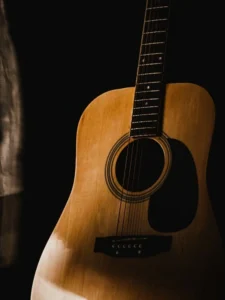
Folk rock is a popular music genre that emerged in the mid-1960s, primarily in the U.S. and UK, by blending the acoustic, lyrical, and melodic elements of folk music with the electric instrumentation, rhythm, and energy of rock & roll. It often features close vocal harmonies, poignant songwriting, and jangly guitars.
The American folk-music revival began during the 1940s; building on the interest in protest folk singers such as Woody Guthrie and Pete Seeger, it reached a peak in popularity in the mid-1960s with artists such as Bob Dylan and Joan Baez: The Byrds are credited with creating the genre’s “jangle” sound, particularly with their 1965 cover of Bob Dylan’s “Mr. Tambourine Man”. Dylan himself popularized the genre by “going electric” at the 1965 Newport Folk Festival. Besides Dylan and The Byrds, notable artists include Crosby, Stills, Nash & Young, Buffalo Springfield, Simon & Garfunkel, and The Band.In the UK, bands like Fairport Convention and Steeleye Span developed a distinct sound by electrifying traditional British folk tunes. Common instruments include acoustic and electric guitars, mandolin, banjo, and fiddle. In the United States folk rock acts personified a generalized, often self-righteous youthful rebellion that in its more pointed songs was labelled “protest” music. In Britain folk rock tended to be more respectful of tradition and combined centuries-old folk material with original, tradition-flavoured songs arranged for folk rock ensembles that often used old instruments to maintain a strong Celtic flavour. While the folk rock movement began and quickly surged in the 1960s, it has continued through the present day. It has spawned many offshoots, including psychedelic folk rock (Jefferson Airplane), country rock (the Flying Burrito Brothers, John Prine), progressive folk music (Richard Thompson, O’Death), punk-inspired folk rock (the Replacements, Dinosaur Jr., Buffalo Tom), and even folk metal (Skyclad, Moonsorrow). The annual Newport Folk Festival brings disparate folk acts together highlighting the wide array of songwriting and performance styles in today’s folk rock music.
Join the Conversation!!!
we will Feature Up to 4 Albums from Artists representative of a range of the Many sub-genres. We Hope to encourage Listeners of all tastes and passions. So Get your Headphones on and Consider discussing the musical Offering and sharing your views with like-minded peers.
In Issue #4, we feature bob dylan
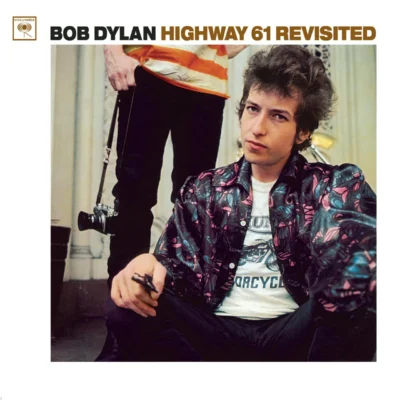
Highway 61 Revisited (1965): Often cited as his definitive work, this is the album where Dylan fully embraced a fierce, uncompromising electric blues-rock sound. It opens with the revolutionary track “Like a Rolling Stone” and closes with the sweeping epic “Desolation Row”. He successfully took the powerful and raw literary language of the Beat poets, the imaginative storytelling of the folk music, the street poetry of the master bluesmen, a bit of the ranting of the street preacher, and somehow mashed them all together into a very tight, cohesive unit. Next, he married his lyrics to blues-based rock’n’roll and topped it off with a startling and singularly effective vocal technique that had never been heard before. Although Dylan had used all of these techniques before, only on this recording did he bring them all together for an entire album. The revolutionary ideas, the angry tone in the lyrics, and the harshness of the music of Highway 61 undoubtedly were fed by the turmoil of the times. It influenced an entire generation of artists, and continues to influence rock musicians today.( the Bob Dylan Commentaries)
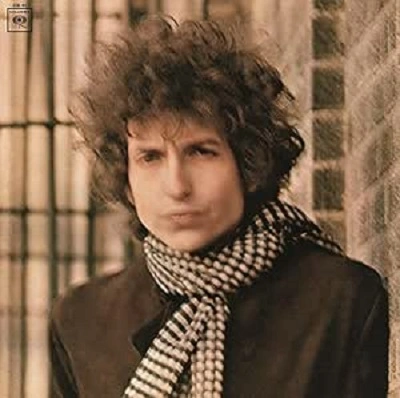
Blonde on Blonde (1966): One of rock music’s very first double albums. Recorded in Nashville, it blends a poetic, surrealist lyrical avalanche with what Dylan famously called “that thin, wild mercury sound”. Blonde on Blonde is an album of enormous depth, providing endless lyrical and musical revelations on each play. Leavening the edginess of Highway 61 with a sense of the absurd, Blonde on Blonde is comprised entirely of songs driven by inventive, surreal, and witty wordplay, “Visions of Johanna” is one the best entries in Dylan’s massive discography, and one of his most beloved recordings. It’s one of the most beautifully crafted songs Dylan ever recorded and features an immaculate musical arrangement and flawless lyrical construction. Blonde on Blonde features Dylan’s two best love songs. “I Want You,” the album’s first single, is his riff on mid 1960s R&B music. It a peppy jaunt that sounds almost joyous. “Just Like a Woman” is another Dylan masterwork, supposedly inspired by his relationship with Edie Sedgwick, an actress and fashion model who was a fixture at Andy Warhol’s Factory. “Stuck Inside of Mobile with the Memphis Blues Again” is a lengthy psychedelic country track with more R&B influences. there is a lot of relationship-themed songs, something he does very well here and The closing track, Sad Eyed Lady of the Lowlands is a full on tribute song to his first wife, Sara Lowndes, which is very touching. Throughout the record, the music matches the inventiveness of the songs, filled with cutting guitar riffs, liquid organ riffs, crisp pianos, and even woozy brass bands. More than five decades later, “Rainy Day Women #12 and #35” is still an oddity—a swinging, goofy, double-entendre laden dedication to persecution and getting high. Dylan warbles as a drunken version of a Salvation Army Band blares in the background, accompanied by an organ and harmonica. It’s the culmination of Dylan’s electric rock & roll period — he would never release a studio record that rocked this hard, or had such bizarre imagery, ever again.
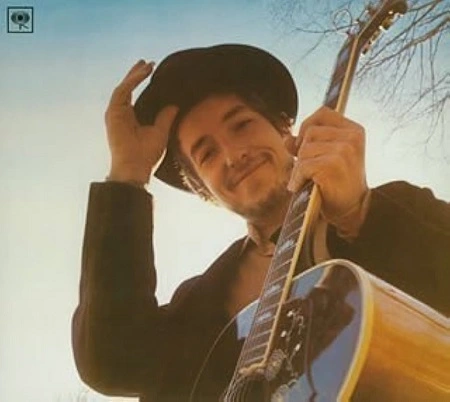
nashville Skyline (1969): Moving entirely away from his signature complex folk poetics and rock protest anthems, the album represents a complete, warm immersion into traditional country music. It charted at number three, but, owing to the comparative simplicity of its lyrics, people questioned whether Dylan remained a cutting-edge artist. Dylan famously traded his familiar nasal drawl for a soft, smooth country croon, the sound of his voice is so different it may be disarming upon first listen, but it suits the songs. a vocal change he later attributed to temporarily quitting smoking. Nashville Skyline was a full-fledged country album, complete with steel guitars and brief, direct songs. It’s a warm, friendly album. The record opens with a famous duet version of “Girl from the North Country” featuring country icon Johnny Cash. It also spawned major career hits like “Lay, Lady, Lay” and “Tonight I’ll Be Staying Here with You”. Alongside master musicians like Charlie Daniels and Pete Drake, the record became a massive commercial success, hitting No. 1 in the UK and cementing country-rock as a viable mainstream genre.
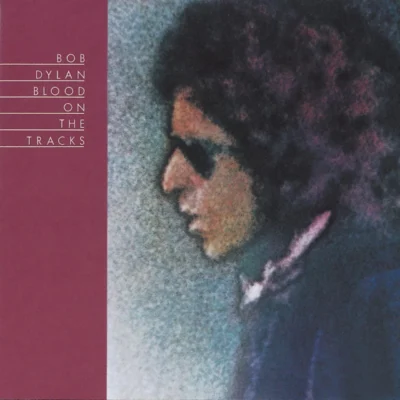
Blood on the Tracks (1975): Often referred to as Dylan’s “breakup album,” it’s likewise become just that for many listeners to find aloneness in clearing out external noise and connecting with your inner voice. breakup albums are about more than their relationships and although the album captures a world-weary and deeply intimate narrative widely linked to the collapse of Dylan’s marriage to his wife Sara it features deeply raw, earnest storytelling on tracks like “Tangled Up in Blue” and the fiercely bitter masterpiece “Idiot Wind”. keeping the music uncompromised by the cool of the 60s. Dylan originally laid down stripped-down acoustic tracks in New York City, only to re-record half of the songs last-minute with a full band in Minneapolis. he modified the album’s sound and changed the lyrics on some of the songs in order to “soften” them. he helped make the album lighter by changing the key everything would be played in. here is Dylan, bringing feeling back home. In this album, he is as personal and as universal as Yeats or Blake; speaking for himself, risking that dangerous opening of the veins, Yet, he speaks for us all. The words, the music, the tones of voice speak of regret, melancholy, a sense of inevitable farewell, mixed with sly humour, some rage, and a sense of simple joy. They are the poems of a survivor. It is not his voice that has grown richer, stronger, more certain; it is Dylan himself. And his poetry, his troubadour’s traveling art, seems to me to be more meaningful than ever
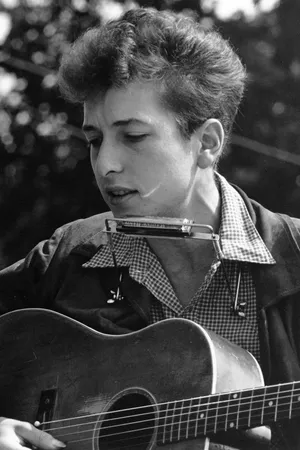
One of the greatest figures of the 20th century, Bob Dylan helped shape the sound and form of popular music in the rock & roll era. Dylan emerged from the Greenwich Village folk scene in the early 1960s, earning a reputation as a perceptive, powerful songwriter, equally capable of penning a protest anthem or a romantic love song. His flair for impressionistic, ‘stream-of-consciousness’ lyrics marked a shift within folk music, an evolution Dylan also introduced to rock & roll when he picked up an electric guitar in 1965.
Born Robert Allen Zimmerman, May 24, 1941. Dylan’s father Abram Zimmerman and his mother Beatrice “Beatty” Stone were part of a small, close-knit Jewish community. They lived in Duluth until Dylan was six, when his father contracted polio and the family returned to his mother’s hometown of Hibbing, where they lived for the rest of Dylan’s childhood, and his father and paternal uncles ran a furniture and appliance store. As a teenager, Dylan heard rock and roll on radio stations broadcasting from Shreveport and Little Rock. Dylan formed several bands while attending Hibbing High School. A 17-year-old Dylan saw Buddy Holly perform at the Duluth Armory, four days before Holly’s fatal plane crash. Dylan was electrified, and in his Nobel Prize lecture, he explained: “He was the archetype. Everything I wasn’t and wanted to be.” In September 1959, Dylan enrolled at the University of Minnesota. Living at the Jewish-centric fraternity Sigma Alpha Mu house, Dylan began to perform at the Ten O’Clock Scholar, a coffeehouse near campus, and became involved in the Dinkytown folk music circuit. His focus on rock and roll gave way to American folk music. Dylan dropped out of college in May 1960 at the end of his first year. In January 1961, he travelled to New York City to perform and to visit his musical idol Woody Guthrie. From February 1961, Dylan played at clubs around Greenwich Village, befriending and picking up material from folk singers. During this period, he began to introduce himself as Bob Dylan and his eponymous first album was released in March 1962 to mixed reviews. His singing voice—a cowboy lament laced with Midwestern patois, with an obvious nod to Guthrie—confounded many critics. It was a sound that took some getting used to. By comparison, Dylan’s second album, The Freewheelin’ Bob Dylan (released in May 1963), sounded a clarion call. Young ears everywhere quickly assimilated his quirky voice, which divided parents and children “a rebel with a cause.” Moreover, his first major composition, “Blowin’ in the Wind,” served notice that this was an authentic creative identity.
Championed by folk music’s doyenne, Joan Baez, Dylan made his first appearance at the Newport Folk Festival and was virtually crowned the king of folk music. The prophetic title song of his next album, The Times They Are A-Changin’ (1964), provided an instant anthem. Dylan was perceived as a singer of protest songs, a politically charged artist with a whole other agenda While previewing songs from Another Side of Bob Dylan, he confounded his core audience by performing songs of a personal nature rather than his signature protest repertoire. Although his new lyrics were as challenging as his earlier compositions, a backlash from purist folk fans began and continued for three years as Dylan defied convention at every turn. On his next album, Bringing It All Back Home (1965), electric instruments were openly brandished—a violation of folk dogma—and only two protest songs were included. The folk-rock group the Byrds covered “Mr. Tambourine Man” from that album, adding electric 12-string guitar and three-part harmony vocals, and took it to number one on the singles chart. Other rock artists were soon pilfering the Dylan songbook and joining the juggernaut. As Dylan’s mainstream audience increased rapidly, his purist folk fans fell off in droves. In June 1965, consorting with “hardened” rock musicians and in kinship with the Byrds, Dylan recorded his most ascendant song yet, “Like a Rolling Stone.” Devoid of obvious protest references, set against a rough-hewn, twangy rock underpinning, and fronted by a snarling vocal that lashed out at all those who questioned his legitimacy, “Like a Rolling Stone” spoke to yet a new set of listeners. And the album containing the hit single, Highway 61 Revisited (1965), further vindicated his abdication of the protest throne. At the 1965 Newport Folk Festival, Dylan bravely showcased his electric sound, backed primarily by the Paul Butterfield Blues Band. reams were written about his electric betrayal and banishment from the folk circle.
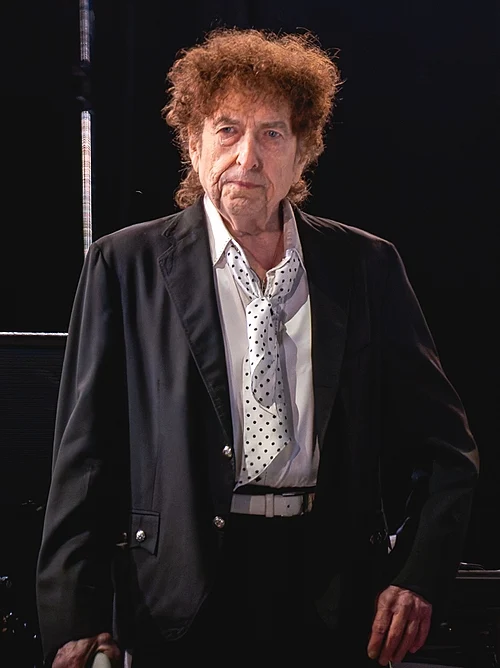
Bob Dylan is an American singer-songwriter. Described as one of the greatest songwriters of all time, Dylan has been a major figure in popular culture over his 69-year career. With an estimated 125 million records sold worldwide, he is one of the best-selling musicians. Dylan added increasingly sophisticated lyrical techniques to the folk music of the early 1960s, infusing it “with the intellectualism of classic literature and poetry”. His lyrics incorporated political, social, and philosophical influences, defying pop music conventions and appealing to the burgeoning counterculture.
Dylan toured incessantly in 1965 and 1966, always playing to sold-out, agitated audiences. In February 1966, at the suggestion of his new producer, Bob Johnston, Dylan recorded at Columbia’s Nashville, Tennessee, studios, along with Kooper, Robertson, and the cream of Nashville’s play-for-pay musicians. A week’s worth of marathon 20-hour sessions produced a double album that was more polished than the raw, almost punklike Highway 61 Revisited. Containing some of Dylan’s finest work, Blonde on Blonde peaked at number nine in Billboard, was critically acclaimed, and pushed Dylan to the zenith of his popularity. He toured Europe with the Hawks (soon to reemerge as the Band) until the summer of 1966, when a motorcycle accident in Woodstock brought his amazing seven-year momentum to an abrupt halt. Citing a serious neck injury, he retreated to his home in Woodstock and virtually disappeared for two years. In 1967 the Band moved to Woodstock to be closer to Dylan. Occasionally they coaxed him into the basement studio of their communal home to play music together, and recordings from these sessions ultimately became the double album The Basement Tapes (1975). In early 1968 Columbia released a stripped-down album of new Dylan songs titled John Wesley Harding. In January 1968 Dylan made his first postaccident appearance at a memorial concert for Woody Guthrie in New York City. His image had changed; with shorter hair, spectacles, and a neglected beard, he resembled a rabbinical student. Dylan returned to Tennessee to record Nashville Skyline (1969), which helped launch an entirely new genre, country rock. It charted at number three, but, owing to the comparative simplicity of its lyrics, people questioned whether Dylan remained a cutting-edge artist. Over the next quarter century Dylan continued to record, toured sporadically, and was widely honoured, though his impact was never as great or as immediate as it had been in the 1960s. His first book, Tarantula, a collection of unconnected writings, met with critical indifference when it was unceremoniously published in 1971, five years after its completion. In 1973 he appeared in director Sam Peckinpah’s film Pat Garrett and Billy the Kid and contributed to the sound track, including “Knockin’ on Heaven’s Door.” Writings and Drawings, an anthology of his lyrics and poetry, was published the next year. In 1974 he toured for the first time in eight years, reconvening with the Band (by this time popular artists in their own right). Before the Flood, the album documenting that tour, reached number three. Released in 1975, Bob Dylan’s Blood on the Tracks was considered a return to lyrical form for the artist. The album, which redefined the power of personal songwriting, topped the Billboard chart, as did Desire, released one year later. In 1975 and 1976 Dylan barnstormed North America with a gypsy-like touring company, announcing shows in radio interviews only hours before appearing. Dylan divorced Sara Lownds, his wife of 12 years in 1977. They had four children, including son Jakob, whose band the Wallflowers experienced pop success in the 1990s. In 1978 Dylan mounted a yearlong world tour and released a studio album, Street-Legal, and a live album, Bob Dylan at Budokan. In a dramatic turnabout, he converted to Christianity in 1979 and for three years recorded and performed only religious material, preaching between songs at live shows. Critics and listeners were, once again, confounded. In 1982, when Dylan was inducted into the Songwriters Hall of Fame, his open zeal for Christianity was waning. Dylan toured again in 1986–87, backed by Tom Petty and the Heartbreakers, and in 1987 he co-starred in the film Hearts of Fire. A year later he was inducted into the Rock and Roll Hall of Fame. In 1989 Dylan once again returned to form with Oh Mercy, produced by Daniel Lanois. As the 1990s drew to a close, Dylan, who was called the greatest poet of the second half of the 20th century by Allen Ginsberg, performed for the pope at the Vatican, was Awarded the Nobel Prize for Literature “for having created new poetic expressions within the great American song tradition”. received a Kennedy Center Honor, and was made Commander in the Order of Arts and Letters (the highest cultural award presented by the French government). In 1998, in a comeback of sorts, he won three Grammy Awards—including album of the year—for Time Out of Mind (1997). In 2006 Dylan released Modern Times, which won a Grammy Award for best contemporary folk album. In 2008 the Pulitzer Prize Board awarded him a special citation for his “profound impact on popular music and American culture.” In 2009 Dylan released Together Through Life, which debuted at the top of the British and American album charts. He was still actively performing as he entered his 70s, and his 35th studio album, the rootsy Tempest (2012), found him as vigorous as ever. Dylan then turned his attention to the so-called Great American Songbook—Shadows in the Night (2015), Fallen Angels (2016), and the three-disc Triplicate (2017)—earned Dylan praise for his deeply felt interpretations. He returned to spectacular lyrical form yet again with Rough and Rowdy Ways (2020).
Sound quality is important and the better online Streaming services will offer superior sound quality. As always, We do encourage you to purchase Favoured albums from good online or High street record stores. Bob Dylan Labels: - Columbia Records
Artists in upcoming issues: steeleye span, crosby, stills and Nash.....Keep Listening!! JOIN THE CONVERSATION...
“Comments are most welcome and appreciated”