Classical Music – issue #11
Classical music generally refers to the art music of the Western world. Classical music is often characterized by formality and complexity in its musical form and harmonic organization. particularly with the use of polyphony, music in which several different tunes are played or sung at the same time. Since the ninth century, it has been primarily a written tradition, spawning a sophisticated notational system.
Rooted in the patronage of churches and royal courts in Europe. early medieval music is Chiefly Religious monophonic and vocal. The Baroque period (1580–1750) saw the relative standardization of common-practice tonality. Together with, the increasing importance of musical instruments, which grew into ensembles of considerable size. The common-practice period was a period in which the tonal system was regarded as the only basis for composition. The word tonality is sometimes used as a synonym for “key.”.In the shorter but pivotal Classical period (1730–1820), composers such as Mozart created widely admired examples of absolute music. including symphonies, string quartets and concertos. Absolute music (sometimes abstract music) is instrumental music not intended to represent or illustrate something else. The ensuing Romantic music (1800–1910) focused instead on programmatic music. the art song, symphonic poem and various piano genres were important vessels. Program music is often written so that the notes themselves convey, to some degree, the meaning of what is portrayed.
Thus the thunderstorm in Beethoven’s symphony includes loud timpani strokes to convey the thunder. The shrill piccolo music to depict the shrieking winds. During this time virtuosity was celebrated, immensity was encouraged, while philosophy and nationalism were embedded. all aspects that converged in the operas of Richard Wagner.By the 20th century, the prominence of popular music greatly increased. Many Classical composers actively avoided past techniques and genres in the lens of modernism. with some abandoning tonality in place of serialism.a serial pattern in music is merely one that repeats over and over within a composition. The term serial music is often used interchangeably with 12-tone music. However, the latter is more properly an example of the former. others found new inspiration in folk melodies or impressionist sentiments.Trends of the mid-20th century to the present day include New Simplicity, New Complexity, Minimalism, Spectral music. more recently Postmodern music and Postminimalism.
Join the Conversation!!!
we will Feature Significant Compositions from Artists representative of the various classical Periods. We Hope to encourage Listeners of all tastes and passions. So Get your Headphones on and Consider discussing the musical Offering and sharing your views with like-minded peers.
In Issue #11, we feature johannes Brahms

Clarinet Quintet in B minor, Op. 115, composed in 1891, is widely celebrated as one of the sublime pinnacles of late-Romantic chamber music. The piece is famous for its deeply introspective, melancholic, and autumnal character, reflecting Brahms’s mastery at the twilight of his career. The work is scored for a clarinet in A playing alongside a standard string quartet (two violins, a viola, and a cello). Rather than treating the clarinet as a virtuosic solo instrument with string accompaniment, Brahms seamlessly weaves all five instruments together into an equal, deeply integrated texture.I. Allegro: Establishes a fluid, yearning atmosphere and introduces the core melodic motifs that bind the entire work. .II. Adagio: A profoundly moving, dreamlike movement with a middle section inspired by Hungarian folk styles and Romani music. III. Andantino – Presto non assai, ma con sentimento: a comforting melody that transitions smoothly into a fleeting, nimble dance. IV. Con moto: bringing the entire work to a heartbreaking, sombre conclusion.Piano Quintet in F minor, Op. 34, is widely considered one of the absolute masterpieces of chamber music. Written for piano and string quartet (two violins, viola, and cello), this dark, powerful, and symphonic work is often referred to as Brahms’s great chamber epic. I. Allegro non troppo: Opens and quickly explodes into a turbulent and fiery drama. II. Andante, un poco adagio: A serene, lyrical respite from the surrounding drama. The piano introduces a tranquil, song-like melody that gently winds through the strings. .
III. Scherzo: Allegro; Starts with an ominous, whispering energy before launching into a triumphant, blazing march. IV. Finale: Poco sostenuto – Allegro non troppo: Begins with a slow, dark, and searching introduction, and concludes with a musical piece that is performed at an extremely fast, rapid tempo

The Piano Concerto No. 1 in D minor, Op. 15, is one of the most monumental and emotionally intense works in the Romantic orchestral repertoire. The masterpiece serves as a staggering testament to a young composer grappling with tragedy, love, and the immense shadow of Beethoven. Its early public reception was brutally hostile; contemporary audiences expecting a light, flashy virtuoso showcase were baffled by its massive scale and symphonic structure. Rather than a traditional vehicle for soloist display, the work operates as a “symphony with piano obbligato,” where the piano and orchestra engage in a titanic, dramatic struggle. I. Maestoso: This colossal movement opens with a thunderous trill in the strings. Built on strict classical sonata form, it relies on innovative, complex harmonies rather than a standalone solo cadenza. II. Adagio: A profound, movement that acts as a tender contrast to the fury of the first. III. Rondo: Allegro non troppo: A jaunty finale built on rhythmic vitality. It incorporates a dense fugato section and a brilliant, rhapsodic cadenza before shifting into a triumphant D major conclusion. Piano Concerto No. 2 in B-flat major, Op. 83 is one of the most monumental and physically demanding symphonic works. Completed in 1881 it captures a mature Brahms at the absolute peak of his creative power. I. Allegro non troppo: Opens with a famously poetic, floating horn call answered directly by the piano. It unfolds into a vast, heroic movement where the soloist is tightly integrated with the orchestra. .
II. Allegro appassionato: The “extra” movement Brahms added because he felt the first movement was too simple. It functions as a stormy, turbulent scherzo that demands extreme power and athletic stamina from the pianist. III. Andante: An intimate, chamber-music-like movement that breathes deep emotion. It begins with a long, gorgeous solo for the principal cello. IV. Allegretto grazioso: A lighter, nimble, and joyful rondo finale. It blends classical elegance with energetic, syncopated Hungarian folk rhythms
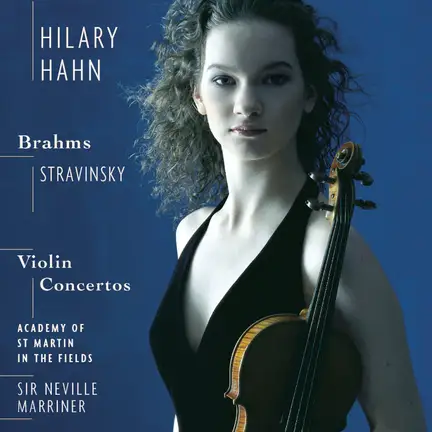
Violin Concerto in D major, Op. 77. Written in 1878, the monumental work was dedicated to and premiered by his close friend, the legendary Hungarian virtuoso Joseph Joachim. I. Allegro non troppo: Taking up nearly two-thirds of the entire piece, this massive movement starts with a quiet orchestral introduction before the violin explodes onto the scene. It features a traditional unwritten cadenza near the end and many virtuosos write or choose their own.
II. Adagio: A serene, deeply lyrical piece. Curiously, the gorgeous main melody is first introduced by a solo oboe, a choice that famously annoyed early violin critics. III. Allegro giocoso, ma non troppo vivace: A highly energetic, rhythmically driving finale structured in rondo form. It heavily incorporates Hungarian folk dance flavours as a direct tribute to Joachim’s heritage.

Symphony No. 1 in C minor, Op. 68, is widely regarded as one of the greatest symphonic masterworks of the Romantic era. Completed in 1876 when Brahms was 43 years old, the piece famously took the perfectionist composer between 14 and 21 years to finish from its initial sketches. The symphony is divided into four contrasting movements: Un poco sostenuto — Allegro: Establishes a stormy mood with a driving, dramatic, and intense introduction marked by a relentless, pounding timpani pulse. Andante sostenuto: A deeply lyrical, radiates a gentler, introspective mood, featuring beautiful solo passages for the violin and oboe. Un poco allegretto e grazioso: A shorter, lighter, and highly graceful intermezzo-style movement. Adagio — Più andante — Allegro non troppo, ma con brio: The massive finale begins with a dark, brooding introduction that transitions into a serene solo horn call which gives way to the famous, uplifting chorale that carries the symphony to a blazing, ecstatic conclusion. Symphony No. 2 in D major, Op. 73, composed in the summer of 1877, is celebrated as a radiant, lyrical, and pastoral masterpiece. It has a warm and sunny disposition and was written in just a few months during a carefree lakeside holiday. in contrast to the First Symphony. I. Allegro non troppo: Opens with a serene, pastoral atmosphere introduced by the horns and woodwinds. II. Adagio non troppo: A more reflective and moodier piece marked by a brooding cello melody accompanied by dark woodwind counterpoint. III. Allegretto grazioso: A light-hearted, rustic intervention with a graceful solo oboe section serving as a rhythmic contrast to the country waltz flavour of the surrounding sections. IV. Allegro con spirito: Begins in a hushed, mysterious whisper before exploding into a blazing, joyful dance. It is widely considered one of the most triumphant finales in music history, culminating in a brilliant, blazing fanfare from the brass. Symphony No. 3 in F major, Op. 90 is a symphonic masterpiece composed in 1883. It stands out as the shortest, most lyrical, and most deeply personal of Brahms’s four symphonies. Unprecedentedly for its time, all four movements fade out quietly rather than ending with a standard, loud symphonic triumph. I. Allegro con brio: Rich in rhythmic and lyrical invention, an expansive, heroic opening movement. II. Andante: A pastoral, hymn-like, and meditative woodwind-heavy movement. the violins are given the chance to shine with an ecstatic crescendo of joy before the coda is allowed to dissolve into silence. III. Poco allegretto: A poignant, melancholy, and incredibly famous movement. A deeply romantic, waltz-like melody that has crossed into pop culture. IV. Allegro — Un poco sostenuto: A stormy, turbulent finale that ultimately dissolves its tension, ending in a shimmering, autumnal peace. Symphony No. 4 in E minor, Op. 98: The composer’s final symphony, widely considered his orchestral masterpiece. Composed during the summers of 1884 and 1885 and celebrated for its deep emotional gravity, structural perfection, and unique blend of Classical forms with rich Romantic expression. I. Allegro non troppo: It opens with a famous, sweeping melody and balances a sense of lyrical beauty with an undercurrent of tragic unrest, concluding with a dramatic, minor-key finish. II. Andante moderato: The opening of the second movement is a forceful statement by two horns, followed by a ravishing passage in which all of the strings play delicate pizzicato chords supporting a sustained melody in the winds, a beautifully orchestrated acoustic landscape.
III. Allegro giocoso: The movement overflows with high spirits and raw energy, with the piccolo and triangle added to the performing forces for extra sizzle. A joyful and boisterous movement. IV. Allegro energico e passionato: A monumental, devastating finale usually characterized as a passacaglia. The main melody is an expansion of a chaconne tune from Bach’s cantata 150.

Johannes Brahms (1833 – 1897) was a German composer, virtuoso pianist, and conductor of the mid-Romantic period. His music features expressive counterpoint, freer dissonance, rhythmic vitality, and traditional forms. His works include four symphonies, four concertos, a Requiem, much chamber music, and hundreds of folk-song arrangements and Lieder (German art songs).
Johannes Brahms was born in 1833. The family then lived in poor apartments in Hamburg and struggled economically. Eventually the father, Johann Jakob, became a musician in the Philharmonisches Staatsorchester Hamburg playing double bass, horn, and flute and the family moved over the years to ever better accommodation in Hamburg. Johann Jakob gave his son his first musical training; Johannes also learned to play the violin and the basics of playing the cello. From 1840 he studied piano with Otto Friedrich Willibald Cossel. At the age of 10, Brahms made his debut as a performer in a private. By 1845 he had written a piano sonata in G minor. His parents disapproved of his early efforts as a composer, feeling that he had better career prospects as a performer. In 1847 Brahms made his first public appearance as a solo pianist in Hamburg, playing a fantasy by Sigismund Thalberg. His first full piano recital, in 1848, included a fugue by Bach. A second recital in April 1849 included a waltz fantasia of his own composition and garnered favourable newspaper reviews. Brahms was later assiduous in eliminating all his juvenilia. Even as late as 1880, he wrote to his friend Elise Giesemann to send him his manuscripts of choral music so that they could be destroyed. In 1850 Brahms met the Hungarian violinist Ede Reményi and accompanied him in a number of recitals over the next few years. This was his introduction to “gypsy-style” music such as the csardas, which was later to prove the foundation of his most lucrative and popular compositions, the two sets of Hungarian Dances. Robert Schumann was greatly impressed and delighted by the 20-year-old’s talent and his accolade led to the first publication of Brahms’s works under his own name.
Brahms went to Leipzig where Breitkopf & Härtel published his Opp. 1–4 (the Piano Sonatas nos. 1 and 2, the Six Songs Op. 3, and the Scherzo Op. 4), whilst Bartholf Senff published the Third Piano Sonata Op. 5 and the Six Songs Op. 6. After the publication of his Op. 10 Ballades for piano, Brahms published no further works until 1860. His major project of this period was the Piano Concerto in D minor, which he had begun as a work for two pianos in 1854 but soon realized needed a larger-scale format. Based in Hamburg at this time, he spent the winters of 1857 to 1860 and for which he wrote his two Serenades (1858 and 1859, Opp. 11 and 16). To this period also belong his first two Piano Quartets (Op. 25 and Op. 26) and the first movement of the third Piano Quartet, which eventually appeared in 1875. In autumn 1862 Brahms made his first visit to Vienna, and soon made it his home. From 1864 to 1876 he spent many of his summers in Lichtental, on the north side of Vienna, where he worked on many of his major compositions, including his middle-period chamber works. In February 1865 Brahms’s mother died, and he began to compose his large choral work A German Requiem, Op. 45, the premier of the completed work was first given in Bremen in 1868 to great acclaim. Brahms also experienced at this period popular success with works such as his first set of Hungarian Dances (1869), the Liebeslieder Waltzes, Op. 52, (1868/69), and his collections of lieder (Opp. 43 and 46–49). Following such successes he finally completed a number of works that he had wrestled with over many years such as the cantata Rinaldo (1863–1868), his first two string quartets Op. 51 nos. 1 and 2 (1865–1873), the third piano quartet (1855–1875), and most notably his first symphony which appeared in 1876, but which had been begun as early as 1855. There followed a succession of well-received orchestral works:

Brahms’s music is defined by its blend of Classical form and Romantic expressivity—a fusion evident in his four symphonies, monumental piano works, and deeply personal chamber music. Though often labelled conservative for his allegiance to structure and tradition, his harmonic daring and rhythmic complexity were thoroughly modern. He was a master of counterpoint, but never at the expense of emotional weight. Mysterious, rigorous, and poetic, Brahms remains a cornerstone of the classical repertoire.
the Second Symphony Op. 73 (1877), the Violin Concerto Op. 77 (1878) and the Academic Festival Overture and Tragic Overture of 1880. In 1882 Brahms completed his Piano Concerto No. 2. The following years saw the premieres of his Third Symphony, Op. 90 (1883) and his Fourth Symphony, Op. 98 (1885). After the successful Vienna premiere of his Second String Quintet, Op. 111 in 1890, the 57-year-old Brahms came to think that he might retire from composition, he also began to find solace in escorting the mezzo-soprano, Alice Barbi. His admiration for Richard Mühlfeld, clarinettist with the Meiningen orchestra, revived his interest in composing and led him to write the Clarinet Trio, Op. 114 (1891); Clarinet Quintet, Op. 115 (1891); and the two Clarinet Sonatas, Op. 120 (1894). In the summer of 1896 Brahms was diagnosed with jaundice and pancreatic cancer, and later in the year his Viennese doctor diagnosed him with liver cancer. His condition gradually worsened and he died on 3 April 1897, in Vienna at the age of 63. Brahms is buried in the Vienna Central Cemetery.
Sound quality is important and the better online Streaming services will offer superior sound quality. As always, We do encourage you to purchase Favoured albums from good online or High street record stores.
Artists in upcoming issues: Richard strauss, franz Liszt, peter Maxwell davies……Keep Listening!! JOIN THE CONVERSATION…