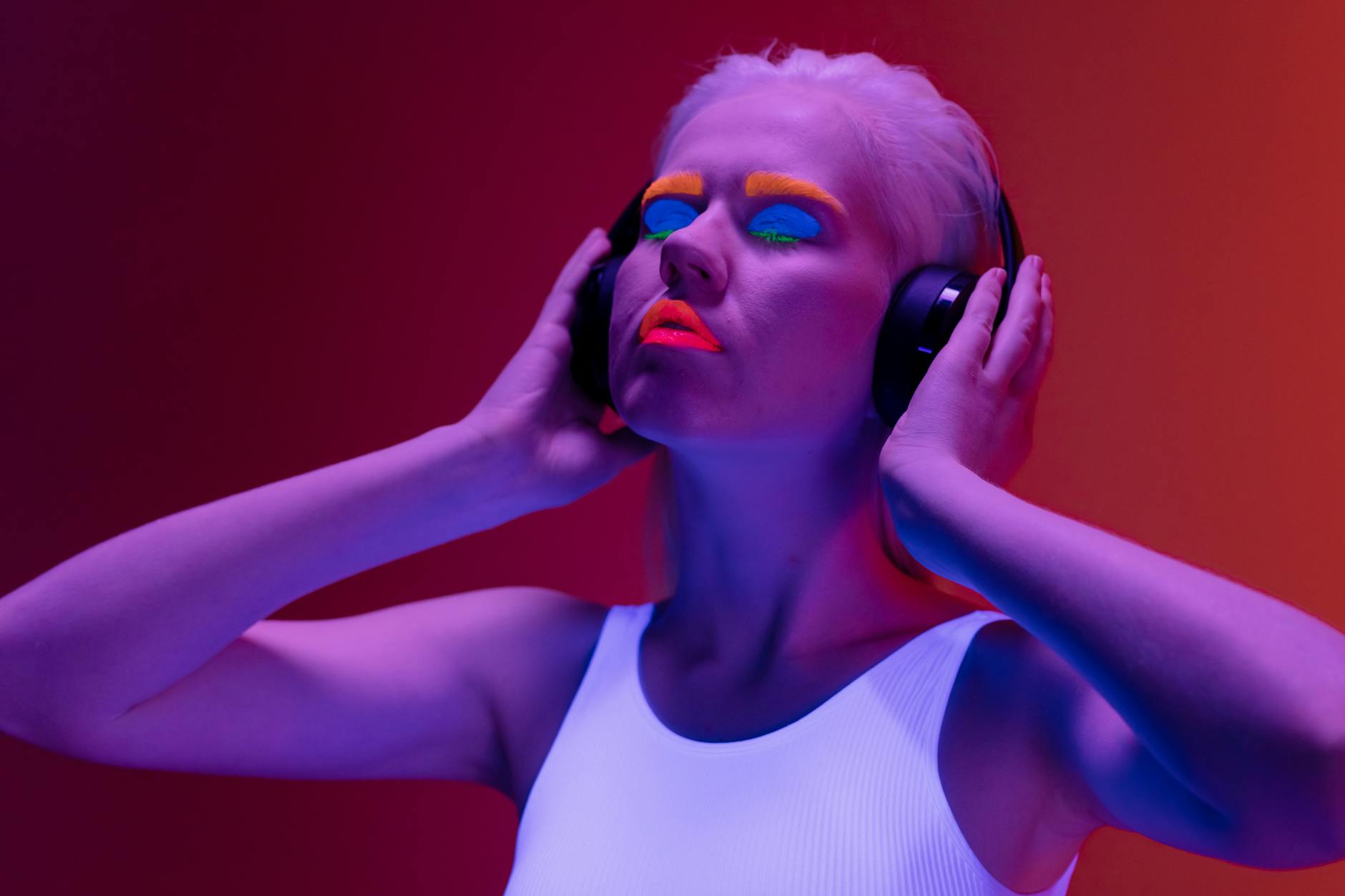
woman with bright neon make up and her eyes closed under blue light holding headset
Hands
She Moves She
First Thing
My Angel Rocks Back and Forth
Spirit Fingers
Unspoken
Chia
As Serious as Your Life
And They All Look Broken Heart
Slow Jam


NOTES

Sound quality is important and some streaming services will offer superior sound quality. We do encourage you to purchase albums from good online record stores. alternatively, stream the music of favoured artists from those better online streaming services.

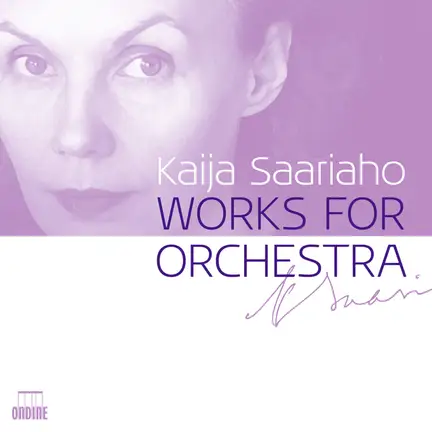
kaija saariaho – Saariaho: Works For Orchestra – Label‏ : ‎ Ondine

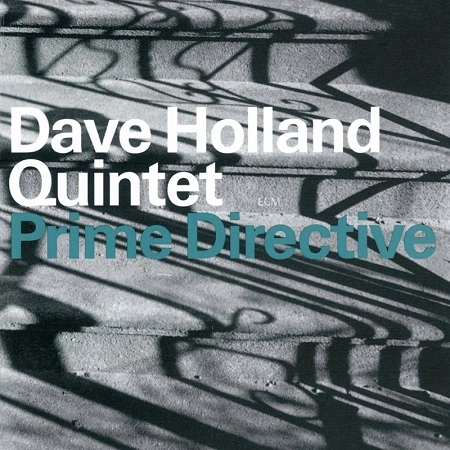
dave Holland – Prime Directive – Label : ECM label

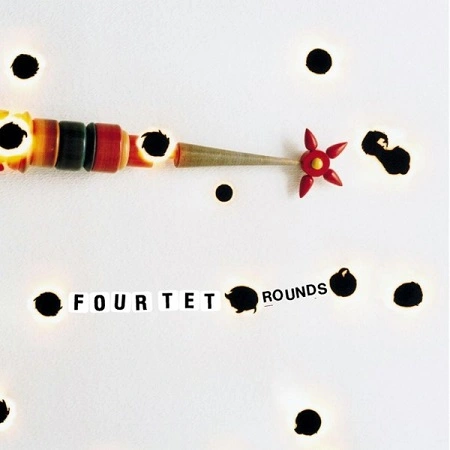
Four Tet – Rounds – Label : Domino Recording Company

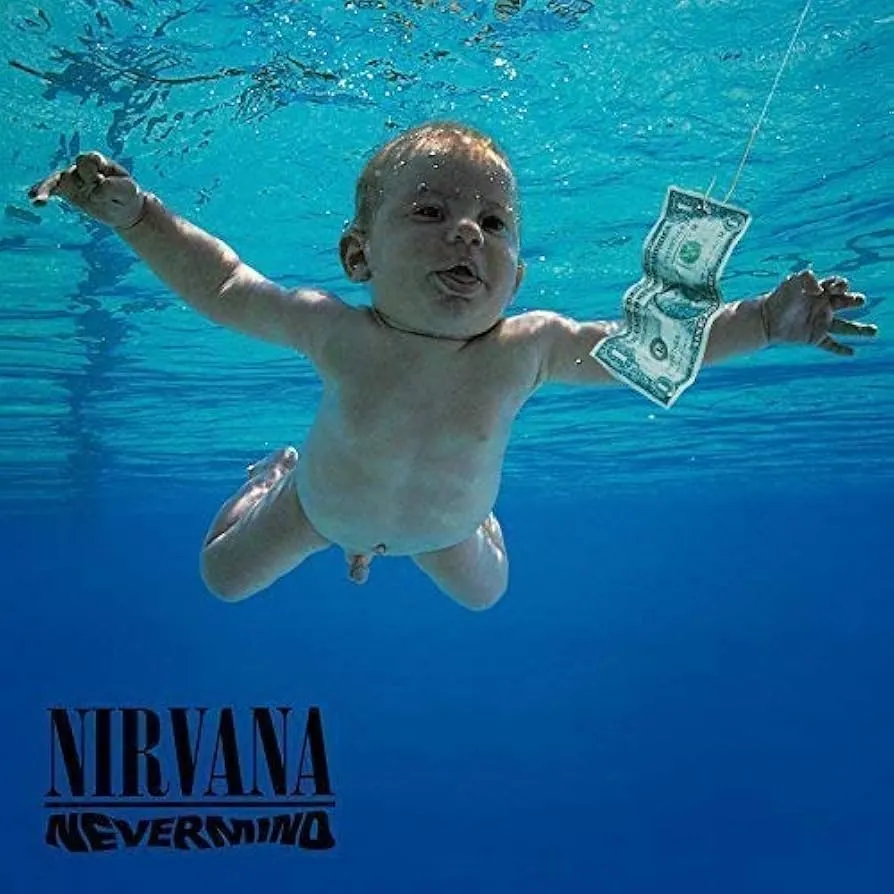
Nirvana – nevermind – Label : DGC Records


It is helpful to research the artist, using sources like Wikipedia , Music Magazine Reviews (Pitchfork, Rolling stone, NME etc.,) Artist Websites, etc…

A synopsis of the life and music of this Issue’s featured artists appears below.

This Week’s Artists

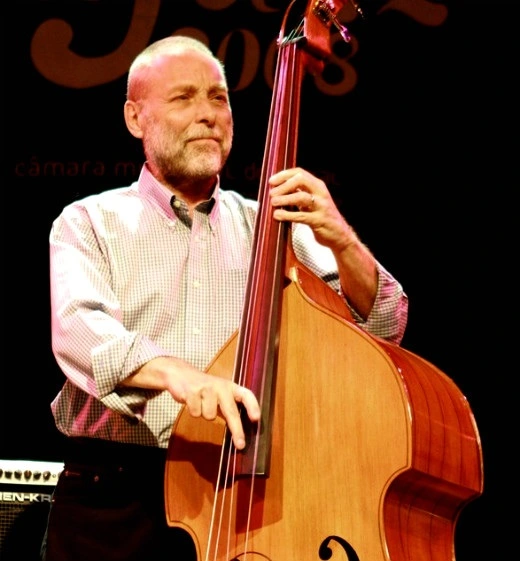
David Holland is an English Born October 1, 1946, in Wolverhampton, England, David Holland is a world-renowned jazz double bassist, composer, and bandleader with a career spanning over five decades. He is a highly influential figure in modern jazz, known for his versatile technique and numerous collaborations. 

Dave Holland

Born in Wolverhampton, England, Holland taught himself how to play stringed instruments, beginning at four on the ukulele, then graduating to guitar and later bass guitar. He quit school at the age of 15 to pursue his profession in a pop band, but soon gravitated to jazz. By his late teens Holland began exploring an expanding palette of jazz styles and it was clear that music was Holland’s calling. After moving to London in 1964, He played double bass in small venues. Holland received a full-time scholarship at Guildhall School of Music and Drama for the three-year programme. At 20, Holland was keeping a busy schedule in school, studios and Ronnie Scott’s Jazz Club where he often played in bands that supported touring American jazz saxophonists. He also began a working relationship with Canada-born, England-based trumpeter Kenny Wheeler that continued until Wheeler’s death in 2014.. In 1968, Miles Davis and Philly Joe Jones heard him at Ronnie Scott’s Jazz Club. Jones told Holland that Davis wanted him to join his band (replacing Ron Carter). Holland’s first recordings with Davis were in September 1968. Holland was also a member of Davis’s working group during this time.


After leaving Davis’s group, Holland briefly joined the avant-garde jazz group Circle, with Chick Corea, saxophonist Anthony Braxton and percussionist Barry Altschul. By 1972, Holland relocated to upstate New York, and began recording under his own name. beginning a long-standing association with the Munich-based ECM label. Holland worked as a leader and as a sideman with many other jazz artists throughout the 1970s. Holland formed his first working quintet in 1983. The bassist also continued to collaborate with his peers. During the 1990s, Holland formed his third quartet in addition to releasing four quintet albums on ECM. Holland also revisited a number of historic collaborations—including the Gateway Trio, and working with Herbie Hancock. His desire to focus on his compositional and arranging skills led to the formation of the Dave Holland Big Band. a group that that led to his notching two Grammy awards for Best Large Jazz Ensemble. category. In 2003, Holland departed ECM and formed his own label, Dare2 Records, on which he has issued almost all of his recent recordings. The National Endowment for the Arts named Holland as one of its five Jazz Masters Fellows in 2017; the award recognizes artists for their lifetime achievements and exceptional contributions toward the advancement of jazz.

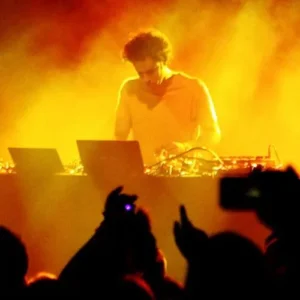
Four Tet is the stage name of Kieran Hebden, an English electronic musician, DJ, and producer known for his innovative blending of electronic music with organic, sample-driven sounds, folk, jazz, and hip-hop. Four Tet remains highly active, both as a solo artist and a sought-after collaborator and DJ.

Four Tet

Kieran Miles David Hebden (born September 1977), known as Four Tet, is an English electronic musician. He came to prominence as a member of the post-rock band Fridge before establishing himself as a solo artist with charting and critically acclaimed albums such as Rounds (2003) Everything Ecstatic (2005) and There Is Love in You (2010). In addition to his twelve studio albums as Four Tet, Hebden’s work includes a number of improvisational works with jazz drummer Steve Reid and collaborations with Burial and Thom Yorke. Kieran Hebden was born in Putney, London, England, to a South African-born Indian mother and a British white sociology lecturer father. He attended Elliott School in Putney, where he formed the band Fridge with classmates Adem Ilhan and Sam Jeffers. The band signed a recording contract when Hebden was 15 and released their first album, Ceefax, on Trevor Jackson’s Output Recordings label in March 1997. While working with Fridge, Hebden began a degree in maths and computer sciences at the University of Manchester. After being a member of Fridge since 1995, Kieran Hebden began releasing solo records under the name Four Tet in 1998. 1999’s Dialogue, again on Output, was Four Tet’s first full-length album release and fused hip hop drum lines with dissonant jazz samples.

Four Tet’s second album Pause was released Through Domino Recording Company and found Hebden using more folk and electronic samples, which was quickly dubbed “folktronica” by the media and press. Rounds was the third solo album Its ten tracks feature elements of hip hop, jazz and folk; apart from a guitar part recorded for “Slow Jam.” His fourth studio album Everything Ecstatic was released on Domino on 23 May 2005.There Is Love in You, a fifth album was released on 25 January 2010. The sixth full-length Four Tet album, Pink was released on 20 August 2012 through Hebden’s own record label, Text Records. Hebden followed up Pink with 0181 on 15 January 2013. a collection of unreleased material from 1997 to 2001 collected as one track and released online. the seventh Four Tet album, Beautiful Rewind, in October 2013, and his eighth Album, Morning / Evening Album, in July 2015. the ninth album New Energy was released in November 2017. In 2020, a tenth album Sixteen Oceans was released in March. Hebden released Three on 15 March 2024. Hebden received two Grammy nominations for his album “Three”, for “Best Dance/Electronic Recording” with “Loved,” and for “Best Dance/Electronic Album.”

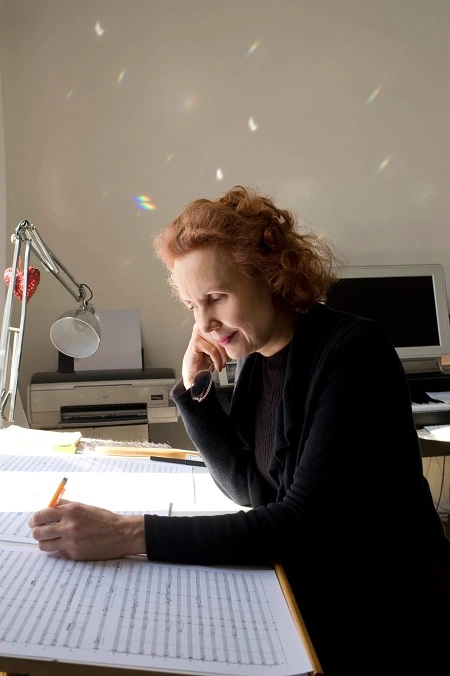
Kaija Anneli Saariaho (4 October 1952 – 2 June 2023) was a Finnish composer based in Paris, France. Renowned for her innovative fusion of acoustic instruments and electronics, creating a distinct sonic palette focused on texture and tone colour. Often considered one of the foremost contemporary composers, she was voted the greatest living composer in a 2019 BBC Music Magazine poll. Saariaho received many major awards throughout her career, including the Grawemeyer Award, the Polar Music Prize, and the Wihuri Prize, and she left behind a significant legacy in contemporary classical music as a pathbreaking and influential composer… 

kAIJA SAARIAHO

Saariaho played violin, guitar and piano growing up,  In university she studied graphic design at the Aalto University School of Arts and piano at the University of Helsinki. She later studied composition at the Sibelius Academy. She moved to Germany to study at the Hochschule für Musik Freiburg  She found her Freiburg teachers’ emphasis on strict serialism and mathematical structures stifling, Saariaho attended a concert of the French Spectralists Tristan Murail and Gérard Grisey. Hearing spectral music for the first time marked a profound shift in Saariaho’s artistic direction and guided her decision to attend courses in computer music that were being given by IRCAM, Paris. marked a turning point in her music away from Strict Serialism towards spectralism. Serialism is a method of musical composition that uses an ordered sequence, or series, of musical elements to structure a piece. Spectral music uses the acoustic properties of sound – or sound spectra – as a basis for composition. Her characteristically rich, polyphonic textures are often created by combining live music and electronics and computer-assisted composition, which defined her signature style. Her music is known for its lush, complex, and often mysterious textures. After her breakthrough piece Lichtbogen for ensemble and electronics in 1986, Saariaho gradually expanded her musical expression to a great variety of genres, and her chamber pieces and choral music have become staples of instru­mental and vocal ensembles, respectively.

Her work in the 1980s and 1990s was marked by an emphasis on timbre and the use of electronics alongside traditional instruments. Nymphéa (Jardin secret III) (1987), for example, is for string quartet and live electronics and contains an additional vocal element.Another example is Six Japanese Gardens (1994), a percussion piece accompanied by a pre-recorded electronic layer of the Japanese nature, traditional instruments, and chanting of Buddhist monks. 1990-1991: Premiere of Du Cristal and …à la fumée, Kaija’s first works for large orchestra, conceived as a diptych, a composition structured in two distinct, complementary, or contrasting parts. 1991: Premiere of the ballet Maa 1995 : Premiere of the violin concerto Graal théâtre inau­gu­rating a long series of successful orchestral works without electronics.

On 1 December 2016, the Metropolitan Opera gave its first performance of L’Amour de loin,

She rose to inter­na­tional pre-em­inence as the composer of works taken up by symphony orchestras around the world, such as Oltra Mar (1999), orion (2002) Laterna Magica (2008) and Circle Map (2012), as well as six concertos (including Notes on Light for cello in 2006), and five major symphonic song cycles Saariaho died in Paris on June 2, 2023, at the age of 70, from an aggressive form of brain cancer. Her final work, a trumpet concerto titled Hush, premiered posthumously.


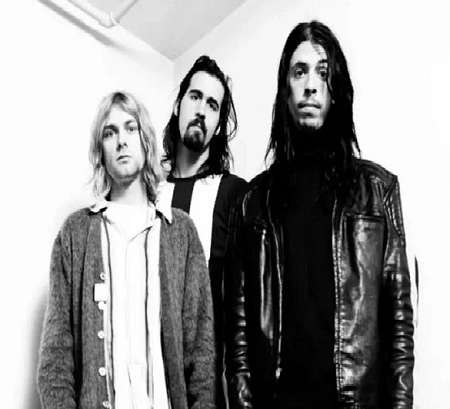
Characterized by a punk aesthetic, Nirvana are credited with bringing alternative rock to the mainstream. Nirvana’s fusion of pop melodies with noise, combined with its themes of abjection and social alienation, brought them global popularity. Following Cobain’s death, numerous headlines referred to Nirvana’s frontman as “the voice of a generation”, although he had rejected such labelling during his lifetime. Their music maintains a popular following and continues to influence rock culture. During its three years as a mainstream act, Nirvana received an American Music Award, Brit Award, and Grammy Award, as well as seven MTV Video Music Awards and two NME Awards. 

nIRVANA

Nirvana was an American rock band formed in Aberdeen, Washington, in 1987. Founded by lead singer and guitarist Kurt Cobain and bassist Krist Novoselic. Their first band, the Sellouts featuring Novoselic on guitar and vocals, Cobain on drums, and Steve Newman on bass but only lasted a short time. The band played under the name Nirvana for the first time on March 19, 1988. The band went through a succession of drummers, most notably Chad Channing, before recruiting Dave Grohl in 1990. Nirvana established itself as part of the Seattle ‘grunge’ scene. They released their first album, Bleach, for the independent record label Sub Pop in 1989. Their sound relied on dynamic contrasts, often between quiet verses and loud, heavy choruses. Disenchanted with Sub Pop, and with the Smart Studios sessions generating interest, Nirvana sought a deal with a major record label since no indie label could buy them out of their contract. Nirvana signed to DGC Records in 1990. Nirvana found unexpected mainstream success with “Smells Like Teen Spirit”, the first single from its landmark second album, Nevermind (1991). By Christmas 1991, Nevermind was selling 400,000 copies a week in the US.  In March 1992, Cobain sought to reorganize the group’s songwriting royalties. Grohl and Novoselic did not object, but when Cobain wanted the agreement to be retroactive to the release of Nevermind, the disagreements came close to breaking up the band.

 For their third album, In Utero (1993), Nirvana chose producer Steve Albini, who had a reputation as principled and opinionated in the American indie music scene. While the stories about DGC shelving the album were untrue, the band was unhappy with certain aspects of Albini’s mixes. when released In Utero topped the American and British album Charts, In early 1994 at the end of a European Tour , Courtney Love, found Cobain unconscious in their hotel in rome and he was rushed to the hospital. Cobain had reacted to a combination of Prescribed rohypnol and alcohol. In the weeks following his hospitalization, Cobain’s heroin addiction resurfaced. He was persuaded to enter drug rehabilitation, but withdrew after a week and returned to Seattle. On April 6, 1994, it was announced a cancellation of a Nirvana tour due to Cobain’s ongoing health problems, with reports that they had broken up. Two days later, on April 8, Cobain was found dead of a self-inflicted shotgun wound to the head at his home in the Denny-blaine neighbourhood of the city. He had died approximately three days earlier. Nirvana disbanded following Cobain’s suicide in April 1994. Further releases have been overseen by Novoselic, Grohl, and Cobain’s widow, Courtney Love.