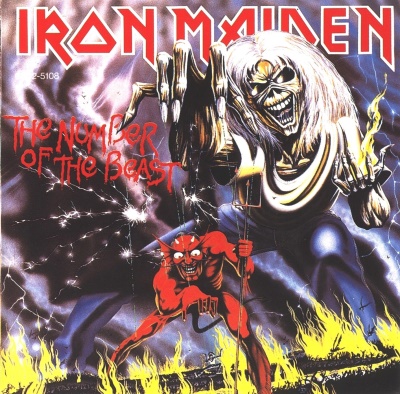
The Number of the Beast is the third studio album by English heavy metal band Iron Maiden. It is widely considered one of the most influential metal albums of all time. It was the first album to. It was the last album for drummer Clive Burr, who was later replaced by Nicko McBrain. The title track and artwork, featuring the mascot Eddie controlling Satan like a puppet, sparked “Satanic Panic” in the US, leading to organized record burnings. The album’s intensity never lets up, the musical technique is peerless for its time, and there isn’t a truly unmemorable song in the bunch. Blessed with a singer who could drive home a melody in grandiose fashion.

invaders
Children Of The Damned
The Prisoner
22 Acacia Avenue
The Number Of The Beast
Run To The Hills
Gangland
Total Eclipse
Hallowed Be Thy Name

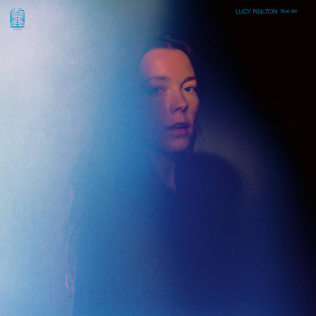
Blue Veil is a solo studio album. The work is a 40-minute exploration of the acoustic characteristics of the cello, recorded at the Église du Saint-Esprit in Paris. Wonderful, deeply layered music. The music avoids traditional melodies, instead using sustained bowed phrases to create vibrating, pulsating “blocks of sound” that emphasize the physical experience of the instrument. The cellist described the experience of playing her instrument as like “standing next to a guitar amp,” and Blue Veil does everything it can to make you feel the vibrations short of grabbing your face and pressing it up against the strings. This is Railton’s first solo cello album, but she’s been a regular presence in the classical avant-garde for a while, organizing a long-running concert series at London’s Café Oto and co-founding the London Contemporary Music Festival in between gigs with the likes of Bat for Lashes and Bonobo, and Bach recordings on ECM.

Phase I
Phase II
Phase III
Phase IV
Phase V
Phase VI
Phase VII

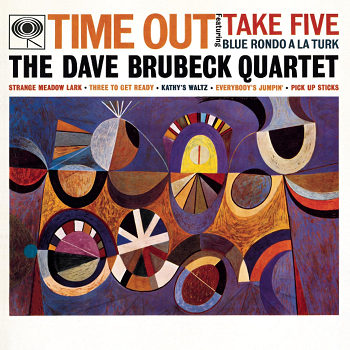
Time Out is a landmark studio album by the American jazz group the Dave Brubeck Quartet, released by Columbia Records on 14 December 1959. It is widely celebrated as one of the most commercially successful and rhythmically innovative jazz records of all time. It was added to the Library of Congress National Recording Registry for its cultural and historical significance. The album was a “bold experiment” focused on using unusual time signatures that were rarely heard in jazz at the time. The “Classic Quartet” featured Dave Brubeck (piano), Paul Desmond (alto saxophone), Eugene Wright (double bass), and Joe Morello (drums). Dave Brubeck, pioneer already in so many other fields, is really the first to explore the uncharted seas of compound time. True, some musicians before him experimented with jazz in waltz time, notably Benny Carter and Max Roach. But Dave has gone further, finding still more exotic time signatures, and even laying one rhythm in counterpoint over another. The outcome of his experiments is this album. Basically, it shows the blending of three cultures: the formalism of classical Western music, the freedom of jazz improvisation, and the often-complex pulse of African folk music. Brubeck even uses, in the first number, a Turkish folk rhythm.

Blue Rondo A La Turk
Strange Meadow Lark
Take Five
Three To Get Ready
Kathy’s Waltz
Everybody’s Jumpin’
Pick Up Sticks

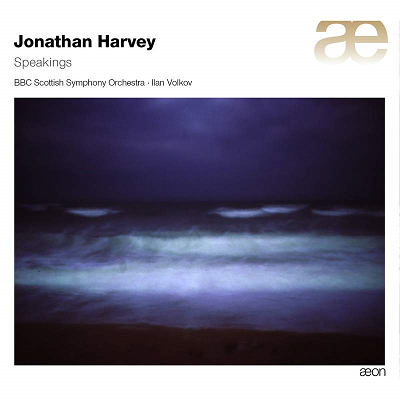
His quartet cycle explores the physical nature of sound—and its fusion of technical innovation. String Quartet No. 1 A 15-minute, single-movement essay on “shimmering sounds.” It focuses on the inner life of sound, starting with subtle inflections on a single note. String Quartet No. 2 Features a “melodic chain” where themes are characterised as ‘male’ or ‘female’ and ‘hot’ or ‘cold,’ reaching a resolution with a high cello melody. String Quartet No. 3  Explores insubstantial textures, including microtones, shadowy harmonics, and audible breathing from the performers. String Quartet No. 4 Incorporates live electronics. Tiny instrumental noises are amplified and transformed into “electronic shadows,” creating an immersive, spatialized experience.

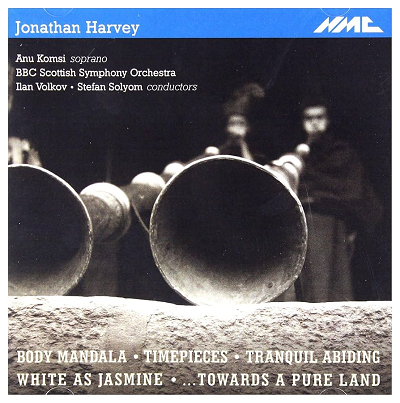
Body Mandala is a powerful orchestral composition It is part of a spiritual triptych that explores Buddhist concepts focusing on the purification of the body. …tranquil Abiding is a Buddhist term referring to a state of single-pointed concentration achieved through meditation. The piece is structured around a single, slow breathing rhythm that persists throughout the entire work. timepieces is a three-part work that famously requires two conductors.

The conductors beat at different tempi, causing groups of instruments to stretch and reconfigure the listener’s perception of time.

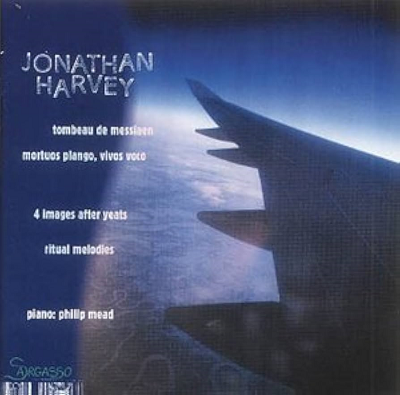
4 images after yeats is a solo piano composition comprising a collection of four short movements, each reflecting on specific fragments or symbols from the poetry of W.B. Yeats. Mortuos Plango, Vivos Voco is a landmark electroacoustic composition. the nine-minute piece is a “classic” of the spectral music tradition. Harvey conceived the work as a dialogue between the “dead” sound of the bell and the “living” sound of a human voice.

String Quartet № 1 (1977)
String Quartet № 2 (1988)
String Quartet № 3 (1995)
String Quartet № 4 with electronics (2003)
String Trio (2004)


Body Mandala
…Towards a Pure Land
Tranquil Abiding
Timepieces- I. —
Timepieces- II. —
Timepieces- III. —

4 Images After Yeats- I
4 Images After Yeats- II
4 Images After Yeats- III
4 Images After Yeats- IV
Mortuos Plango, Vivos Voco

NOTES

Sound quality is important and some streaming services will offer superior sound quality. We do encourage you to purchase albums from good online record stores. alternatively, stream the music of favoured artists from those better online streaming services.

jonathan Harvey – String quartets – Label : Aeon; timepieces, etc., -Label : NMC recordings ; 4 images after Yeats, etc., – label : sargasso

dave Brubeck – Time Out – Label : columbia Records

Lucy Railton – blue veil – Label : Ideologic Organ

Iron Maiden – the Number of the beast – Label : eMI Records

It is helpful to research the artist, using sources like Wikipedia , Music Magazine Reviews (Pitchfork, Rolling stone, NME etc.,) Artist Websites, etc…

A synopsis of the life and music of this Issue’s featured artists appears below.

This Week’s Artists

Jonathan Harvey

Jonathan Harvey can be thought of as an English Stockhausen: he is perhaps best known for integrating electronically generated sound with live music in the service of a mystical outlook with many (especially non-Western) philosophical influences. However, Harvey’s large output also contains many accessible choral pieces and acoustic avant-garde works for orchestra or chamber ensemble. While a student at Cambridge, Harvey studied composition privately with Erwin Stein and Hans Keller (following the advice of Benjamin Britten), from whom he learned the basics of serial technique. In 1966, Harvey had a “Stockhausen conversion,” and the German composer’s alternately complex and simple textures in the instrumental pieces written from the late-’60s through the 1970s, such as Quantumplation (1973) for chamber ensemble.Harvey spent much of the 1980s at IRCAM, the new-music research centre in Paris under the direction of Pierre Boulez.

In the first compositional result of this period, Mortuos plango, vivos voco (1980), Harvey combined the sound of his son’s singing with that of a bell at Winchester Cathedral, with an effect similar to that of Stockhausen’s Gesang der Jünglinge. Another important composition was Ritual Melodies (1990) for tape, in which Harvey continually transforms synthesized instrumental and vocal sounds and their associated melodies. Harvey has taught in various English and American universities, and in 1995 began teaching composition at Stanford University in California.


Iron Maiden

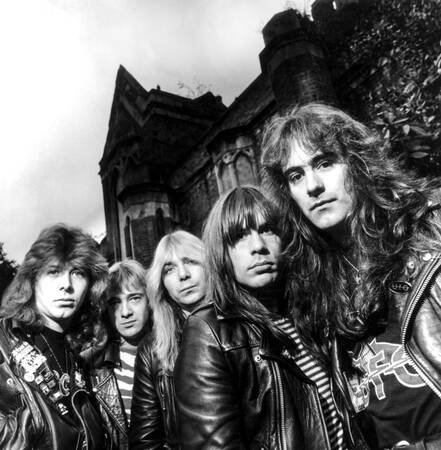
Iron Maiden is an iconic English heavy metal band formed in 1975 by bassist Steve Harris. Celebrated as pioneers of the New Wave of British Heavy Metal, they have sold over 130 million albums and are known for their “galloping” rhythm, historical lyrics, and famous mascot, Eddie. In the 50 years since bassist Steve Harris’ vision was born in East London, Iron Maiden have grown to become nothing less than an institution. By 1980 Iron Maiden had already earned themselves a cast-iron reputation for ferocious live shows and a fiercely loyal following to match. Inspired by heavy rock and tempered by the heat of the burgeoning New Wave of British Heavy Metal.

theirs was an upward ascent that would culminate in a landmark self-titled album debut which would immediately elevate them above their peers and serve as the prologue to a truly remarkable story that has captured the imagination of music lovers of every country, colour and creed. Emblazoned with the totemic image of Eddie, it was nothing less than a groundbreaking statement of intent.

Many more would follow. The rapturous response to the 1981 follow-up Killers would confirm the growing suspicion that this was a band in a class of its own, and ensuing tours of Japan and the States as well as the UK and Europe would affirm both Maiden’s international appeal and their relentless commitment to reach fans, wherever they are. However, it was really the release of their third album – The Number Of The Beast – and a bold line-up change which would see original singer Paul Di’Anno replaced Bruce Dickinson that would set the scene for the epic chapters to come. A chart-smashing success, it would kick off a decade of now-classic annual releases and dogged touring that would come to epitomise the indefatigable gallop that Maiden are so well known for. That marvellous decade would also yield seven new studio albums and the influential concert album Live After Death…. almost entirely without the acknowledgent of mainstream media.

Lucy railton

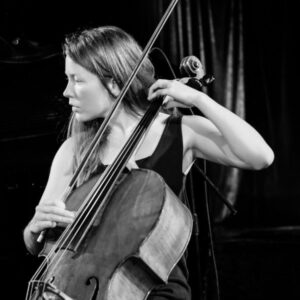
Railton studied cello at the New England Conservatory in Boston, and at the Royal Academy of Music in London, where she graduated in 2008.In the field of improvisational music. During the same year, she established the new music series Kammer Klang, and she later co-founded the London Contemporary Music Festival. For the last 2 decades, her work has moved freely between Classical and contemporary music, electronic composition, improvisation and popular music performance, as well as writing for dance, film and visual art installations.Her solo album Blue Veil is a deeply intimate, meditative set of compositions for solo cello, released this year on the label Ideologic Organ. Railton has undertaken collaborations and shared performances and also appeared on recordings by numerous jazz, folk, electronic, and indie rock artists. In addition, Railton has worked as a soloist and chamber musician, alongside playing with ensembles such as London Sinfonietta. In her programs as a soloist, she has interpreted canonical works, such as those by J.S. Bach or Giacinto Scelsi, as well as pieces by lesser-known and younger composers.

Dave Brubeck

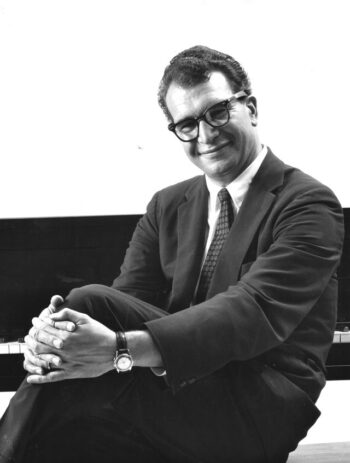
David Warren Brubeck (1920 –2012) was an American jazz pianist and composer. Often regarded as a foremost exponent of cool jazz, Brubeck’s work is characterized by unusual time signatures and superimposing contrasting rhythms, meters, and tonalities, and combining different styles and genres, such as classical, jazz, and blues. He grew up in the rural town of Ione, California. His father, Peter Howard “Pete” Brubeck, was a cattle rancher. His mother, Elizabeth taught piano. After graduating in 1942, Brubeck was drafted into the United States Army. He created one of the U.S. armed forces’ first racially integrated bands, “The Wolfpack”. In the military in 1944, Brubeck met Paul Desmond.he returned to California for graduate study at Mills College in Oakland. He was a student of composer Darius Milhaud’s. In 1949, Coronet Records were to make the first recording of Brubeck’s octet and later his trio.

In 1951, Brubeck organized the Dave Brubeck Quartet, with Paul Desmond on alto saxophone. The two took up residency at San Francisco’s Black Hawk nightclub and had success touring college campuses, recording a series of live albums. Brubeck was featured on the cover of Time in November 1954, the second jazz musician to be featured, following Louis Armstrong in February 1949. In 1959, the Dave Brubeck Quartet recorded Time Out. The album, which featured pieces entirely written by members of the quartet, notably uses unusual time signatures—especially for jazz—about which Columbia Records was enthusiastic, but was nonetheless hesitant to release. Time Out was followed by several albums with a similar approach. These albums (except Time In) were also known for using contemporary paintings as cover art.