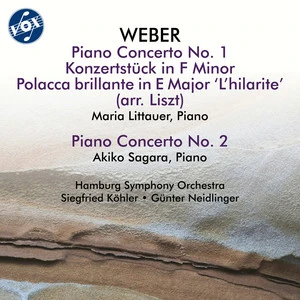
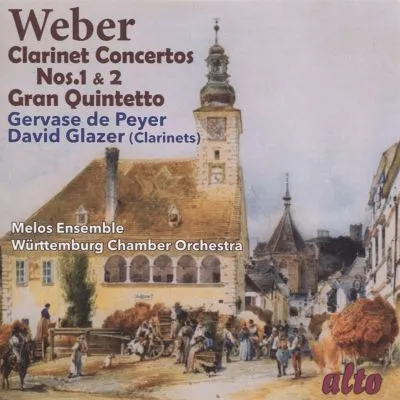
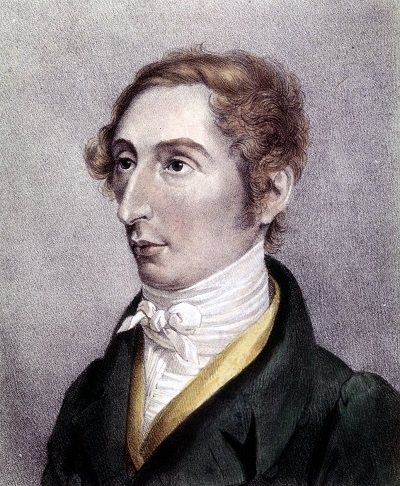
Moving on to Darmstadt, he met Vogler again, as well as the German opera composer Giacomo Meyerbeer. From this period came principally the Grand Concerto No. 1 in C Major, Opus 11, for piano, and the delightful one-act opera Abu Hassan (1811). Weber travelled on to Munich, where his friendship with the clarinet virtuoso Heinrich Bärmann led to the writing of the Concertino, Opus 26, and two brilliant, inventive clarinet concerti. Weber was also one of music’s great piano virtuosos; his own music reflects something of the brilliance and melancholy and exhibitionist charm described by his contemporaries when he performed it. From 1809 to 1818 Weber also wrote a considerable number of reviews, poems, and uncompromising, stringent music criticisms. All his work, music, and critical writings furthered the ideals of Romanticism as an art in which feeling took precedence over form and heart over head. Appointed conductor of the opera at Prague in 1813, Weber was at last able to put his theories into full practice. Now happily married, he applied himself energetically to his work, assuming full control over all aspects of the operatic production. No detail escaped him. He produced several works during this period, including the last of his four piano sonatas, many songs and shorter piano solos, such as the famous Invitation to the Dance (1819), and the Konzertstück, Opus 79 (1821), for piano and orchestra. In 1821 in the opera Der Freischütz Weber not only helped liberate German opera from French and Italian influences, but, in his novel orchestrations and in his choice of a subject matter containing strong supernatural elements, he laid the foundations of one of the principal forms of 19th-century opera. Der Freischütz made Weber a national hero. When Covent Garden in London commissioned a new opera, Weber took on the task of learning English and working with a librettist, James Robinson Planché, by correspondence. Weber was already suffering from tuberculosis when he visited London. In form, Oberon was little to his taste, having too many spoken scenes and elaborate stage devices for a composer who had always worked for the unification of the theatrical arts in opera. But into it he poured some of his most exquisite music, and he travelled to London for the premiere in 1826. Oberon was a success and Weber was feted, but his health was declining fast. Shortly before he was due to start the journey back to Germany, he was found dead in his room, he was 39 years old.