In This issue #14 we highlight 4 artists and some significant works
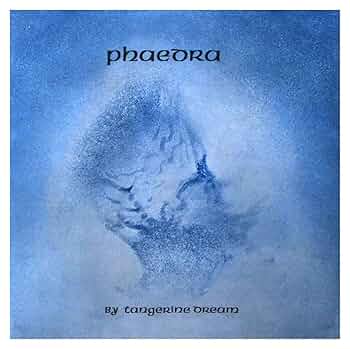
Phaedra is the fifth studio album by German electronic pioneers Tangerine Dream. It is widely considered one of the most influential works in electronic music. Commercially successful despite having almost no radio airplay. It was the first Tangerine Dream album to heavily utilize the Moog modular synthesizer and its analog sequencer. Tracklist: Phaedra: A massive 17-minute title piece. Allmusic reviewed Phaedra as one of the most important, artistic, and exciting works in the history of electronic music, best heard on the title track, unparalleled before or since for its depth of sound and vision. Given focus by the arpeggiated trance that drifts in and out of the mix, the track progresses through several passages including a few surprisingly melodic keyboard lines and an assortment of eerie Moog and Mellotron effects, gaseous explosions, and windy sirens. Despite the impending chaos, the track sounds more like a carefully composed classical work than an unrestrained piece of noise. there are three other excellent tracks on Phaedra. Mysterious Semblance at the Strand of Nightmares: A solo Edgar Froese track featuring lush Mellotron textures. Movements of a Visionary: An experimental piece known for its “scuttling” synth sounds. Sequent ‘C’: A shorter, flute-based finale.
PhaedraMysterious Semblance at the Strand of NightmaresMovements of a VisionarySequent C’
Mesmerism is a beautiful, swinging trio meeting led by drummer Tyshawn Sorey featuring two musicians whom he has considered his closest colleagues: pianist Aaron Diehl and bassist Matt Brewerby. A review from DownBeat Magazine described it as “wonderfully simple, yet breathtakingly deep”. Sorey released this project as an intentional nod to his roots in the straight-ahead jazz tradition. The album consists entirely of interpretation covers of jazz standards and pieces by influential composers, emphasizing loose melody and natural rhythmic interplay over intense abstraction. While a straightforward approach applies to “Enchantment” by Horace Silver, “Two Over One” by Muhal Richard Abrams and the closing “REM Blues” by Duke Ellington. his handling of the yearning romanticism of ‘Autumn Leaves’, a standard that can turn to slush if not treated with a degree of imagination, underlines his listening as well as playing skills. alterations become readily apparent on the remaining selections. On “Detour Ahead,” for example, Sorey, a self-described Bill Evans aficionado, tips his hat to the late master with an arrangement that ‘constantly ‘detours’ from the original key. Later, in Sorey’s treatment of Paul Motian’s “From Time to Time,” the song is nearly unrecognizable, they transform the song into a dense fog as bass and piano notes bump into one another, searching for an exit. Only in the final moments do they introduce the central melody of the original composition.
EnchantmentDetour AheadAutumn LeavesFrom Time To TimeTwo Over OneREM Blues
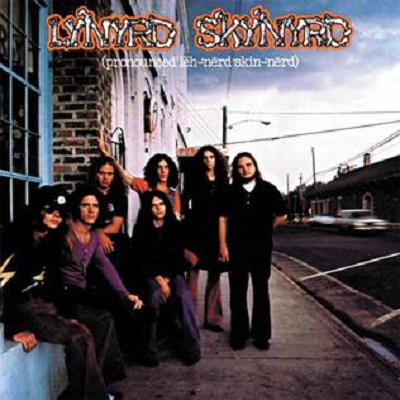
The band was so aware of how confusing their unique spelling could be that they titled their 1973 debut album (Pronounced ‘Lĕh-‘nérd ‘Skin-‘nérd). The album received acclaim from music critics, and brought the band to the forefront of the Southern rock genre in the 1970s. It was an immediate sensation, thanks to the interplay of its three lead guitars. The album features several of Southern rock’s most iconic anthems, including “Free Bird,” “Simple Man,” “Tuesday’s Gone,” and “Gimme Three Steps”. It is widely considered a masterpiece of the genre, ranking on Rolling Stone’s list of the greatest albums ever made. It was produced by Al Kooper and recorded at Studio One in Doraville, Georgia. On release it immediately put the band on the rock-and-roll map. Rock journalist Robert Christgau acknowledged the quality of the songs and gave the album an “A” rating while referring to Lynyrd Skynyrd as a “staunchly untranscendent band”. Kooper, a close friend of Pete Townshend, secured the band a spot opening for the Who on their American tour, and Lynyrd Skynyrd was subsequently exposed to much larger audiences than they had ever seen before.
I Ain’t The OneTuesday’s GoneGimme Three StepsSimple ManThings Goin’ OnMississippi KidPoison WhiskeyFree Bird
His quartet cycle explores the physical nature of sound—and its fusion of technical innovation. String Quartet No. 1 A 15-minute, single-movement essay on “shimmering sounds.” It focuses on the inner life of sound, starting with subtle inflections on a single note. String Quartet No. 2 Features a “melodic chain” where themes are characterised as ‘male’ or ‘female’ and ‘hot’ or ‘cold,’ reaching a resolution with a high cello melody. String Quartet No. 3 Explores insubstantial textures, including microtones, shadowy harmonics, and audible breathing from the performers. String Quartet No. 4 Incorporates live electronics. Tiny instrumental noises are amplified and transformed into “electronic shadows,” creating an immersive, spatialized experience.
Body Mandala is a powerful orchestral composition It is part of a spiritual triptych that explores Buddhist concepts focusing on the purification of the body. …tranquil Abiding is a Buddhist term referring to a state of single-pointed concentration achieved through meditation. The piece is structured around a single, slow breathing rhythm that persists throughout the entire work. timepieces is a three-part work that famously requires two conductors.
The conductors beat at different tempi, causing groups of instruments to stretch and reconfigure the listener’s perception of time.
The Bassoon Concerto in F Major, Op. 75 (J. 127) is one of the most prominent works in the bassoon repertoire, and Matthias Rácz is widely celebrated for his interpretation of it. The concerto consists of three movements in the standard fast-slow-fast pattern: Rondo: Allegro (F major) – the bassoon enters triumphantly with the first full statement of the movement’s militaristic first theme. Allegro ma non troppo (F major) – The melody could easily be sung and is arguably one of the most beautiful melodies written for the solo bassoon.Adagio (B♭ major) – At the end of the piece after the final statement of the theme, the bassoonist engages in a flurry of scales and arpeggios, showing off in one of the bassoon repertoire’s flashiest and most virtuosic finales.
Concerto for Double String Orchestra – 1. Allegro con brioConcerto for Double String Orchestra – 2. Adagio cantabileConcerto for Double String Orchestra – 3. Allegro moltoFantasia Concertante on a Theme of CorelliSymphony No.1 – 1. Allegro Vigoroso, Quasi Alla BreveSymphony No.1 – 2. AdagioSymphony No.1 – 3. PrestoSymphony No.1 – 4. Allegro Moderato Ma Con Brio E Più Tarde CondelicatezzaSymphony No.2 – 1. Allegro VigorosoSymphony No.2 – 2. Adagio Molto & TranquilloSymphony No.2 – 3. Presto VeloceSymphony No.2 – 4. Allegro ModeratoPiano Concerto- I. Allegro non troppoPiano Concerto- II. Molto lento e tranquilePiano Concerto- III. VivacePiano Sonata No. 1- I. AllegroPiano Sonata No. 1- II. Andante molto tranquilloPiano Sonata No. 1- III. PrestoPiano Sonata No. 1- IV. Rondo giocoso con motoPiano Sonata No.2
in further issues we will continue to Bring you the music of Popular genres to listen, review and evaluate. issue #15 (coming soon) features Cocteau Twins , floating Points, Courtney Pine and Leonard Bernstein
NOTES
Sound quality is important and some streaming services will offer superior sound quality. We do encourage you to purchase albums from good online record stores. alternatively, stream the music of favoured artists from those better online streaming services.
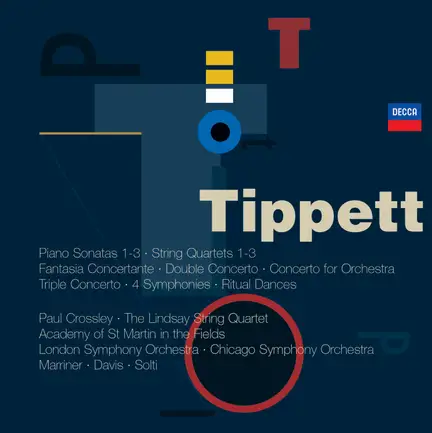
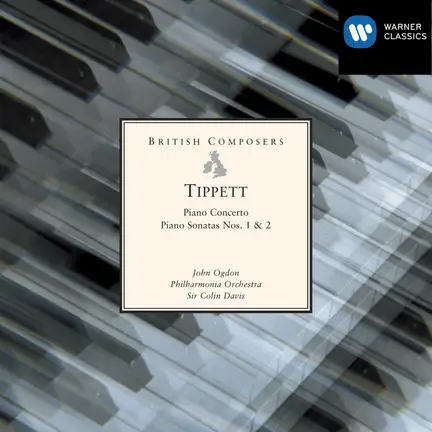
Michael Tippett – Concerto for Double String Orchestra – Label : Decca ; Piano Concerto – Label : Warner Classics ; Symphonies – label : hyperion
It is helpful to research the artist, using sources like Wikipedia , Music Magazine Reviews (Pitchfork, Rolling stone, NME etc.,) Artist Websites, etc…
A synopsis of the life and music of this Issue’s featured artists appears below.
This Week’s Artists
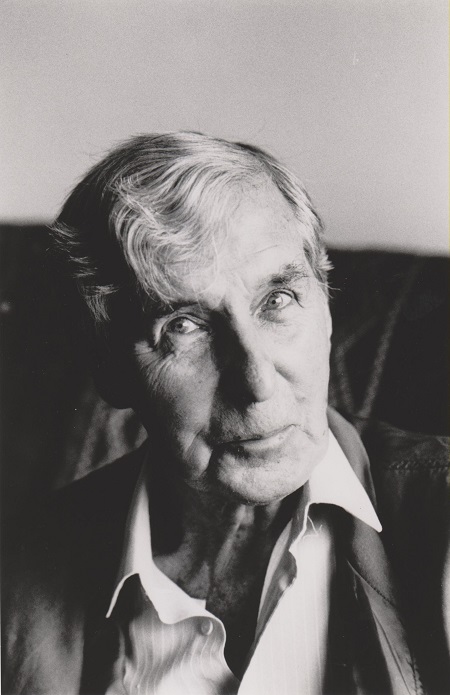
Tippett was a composer of risk and originality; his imagination often ran ahead of performers, audiences and critics. Early pieces, once dismissed, are now thought masterpieces of British composition.“Up there with the greatest twentieth-century composers, on an international level.”— Sir Andrew Davis
Michael Tippett
He was brought up in Suffolk, his childhood largely overtaken by his mother’s fierce commitment to the women’s suffrage movement. It was an innate sense that he should respond creatively to global events, rather than any natural talent, that led to his studying at the Royal College of Music. His twenties and thirties were given over to compositions, now withdrawn, that he later decided were weakened by lack of originality and a devotion to left-wing politics. Aghast at the Great Depression and the threat of fascism, Tippett initially dedicated much of his time to political endeavours, not least major musical projects formed to boost the morale of unemployed miners in the north of England. His initial difficulties in accepting his homosexuality led him in 1939 to Jungian psychoanalysis; the Jungian dichotomy of “shadow” and “light” remained a recurring factor in his music. A break-down of a major love affair and a subsequent period of Jungian therapy coincided with the outbreak of the Second World War, leading Tippett to reject violence of any persuasion – Trotskyian, Hitlerian, Churchillian – in favour of an ardent and absolute pacifism. He registered as a conscientious objector, and his refusal to comply with the terms of his exemption from military service led to his serving two months in HMP Wormwood Scrubs. By the end of the war, he had produced a clutch of powerful works, characterized by imaginative counterpoint and an eclectic list of influences from Beethoven to blues: two string quartets, a symphony, the Concerto for Double String Orchestra, and A Child of Our Time, an oratorio woven around the events of Kristallnacht.
In 1951 Tippett resigned as Director of Music at Morley College, an adult education college in South London, where he had created a music department of historic significance, the choir and orchestra championing and even broadcasting then-neglected figures from the Renaissance and Baroque. The post-war years saw Tippett dedicated to the lushly-orchestrated lyricism of his first mature opera, The Midsummer Marriage, and its satellite works, chief among them his piano concerto, and the Fantasia Concertante on a Theme of Corelli. Critical reception was either politely perplexed or openly hostile, an attitude only exacerbated by the breakdown of his second symphony at its first performance, in 1958. Undeterred, Tippett reinvented himself musically with his second opera, King Priam (a re-telling of Homer’s Iliad), splintering the orchestra into a jagged mosaic of juxtaposed motifs, alternately harsh and lyrical. Praise of King Priam and the works it gave rise to – The Vision of Saint Augustine and a concerto for orchestra – coincided with a reappraisal of earlier pieces to cement Tippett’s reputation as one of the country’s leading composers. He was knighted in 1966. Operas three and four – The Knot Garden and The Ice Break – were rapturously reviewed, younger audiences thrilling to the septuagenarian Tippett’s grappling with twentieth-century life in a soundworld that now fizzed with jazz and blues, the orchestra augmented with electric guitars and a drum kit. His commissions became international and lucrative; happy to appear on television chat shows wearing brilliant and eccentric outfits, he was something of a celebrity. In 1979 he was made a Companion of Honour, and four year later was appointed a Member of the Order of Merit. He enjoyed a mainly vigorous old age, reintroducing to his music a lyricism some thought had gone for good: the Triple Concerto; a large-scale setting of Yeats’s “Byzantium”; and a further two symphonies, one culminating with a set of blues songs in dialogue with Beethoven’s Ninth, the other incorporating the pre-recorded sound of human breath. For his ninetieth-birthday celebrations, working with an amanuensis as a result of macular degeneration, he produced a final blaze of instrumental colour in The Rose Lake, a ‘song without words for orchestra’. By his and the century’s seventies he had settled into a lasting relationship with the music writer Meirion Bowen, though continued to live alone in the Wiltshire countryside. He died aged ninety-three, in January 1998; his obituaries proclaimed a composer to rank alongside Elgar, Vaughan Williams, and Britten.
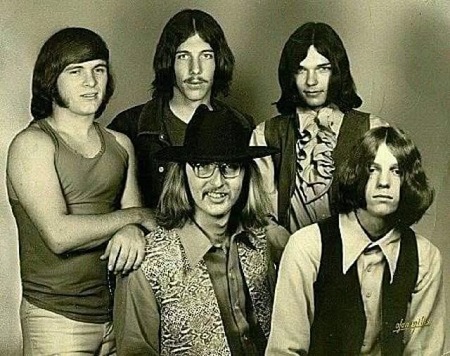
With over 28 million records sold in the U.S. and a sound as iconic as the American culture it celebrates, Rock and Roll Hall of Famers Lynyrd Skynyrd continue to inspire fans of all ages while embodying the very soul of Southern rock.
After five decades and more than 60 albums, the musical powerhouse continues to tour – delighting crowds around the world with their iconic sound. 2023 sees them teaming with fellow southern legends ZZ Top for the “Sharp Dressed Simple Man Tour,” as well as playing several stand-alone concerts for their enthusiastic and generational fan base.
Lynryd Skynryd
Lynryd Skynryd – In the summer of 1964, teenagers Ronnie Van Zant, Bob Burns, and Gary Rossington at An impromptu afternoon jam session in the carport of Burns’ parents’ house inspired the trio to form a band. Before long, guitarist Allen Collins and bassist Larry Junstrom were added to the mix, and the band began entertaining Jacksonville audiences – first as My Backyard, then as The Noble Five, then as The One Percent, before finally arriving on the name Lynyrd Skynyrd in 1969. By 1970, the band was well on their way to developing the hard-driving mix of blues, country, and rock that would become their signature. Having become one of the top bands in the Jacksonville area, they had an opportunity to record their first demos at the now iconic Muscle Shoals Sounds Studio in Alabama. Recorded and released in 1974, “Second Helping” cemented their legacy as a band determined to face the world entirely on its own terms. In addition to introducing the world to the three-guitar attack that would become their hallmark, the album also featured some of Ronnie Van Zant’s finest moments as a songwriter – with tracks like “Sweet Home Alabama” and “The Ballad of Curtis Loew” establishing a blueprint for Southern rock that would inspire artists of all genres for decades.
Over the next few years, personal issues began to take their toll on the group. The band’s next album, “Nuthin’ Fancy,” was recorded in a rushed 17 days to accommodate an aggressive touring schedule. Disagreements and pressure led to fissures among the group and prompted additional lineup changes. One of those new additions was Steve Gaines, whose multiple talents were on full display in the band’s fifth album, “Street Survivors.” In addition to multiple songwriting credits and rousing guitar riffs, Gaines also served as co-vocalist – the only time to that point anyone other than Ronnie Van Zant had sung lead vocals for the group. The album was an instant success, going gold in just 10 days. (It would eventually go double platinum.) It marked the last Skynyrd album featuring original members Ronnie Van Zant and Allen Collins. It was also Steve Gaines’ only Skynyrd studio recording. On October 20, 1977, just three days after the release of “Street Survivors,” the band was flying from a show in Greenville, South Carolina, to Baton Rouge, Louisiana, when their chartered plane ran out of fuel. The plane crashed in the woods five miles outside of Gillsburg, Mississippi, killing band members Ronnie Van Zant and Steve Gaines, as well as backup singer Cassie Gaines (Steve’s sister) and road manager Dean Kilpatrick. Both pilots also lost their lives. The other band members suffered serious injuries but survived. Skynyrd disbanded following the crash. It would be ten years before they reunited. Before long, a second generation Lynyrd Skynyrd was adding new members and recording new music. The band’s legacy as pillars of Southern rock has only grown over time.
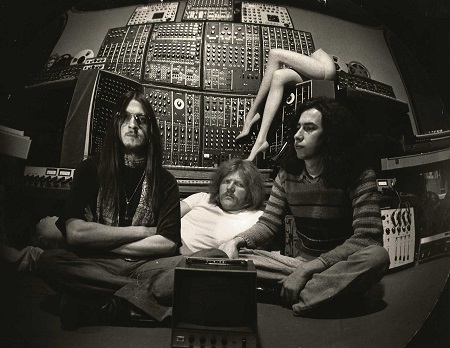
Tangerine Dream is a legendary German electronic music group founded in 1967 by Edgar Froese. They are pioneers of the Berlin School of electronic music, characterized by immersive atmospheres and hypnotic sequencer rhythms. Over five decades, the band has released more than 100 studio albums and scored over 60 films, including the 1983 hit Risky Business and the original score for Grand Theft Auto V. Following Froese’s death in 2015, the group has continued under the leadership of Thorsten Quaeschning.
Tangerine Dream
Tangerine Dream:The group has seen many personnel changes over the years, with Froese the only constant member until his death in January 2015. The best-known lineup of the group was its mid-1970s trio of Froese, Christopher Franke, and Peter Baumann. In 1979, Johannes Schmoelling replaced Baumann until his own departure in 1985. Tangerine Dream are considered a pioneering act in electronica. Their work with the electronic music Ohr label produced albums that had a pivotal role in the development of the German musical scene known as kosmische Musik (“cosmic music”). Their “Virgin Years”, so called because of their association with Virgin Records, produced albums that further explored synthesizers and sequencers, including the UK top 20 albums Phaedra (1974) and Rubycon (1975). The group also had success composing film soundtracks, creating over 60 scores. Froese experimented with musical ideas, playing smaller gigs with a variety of musicians. Most of these performances were in the famous Zodiak Free Arts Lab, although one grouping also had the distinction of being invited to play for the surrealist painter Salvador Dalí. The music was partnered with literature, painting, early forms of multimedia, and more. As members of the group came and went, the direction of the music continued to be inspired by the Surrealists, and the group came to be called by the surreal-sounding name of Tangerine Dream, inspired by mishearing the line “tangerine trees and marmalade skies” from the Beatles’ track “Lucy in the Sky with Diamonds”.
Froese was fascinated by technology and skilled in using it to create music. He built custom-made instruments and, wherever he went, collected sounds with tape recorders for use in constructing musical works later. His early work with tape loops and other repeating sounds was a precursor to the emerging technology of the sequencer, which Tangerine Dream quickly adopted upon its arrival. The band’s 1973 album Atem was named as one of British DJ John Peel’s records of the year, and this attention helped Tangerine Dream to sign to the fledgling Virgin Records in the same year. Soon afterward, they released the album Phaedra, an eerie soundscape that became one of Virgin’s first bona fide hits. Phaedra was one of the first commercial albums to feature sequencers and came to define much more than just the band’s own sound. Their mid-1970s work has been profoundly influential in the development of electronic music styles such as new-age and electronic dance music. In the 1980s, the band were early adopters of the new digital technology, which revolutionized the sound of the synthesizer. Their technical competence and extensive experience in their early years with self-made instruments and unusual means of creating sounds meant that they were able to exploit this new technology to make music quite unlike anything heard before. Several of the band’s albums released during the 1990s were nominated for Grammy Awards. Since then, Tangerine Dream with Jerome Froese took a directional change away from the new-age leanings of those albums and toward an electronica style. After Jerome’s departure, founder Edgar Froese steered the band in a direction somewhat reminiscent of material throughout their career. Edgar Froese died suddenly in Vienna on 20 January 2015 from a pulmonary embolism. The group’s remaining members (Quaeschning, Schnauss and Yamane) and Bianca Acquaye (Froese’s widow), pledged to continue working together in an effort to fulfil Froese’s vision for the group.
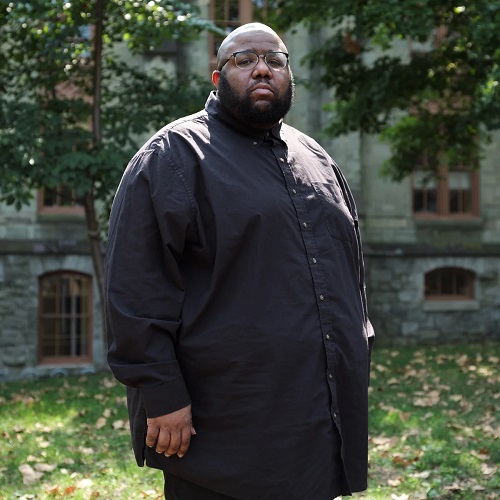
Tyshawn Sorey(born July 8, 1980) is an American composer, multi-instrumentalist, and professor of contemporary music. Newark-born composer and multi-instrumentalist Tyshawn Sorey is a composer and musician who occupies a unique space in and between spontaneous and formal composition. An artist whose work has proven impossible to categorize, he has maintained a lifelong interest in establishing an alternative musical model that celebrates genre mobility both as an artistic ideal and a compositional attitude.
tyshawn Sorey
Sorey grew up in Newark, New Jersey, and attended Newark Arts High School. As a teenager, he participated in the New Jersey Performing Arts Center Jazz for Teens program, through which he was awarded a Star-Ledger Scholarship. In 2004, Sorey completed jazz studies and performance at William Paterson University, where he began as a classical trombone major before transferring to jazz drumming. After a number of years recording and performing as a side-person for artists including Vijay Iyer and Steve Lehman, Sorey’s first album as leader was released on Firehouse 12 Records in 2007. The 2-CD That/Not features various configurations of Sorey, trombonist Ben Gerstein, pianist Cory Smythe, and bassist Thomas Morgan performing an array of works, from “Seven Pieces for Trombone Quartet” to the 43-minute “Permutations for Solo Piano”. Sorey mainly plays drums, but also makes appearances on piano, including on the opening track. Sorey’s second album, Koan, was released in 2009. Featuring Todd Neufeld on electric and acoustic guitar and Thomas Morgan on bass and acoustic guitar. The album was reviewed favourably by All About Jazz and the BBC. In 2009, Sorey enrolled in a master’s program at Wesleyan University to study composition with Anthony Braxton. He completed his M.A. in 2011 and entered the doctoral program at Columbia University.
His enrolment at Columbia coincided with the release of his Oblique – I. During the six years of doctoral study that followed, off-campus he recorded three albums with pianist Cory Smythe and bassist Chris Tordini. The first of these, Alloy, was released on Pi Recordings in 2014. In 2017, Sorey completed his Doctor of Musical Arts in composition at Columbia. After receiving his DMA, Sorey began his appointment as Assistant Professor of Music at Wesleyan University. In 2019 he was named Composer in Residence for the Seattle Symphony and Opera Philadelphia, and his duo album with Marilyn Crispell, The Adornment of Time, was released on Pi Recordings. In 2020, Sorey self-released his sextet’s Unfiltered. Later that year he joined the faculty at the University of Pennsylvania as Presidential Assistant Professor of Music. Beginning in 2019, Sorey embarked on several musical projects as well as several versions of Autoschediasms. Autoschediasms are large-scale, improvised musical works led by composer-percussionist Sorey, characterized as spontaneous collective improvisation or “something done offhand”. These works, notably performed with Alarm Will Sound, utilize hand signals, a baton, and minimal preparation to explore timbre, texture, and emotional weight in real-time. Sorey was The 2024 Pulitzer Prize Winner in Music – Adagio (For Wadada Leo Smith), an introspective saxophone concerto with a wide range of textures presented in a slow tempo, a beautiful homage that’s quietly intense, treasuring intimacy rather than spectacle.