In This issue #15 we highlight 4 artists and some significant works
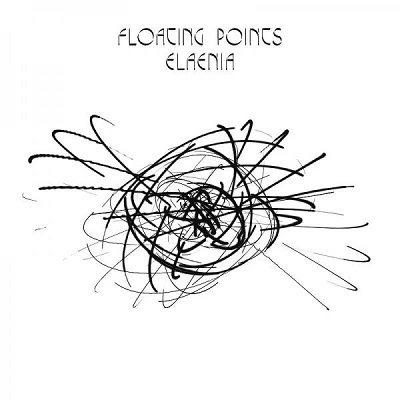
Elaenia is the debut studio album by Sam Shepherd under his alias Floating Points in 2015 by Shepherd’s own Pluto label and Luaka Bop. the album represents a landmark fusion of electronic music, spiritual jazz, classical arrangements, and soul. Though originally conceived as a single continuous piece of music, the album is divided into seven distinct tracks that seamlessly transition into one another: Thin Air: A texturized electronic track adding to the album’s hypnotic pace Nespole: A minimalist, swaying opener layered with understated electronic glitched patterns and Restless saxophone samples. Silhouettes (I, II & III): An epic 10-minute centerpiece that blends freeform jazz drumming, cinematic strings, and a cathartic choral crescendo. Elaenia: The ambient, spare title track composed using a Fender Rhodes electric piano and vintage modular synthesisers. Argente: A short, formless electronic piece that serves as an atmospheric bridge. For Marmish: A twinkling, delicate ambient-jazz track featuring live instrumentation. Peroration Six: The explosive final track that builds immense tension through skittering drums and droning guitars, ending in an abrupt, exhilarating sonic drop.
NespoleSilhouettes (I,II & III)ElaeniaArgentThin AirFor MarmishPeroration Six
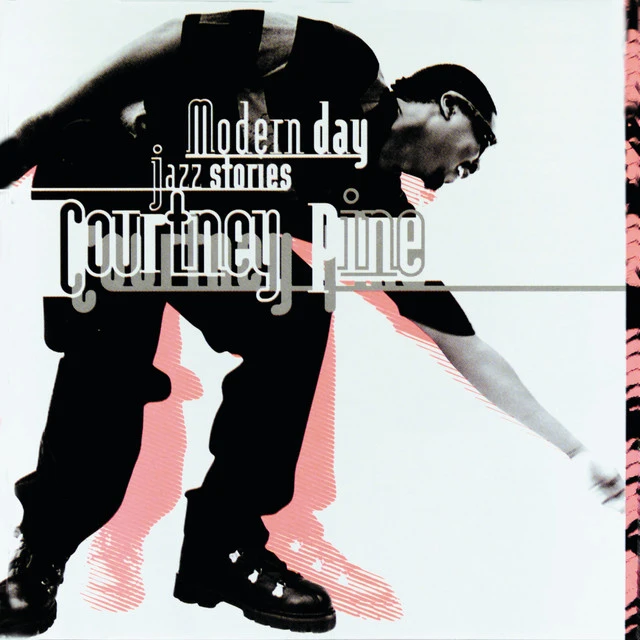
Modern Day Jazz Storiesis a highly acclaimed 1995 studio album , originally released through the Antilles label. Widely recognized as a milestone in the UK jazz scene,. The album earned a nomination for the prestigious Mercury Music Prize in 1996 and won a MOBO Award for Best Jazz Act, solidifying Pine’s legacy as a genre-blurring innovator. Modern Day Jazz Stories as a cornerstone of the movement that birthed the contemporary UK jazz renaissance. Modern Day Jazz Stories, is an essentially acoustic modern jazz album underpinned by hip‑hop loops and DJ vinyl pyrotechnics. Unlike the many hip‑hop records that have a jazz influence or feature a token jazz performer, Modern Day Jazz Stories is most definitely jazz with a hip‑hop influence, rather than vice versa, and unlike many compositions that use off‑the‑shelf loops, many of the drum loops on this album started life as an acoustic kit in the studio, while some of the more experimental loops were produced by Courtney at home. Courtney Pine reached a creative high with Modern Day Jazz Stories resulting in one of the best displays of jazz’s flirtation with DJ culture. Modern Day Jazz Stories functioned as a template for Pine’s succeeding albums.
Prelude – The Water Of LifeThe 37th ChamberDon’t ‘XplainDah BlessingIn The Garden Of Eden (Thinking Inside Of You)Creation StepperAfter the DamajaAbsolutionEach One (Must) (Teach One)The Unknown Warrior (Song For My Forefathers)I’ve Known RiversOutro – Guiding LightPrince Of Peace
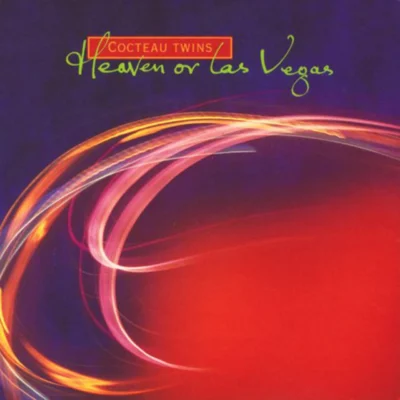
Heaven or Las Vegas is widely celebrated as the definitive dream pop magnum opus. Released in 1990 through the independent label 4AD, the record captures the Scottish trio at their absolute creative and commercial peak, seamlessly blending their trademark ethereal soundscapes with accessible, brilliant pop structures. The album is a fascinating exercise in contrast. Recorded during a period of massive personal turmoil—including guitarist Robin Guthrie’s severe drug addiction and bassist Simon Raymonde mourning his father—it paradoxically sounds incredibly bright and lush. The birth of vocalist Elizabeth Fraser and Guthrie’s daughter injected a sense of maternal clarity and joy into tracks like “Pitch the Baby”. Musically, Guthrie’s shimmering guitar textures and Raymonde’s bass create a rich, cinematic foundation. Elizabeth Fraser’s legendary vocals are slightly clearer and more intelligible here than on earlier records, acting less like an abstract instrument and more like a gorgeous, soaring pop vehicle. notable tracks include: “Cherry-Coloured Funk”: Renowned as one of the greatest, most immersive album openers in alternative rock history. “Iceblink Luck”: The upbeat, shimmering lead single that pushed the band into a more direct pop echelon. “Heaven or Las Vegas”: The hypnotic, rhythmic title track that balances emotional depth with danceable momentum. “Frou-Frou Foxes in Midsummer Fires”: A sweeping, transcendent closing track that builds into a towering wall of sound.
Cherry-Coloured FunkPitch the BabyIceblink LuckFifty-Fifty ClownHeaven or Las VegasI Wear Your RingFotzepoliticWolf in the BreastRoad, River and RailFrou-Frou Foxes in Midsummer Fires
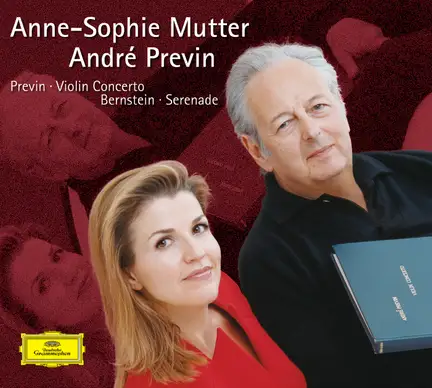
Serenade after Plato’s “Symposium” (1954) is a half-hour, five-movement masterpiece scored for solo violin, strings, harp, and percussion. I. Phaedrus: Pausanias (Lento – Allegro): Opens with an intimate lyrical solo representing Phaedrus’s praise of love, followed by a driving allegro. II. Aristophanes (Allegretto): A charming, almost childlike movement III. Eryximachus (Presto): A fleeting, fast-paced scherzo IV. Agathon (Adagio): A deeply moving, expansive statement centered on beauty as the chief driver of love, praised by prominent violinists as one of Bernstein’s greatest lyrical achievements. V. Socrates: Alcibiades (Molto tenuto – Allegro molto vivace): Begins with a heavy, philosophical weight. It is famously interrupted by a rowdy, jazz-inflected rondo representing the drunken arrival of Alcibiades and his band of revellers.
Sonata for Violin and Piano is one of his earliest chamber works, composed in 1940 while he was a student at the Curtis Institute of Music. it offers a fascinating glimpse into Bernstein’s developing compositional voice before he found major fame in orchestral conducting and musical theatre. The piece is relatively short, structured into two movements, and heavily influenced by the contemporary styles of Aaron Copland and Paul Hindemith:I. Moderato assai: Characterized by sweeping lyrical sections juxtaposed with syncopated rhythmic interest. II. Variations on Movement I: An expansive and profound set of six variations that showcase Bernstein’s burgeoning melodic genius. The finale of this movement hints at the rhythmic momentum and recycling techniques he would later use in major works
Piano Trio is a three-movement chamber work for piano, violin, and cello composed in 1937 while at Harvard University. it stands as one of Bernstein’s earliest completed works. Though categorized by the composer as “juvenilia” and kept unpublished until 1979, the trio is celebrated for its youthful energy, contrapuntal confidence, structured into three distinct movements: I. Adagio non troppo – Più mosso – Allegro vivace: An ambitious essay in counterpoint that weaves the three instruments into imitative textures. II. Tempo di marcia: A playful, brief march lasting about three and a half minutes. III. Largo – Allegro vivo et molto ritmico: A finale that transitions from a slow, solemn opening into a highly rhythmic, syncopated, and energetic conclusion.
Symphony No. 1, titled “Jeremiah”, is a 25-minute programmatic work for orchestra and mezzo-soprano soloist completed in 1942. It stands as his first major symphonic statement, written to reflect an inner “crisis of faith” and the global turmoil of World War II.The symphony is structured in three movements, tracing the biblical story of the prophet Jeremiah and the downfall of Jerusalem: I. Prophecy: An intense, instrumental movement to parallel the emotional weight of the prophet’s unheeded warnings. II. Profanation: A chaotic, fast-paced scherzo mimics the destruction and corruption of the priesthood. III. Lamentation: The emotional climax of the work featuring a solo mezzo-soprano. mourning the ruined city of Jerusalem
Symphony No. 2: The Age of Anxiety is an unconventional, concertante-style symphony for orchestra and solo piano composed between 1948 and 1949 and was revised in 1965. The piece is directly inspired by W. H. Auden’s poem The Age of Anxiety capturing the post-World War II cultural mood of isolation and the human search for faith. The solo piano acts as an autobiographical protagonist. It mirrors the existential journey, conflict, and eventual spiritual discovery of the narrative. Following Auden’s poem, the symphony is strictly split into two parts, each containing three subsets: Part I: Includes The Prologue, The Seven Ages (a set of variations), and The Seven Stages (further variations depicting a dream-quest) Part II: Includes The Dirge (a mourning of a lost father figure), The Masque (a fast, jazz-infused late-night party), and The Epilogue (the arrival of dawn and faith).
Symphony No. 3, titled Kaddish, is a dramatic choral symphony composed between 1961 and 1963. It is a highly expressive, deeply personal masterpiece famous for its complex orchestration and intense spiritual themes. The piece is divided into three continuous movements spanning about 40 minutes:Invocation – Kaddish 1: Opens with the narrator’s prayer followed by an intense, rhythmically complex setting of the liturgical text. Din-Torah – Kaddish 2: Represents the central clash with God. It features a fierce, modern 12-tone row clash that melts into a beautiful, serene lullaby for the soprano and boys’ choir. Scherzo – Kaddish 3 – Finale – Fuga: A complex instrumental and vocal resolution where God and humanity come to an emotional, celebratory peace pact. The text, written by Bernstein himself, weaves the ancient Jewish prayer for the dead (the Kaddish) with a dramatic, agonizing narration. Instead of submission, the narrator engages in a furious Din-Torah (a legal trial under Jewish law), aggressively challenging God’s apparent indifference to human suffering and the evils of the 20th century before ultimately finding reconciliation.
.
.
Serenade After Plato’s Symposium- I. Phaedrus – Pausanias. Lento – Allegro marcatoSerenade After Plato’s Symposium- II. Aristophanes. AllegrettoSerenade After Plato’s Symposium- III. Erixymachus. PrestoSerenade After Plato’s Symposium- IV. Agathon. AdagioSerenade After Plato’s Symposium- V. Socrates – Alcibiades. Molto tenuto – AllegroSonata for Violin and Piano- I. Moderato assaiSonata for Violin and Piano- II. Var. 1 – AllegroSonata for Violin and Piano- III. Var. 2 – PrestissimoSonata for Violin and Piano- IV. Var 3 – L’sitesso tempo (ma un poco più libre)Sonata for Violin and Piano- V. Var. 4 – Andante teneramenteSonata for Violin and Piano- VI. Var. 5 – Allegro agitatoSonata for Violin and Piano- VII. Var. 6 (Finale)Piano Trio- I. Adagio non troppo – Allegro vivacePiano Trio- II. Tempo di marcia – PrestoPiano Trio- III. Largo – Allegro vivo e molto ritmicoSymphony No. 1 Jeremiah- I. Prophecy. Largamente (Live)Symphony No. 1 Jeremiah- II. Profanation. Vivace con brio (Live)Symphony No. 1 Jeremiah- III. Lamentation. Lento (Live)Symphony No. 2 The Age of Anxiety, Pt. 1- I. The Prologue. Lento moderato (Live)Symphony No. 2 The Age of Anxiety, Pt. 1- IIa. The 7 Ages. Vars. 1-7 (Live)Symphony No. 2 The Age of Anxiety, Pt. 1- IIb. The 7 Stages. Vars. 8-14 (Live)Symphony No. 2 The Age of Anxiety, Pt. 2- III. The Dirge. Largo (Live)Symphony No. 2 The Age of Anxiety, Pt. 2- IV. The Masque. Extremely Fast (Live)Symphony No. 2 The Age of Anxiety, Pt. 2- V. The Epilogue. L’istesso tempo Symphony No. 3 Kaddish- Ia. Invocation. AdagioSymphony No. 3 Kaddish- Ib. Kaddish 1. L’istesso tempo – Allegro moltoSymphony No. 3 Kaddish- IIa. Din – Torah- Di nuovo adagioSymphony No. 3 Kaddish- IIb. Kaddish 2. Andante con tenerezzaSymphony No. 3 Kaddish- IIIa. Kaddish 3. Scherzo – Presto scherzando, sempreSymphony No. 3 Kaddish- IIIb. Kaddish 3. Finale – Adagio come nel Din-Torah
in further issues we will continue to Bring you the music of Popular genres to listen, review and evaluate. issue #16 (coming soon) features Jimi hendrix, tame Impala, McCoy tyner and Samuel Barber
NOTES
Sound quality is important and some streaming services will offer superior sound quality. We do encourage you to purchase albums from good online record stores. alternatively, stream the music of favoured artists from those better online streaming services.
Leonard Bernstein – Symphonies – Label : Deutsche Grammophon ; Piano trio and Sonata for violin – Label : Avi Music ; Serenade – label : Deutsche Grammophon
floating points – elaenia – Label : Luaka Bop
Courtney Pine – Modern Day Jazz Stories – label : Verve
Cocteau Twins – heaven or las Vegas – Label : 4AD
It is helpful to research the artist, using sources like Wikipedia , Music Magazine Reviews (Pitchfork, Rolling stone, NME etc.,) Artist Websites, etc…
A synopsis of the life and music of this Issue’s featured artists appears below.
This Week’s Artists
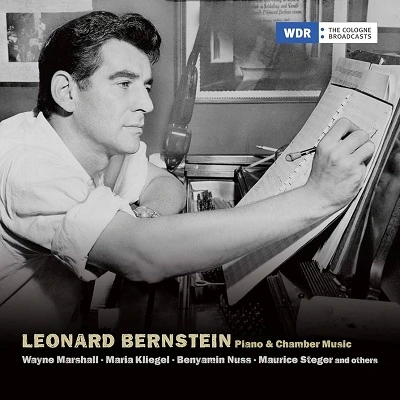
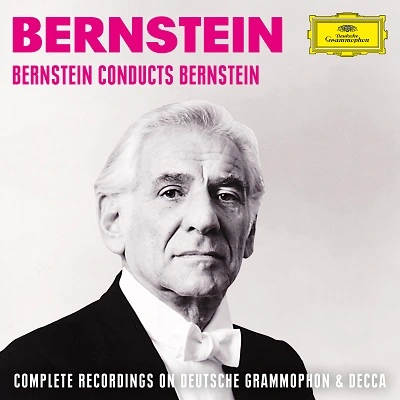
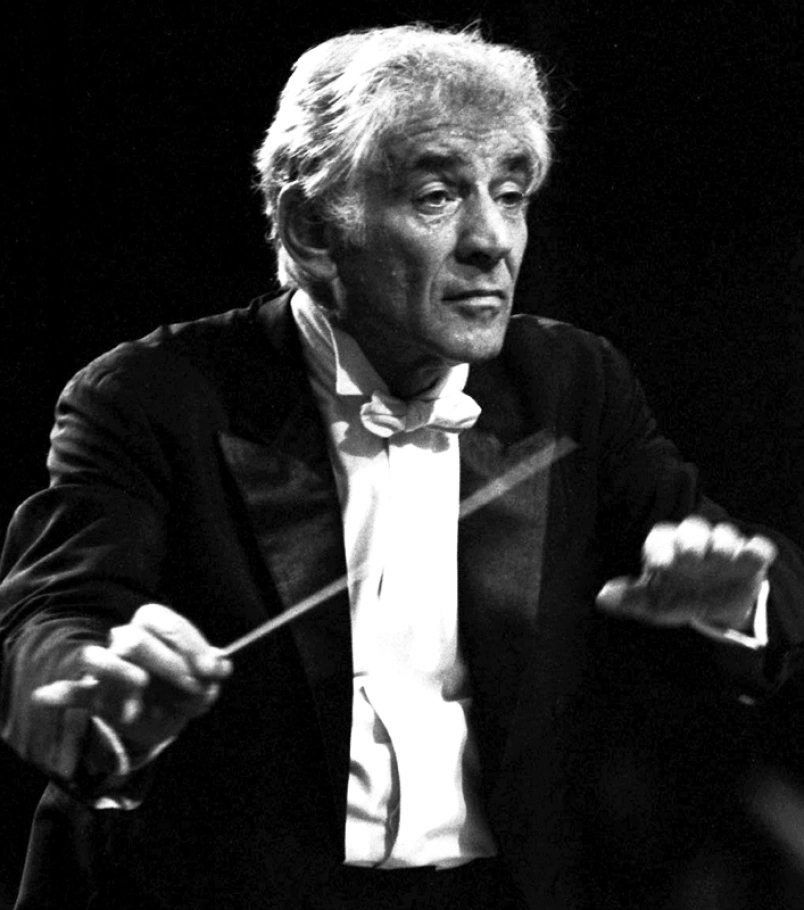
As composer, conductor, and educator, Leonard Bernstein (1918-1990) emerged as one of a handful of figures in the twentieth century who truly changed the face of music. As a composer, Bernstein left a far-reaching legacy that includes three symphonies, a film score of singular distinction, (On the Waterfront), and an important body of stage works, including one of the cornerstones of American musical theatre, West Side Story (1957). The first American-born conductor to attain international superstardom, Bernstein made a profound impression on audiences; his podium manner was dynamic, even flamboyant, to an extent never before witnessed. Bernstein’s extroverted manner attracted much criticism from those who dismissed him as a mere exhibitionist; his advocates, however, far outnumbered his detractors.
leonard Bernstein
Born in Lawrence, MA, Bernstein made his mark first as a composer. Young Bernstein sought piano lessons from the age of 10 and subsequently studied with a variety of piano teachers, including Helen Coates, who would later become his secretary. in 1932, Bernstein played Brahms’s Rhapsody in G minor at his first public piano performance at the New England Conservatory of Music. Two years later, he made his debut as a soloist with an orchestra, playing Grieg’s Piano Concerto in A minor with the Boston Public School Orchestra. In 1935, Bernstein enrolled at Harvard College, where he studied music with Walter Piston among other distinguished figures. After graduating from Harvard, Bernstein enrolled at the Curtis Institute of Music in Philadelphia. At Curtis, Bernstein studied conducting with Fritz Reiner and received a diploma in conducting from Curtis in 1941. Occasionally he wrote popular songs on the side using the pseudonym Lenny Amber (“amber” being the English translation of the word “Bernstein”). Bernstein would later make his New York Philharmonic conducting debut. On November 14, 1943, having recently been appointed assistant conductor. On January 28, 1944, Bernstein conducted the premiere of his Symphony No. 1: Jeremiah with the Pittsburgh Symphony Orchestra and soloist Jennie Tourel. His works of the 1940s, both weighty and light, brought him considerable acclaim. The 1950s comprised the most active years of Bernstein’s career. He created five new works for the Broadway stage, composed several symphonic works and an iconic film score, and was appointed music director of the New York Philharmonic with whom he toured the world, including concerts behind the Iron Curtain. During this sometimes rocky tenure (1958-1969) as music director of the New York Philharmonic, Bernstein brought that ensemble to a new level of prestige and popularity: every Bernstein concert and recording became a much-anticipated event. Through his association with the New York Philharmonic and a never-ending stream of guest engagements worldwide, Bernstein became particularly renowned as an interpreter of Mahler and Copland; he did much to carve out the prominent place in the orchestral concert repertory that both composers now maintain.
Bernstein’s innovative approach to themed programming included introducing audiences to composers less-performed at the time including the world premiere of his Symphony No. 2. Bernstein actively advocated for the commission and performance of works by contemporary composers, conducting over 40 world premieres by a diverse roster of composers ranging from John Cage to Alberto Ginastera to Luciano Berio. He also conducted US premieres of 19 major works from around the globe, including works by Dmitri Shostakovich, Pierre Boulez, and György Ligeti. Already well-known by the time he took over the New York Philharmonic, Bernstein became truly famous in 1958, with the first of his series of televised Young People’s Concerts, fondly remembered by many as their introduction to the world of classical music. Bernstein soon became the institution’s guiding light, serving as teacher and mentor for generations of musicians. Bernstein curtailed his conducting activities in later years in order to spend more time composing. Ever the eclectic composer he refused to compromise his love for tonality and unforgettable melodies in an era dominated by avant-garde atonalism, Bernstein wrote a vast array of works. He created enduring concert hall masterpieces alongside landmark musical theatre productions. During the 1970s, Bernstein’s company, Amberson, in partnership with Unitel, produced and coordinated filmed recordings of his symphonic concerts around the world. For the rest of his life, Bernstein preferred to derive his audio recordings from live performances. Nearly 80% of Bernstein’s recordings with his new recording partner, Deutsche Grammophon, were recorded live. Little of Bernstein’s music from the 1970s on has attained the same level of popularity achieved by his earlier works; still, it comprises a distinguished, substantial body of work that includes Mass (1971), the opera A Quiet Place (1983), and the song cycle Arias and Barcarolles (1988). Bernstein announced his retirement from conducting on October 9, 1990. He died five days later at the age of 72, in his New York apartment at the Dakota, of a heart attack brought on by pleural tumour.
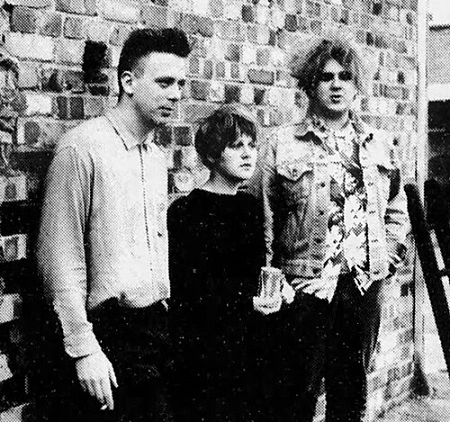
A group whose distinctly ethereal and gossamer sound virtually defined the enigmatic image of the record label 4AD, Cocteau Twins were founded in Grangemouth, Scotland, in 1979. Taking their name from an obscure song from fellow Scots Simple Minds, the Cocteaus were originally formed by guitarist Robin Guthrie and bassist Will Heggie and later rounded out by Guthrie’s girlfriend Elizabeth Fraser, an utterly unique performer whose swooping, operatic vocals relied less on any recognizable language than on the subjective sounds and textures of verbalized emotions.
Cocteau Twins
Cocteau Twins were a Scottish rock band active from 1979 to 1997. They were formed in Grangemouth on the Firth of Forth by Robin Guthrie (guitars, drum machine) and Will Heggie (bass), adding Elizabeth Fraser (vocals) in 1981. In 1983, Heggie was replaced by multi-instrumentalist Simon Raymonde. The group earned critical praise for their ethereal, effects-laden sound and the soprano vocals of Fraser, whose lyrics often eschew any recognisable language. They pioneered the 1980s alternative subgenre of dream pop and helped define what would become shoegaze.
Prior to releasing their debut album, the band recorded a four-track session for John Peel in June 1982, including “Wax and Wane” and “Garlands”. Their debut LP Garlands (1982), released through 4AD in July 1982, was a sales success. Sounds wrote that the style of the band was “mixing strong Siouxsie and the Banshees and Joy Division influences”. NME established the same comparisons, likening it to the album was followed by the EP Lullabies in October. In April 1983, the band released a second EP, Peppermint Pig. Cocteau Twins’ sound on their first three recordings relied on the combination of Heggie’s rhythmic basslines, Guthrie’s minimalist guitar melodies, and Fraser’s voice.
The band’s next full-length LP record, Head over Heels (1983), relied solely on the latter two, following Heggie’s departure. This led to the characteristic Cocteau Twins sound: Fraser’s voice, by turns ethereal and operatic, combined with increasingly effects-heavy guitar playing by Guthrie. Multi-instrumentalist Simon Raymonde joined Cocteau Twins later that year. With Raymonde, the band released a series of albums and EPs that explored their new style. These included Treasure (1984). Raymonde, did not participate in the recording of the fourth Cocteau Twins LP, Victorialand (1986), a predominantly acoustic record which featured only Guthrie and Fraser. Raymonde returned to the group for The Moon and the Melodies (1986), a collaboration with ambient composer Harold Budd, which was not released under the Cocteau Twins name, instead being credited to all four participating musicians alphabetically. While remaining a 4AD band, Cocteau Twins signed a major-label contract with Capitol Records in 1988 for distribution in the U.S., and released their fifth album, Blue Bell Knoll (1988). The group released Heaven or Las Vegas in early 1990. The most commercially successful of their many recordings. Despite the success of the record and the subsequent concert tours, not everything was well with the band. They parted ways with 4AD following Heaven or Las Vegas partly because of conflicts with the label’s founder Ivo Watts-Russell, and were close to breaking up over internal problems due in large part to Guthrie’s substance abuse. While on their international tour supporting Heaven or Las Vegas, they added several live musicians to their touring band to better replicate the layered sound of their studio albums. Fraser and Guthrie had a daughter, Lucy Belle, born in 1989. The couple ended their 13-year relationship in 1993. The band’s seventh LP, Four-Calendar Café, their first since Fraser and Guthrie’s separation, was released in late 1993. The band explained that Four-Calendar Café was a response to the turmoil that had engulfed them in the intervening years, with Guthrie entering rehab and quitting alcohol and drugs, and Fraser undergoing psychotherapy. The band’s eighth album, Milk & Kisses (1996) saw the return of more heavily layered guitars, and Fraser began once again to obscure her lyrics, though not entirely. In 1997, while recording what was to have been their ninth LP, the trio disbanded over irreconcilable differences in part related to the breakup of Guthrie and Fraser. Some songs were partially recorded and possibly completed, but the band has stated that they will likely never be finished or released in any form.
His sound blends club-ready electronic textures with spiritual jazz, classical compositions, and heavy synthesizer manipulation.
Floating Points
Samuel Shepherd (born 1986), known professionally as Floating Points, is a British electronic music producer, DJ, and musician. He is the founder of Pluto Records,[1] co-founder of Eglo Records and leader of a 16-piece group called Floating Points Ensemble. Raised in Manchester, England, Shepherd studied piano at Chetham’s School of Music before receiving a Ph.D. in neuroscience and epigenetics at University College London. He also worked as a DJ at Plastic People, a London club, in the late 2000s. In 2008, Shepherd and Alexander Nut launched the Eglo record label. Shepherd’s musical influences include Claude Debussy, Olivier Messiaen, and Bill Evans. He began releasing work under the Floating Points moniker in 2008. Shepherd’s first release was the Vacuum EP in 2008 on Eglo Records. Over the next few years, he would continuously release EPs and singles on Eglo, but also other labels such as Planet Mu. Notable releases included Shadows EP (2011) and “King Bromeliad” / “Montparnasse”.(2014).
On 6 November 2015, Shepherd released the first Floating Points album, Elaenia which received reviews, indicating “universal acclaim”. Around its release, Shepherd launched an 11-piece live show and immediately sold out a string of global live dates. In 2017, Shepherd released Reflections: Mojave Desert. Floating Points explained: “Whilst we were out playing and exploring the area around us—the sound reflecting from the rocks, the sound of the wind between them, complete stillness at night and packs of roaming coyotes in the distance—it became apparent that we could use this as its own unique recording environment.”
On 18 October 2019, Shepherd released the album Crush. It received positive reception upon release. On 26 March 2021, Shepherd released a collaborative album with Pharoah Sanders and the London Symphony Orchestra, entitled Promises. It was nominated for the Mercury Prize 2021. His electronic dancefloor return, Cascade, dropped in late 2024., this third studio album received universal acclaim from critics.
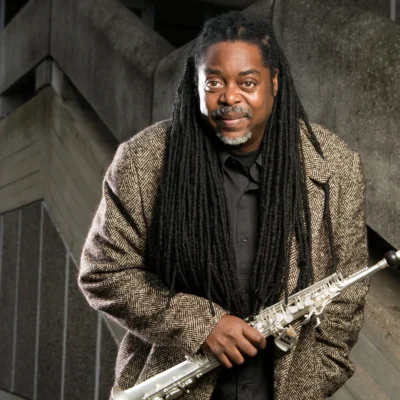
Courtney Pine, CBE (born 18 March 1964) is a pioneering British jazz multi-instrumentalist and composer who transformed the UK jazz scene in the 1980s. Renowned primarily for his explosive and technically advanced saxophone play,
Courtney Pine
Courtney Pine CBE is a British jazz musician, who was the principal founder in the 1980s of the black British band the Jazz Warriors. Although known primarily for his saxophone playing, Pine is a multi-instrumentalist, also playing the flute, clarinet, bass clarinet and keyboards. His recent music integrates modern British music like drum and bass and UK garage with contemporary jazz styles. He runs his own band and integrates many contemporary musicians in his performances. Courtney Pine was born on 18 March 1964 in London. His parents were Jamaican immigrants. Pine lived in the “Avenues” area of Kensal Green in north-west London, before moving to Wembley and attending Kingsbury High School, where he studied classical clarinet, teaching himself the saxophone from the age of 14. In 1986 Courtney Pine’s debut album Journey To The Urge Within charted in the UK Top 40 albums chart, and placed jazz unequivocally in the centre of reggae, soul, hip hop and the sound-system culture, leaving a legacy that still resonates loudly today. Urge Within featured some of the most promising black English jazz musicians of the time, including Pine (who also plays some bass clarinet and soprano), singer Cleveland Watkiss (who often is reminiscent of Bobby McFerrin), vibraphonist Orphy Robinson, and pianist Julian Josep. Pine is the principal founder of the seminal black British big band the Jazz Warriors, who recorded two albums under Pine’s leadership: Out of Many, One People, which was released on the Antilles division of the Island Records label in 1987, and Afropeans, which was released on Pine’s own label, Destin-E Records, for their 20th anniversary in 2007.
In the early 2000s, his music integrated modern British music like drum and bass and UK garage with contemporary jazz styles. He had his own band and included many contemporary musicians in his performances. A highly respected broadcaster, Pine is best known for his long-running Jazz Crusade show on BBC Radio 2 and for presenting award-winning radio documentaries for the BBC. Pine was appointed Officer of the Order of the British Empire (OBE) in 2000, and Commander of the Order of the British Empire (CBE) in the 2009 New Year Honours for services to jazz music. A central figure in modern British jazz, Courtney Pine has spent over four decades reshaping the music’s contemporary identity through performance and recording. His work embodies a constantly evolving dialogue between tradition and present-day culture. A distinctly UK sound shaped by the diverse cultures and musical traditions he has encountered throughout his international career.