In This issue #17 we highlight 4 artists and some significant works
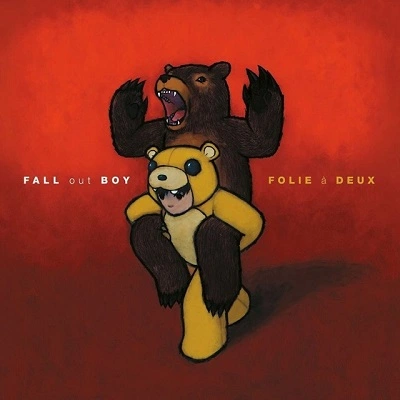
Folie à Deux is the fourth studio album by Fall Out Boy released in December 2008 by Island Records. The title translates from French to “the madness of two”. The record features music composed by lead singer Patrick Stump and lyrics written by bassist Pete Wentz. Though it was heavily misunderstood and polarizing when first released, Folie à Deux has undergone a massive critical reappraisal and is now regularly voted by the Fall Out Boy community as their absolute best album. An ambitious, theatrical, and genre-bending pop-rock record filled with intricate composition and massive orchestral elements. Patrick Stump’s vocals reach an all-time peak, and Pete Wentz’s lyrics are at their most biting and self-aware. It seamlessly blends punk energy with soul, funk, and massive arena rock hooks. Focusing on decaying personal relationships, celebrity culture, moral dilemmas, and political undertones. Includes diverse guest appearances such as Elvis Costello, Lil Wayne, Debbie Harry (Blondie), Brendon Urie (Panic! At The Disco), and producer Pharrell Williams. Essential Tracks: “Disloyal Order of Water Buffaloes”, “Headfirst Slide into Cooperstown on a Bad Bet”, “What a Catch, Donnie” Though the band distanced themselves from the album initially, Folie à Deux has seen renewed acclaim in recent years. It has been widely described as ambitious and “radically different”. Stereogum’s Annie Zaleski praised the “gigantic leaps in songwriting.”
Disloyal Order Of Water BuffaloesI Don’t CareShe’s My WinonaAmerica’s SuiteheartsHeadfirst Slide Into Cooperstown On A Bad BetThe (Shipped) Gold Standard(Coffee’s For Closers)What A Catch, Donnie27Tiffany Blewsw.a.m.s20 Dollar Nose BleedWest Coast Smoker
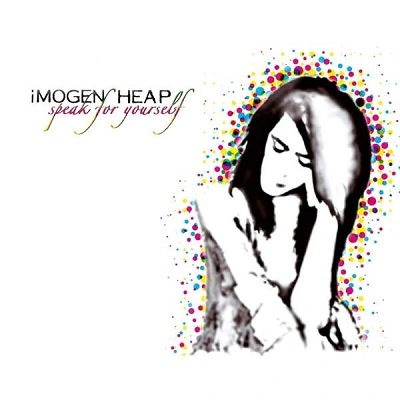
Imogen Heap’s undisputed masterpiece is widely considered to be her second solo album, Speak for Yourself (2005). Written, produced, and recorded entirely by Heap, it showcases her signature blend of intricate vocal layering, profound lyrics, and pioneering electronic pop. The album features iconic tracks like “Hide and Seek” (made famous by The O.C.) a groundbreaking a cappella folktronica ballad the track is uniquely composed using only Heap’s voice altered by a digital harmonizer. The Hide and Seek Lyrics paint a stark, abstract picture of loss, vulnerability, and sudden, painful change, often interpreted as the fallout of a difficult breakup or divorce. “Goodnight and Go” captures the overwhelming, frustrating “devastation of having a crush” on a friend. It contrasts a playful melody with lyrics that subtly hint at an intense, borderline unhealthy fixation. It blends experimental, glitchy electronic production with accessible pop melodies, featuring signature “skipping beats” and organic clicks. Legendary British rock guitarist Jeff Beck plays the guitar track on the song. “Headlock”. A rhythmic, ambient electropop and indie electronic style track which focuses on encouraging a friend who is stuck in old, self-destructive patterns to stop wasting time and move forward with their life.
HeadlockGoodnight and GoHave You Got It In YouLoose EndsHide and SeekClear the AreaDaylight RobberyThe WalkJust for NowI Am In Love With YouClosing InThe Moment I Said It
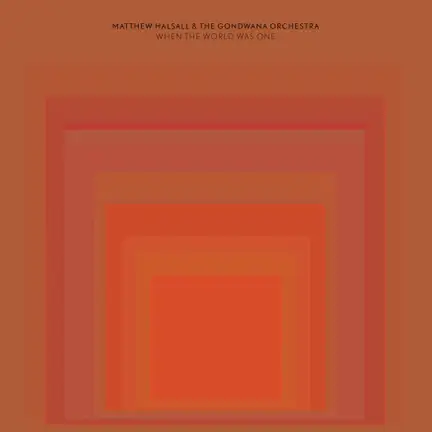
When The World Was One is a critically acclaimed studio album. performing alongsideThe Gondwana Orchestra. It was officially released in 2014. The presence of so many Halsall regulars is important in anchoring the core sound in the blend of modal soloists where they improvise over a single mode or tonality that lasts for extended periods and spiritual jazz where musicians use lingering scales (modes) to establish hypnotic, meditative, and trance-like environments. Tracks like “Patterns” the harp and flute in particular buzz around the modal lines of Birchall’s sax augmenting and emphasising key points and phrases. Halsall’s solo here is also worthy of note, feeling like he is meditating on the music around him. The feel on this and title track “When the World Was One” allude to the John Coltrane era contrasting with the later spiritual jazz explorations of Alice Coltrane which takes the music to a different place. It makes for an intriguing listen with Taz Modi’s piano on these pieces bringing something of the pulsing power, alongside Rachael Gladwin’s harp. Another key theme is the impact of travel in Japan, and specifically Kyoto, on Halsall—both “Kiyomizu-Dera’s” gentle beauty inspired by the famous temple, and “Sagano Bamboo Forest” indicate a direct personal inspiration.
.
When the World Was OneA Far Away PlaceFalling WaterPatternsKiyomizu-DeraSagano Bamboo ForestTribute to Alice Coltrane
The wonderful, well judged, “Tribute to Alice Coltrane” that closes the collection confirms the inspiration and allows Halsall to build his expressive solo upon Barras’ wonderfully measured bass line, revealing a depth of feeling and thought in every phrase of its calm, walking pace tempo. We have one of the finest British jazz records of the modern era, one that manages to combine the serious and spiritual within a warm, melodic and welcoming musical context.
Górecki composed three major, numbered string quartets late in his life, all of which were commissioned by and dedicated to the famous Kronos Quartet. These works marked a monumental shift into his mature chamber music period, capturing a mix of haunting, minimalist sacred music, raw folk rhythms, and intense emotional directness. String Quartet No. 1, Op. 62 (“Already It Is Dusk”): Written in 1988, this single-movement piece is compact and highly focused. It opens with a quiet, plainchant-like theme based on a 16th-century Polish church song before exploding into frantic, dissonant, folk-driven energy from the Tatra mountains. String Quartet No. 2, Op. 64 (“Quasi una fantasia”): Composed between 1990 and 1991, this quartet is roughly double the length of the first and follows a classical four-movement structure. As the subtitle suggests, it heavily references the dramatic weight and shifting textures of Beethoven. String Quartet No. 3, Op. 67 (“…songs are sung”): Completed in 1995 but withheld and revised until 2005, this massive five-movement masterpiece stretches over 50 minutes. Its title comes from a line by Russian poet Velimir Khlebnikov. It captures a profound sense of mourning, memory, and ultimate peace, sharing a deeply poignant harmonic language with his famous Symphony of Sorrowful Songs.
Symphony No. 3, Op. 36, also famously known as the Symphony of Sorrowful Songs (Symfonia pieśni żałosnych), is a three-movement symphony composed in late 1976. Written for a full orchestra and a solo soprano, it stands as one of the most culturally significant and commercially successful classical compositions of the late 20th century. The piece marked a massive stylistic departure for Górecki. He transitioned from his early abrasive, dissonant avant-garde style to an accessible, tonal, and deeply meditative soundscape often associated with “holy minimalism”. The symphony unfolds entirely through slow tempos (Lento) and explores universal themes of motherhood, separation, war, and grief. Each movement features a different historical Polish text sung by the soprano. Movement I (Lento — Sostenuto tranquillo ma cantabile): Taking up roughly half the symphony’s duration, it opens with a massive, haunting E-minor canon built slowly by the string section. The soprano sings a 15th-century Polish Holy Cross lament (Lament świętokrzyski), expressing the maternal grief of the Virgin Mary at the foot of Jesus’ cross. Movement II (Lento e largo — Tranquillissimo): A moving, luminous prayer centered around a real message scratched into the wall of a Gestapo prison cell in Zakopane, Poland. It was written by an 18-year-old girl named Helena Wanda Błażusiakówna, asking for the protection of the Virgin Mary and comforting her own mother. Movement III (Lento — Cantabile semplice): Built as a delicate set of orchestral variations, this movement features a Silesian folk song. It tells the tragic story of a mother searching for and mourning her son, who was killed during the Silesian Uprisings. Symphony No. 4, Op. 85, subtitled Tansman Episodes, is the final composition by Górecki. Left unfinished at the time of his death in 2010, it serves as a powerful, jarring, and highly contrasting farewell that sounds vastly different from his hyper-popular, serene Third Symphony (Symphony of Sorrowful Songs). Movement I: Opens with brutal, fortissimo, repetitive hammer-like blows from the bass drums and brass. Movement II: Shifts into a solemn, hymn-like string chorale intercut with clashing chords and references to Karol Szymanowski’s Stabat Mater. Movement III: Introduces an aggressive, circus-like march that abruptly gives way to an incredibly long, intimate, and delicate see-saw duet for solo violin, cello, and piano.
Kleines Requiem für eine Polka (Small Requiem for a PolkaOp. 66 is a notable chamber composition written in1993 Combining the solemnity of a funeral mass with sudden, jarring dynamic changes, it serves as a prominent example of his deeply emotional, sacred minimalist style. The composition consists of four distinct movements that juxtapose serene meditation with chaotic bursts of energy: I. Tranquillo: A quiet, introspective opening featuring a simple piano melody accompanied softly by tubular bells, before expanding into a lyrical string line. II. Allegro impetuoso – Marcatissimo: A sudden, loud, and highly agitated section driven heavily by aggressive brass phrases. III. Allegro – Deciso assai: A surprisingly comic, catchy polka led by the winds and strings, overlaying a driving piano rhythm. IV. Adagio cantabile: A return to the quiet lyricism of the opening movement, closing with a solemn, fading dialogue between the strings, horn, and distant chimes.
“Good Night” (Dobra Noc), Op. 63 is a poignant, minimalist classical composition written in 1990. The piece is dedicated In Memoriam Michael Vyner to honor the artistic director of the London Sinfonietta, who died shortly after helping popularise Górecki’s famous Symphony No. 3. It is highly regarded for its meditative, hushed, and deeply emotional qualityThe work is divided into three slow movements: I. Lento (adagio) – tranquillo. II. Lento tranquillissimo. III. Lento – largo: dolcissimo – cantabilissimo. The unique instrumentation requires only four performers: Soprano voice (featured exclusively in the final movement); Alto flute; Piano; 3 tam-tams (large gongs used at the very end of the piece). The third movement introduces the soprano voice singing a very brief, comforting text adapted from William Shakespeare’s Hamlet. Musically, the composition ends in a quiet, sonorous cloud where a single repeated piano chord slowly dissolves into the fading ring of the tam-tams.
String Quartet No. 1, Op. 62 – Already It Is DuskString Quartet No. 2, Quasi Una Fantasia- Op.64–l. Largo Sostenuto – MestoString Quartet No. 2, Quasi Una Fantasia- Op.64–Il. Deciso – Energico- Furioso,tString Quartet No. 2, Quasi Una Fantasia- Op.64–Ill. Arioso- Adagio CantabileString Quartet No. 2, Quasi Una Fantasia- Op.64–IV. Allegro – Sempre Con GrandString Quartet No. 3 – …songs are sung I. Adagio-Molto Andante-CantabileString Quartet No. 3 – …songs are sung II. Largo, CantabileString Quartet No. 3 – …songs are sung III. Allegro, Sempre ben marcatoString Quartet No. 3 – …songs are sung IV. Deciso-Espressivo ma ben tenutoString Quartet No. 3 – …songs are sung V. Largo-TranquilloSymphony No. 3, Op. 36- I. Lento – Sostenuto Tranquillo Ma CantabileSymphony No. 3, Op. 36- II. Lento e Largo – TranquillissimoSymphony No. 3, Op. 36- III. Lento – Cantabile SempliceSymphony No. 4, Op. 85-i Deciso – Marcatissimo ma ben tenuto Symphony No. 4, Op. 85-II Largo – Ben Tenuto – MarcatissimoSymphony No. 4, Op. 85- iII Deciso-Marcatissimo – Tranquillo e CantabileSymphony No. 4, Op. 85-iV Allegro Marcato – Giocosa – Deciso – MarcatissimoKleines Requiem fur eine Polka- I. TranquilloKleines Requiem fur eine Polka- II. Allegro impetuoso – marcatissimoKleines Requiem fur eine Polka- III. Allegro – deciso assaiKleines Requiem fur eine Polka- IV. Adagio cantabileGood Night – I. Lento (adagio)—tranquilloGood Night- III. Lento – largo- dolcissimo – cantabilissimo
in further issues we will continue to Bring you the music of Popular genres to listen, review and evaluate. issue #18 (coming soon) features duran Duran, Tim Hecker , jack deJohnette and Arvo Part
NOTES
Sound quality is important and some streaming services will offer superior sound quality. We do encourage you to purchase albums from good online record stores. alternatively, stream the music of favoured artists from those better online streaming services.
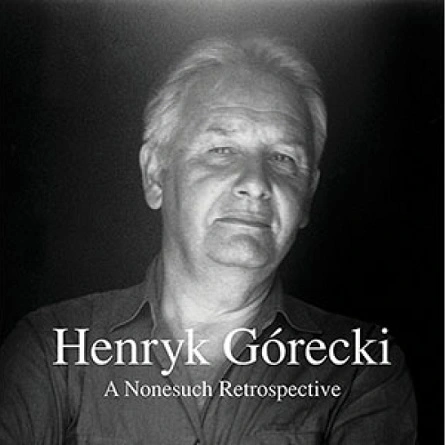
Henryk Mikołaj Górecki – Retrospective – Label : nonesuch records
imogen heap – Speak for Yourself – Label : megaphonic Records
Matthew Halsall – When The World Was One – label : Gondwana Records
fall out boy – Folie à Deux – Label : island Records
It is helpful to research the artist, using sources like Wikipedia , Music Magazine Reviews (Pitchfork, Rolling stone, NME etc.,) Artist Websites, etc…
A synopsis of the life and music of this Issue’s featured artists appears below.
This Week’s Artists
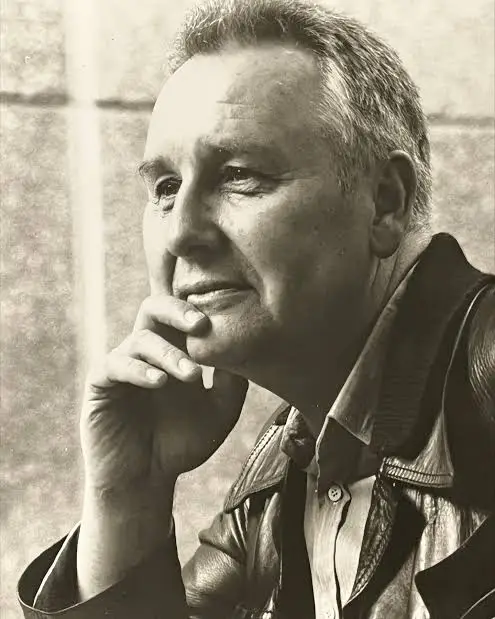
Henryk Mikołaj Górecki (6 December 1933 – 12 November 2010) was a renowned Polish composer of contemporary classical music. Initially a leading figure of the radical Polish postwar avant-garde, he later shifted to an exceptionally direct, minimalist style rooted in sacred traditions. He achieved unprecedented global commercial success for a 20th-century classical composer with his 1976 Symphony No. 3, Op. 36 (“Symphony of Sorrowful Songs”)
henryk Gorecki
Henryk Mikołaj Górecki (1933 – 2010) was a Polish composer of contemporary classical music. He became a leading figure of the Polish avant-garde during the post-Stalin cultural thaw. His Anton Webern-influenced serialist works of the 1950s and 1960s were characterized by adherence to dissonant modernism and influenced by Luigi Nono, Karlheinz Stockhausen and Krzysztof Penderecki. He continued in this direction throughout the 1960s, but by the mid-1970s had changed to a less complex sacred minimalist sound, exemplified by the transitional Symphony No. 2 “Copernician” and the Symphony No. 3 “Symphony of Sorrowful Songs”. This later style developed through several other distinct phases, from such works as his 1979 “Beatus Vir”, to the 1981 choral hymn “Miserere”, the 1993 “Kleines Requiem für eine Polka” and his requiem “Good Night”. Górecki was largely unknown outside Poland until the late 1980s. In 1992, 15 years after it was composed, a recording of his Symphony of Sorrowful Songs with soprano Dawn Upshaw and conductor David Zinman became a worldwide commercial and critical success, selling more than a million copies and vastly exceeding the typical lifetime sales of a recording of symphonic music by a 20th-century composer. Henryk Górecki was born on 6 December 1933, in the village of Czernica, southwest Poland. His family lived modestly, though both parents had a love of music. His father Roman was an amateur musician, while his mother Otylia played piano. Otylia died when her son was just two years old, and many of his early works were dedicated to her memory. Henryk developed an interest in music from an early age, and in 1943 was allowed to take violin lessons. Between 1951 and 1953, Górecki taught 10- and 11-year-olds at a school in Rydułtowy. In 1952, he began a teacher training course in Rybnik, where he studied clarinet, violin, piano, and music theory. During this time, he began to compose his own pieces, mostly songs and piano miniatures. Occasionally, he attempted more ambitious projects.
Górecki’s life during this time was often difficult. Teaching posts were generally badly paid, while the shortage economy made manuscript paper at times difficult and expensive to acquire. Górecki kept up to date with music despite having no access to radio by purchase of music periodicals. Górecki continued his formal study of music at the Academy of Music in Katowice, where he studied under the composer Bolesław Szabelski, a former student of Karol Szymanowski. He encouraged Górecki’s growing confidence and independence by giving him considerable space in which to develop his own ideas and projects; several of Górecki’s early pieces were straightforwardly neo-classical, during a period when Górecki was also absorbing the techniques of twelve-tone serialism. He graduated from the Academy with honours in 1960.In 1975, Górecki was promoted to professor of composition at the State Higher School of Music in Katowice. As a senior administrator but not a member of the Communist Party, he was in almost perpetual conflict with the authorities in his efforts to protect his school, staff and students from undue political influence. In 1979, he resigned from his post in protest at the government’s refusal to allow Pope John Paul II to visit Katowice, and formed a local branch of the “Catholic Intellectuals Club”, an organisation devoted to the struggle against the Communist Party (Polish United Workers’ Party). In 1981, he composed his “Miserere” for a large choir in remembrance of police violence against the Solidarity movement. In 1987, he composed “Totus Tuus” for John Paul II’s visit to Poland. Górecki’s music covers a variety of styles, but tends towards relative harmonic and rhythmical simplicity. He is considered a founder of the New Polish School. Górecki’s first works, dating from the last half of the 1950s, were in the avant-garde style of Webern and other serialists of that time. Some of these twelve-tone and serial pieces include Epitaph (1958), First Symphony (1959), and Scontri (1960). During the mid-1960s and early 1970s, Górecki progressively moved away from his early career as radical modernist, and began to compose in a more traditional, romantic mode of expression. His change of style was viewed as an affront to the then avant-garde establishment, and though he continued to receive commissions from various Polish agencies, by the mid-1970s Górecki was no longer regarded as a composer of importance. By the mid-1980s, Górecki began to attract a more international audience, and in 1989 the London Sinfonietta held a weekend of concerts in which his work was played alongside that of the Russian composer Alfred Schnittke. In 1990, the American Kronos Quartet commissioned and recorded his First String Quartet, Already It Is Dusk, Op. 62, an occasion that marked the beginning of a long relationship between the quartet and Górecki. His most popular piece is his Third Symphony, also known as the “Symphony of Sorrowful Songs” the work is slow and contemplative, and each of its three movements is for orchestra and solo soprano. The libretto for the first movement is taken from a 15th-century lament, while the second movement uses the words of a teenage girl, Helena Błażusiakówna, which she wrote on the wall of a Gestapo prison cell in Zakopane to invoke the protection of the Virgin Mary. The third uses the text of a Silesian folk song which describes the pain of a mother searching for a son killed in the Silesian Uprisings. The symphony’s dominant themes are motherhood and separation through war. While the first and third movements are written from the perspective of a parent who has lost a child, the second is from that of a child separated from a parent. he completion of Górecki’s Fourth Symphony, subtitled “Tansman Episodes”, was delayed for many years, partly by Górecki’s unease at his newfound fame. Indeed, it had not even been orchestrated when he died in 2010, and his son Mikołaj completed it after his death from the piano score and notes left behind by his father. During the last decade of his life, Górecki suffered from frequent illnesses. He died on 12 November 2010, in his home city of Katowice, from complications arising from a lung infection. While his Third Symphony frequently overshadowed the rest of his catalogue, several other works remain highly celebrated by music critics: Totus Tuus (1987): An exceptionally popular, deeply moving unaccompanied choral piece celebrating Pope John Paul II’s third pilgrimage to Poland. Miserere (1981): A stark, large-scale choral prayer written in solidarity with the rural Solidarity movement during political unrest. String Quartets: Three masterful string quartets (Already It Is Dusk, Quasi una fantasia, and …songs are sung) commissioned by the American Kronos Quartet.
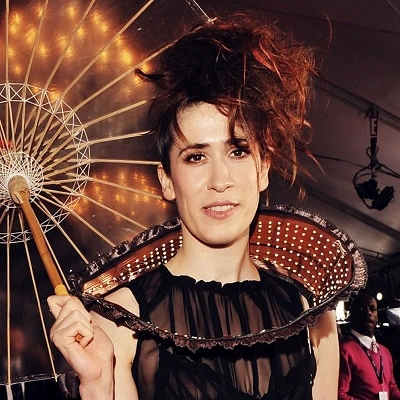
Imogen Jennifer Jane Heap (born 9 December 1977) is an English musician, singer, songwriter, record producer, and entrepreneur. She is considered a pioneer in pop music, particularly electropop, and in music technology. In the late 1990s, Heap’s music was largely alternative rock. However, after forming and subsequently disbanding the electronic duo Frou Frou, whose work on their sole album to date, Details, was mainly electropop, her music became primarily based in pop, specifically electropop, art pop, alt-pop, and synth-pop. She has written, produced and engineered most of her music on her own. She has also stated that she rarely listens to music.
imogen Heap
Imogen Jennifer Jane Heap was born on 9 December 1977 in Romford. Her parents divorced when she was twelve years old. Heap was raised in the Round House, a Grade II* listed elliptical house in Havering-atte-Bower near Romford built in 1792; she later bought the house from her father when it was put on the market in 2006 and converted its basement, which had been her play room as a child, into a recording studio called the Hideaway. When she was one year old, she was diagnosed with osteomyelitis in her left leg. She played music from an early age, “everyone was playing music” in her family home growing up and that she rarely listened to the radio. She soon began taking lessons and became classically trained in several instruments, including piano, cello, and clarinet, while attending Friends’ School, a private, Quaker-run boarding school in Saffron Walden. She has stated that she was “everyone’s worst nightmare” while there, spending much of her time smoking, drinking, and experimenting with drugs. By the age of thirteen, she had begun writing songs. At age fifteen, she started using reel-to-reel recording to record her music and using a home computer to program it. At age 16, Heap started studying at the BRIT School for Performing Arts & Technology in Croydon, South London, with plans to write orchestral music, where she first began regularly singing and writing songs While attending the BRIT School, Heap signed to independent record label Almo Sounds and later released her debut album I Megaphone (1998). It sold poorly and she was soon left without a record deal. In 2000, she and English record producer Guy Sigsworth formed the electronic duo Frou Frou, in which she was the vocalist, and released their only album to date, Details (2002).
Heap produced, recorded, arranged, mixed, and designed the cover art for Speak for Yourself (2005), her second studio album, on her own. It was self-released through her independent record label, Megaphonic Records. Its lead single “Hide and Seek” garnered success internationally after being featured in the Fox television series The O.C. Her follow-up 2005 single “Headlock” went viral on TikTok in 2024 and, in 2025, became her highest entry on the UK Singles Chart. Heap’s third studio album, Ellipse (2009), produced the single “First Train Home”, and made Heap the second woman to win the Grammy Award for Best Engineered Album, Non-Classical. This was followed by her fourth studio album, Sparks (2014), which topped Billboard’s Dance/Electronic Albums chart. Heap also found commercial success with her 2016 children’s song “The Happy Song” and collaborated with Clams Casino on the re-release of his 2011 cloud rap song “I’m God” in 2020. Heap is known for her innovative musical approach, contributions to film and television soundtracks, independent success online, and devoted fanbase. She developed the Mi.Mu gloves (a name derived from an abbreviation of “me” and “music”), a line of wired musical gloves, and, in the 2020s, became known for her work with and advocacy for artificial intelligence in music. She composed the music for the play Harry Potter and the Cursed Child, a sequel to the Harry Potter novels which premiered on the West End in 2016 and for which she won a Drama Desk Award. She has also been awarded the Grammy Award for Album of the Year for her production work on Taylor Swift’s 2014 album 1989, an Ivor Novello Award, and an honorary doctorate from Berklee College of Music.
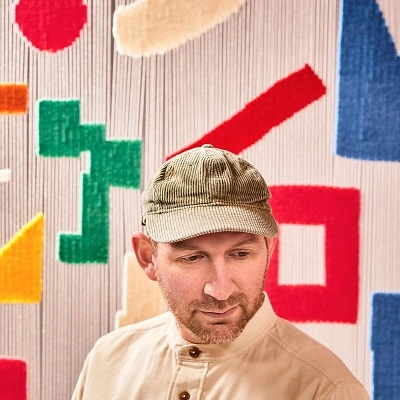
Matthew Halsallis an English jazz musician, composer, producer and founder of the independent jazz label Gondwana Records, based in Manchester. With Gondwana Records he has cultivated a worldwide outlook and roster, and the label’s celebrated artists include Portico Quartet and GoGo Penguin. A trumpeter whose unflashy, soulful playing radiates a thoughtful beauty, Halsall, has created his own rich sound world.
matthew halsall
Born and based in Manchester, Halsall is known for being one of the leading lights of the UK jazz renaissance. Halsall’s own distinct sound draws on his unique foundation in meditative music. He started playing trumpet in his early teens and was the youngest member of a local big band. He didn’t feel comfortable in traditional education either and began attending a consciousness-based school in the northwest of England, where he learned yoga and Transcendental Meditation. At the same time in the late-90s, crate-digging DJ culture was exploding in the UK, with producers on record labels like Warp and Ninja Tune exploring the possibilities of sample-based electronica. One memorable DJ set changed everything: when Halsall witnessed Mr Scruff play Pharaoh Sanders’ ‘You’ve Got To Have Freedom’, its themes spoke to his schooling and kickstarted a lifelong appreciation of spiritual jazz. By the mid-2000s, Manchester had become a hotbed of jazz talent and Halsall, then in his twenties, was in his element. It revolved around the Matt & Phreds Jazz Club. Gondwana Records was born in 2008 as Halsall’s way to document this scene, with his brother Daniel creating the artwork. His first album, Sending My Love, was released under his name but was a collective effort and a tribute to the communal power of jazz. It’s an ethos that’s guided him ever since, and the label has now put out over 60 releases. He released Colour Yes in 2009, utilizing a septet featuring two drummers and harpist Rachael Gladwin. 2011’s On the Go offered a sextet’s articulation of modal post-bop rippled through with deep spiritual blues. It won notice across the Atlantic as well as at home, with many reviewers clamouring for more critical and popular recognition for the trumpeter. Fletcher Moss Park (2012) followed and was an album that appended his sextet with chamber strings.
Halsall switched it up. He formed the Gondwana Orchestra (a nonet) adding bansuri flute and koto, endeavouring to initiate a new, evolved strain of 21st century spiritual jazz.He released his fifth album When World Was One, this album was awarded iTunes Jazz Album of the Year 2014. In 2015 came Into Forever. These last two releases, collaborations with the Gondwana Orchestra, arrived at a time when the burgeoning jazz scene was gaining respect at home, and abroad, and by a new wave of young heads who, like Halsall, came to it through club and DJ culture. In 2019, Halsall released the triple-length Oneness, a series of meditative jazz compositions he’d recorded with most of his current band in 2008. In 2020, after five years focused on his label, Halsall returned with Salute To The Sun and a new band of talented young instrumentalists from his home city. The record’s earthy, soulful music earned scores of new admirers who’d never before seen themselves as jazz fans. Its follow-up, 2023’s An Ever Changing View, continue the ambient textures and acoustic electronica but in its process showcases Halsall at his most experimental, with his canny acoustic arrangements, utilizing multiple percussionists, loops, samples, and beats woven into his own meditative tapestries and acquitting them seamlessly. The result is a sound that is rooted both past and present, straddling different worlds and genres.
Fall Out Boy is an American rock band formed in Wilmette, Illinois, a suburb of Chicago, in 2001. The band consists of lead vocalist and guitarist Patrick Stump, bassist Pete Wentz, guitarist Joe Trohman, and drummer Andy Hurley. The band originated from Chicago’s hardcore punk scene and was formed by Wentz and Trohman as a pop-punk side project; Stump joined shortly thereafter.
Fall out Boy
Uprising Records wanted to release an album with the emerging band, which had only written three songs at that point. The group attempted to put together a collection of songs in two days and recorded them but the rushed recording experience and underdeveloped songs left the band dissatisfied. However, Take This to Your Grave (2003), became an underground success and helped the band gain a dedicated fan base through heavy touring. Fall Out Boy took a much more gradual pace while working on From Under the Cork Tree. It was the first Fall Out Boy record in which Stump created all the music and Wentz wrote all the lyrics. The album went double platinum, transforming the group into superstars and making Wentz a celebrity and tabloid fixture. The band suffered a setback, however, when Wentz had an emotional breakdown in February 2005, culminating in a suicide attempt. He had withdrawn from the rest of the group, with his condition only apparent through his lyrics, and had also become obsessed with the recent Indian tsunami and his own self-doubt. After taking a two-month-long break following the band’s Black Clouds and Underdogs tour in promotion of From Under the Cork Tree, Fall Out Boy returned to the studio to begin work on a follow-up effort. The band began writing songs for the new album while touring, and intended to quickly make a new album in order to keep momentum in the wake of its breakthrough success. In 2007, the band released its third studio album, Infinity on High, the album implements a diverse array of musical styles, including funk, R&B, and flamenco. As reported by Billboard, Fall Out Boy “drifting from its hardcore punk roots to accessible pop tunes.
During the recording of their fourth album, sessions proved to be difficult for the band; Stump called the making of the album “painful”, noting that he and Wentz quarrelled over many issues, and Trohman felt he and Hurley did not have enough musical freedom and that Stump and Wentz exerted too much control over the group.Folie à Deux, released at the end of 2008, did not perform as well commercially as its predecessor. The constant touring schedule became difficult for the band due to conflicting fan opinion regarding Folie à Deux. The band decided to take a break. The band’s decision stemmed from disillusionment with the music industry. During the hiatus, the band members each pursued individual musical interests, which were met with “varying degrees of failure”. In 2012 the band decided that if a comeback was in order, it must represent the band in its current form and reinvent the group’s sound from scratch. The entire album was recorded in secrecy. Save Rock and Roll was released to acclaim and Rolling Stone called the band’s comeback a “rather stunning renaissance”. Fall Out Boy began writing for their sixth studio album in the summer of 2014 and American Beauty/American Psycho was released on January 16, 2015 through Island Records. The album’s sound has been described as a genre-hopping pop record, incorporating the styles of pop-punk and pop rock. It has also been described as arena rock. American Beauty/American Psycho received mostly positive reviews upon its release.
Originally announced for release in September, 2017, Mania was delayed to the following January. Upon release, it received largely mixed reviews from music critics, but fared well commercially, The album sees the group further departing from a pop-punk and alternative rock sound and having a more “experimental” approach to their newfound sound, incorporating pop rock, electronic rock and electropop. So Much (for) Stardust was the eighth studio album released in 2023, on Fueled by Ramen, Elektra Records and DCD2. It was their first album in five years. On the same day of the single release and album announcement, guitarist Joe Trohman announced on social media that he would be taking a break from the band to focus on his mental health.