In This issue #18 we highlight 4 artists and some significant works
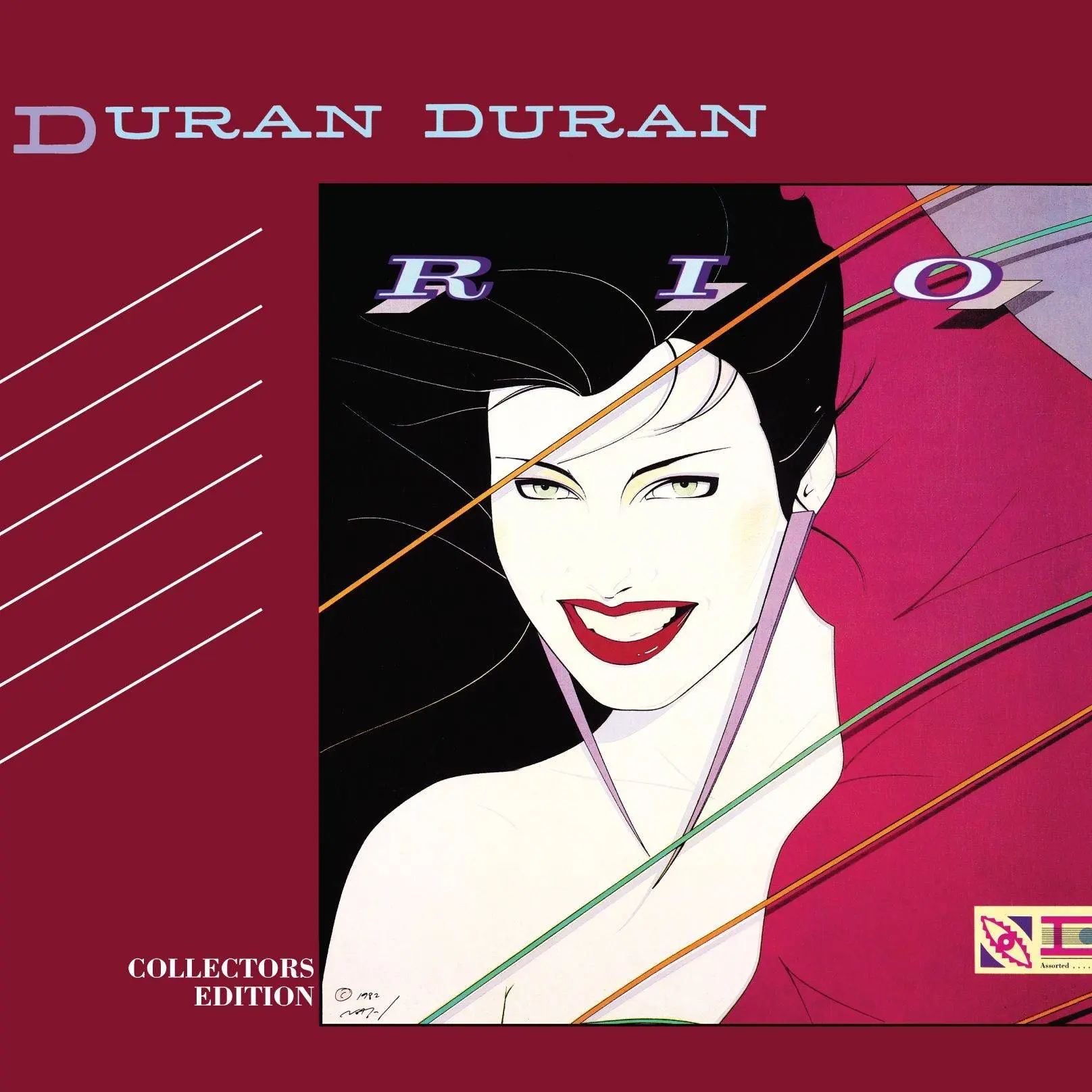
Rio seamlessly blended synth-pop, post-punk, and funk-driven basslines. It catapulted the band to global superstardom. The 9-track record includes timeless 1980s anthems like “Hungry Like the Wolf”, “Save a Prayer”, and “The Chauffeur”. The famous pop-art cover was painted by Patrick Nagel. In 2024, the mysterious “cherry ice cream smile” model was finally identified as former fashion model Marcie Hunt-Dinkel. The title track “Rio” is famous for its fast-paced synthesizer line, a signature saxophone solo by Andy Hamilton, and John Taylor’s intricate bassline. According to the band, the lyrics used “Rio” as a metaphor for their intense ambition to succeed in America. The song’s legendary music video, directed by Russell Mulcahy, featured the band wearing sharp, pastel Anthony Price silk suits while sailing on a yacht in Antigua, defined the high-glamour, escapist aesthetic of the 1980s. Rio is as representative of the ’80s at its best as it gets. The original Duran Duran’s high point, and just as likely the band’s as a whole, its fusion of style and substance ensures that even decades after its release it remains as listenable and danceable as ever. The quintet integrates its sound near-perfectly throughout, the John and Roger Taylor rhythm section providing both driving propulsion and subtle pacing. For the latter, consider the lush, semi-tropical sway of “Save a Prayer,” or the closing paranoid creep of “The Chauffeur,” “The Bogus Man.” Andy Taylor’s muscular riffs provide fine rock crunch throughout, Rhodes’ synth wash adds perfect sheen, and Le Bon tops it off with sometimes overly cryptic lyrics that still always sound just fine in context, courtesy of his strong delivery.
RioMy Own WayLonely In Your NightmareHungry Like The WolfHold Back The RainNew ReligionLast Chance On The StairwaySave A PrayerThe Chauffeur
Rio’s two biggest smashes burst open the door in America for the New Romantic/synth rock crossover. “Hungry Like the Wolf” blended a tight, guitar-heavy groove with electronic production and a series of instant hooks, while the title track was even more anthemic, with a great sax break from guest Andy Hamilton adding to the soaring atmosphere. Lesser-known cuts like “Lonely in Your Nightmare” and “Last Chance on the Stairway” still have pop thrills a-plenty, from start to finish, a great album that has outlasted its era
Ravedeath 1972 is the sixth studio album released in February, 2011, by Kranky. In the preceding years Hecker has established himself as a master of atmosphere. Creating his drone-based tempests with a mixture of laptop, keyboard, tape and effects-drenched guitar, his music often fundamentally serene despite the chill winds whipping across its surface. In this album lingering piano chords slip over the droning throb of the buried pipe organ, permeating the unsettled atmosphere This album was written by Hecker during late 2010 in Montreal and Banff, Canada. Widely considered Hecker’s masterpiece, the record blends ambient, drone, and noise music into an immersive exploration of sonic decay, technological obsolescence, and memory. The album was recorded primarily in Frikirkjan Church, Reykjavík. It makes prominent use of pipe organ, and was described by Hecker as “a hybrid of a studio and a live record.” The album’s striking artwork is a photograph of a real 1972 ritual “piano drop” executed by MIT students pushing an instrument off the roof of a campus building. The title references a three-fold dynamic: the violent degradation of acoustic instruments, our cultural relationship to fading technologies, and the ghost-like echoes of dance music culture. The 52-minute album is structured to be listened to as a continuous, sweeping piece of music across 12 tracks.
The Piano DropIn The Fog IIn The Fog IIIn The Fog IIINo DrumsHatred Of Music IHatred Of Music IIAnalog Paralysis, 1978Studio SuicideIn The Air IIn The Air IIIn The Air III
Released in 1980 on ECM Records, Jack DeJohnette’s Special Edition is a landmark avant-garde jazz album. It features a formidable frontline of saxophonists Arthur Blythe and David Murray alongside Peter Warren on bass and DeJohnette on drums, piano, and melodica. The record masterfully merges outside free jazz with traditional roots and blues. High-energy, raw, and bluesy. The interplay between Blythe’s sweet tone and Murray’s roaring, Eric Dolphy-inspired playing provides a rich, energetic contrast. DeJohnette’s drumming is explosive yet tasteful, and he also adds vibrant colour on acoustic piano and melodica. Revered by critics and fans as one of the most innovative contemporary jazz records of its era, balancing complex written arrangements with uninhibited solo flights
One For EricZoot SuiteCentral Park WestIndiaJourney To The Twin Planet
Notable tracks include: “One for Eric”: An exquisite and slightly humorous tribute to Eric Dolphy, driven by soaring bass clarinet. “Journey to the Twin Planet”: A highly adventurous, textural piece featuring a deeply immersive acoustic-electronic feel. ” Zoot Suite” — A tribute to saxophonist Zoot Sims. The aura of John Coltrane is not far behind on the peaceful “Central Park West,” with DeJohnette again on the underlying melodica, while “India” has DeJohnette leading out on a playful Native and Eastern Indian motif via his piano playing. Blythe and Murray literally weep on the alto and bass clarinet.
Spiegel im Spiegel (1978): His most widely recognized and popular work. It features a famously slow, meditative violin melody gliding over gentle, repeating piano arpeggios that mimic “mirrors reflecting mirrors”
Fratres (1977): A mesmerizing, highly adaptable piece written in a variation structure. It transitions beautifully between intense, virtuosic bursts and profoundly still, rhythmic, and atmospheric sequences.
Tabula Rasa (1977): A landmark double concerto composed for two violins, string orchestra, and a prepared piano. It is divided into two contrasting movements: the energetic Ludus and the slow, deeply quiet Silentium.
Festina lente (Latin for “make haste slowly”) is a mesmerising 1986 composition, scored for a string orchestra and harp. It is one of the most prominent examples of his signature tintinnabuli style, mimicking the mathematical, meditative resonance of bells. Cantus in Memoriam Benjamin Britten (1977): A short, devastatingly emotional elegy written for string orchestra and a solitary mourning bell. It utilizes a slowly cascading, descending canon that builds into a powerful wall of sound. Summa (1992)Originally written as a choral work back in 1977, Pärt’s Summa in its string quartet form is absolutely hypnotising, allowing us listening to float as if swimming in the ocean. The spine-tingling piece
Symphony No. 1, Op. 9 “Polyphonic” (1963): Composed upon graduating from the Tallinn Conservatory, this two-movement piece balances traditional Baroque counterpoint (Canons and a Prelude and Fugue) with strict 12-tone serialism. Symphony No. 2 (1966): A complex three-movement avant-garde experiment mixing aggressive serialism with chaotic textures influenced by Krzysztof Penderecki and the Polish school. Symphony No. 3 (1971): A critical turning point marking Pärt’s break from modernism, deeply inspired by his intense study of medieval plainsong and early Renaissance polyphony. After composing his Credo in 1968, he embarked on a transitional period where he stopped composing. The reason for this creative hiatus was Pärt’s realization that his musical compositional method had been fully developed. The only major piece he decided to work on was the third symphony, which came about right before the creation of his unique tintinnabular style. During the years between 1968 and the creation of both Fratres and Tabula Rasa, Pärt delved into Gregorian chant, early polyphonic music and polyphony from the Renaissance period, from which he found much inspiration for this symphony. By doing this, he rejected the serialist musical style he pioneered and advocated in Estonia and turned to a much denser, minimalistic musical language. Pärt finally completed the symphony in 1971.Pärt described this symphony later as a “joyous work” and stated that it was not “the end of my despair and search” Symphony No. 4 “Los Angeles” (2008): Pärt’s previous symphonies are scored for full orchestra but this was scored uniquely for strings, harp, timpani, and percussion. It is the first of his pieces that focuses on larger scale, instrumental tintinnabulation. Symphony No. 4 was written 37 years after Pärt’s third symphony. In the previous decade, he had written mostly mystical works for chorus and small vocal ensembles. The piece earns its nickname from its commission by the Los Angeles Philharmonic Association who had long desired to commission a new work by Pӓrt. A distinguishing feature of Pӓrt’s music is the way he has used it throughout his career in protest against different Russian governments. He composed serialist works when it was an aesthetic criticized by soviets, and composed religious music when the Soviet Union suppressed and persecuted Christianity. The symphony is dedicated to Mikhail Khodorkovsky, a Russian oil executive and Russia’s most politically active oligarch who was accused of and imprisoned for fraud. The piece is a protest against Vladimir Putin in its dedication.
Spiegel im SpiegelFratres (1989 Version for String Quartet)Tabula rasa- I. LudusTabula rasa- II. SilentiumCantus in memoriam Benjamin BrittenFestina lenteSumma for String OrchestraSymphony No.1 ‘Polyphonic’ – I. CanonsSymphony No.1 ‘Polyphonic’ – II. Prelude and FugueSymphony No.2 – ISymphony No.2 – IISymphony No.2 – IIISymphony No.3 – ISymphony No.3 – IISymphony No.3 – IIISymphony No.4 ‘Los Angeles’ – I. Con sublimita. Marcando con maesta. PacatoSymphony No.4 ‘Los Angeles’ – II. Affannoso. Un poco piu affannatoSymphony No.4 ‘Los Angeles’ – III. Insistentemente. Con intimo sentimento
in further issues we will continue to Bring you the music of Popular genres to listen, review and evaluate. issue #19 (coming soon) features the Black Keys, ben frost, eberhard Weber and John Luther Adams
NOTES
Sound quality is important and some streaming services will offer superior sound quality. We do encourage you to purchase albums from good online record stores. alternatively, stream the music of favoured artists from those better online streaming services.
Arvo Pärt – the very best of…- Label : warner classics ; Symphonies 1-4 – label : ECM
tim Hecker – ravedeath – Label : kranky
jack deJohnette – Special edition – label : eCM
Duran Duran – Rio – Label : eMI
It is helpful to research the artist, using sources like Wikipedia , Music Magazine Reviews (Pitchfork, Rolling stone, NME etc.,) Artist Websites, etc…
A synopsis of the life and music of this Issue’s featured artists appears below.
This Week’s Artists
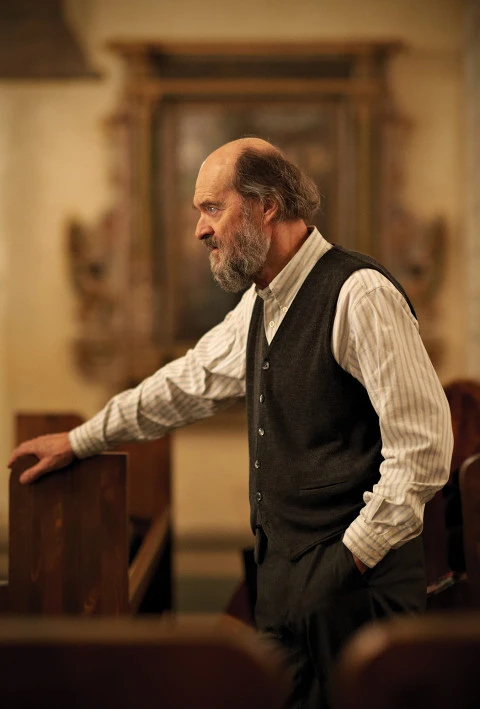
From sublime sacred choral settings, to mesmerising minimalist instrumental works, Pärt’s music is as accessible as it is profound. Arvo Pärt is one of the most performed living composers in the world. The Estonian composer’s beautiful, minimalist music is unique, atmospheric and mesmerising.
Arvo Pärt
Pärt was born in Estonia at a time when the country was experiencing a short period of independence from its more powerful neighbours. In 1944, however, Estonia was occupied by the Soviet Union and, as a result, Pärt spent the greater part of his life struggling against the Soviet regime. Pärt’s early works were influenced by Prokofiev and Shostakovich but the introduction of serialism into his music brought him into conflict with the authorities, who banned many of his earliest works. This affected him deeply and resulted in a period of silent introspection during which time he took a great interest in early music. He wrote Estonia’s first ever serial piece, Nekrolog, in 1960, whose dissonance and expressionist intensity that will shock you if you know Pärt only from his later music! At that time, he experimented with collage, with neo-classicism, and with aggressive dissonance, in ways that were bound to alienate him from the Soviet authorities but which began to bring him respect in the west. Pärt’s modernist credentials were cemented in his First and Second symphonies, but a crisis came in 1968 with his Credo, a work in which at least three worlds collide. Credo was an attempt to symbolise his frustration with what had become, for him, the dry, desiccated, avant garde, a world of purity represented by tonality and a quotation from Bach, and a setting of a religious text. The piece only avoided censure by the communists because its conductor, Neeme Järvi, didn’t show the score to the Estonian composers’ union before its premiere. And at its first performance, the piece was a lightning rod for protest against the regime, both because of its musical extremity and its religious conviction.
He went into a self-imposed creative exile for the next eight years, trying to find a way to resolve the creative conflict that he had opened up in Credo. His Third Symphony, from 1971, is the only piece that dates from this transitional period, an attempt to fuse elements of the traditions Pärt was drawn to: Gregorian chant, harmonic simplicity, and the spiritual explorations into his Russian Orthodox faith he undertook at the same time. It was during the 1970s that Pärt developed the “Tintinnabuli Style” of music for which he has become most famous – and which has resonated with millions of listeners and consumers. This style of composition has been likened to minimalism and there are distinct similarities in the use of slow tempi and repeated notation. Für Alina. This little piece is the seed from which the rest of Pärt’s musical life has grown: in the space of just a couple of years, Pärt composed the pieces that are still among his most popular today, including Fratres, the concerto for two violins, Tabula Rasa, Summa, and the Cantus in Memoriam Benjamin Britten. And here’s where it’s easy to be fooled by preconceptions about Pärt’s work. To dismiss it as cliched and sentimental holy minimalism is simply wrong. In 1980 he and his family emigrated to Austria, where he took up Austrian citizenship; they returned to Estonia at the beginning of the new century and to live in the capital, Tallinn.
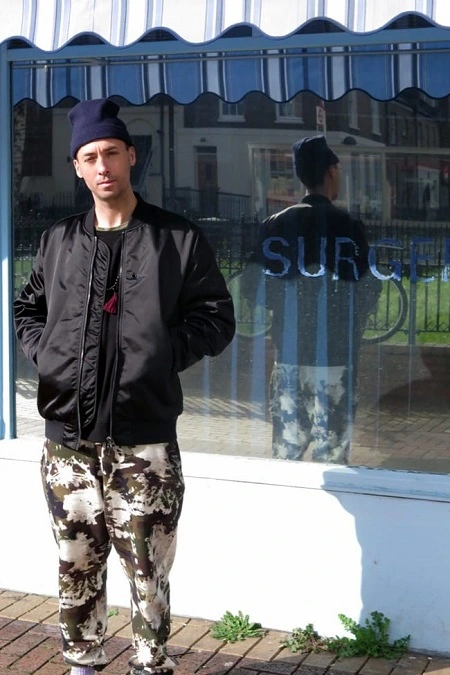
Tim Hecker (born July 17, 1974 is a Canadian electronic musician, producer, composer, and sound artist. His work, spanning albums such as Harmony in Ultraviolet (2006), Ravedeath, 1972 (2011) and Virgins (2013), has been widely critically acclaimed.[1][2] He has released eleven albums and a number of EPs in addition to a number of film scores and collaborations with artists such as Arca, Ben Frost, Jóhann Jóhannsson, Daniel Lopatin, and Aidan Baker
tim Hecker
Born in Vancouver, British Columbia, Hecker is the son of two art teachers. During his high school years, he played in rock bands with friends, before acquiring a sampler and working on solo material. He moved to Montreal, Quebec in 1998 to study at Concordia University and explore his artistic interests further.[6] He initially performed as a techno producer under the name Jetone, debuting in 1996. By 2001 he became disenchanted with the musical direction of the Jetone project. In 2001, Hecker released the album Haunt Me, Haunt Me Do It Again, under his own name through the label Alien8. He followed with Radio Amor (2003) and Mirages (2004). In 2006, he moved to Kranky (an American independent record label based in Chicago) where he released his fourth album Harmony in Ultraviolet. He subsequently incorporated the use of pipe organ sounds which were digitally processed and distorted. The ambient album was critically acclaimed. For the album Ravedeath, 1972 (2011), Hecker travelled to Iceland where together with Ben Frost, he recorded parts in a church. The album was awarded the Juno Award for Electronic Album of the Year. In November 2010, Alien8 re-released Hecker’s debut album on vinyl. His live performances contain improvisations by processing organ sounds that are manipulated, with great fluctuations in volume. In 2012, Hecker collaborated with Daniel Lopatin (who also records as Oneohtrix Point Never) on an improvisatory project which became Instrumental Tourist. Following 2013’s Virgins, Hecker returned to Reykjavík, Iceland for sessions in 2014 and 2015, to create what would become Love Streams. Collaborators include Ben Frost, Johann Johannsson, Kara-Lis Coverdale and Grimur Helgason, whilst the 15th century choral works by Josquin des Prez birthed the foundations of the album.
In February 2016, it was announced that Hecker had signed with 4AD while Love Streams was released in April of that year. In addition to touring with Godspeed You! Black Emperor, Sigur Rós, and recording with the likes of Fly Pan Am, Hecker has also collaborated with the likes of Arca and Aidan Baker. He has also contributed remixes to other artists, including Ellen Allien, John Cale, Isis, and Interpol.
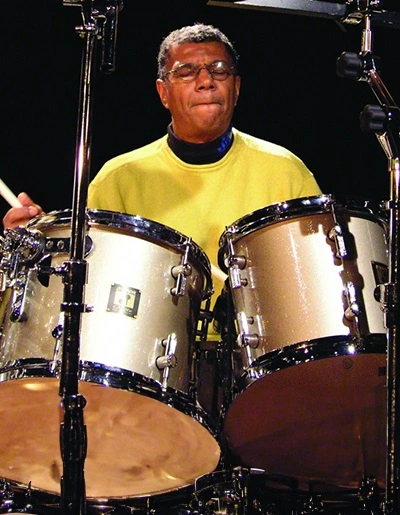
Jack DeJohnette (9 August 1942 – 26 October 2025) was an exceptionally influential American jazz drummer, pianist, and composer, widely ranked among the most creative and versatile percussionists in the history of the genre. Renowned for his unparalleled fluid sense of phrasing, expansive tonal palette, and an orchestral approach to the drum kit, DeJohnette was a crucial architect of modern jazz. He seamlessly bridged avant-garde experimentation, hard-driving post-bop, and foundational jazz fusion. Over his six-decade career.
Jack deJohnette
Jack DeJohnette (August 9, 1942 – October 26, 2025) was an American jazz drummer, pianist and composer. Known for his extensive work as leader and sideman. DeJohnette was inducted into the Modern Drummer Hall of Fame in 2007. He won two Grammy Awards and was nominated for six others. The Times said that as a drummer “few could rival his virtuosity or his dynamism”. He recorded more than 35 albums under his own name as a band leader. DeJohnette was born in Chicago, Illinois, on August 9, 1942, His parents moved to California to find work and he was raised by his grandmother Rosalie Ann Wood. His childhood was spent in a musical environment and his mother, who returned to Chicago without his father, was said to have composed the jazz standard ‘Stormy Monday’ and sold it for 50 dollars. DeJohnette played R&B, hard bop, and avant-garde music in Chicago. He led his own groups in addition to playing with others such as Roscoe Mitchell. DeJohnette also occasionally played drums for the Sun Ra Arkestra. He graduated from Chicago Vocational School in 1961, by which time he was well-known in the city’s jazz clubs. One night when John Coltrane and his quintet were playing a residency at a club, the drummer was late back for the final set and DeJohnette sat in for three numbers to cover for him. In 1966, DeJohnette moved to New York City, where he became a member of the Charles Lloyd Quartet, a band that recognized the influence of rock and roll on jazz. In Lloyd’s group DeJohnette first encountered pianist Keith Jarrett, who would work extensively with him throughout his career. He collaborated with Jarrett for almost 40 years. DeJohnette left the group in early 1968, citing Lloyd’s deteriorating “flat” playing as his reason for leaving. He joined Bill Evans’ trio in 1968, the same year the group headlined the Montreux Jazz Festival and produced the album Bill Evans at the Montreux Jazz Festival. In November 1968, DeJohnette worked briefly with Stan Getz and his quartet, which led to his first recordings with Miles Davis.
In 1969, DeJohnette left the Evans trio and replaced Tony Williams in Miles Davis’s live band. Davis had seen DeJohnette play many times, once during a stint with Evans at Ronnie Scott’s Jazz Club in London in 1968, where he also first heard bassist Dave Holland, and Davis recognized DeJohnette’s ability to combine the driving grooves associated with rock and roll with improvisational aspects associated with jazz. DeJohnette was the primary drummer on the album Bitches Brew, recorded in 1969 and released the following year. DeJohnette and the other musicians saw the Bitches Brew sessions as unstructured and fragmentary, but also innovative. He played on the live albums that followed the release of Bitches Brew, assembled from recordings of concerts at the Fillmore East in New York and Fillmore West in San Francisco. DeJohnette’s first record as leader, heading a sextet, The DeJohnette Complex, was released in 1968; on the album, he played melodica as well as drums. DeJohnette also recorded, in the early 1970s, the albums Have You Heard, Sorcery, and Cosmic Chicken. He released these first four albums on either the Milestone or Prestige labels, and then switched to ECM for his next endeavours; ECM gave him a “fertile platform” for his “atmospheric drumming and challenging compositions”. The musical freedom he had while recording for ECM offered DeJohnette many dates as a sideman and opportunities to start his own groups. Special Edition, was the first DeJohnette-led group to receive critical acclaim. This group also helped the careers of many lesser-known young horn players, as it had a rotating front line that included David Murray, Arthur Blythe, Chico Freeman, and John Purcell, among others. DeJohnette recorded more than 35 albums under his own name as a band leader with musicians including Jarrett, Herbie Hancock, Bill Frisell, Pat Metheny and Ravi Coltrane. DeJohnette’s work with Special Edition was interrupted regularly by other projects, the most significant of which were his recordings in 1983 and tours from 1985 as a member of Keith Jarrett’s trio, which was totally devoted to playing jazz standards. Another of DeJohnette‘s high-profile projects in the early 1990s was a touring quartet consisting of himself, Holland, Herbie Hancock, and Pat Metheny. In 1992, the group released Music for a Fifth World. Given the diversity of players and styles that he had embraced by this point, DeJohnette was already describing his music in the 90s as “multidimensional.” In 2004, DeJohnette recorded and toured with two Grammy nominated projects – Out of Towners, with Jarrett and Peacock. He continued to work with Jarrett and Peacock in 2005, but also launched numerous additional ventures that same year, including The Jack DeJohnette Quartet. DeJohnette‟s Peace Time won a Grammy in 2009 for Best New Age Album. The album consists of an hour-long, continuous piece of music described as “a river of meditative delight.” Marking his 70s in 2012, he received a National Endowment for the Arts Jazz Master Fellowship – the highest U.S. honour for jazz musicians. The year-long birthday celebration included performances at the Monterey and Newport Jazz festivals, a tour of Europe with The Jack DeJohnette Group (a quintet he formed in 2010) and several concerts with Chick Corea and Stanley Clarke. DeJohnette remained active well into the 2020s. DeJohnette died of congestive heart failure in Kingston, New York, on October 26, 2025, at the age of 83.
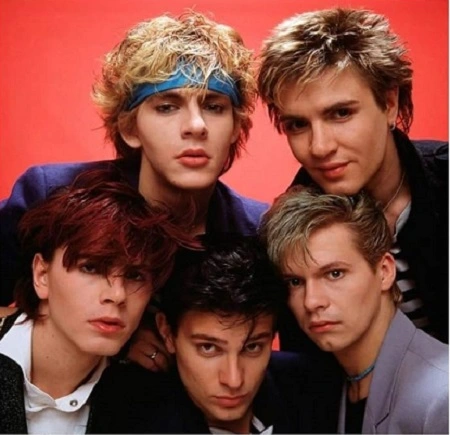
Duran Duran is a legendary English pop-rock and New Romantic band formed in Birmingham in 1978. Best known for pioneering the MTV music video era, Winning early Grammy Awards for high-concept music videos like “Girls on Film” and “The Wild Boys”. they have sold over 100 million records worldwide. The core classic line-up features singer Simon Le Bon, keyboardist Nick Rhodes, bassist John Taylor, and drummer Roger Taylor. Specializing in danceable, synthesized pop delivered with visual flair, Duran Duran epitomizes the sleek, fashionable side of new wave
duran duran
Duran Duran are an English pop rock band. Formed in Birmingham in 1978 by keyboardist Nick Rhodes, guitarist (later bassist) John Taylor and singer/bassist Stephen Duffy, the band went through several early changes before the band’s line-up settled in May 1980 as Rhodes, Taylor, singer Simon Le Bon, guitarist Andy Taylor and drummer Roger Taylor. Duran Duran’s first performance with the lineup of Le Bon, Rhodes and the three Taylors was on 16 July 1980 at the Rum Runner. Duran Duran spent the next few months writing, developing and demoing their songs and performed in clubs around Birmingham and London. In September 1980 they had written all of what would become their debut album. Touring as an opening act for Hazel O’Connor, the band attracted critical attention, resulting in a bidding war between the record companies EMI and Phonogram. They signed with EMI The first article about Duran Duran in a national magazine appeared in Sounds a week after. The members of Duran Duran had noticed that Betty Page (pen name for Beverley Glick) was writing about a new movement called New Romantic that would fit the band perfectly and invited her to meet them at the Rum Runner. Duran Duran is the debut studio album released in June 1981. It features a mixture of new wave, synth-pop and dance-punk tunes with more atmospheric tracks, as well as elements of disco and punk rock. Le Bon’s cryptic lyrics cover topics from youthful torment and confusion to the band’s goals and ambitions. The album, initially received mixed reviews. Critics felt the band did not stand out from their contemporaries.
Retrospective reviews have been more positive, with critics complimenting the band for creating a modern sound that spearheaded the New Romantic movement. In May 1982, Duran Duran released their second album, Rio, which entered the UK Albums Chart at number four and peaked at number two the following week. The band began to achieve worldwide recognition. A headlining tour of Australia, Japan and the US was followed by a stint supporting Blondie during that band’s final American tour. The band were under pressure to follow up the success of Rio, and the recording process took over six months as different band members went through bouts of perfectionism and insecurity. A newly decadent lifestyle and substance abuse issues for some members added complications. The new album, Seven and the Ragged Tiger (1983), included the late 1983 hit “Union of the Snake” (with the soprano saxophone solo by Andy Hamilton). Whilst Duran Duran were on hold, band members were soon anxious to record new music, leading to a supposedly temporary split into two side projects. John Taylor and Andy Taylor collaborated with lead vocalist Robert Palmer and Chic’s drummer Tony Thompson to form the rock/funk supergroup the Power Station and pursue hard rock material. Le Bon and Rhodes wanted to further explore Duran Duran’s atmospheric aspect and formed Arcadia, releasing one album. The band regrouped to contribute “A View to a Kill” to the 1985 James Bond film of the same name. It was the last single the band recorded as the original five-piece for close to twenty years. Roger Taylor left the band and retired to the English countryside, suffering from exhaustion. Andy Taylor signed a solo recording contract in Los Angeles with MCA Records, eventually releasing a solo album in 1986 called Thunder. The band resorted to legal measures to get him into the studio but after numerous delays they let him go at last. He played on only a few songs on the next album Notorious released in October 1986 whilst the disagreements were being settled. The album was a relative failure globally. The next album Big Thing (1988) was experimental, mixing influences from house music and raves with Duran’s atmospheric synth-pop and the creative guitar work of Cuccurullo (previously hired as a session musician was now a full band member), as well as more mature lyrics. Liberty is the sixth studio album by the English pop rock band Duran Duran, released in August 1990 by Parlophone. The album spawned the singles “Violence of Summer (Love’s Taking Over)” and “Serious”. The album received negative reviews from critics, citing poor songwriting and a lack of musical direction.In 1993, the band released a second self-titled album Duran Duran and this album became known as The Wedding Album (for Nick Egan’s cover art featuring the wedding photos of the band members’ parents) to distinguish it from the 1981 release. In 1995, the band released the cover album Thank You. Songs from Thank You included covers. In January 1997, John Taylor announced at the DuranCon fan convention that he was leaving the band “for good”. His departure reduced the band to two long time members (Le Bon and Rhodes) and Cuccurullo, who decided to continue recording under the name Duran Duran. The follow-up, Medazzaland, was released in 1997 but failed to produce any major hits. In 1999 the band parted ways with Capitol/EMI although the label has since used Duran Duran’s back catalogue to release several compilations of remixes and rare vinyl-only B-sides. The band then signed what was intended to be a three-album contract with Disney Music Group’s Hollywood Records, but it lasted only through the poorly received 2000 album Pop Trash. This slow-paced and heavy album seemed out-of-keeping with earlier band material. Rhodes’ intricate production and Cuccurullo’s songwriting and experimentation with guitar sounds and time signatures were not enough to hook the public, and the album did not perform well. The original lineup from the New Romantic era reunited for 2004’s Astronaut, a move that helped revive the band’s profile. Over the next decade: Carpet Massacre, produced by Timbaland and without Andy Taylor, followed in 2007. In 2011, Duran Duran delivered their 13th studio album, the Mark Ronson-produced All You Need Is Now; it was greeted with positive reviews. Duran Duran began recording for their 14th album in 2013 and worked on it over the next two years. When it finally materialized in September 2015, Paper Gods bore tracks produced by both Mark Ronson and Nile Rodgers, The COVID-19 pandemic delayed the release of the ensuing Future Past until October 2021. they collaborated with a number of prominent modern hitmakers, including Timbaland, Justin Timberlake, Mark Ronson, and Blur’s Graham Coxon, who were featured on their 2021 album Future Past. Inducted into the Rock and Roll Hall of Fame in 2022, the band continues to thrive. By March 2023, they had begun working on new material, including some with andy Taylor. The resulting Danse Macabre album emphasized the group’s connections to the goth side of post-punk and was met with generally favourable reviews from music critics.