In This issue #19 we highlight 4 artists and some significant works
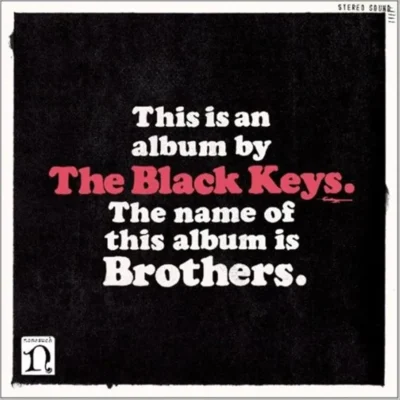
‘Brothers’ (2010) For their sixth album, the Black Keys landed at the legendary Alabama studio Muscle Shoals and crafted their mainstream breakthrough, with elements of glam, garage-rock and the blues throughout the LP. The record served as a major turning point for the duo of Dan Auerbach and Patrick Carney. Moving away from their strictly stripped-down blues sound, Brothers introduced falsetto vocals, drum machines, and lush keyboard layers. The album features 15 tracks that weave between swaggering rock and melancholic, soulful blues. “Tighten Up” was the most popular song and other songs such as the pulsating drive of “Howlin’ for You” and the soulful lament of “Next Girl” to the down-home romance of “Everlasting Light” and sleazy swing of “Ten Cent Pistol,” helped create an engrossing world. Most striking on Brothers is Auerbach’s incorporation of falsetto. The man has honed his speaker-blowing howl for so long now, it’s genuinely surprising to hear him try another vocal style. Even more surprising is how good he is at it, too: he’s controlled and natural on “Everlasting Light”, vibing with high-pitched restraint, while on the penultimate track “Never Gonna Give You Up”, he lets loose over a shimmering Motown melody.
Everlasting LightNext GirlTighten UpHowlin’ for YouShe’s Long GoneBlack MudThe Only OneToo Afraid to Love YouTen Cent PistolSinister KidThe Go GetterI’m Not the OneUnknown BrotherNever Gonna Give You UpThese Days
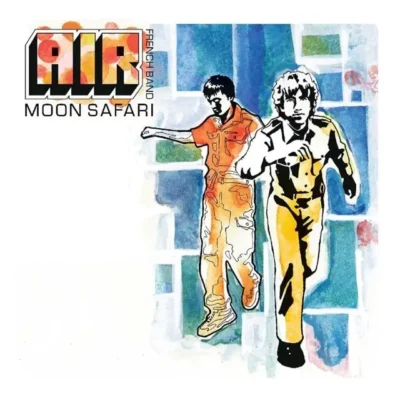
Moon Safari is widely considered the absolute best album by the French electronic duo Air. Released in January 1998, this landmark record defined the space-age pop and downtempo “chill-out” genres of the late 1990s and early 2000s, an absolute masterpiece of the 90s “French touch”. It perfectly blended ambient soundscapes, retro synth textures, and live instrumentation (like acoustic guitar and funky basslines). to create a lush, atmospheric, and romantic sound. Air were classically trained musicians who wore their hearts on their sleeves. The atmosphere of their music was balanced by the human emotion in their songwriting. The album features legendary electronic pop tracks like album opener ‘La Femme d’Argent’ which is a wonderful example of Air’s delightfully carefree, melodic brilliance. The track also features stunning bass work, defining the melody and rhythmic pulse. ‘You Make It Easy’, a glittering highlight, spoke of the magic of falling in love, Beth Hirsch’s vocal soaked in emotion, while ‘New Star in the Sky (Chanson pour Solal)’ brings affection, warmth, and light into one’s life.
La femme d’argentSexy BoyAll I NeedKelly, Watch the starsTalismanRememberYou Make It EasyCe Matin-làNew Star in the Sky (Chanson pour Solal)Le Voyage de Pénélope
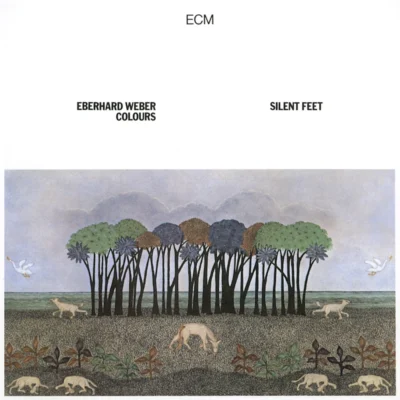
Silent Feet (1977): A masterclass in “contrasting sound with silence,” this record balances sprawling, beautiful melodic compositions with spontaneous group improvisations. Silent Feet is a landmark progressive jazz album by Weber and his band, Colours, recorded in November 1977 and released in March 1978 on the legendary ECM Records label. The record is widely celebrated as a pinnacle of the atmospheric, minimalist, and deeply lyrical “ECM sound”. The music on the album is shaped by Weber’s distinct, custom-built five-string electric upright bass and an extraordinary quartet of musicians – Eberhard Weber – Framus electric upright bass, composer, bandleader – Charlie Mariano – Soprano saxophone and flutes – Rainer Brüninghaus – Piano and synthesizers – John Marshall – Drums (replacing Jon Christensen from the band’s previous album, Yellow Fields).
Seriously DeepSilent FeetEyes That Can See in the Dark
The album consists of three expansive, beautifully constructed compositions: Seriously Deep (17:48) – A sweeping, modal masterwork that builds slowly from tender drones and electric piano into a life-affirming, energetic groove. Silent Feet (12:10) – The title track, famous for its hypnotic rhythm, seamless ensemble interplay, and Brüninghaus’ running piano lines. Eyes That Can See in the Dark (12:20) – A stark, atmospheric, and moody closing piece filled with exotic textures and ethnic woodwinds.
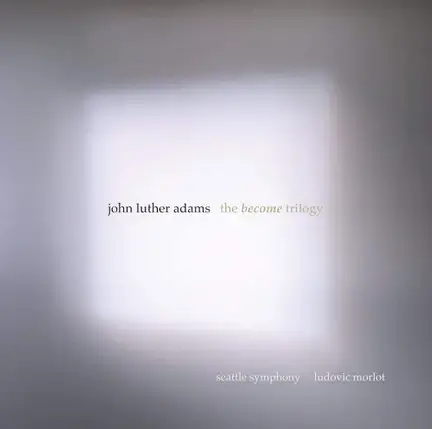
Become Ocean is a monumental, 42-minute orchestral composition, the piece acts as a massive, meditative soundscape that reflects the vastness, depth, and vulnerability of the natural world.The stage is physically divided into three distinct instrumental groups—strings, woodwinds, and brass—each with its own independent rhythm and journey.: The score is a giant mathematical palindrome. The second half of the piece is the exact musical reverse of the first half. Become Desert Inspired by Adams’ move from the Alaskan tundra to the deserts of Mexico, the piece acts as both a celebration of natural aridity and a warning about climate change originating from human activity. The focus is on intense stillness, shimmering textures, tolling bells, and long-held string harmonics that capture the hazy, sapping heat of a desert mirage. Become River : The music begins from a single, high descending pitch. It slowly deepens and expands into a dense delta of cascading melodic streams.
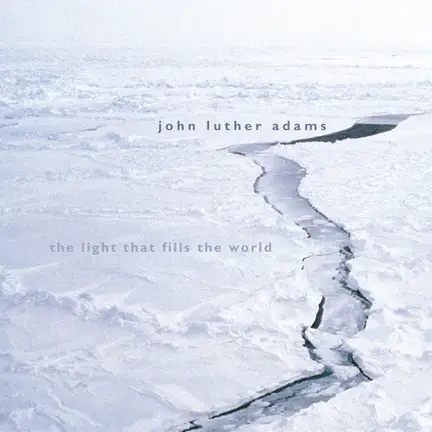
Three darkly textured pieces for bass clarinet, marimba, vibraphone, piano, organ, violin, and double bass: The Light That Fills the World, The Immeasurable Space of Tones, and The Farthest Place. It is compelling, quietly expressive music that seems timeless in its sublimity.
Become DesertBecome OceanBecome RiverThe Farthest PlaceThe Light That Fills The WorldThe Immeasurable Space Of Tones
in further issues we will continue to Bring you the music of Popular genres to listen, review and evaluate. issue #19 (coming soon) features Franz Ferdinand, air, jason moran and mason Bates
NOTES
Sound quality is important and some streaming services will offer superior sound quality. We do encourage you to purchase albums from good online record stores. alternatively, stream the music of favoured artists from those better online streaming services.
john luther adams – the Become Trilogy – Label : Cantaloupe ; the light that fills the world – label : Cold Blue Music
It is helpful to research the artist, using sources like Wikipedia , Music Magazine Reviews (Pitchfork, Rolling stone, NME etc.,) Artist Websites, etc…
A synopsis of the life and music of this Issue’s featured artists appears below.
This Week’s Artists
John Luther Adams (born January 23, 1953) is an American composer. His history of environmental activism informs his music. His orchestral work Become Ocean was awarded the 2014 Pulitzer Prize for Music
John Luther Adams
Born in Meridian, Mississippi, Adams began playing music as a teenager as a drummer in rock bands. He attended the California Institute of the Arts as an undergraduate in the early 1970s, studying with James Tenney and Leonard Stein, and graduated in 1973. After graduating, Adams worked full-time as an environmental activist before focusing entirely on composition, viewing music as a spiritual discipline capable of changing the world where politics falls short. Through this work Adams first travelled to Alaska in 1975. Adams moved to Alaska in 1978 and lived there until 2014. He subsequently divided his time between New York and the Sonoran Desert in Mexico, though his time in Alaska continues to be a prominent influence in his music. From 1982 to 1989, he performed as timpanist and principal percussionist with the Fairbanks Symphony Orchestra and the Arctic Chamber Orchestra. Since January 2024, seeking a cultural and creative refuge, Adams and his wife moved to Australia, settling on the outskirts of Alice Springs to write music influenced by the country’s ancient landscapes. Adams’s composition work spans many genres and media. He has composed for television, film, children’s theater, voice, acoustic instruments, orchestra, and electronics.
Early in his career, Adams was influenced by the music and writings of Frank Zappa, whose enthusiasm for Edgard Varèse intrigued Adams. Through his careful listening to Varèse, Adams developed an interest in and was influenced by the music of John Cage and Karlheinz Stockhausen, among others. From 1998 to 2002, Adams served as associate professor of composition at Oberlin Conservatory of Music. His love of nature, concern for the environment and interest in the resonance of specific places led him to pursue the concept of sonic geography in compositions that translate abstract dimensions of specific places into immersive auditory experiences, integrating musical textures with natural phenomena. Early examples of this idea include two works written during Adams’s sojourn in rural Georgia: Songbirdsongs (1974–80), a collection of indeterminate miniature pieces for piccolos and percussion based on free translations of bird songs, and Night Peace (1977), a vocal work capturing the nocturnal soundscape of the Okefenokee Swamp through slow-changing and sparse sonic textures. His work, Sila: The Breath of the World, represents the “air element”, following the representation of water in Become Ocean and the “earth element” in Inuksuit, an outdoor percussion piece. His music, he says, is “our awareness of the world in which we live and the world’s awareness of us”. Many of his works feature unique instrumentation and expansive staging, such as Inuksuit, a piece written for up to 99 percussionists to be performed outdoors. His orchestral music often features lush, slow-moving walls of shifting colour rather than conventional linear, narrative developments. His more recent works include, Across the Distance, for a large number of horns, was premiered in July, 2015 His recording of Ilimaq (“spirit journeys”), a solo work for percussion, played by art-music percussionist, composer, and Wilco drummer Glenn Kotche, was released in October 2015. A combination of contemporary classical music, Alaskan field recordings, and found sounds from the natural world, it evokes the travels of a shaman riding the sound of a drum to and from the spirit world. Other celebrated works include Become Ocean (2013): A monumental, palindromic orchestral piece mimicking tidal surges to evoke melting polar ice caps and rising sea levels. The Place Where You Go to Listen: A permanent sound and light installation at the University of Alaska Museum of the North that translates real-time geophysical data (auroras, seismic activity) into a musical ecosystem. Become Desert (2018): A companion piece to Become Ocean that expands the physical space of the orchestra, immersing the listener in five separate instrumental choirs. Vespers of the Blessed Earth (2023): A large-scale piece for orchestra and choir that confronts climate grief, human impact, and Earth’s endurance.
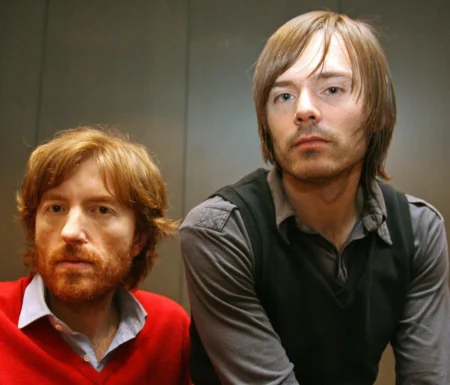
Air is a French music duo from Versailles, consisting of Nicolas Godin and Jean-Benoît Dunckel. Their critically acclaimed debut album, Moon Safari, including the track “Sexy Boy”, was an international success in 1998. Its follow-up, The Virgin Suicides, was the score to Sofia Coppola’s first film The Virgin Suicides. The band has since released the albums 10 000 Hz Legend, Talkie Walkie, Pocket Symphony, Love 2, Le voyage dans la lune and Music for Museum. The band is influenced by a wide variety of musical styles and artists.
Air
Nicolas Godin studied architecture at the École nationale supérieure d’architecture de Versailles, and Jean-Benoît Dunckel studied mathematics, before forming a band in 1995. Before founding Air, Dunckel and Godin played together in the band Orange with others such as Alex Gopher, Xavier Jamaux and Jean de Reydellet. The former two subsequently contributed to remixes of tracks recorded by Air. Initially Godin worked alone, recording a demo with members of Funkadelic as his backing band before releasing his first entirely solo effort, “Modular Mix”, which featured production by Étienne de Crécy. After making several remixes for other acts in the early 1990s, Air recorded its first EP, Premiers Symptômes, in 1997. The band would sign to Virgin Records and Astralwerks following the success of their first EP. The band’s debut full-length album, Moon Safari, was released on January 16, 1998. Air would find major international success with their song “Sexy Boy”, which released as the album’s lead single. The album would produce two more chart topping singles “Kelly Watch The Stars” and “All I Need”. Following the album’s international success, the band would pursue a world tour, which was documented in their film Air: Eating, Sleeping, Waiting and Playing, directed by Mike Mills. In 2000, Air composed the original score for Sofia Coppola’s debut film The Virgin Suicides, a highly praised, dark, and cinematic soundtrack album that showcased a more visceral and atmospheric side to the duo.
With further success, the band would go on to produce their second studio album, 10 000 Hz Legend, which released on May 28, 2001, an experimental left-turn into a more uncommercial, progressive rock, and electronic sound. The album went on to receive polarizing reviews from both critics and fans. Dunckel and Godin also released three other studio albums in the 2000s, including Talkie Walkie (2004), often cited by core fans as their second-best album. It returned to the gorgeous, accessible pop melodies of Moon Safari, producing hits like “Cherry Blossom Girl”. Pocket Symphony (2007), and Love 2 (2009). In 2012, the duo released their second score and sixth studio album Le voyage dans la lune, and later would soundtrack for the Palais des Beaux-Arts de Lille with 2014’s Music for Museum. Air uses many of its studio instruments (including Moog synthesizers, the Korg MS-20, Wurlitzers and vocoders) on stage. The band performs tracks from their albums live as extended or altered versions. Air often collaborates (both in the studio and live) with artists like Beth Hirsch (Moon Safari), Françoise Hardy (“Jeanne”), Jean-Jacques Perrey (“Cosmic Bird”), Gordon Tracks (“Playground Love” and “Easy Going Woman” – Gordon Tracks is a pseudonym of the French singer Thomas Mars from Phoenix), Beck (10 000 Hz Legend)[26] and Jean-Michel Jarre (“Close Your Eyes” from Jarre’s Electronica 1: The Time Machine).
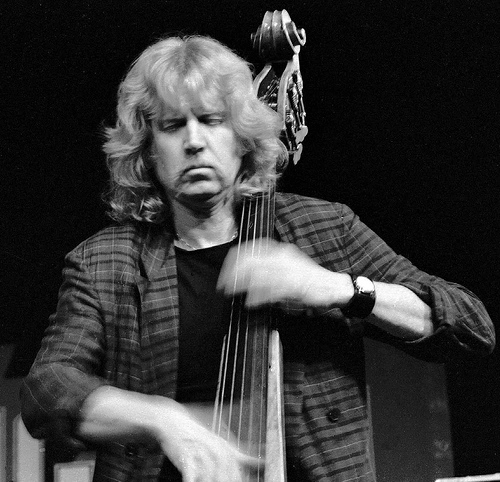
Eberhard Weber is a German double bassist and composer. As a bass player, he is known for his highly distinctive tone and phrasing. Weber’s compositions blend chamber jazz, European classical music, minimalism and ambient music, and are regarded as characteristic examples of the ECM Records sound.In addition to his career as a musician, he also worked for many years as a television and theatre director.
eberhard weber
Weber was born on January 22, 1940, in Stuttgart Germany. His father was a music teacher which meant that Weber received classical music training growing up, beginning on the cello at 6 years old. He began to play the double bass in high school when he was 16 years old. His music teacher wanted someone to play the bass and Weber volunteered. Weber joined the band Spectrum alongside musician Dave Pike and Volker Kriegel. He left the band soon after joining dissatisfied with the rock-oriented direction of the band. He also wanted to experiment with the solid-body electric double bass that he had started playing. He was an early proponent of the instrument, adding a fifth string, which he has played regularly since the early 1970s. From the early 1960s to the early 1970s, Weber’s closest musical association was with pianist Wolfgang Dauner. Their many mutual projects were diverse, from mainstream jazz to jazz-rock fusion to avant-garde sound experiments. In the mid-1970s Weber formed his own group, Colours, with Charlie Mariano (soprano saxophone, flutes), Rainer Brüninghaus (piano, synthesizer) and Jon Christensen (drums). After their first recording, Yellow Fields (1975), Christensen left and was replaced by John Marshall. The group toured extensively and recorded two further records, Silent Feet (1977) and Little Movements (1980), before disbanding. Weber released The Colours of Chloë his first record under his own name, in 1973. He has released 13 more records all on ECM along with many collaborations with other ECM recording artists. Since the early 1980s, Weber has regularly collaborated with the British singer-songwriter Kate Bush, playing on four of her last six studio albums. During the 1980s, Weber toured with Barbara Thompson’s jazz ensemble Paraphernalia.
Since 1990, Weber’s touring has been limited, and he has had only two new recordings under his own name: The 2001 release Endless Days is an elemental fusion of jazz and classical music flavours, fitting well the moniker chamber jazz. His main touring activity during that period was as a regular member of the Jan Garbarek Group. On April 23, 2007, Weber suffered a stroke while on tour with the Jan Garbarek Group. Weber has not been able to play the bass since. Weber’s latest albums, Résumé (2012) and Encore (2015) comprise solos from his performances worldwide with The Jan Garbarek Group, overdubbed with keyboards/treatments by Weber, saxophone by Garbarek, and flügelhorn by Ack Van Rooyen.
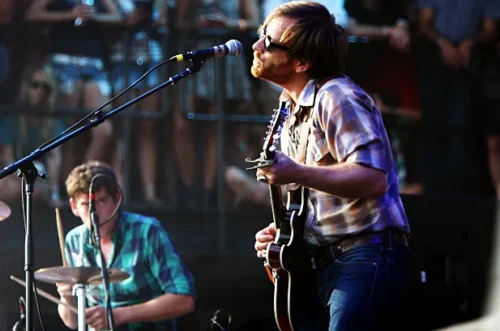
The Black Keys are an American rock duo formed in Akron, Ohio, in 2001. The group consists of Dan Auerbach (guitar, vocals) and Patrick Carney (drums). The duo began as an independent act, and rose from a lo-fi basement act to become one of the definitive leaders of the 21st-century garage rock revival. The band’s raw blues rock sound draws heavily from Auerbach’s blues influences, including Howlin’ Wolf, and Robert Johnson.Their music is celebrated for its raw, gritty blend of blues, garage rock, and indie soul.
Black Keys
Guitarist and vocalist Dan Auerbach and drummer Patrick Carney first met when they were nine years old and were casual friends while living in the same neighbourhood of Akron, Ohio, a couple houses down from each other. Auerbach and Carney both come from musical backgrounds. Auerbach is the cousin of guitarist Robert Quine, a “veteran of New York’s avant-rock scene.” Carney is the nephew of saxophonist Ralph Carney, who performed on several Tom Waits albums. While attending Firestone High School, they became friends again, though they were part of different crowds. Encouraged by their brothers, the duo began jamming together in 1996, as Auerbach was learning guitar at the time and Carney owned a four-track recorder and a drum set. After graduating, both briefly attended the University of Akron before dropping out. Carney and Auerbach jammed, eventually leading to the duo forming a band in mid-2001. Together, they recorded a six-song demo consisting of “old blues rip-offs and words made up on the spot” with minimal equipment. After sending the demo to a dozen record labels, they accepted an offer in 2002 from a small indie label in Los Angeles named Alive. The band’s debut album, The Big Come Up, was recorded entirely in Carney’s basement on an 8-track tape recorder in lo-fi and was released in May 2002. Despite modest sales for The Big Come Up, it gained a cult following and attracted attention from critics, eventually landing the group a record deal with Fat Possum Records. Within days of signing to Fat Possum,
the Black Keys completed their second album, Thickfreakness. It was recorded in Carney’s basement in a single 14-hour session in December 2002, an approach necessitated because the group spent its small advance payment from Fat Possum on rent. The album received positive reviews from critics and spawned three singles. For their third album, Rubber Factory, the band was forced to find a new recording location, a makeshift studio in a former tire-manufacturing factory in Akron, and recorded from January to May 2004. The album was released in September, 2004, and became the group’s first record to chart. On May 2, 2006, the Black Keys released Chulahoma: The Songs of Junior Kimbrough, a 6-track album of cover versions of songs by Junior Kimbrough. It was the band’s final release with the independent label Fat Possum. Having fulfilled their two-album contract, the band signed with the major label Nonesuch Records. For their fifth studio album, Attack & Release, they asked Danger Mouse to produce the record who supplemented the band’s sound with instrumental flourishes and more polished production values. Released in April, 2008, the album debuted at number 14 on the Billboard 200. Auerbach and Carney moved to Nashville in 2010, where they established a studio downtownGuitarist and vocalist Dan Auerbach and drummer Patrick Carney first met when they were nine years old and were casual friends while living in the same neighbourhood of Akron, Ohio, a couple houses down from each other. Auerbach and Carney both come from musical backgrounds. Auerbach is the cousin of guitarist Robert Quine, a “veteran of New York’s avant-rock scene.” Carney is the nephew of saxophonist Ralph Carney, who performed on several Tom Waits albums. While attending Firestone High School, they became friends again, though they were part of different crowds Encouraged by their brothers, the duo began jamming together in 1996, as Auerbach was learning guitar at the time and Carney owned a four-track recorder and a drum set. After graduating, both briefly attended the University of Akron before dropping out. Carney and Auerbach jammed, eventually leading to the duo forming a band in mid-2001. Together, they recorded a six-song demo consisting of “old blues rip-offs and words made up on the spot” with minimal equipment. After sending the demo to a dozen record labels, they accepted an offer in 2002 from a small indie label in Los Angeles named Alive. The band’s debut album, The Big Come Up, was recorded entirely in Carney’s basement on an 8-track tape recorder in lo-fi and was released in May 2002. Despite modest sales for The Big Come Up, it gained a cult following and attracted attention from critics, eventually landing the group a record deal with Fat Possum Records. Within days of signing to Fat Possum, the Black Keys completed their second album, Thickfreakness. It was recorded in Carney’s basement in a single 14-hour session in December 2002, an approach necessitated because the group spent its small advance payment from Fat Possum on rent. The album received positive reviews from critics and spawned three singles. For their third album, Rubber Factory, the band was forced to find a new recording location, a makeshift studio in a former tire-manufacturing factory in Akron, and recorded from January to May 2004. The album was released in September, 2004, and became the group’s first record to chart. On May 2, 2006, the Black Keys released Chulahoma: The Songs of Junior Kimbrough, a 6-track album of cover versions of songs by Junior Kimbrough. It was the band’s final release with the independent label Fat Possum. Having fulfilled their two-album contract, the band signed with the major label Nonesuch Records. For their fifth studio album, Attack & Release, they asked Danger Mouse to produce the record who supplemented the band’s sound with instrumental flourishes and more polished production values. Released in April, 2008, the album debuted at number 14 on the Billboard 200. Auerbach and Carney moved to Nashville in 2010, where they established a studio downtown