In This issue #20 we highlight 4 artists and some significant works
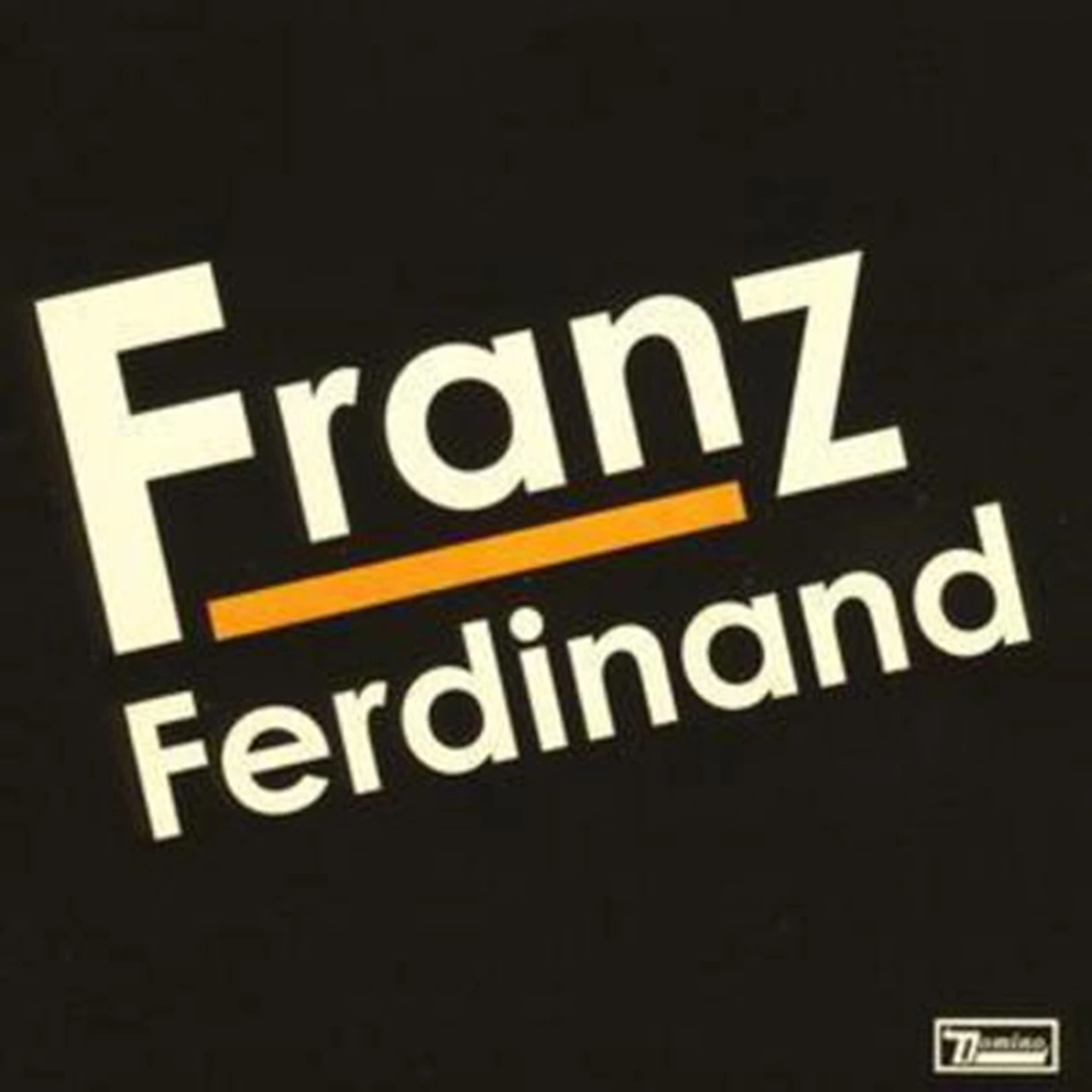
Franz Ferdinand won the 2004 Mercury Prize and earned a Grammy nomination for Best Alternative Album.The self-titled debut album was released in February 2004 through the Domino Recording Company. The record was an instant commercial and critical triumph, launching the Scottish band into global stardom.The 11-track album delivers a precise blend of post-punk revival and dance-rock. From the first track, “Jacqueline,” which begins with a deceptive atmospheric acoustic intro before jumping into a frenzy of guitar and wild lyrics. Franz Ferdinand is darker and more diverse than the band’s previous work. “Auf Auchse” has an unnerving aggressive contradiction in its desire for Love, “Take Me Out” remains unmatched for sheer drama; with its relentless stomp. “The Dark Of The Matinee” for its strange tale of art-school passion.”Come on Home” has emotional lyrics and a notable keyboard sound. “Darts of Pleasure” has a lovely vocal melody, floating wistfully above the scratching guitars, and a remarkable finale. It’s thrilling. The Guardian review proclaims “Their debut album pulls off a fine balancing act: clever without sounding pretentious, idiosyncratic but easy to get along with, a shift away from post-Britpop traditionalism that still recognises the importance of writing great pop songs.”
JacquelineTell Her TonightTake Me OutThe Dark Of The MatinéeAuf AchseCheating Of YouThis FireDarts Of PleasureMichaelCome On Home40FT
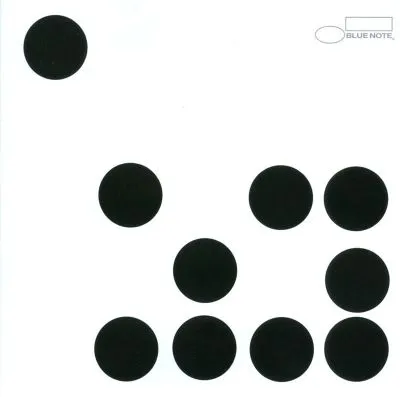
Ten (2010) Widely considered Jason Moran’s masterpiece, this album celebrated the 10-year anniversary of The Bandwagon. released under the Blue Note Records label it features bassist Tarus Mateen and drummer Nasheet Waits. the record serves as a showcase for the trio’s tightly-knit, telepathic musical rapport developed over a decade of playing together. It features a breathtaking mix of original compositions, tributes (like Crepuscule with Nellie), and re-contextualized hip-hop and historical influences. notable tracks include: Blue Blocks –blending blues and gospel-rooted themes. RFK In The Land Of Apartheid – about Robert Kennedy’s 1966 visit to South Africa. Feedback Pt. 2 – An experimental track incorporating audio feedback sampled from Jimi Hendrix’s 1967 Monterey performance. Crepuscule With Nellie – A rigorous, personal interpretation of the classic ballad by Thelonious Monk. Study No. 6 – An adaptation of American avant-garde composer Conlon Nancarrow’s player-piano composition. Pas De Deux – Lines Ballet – A piece carrying a romantic, modernist point of view heavily influenced by modern classical motifs. Gangsterism Over 10 Years – A continuation of Moran’s career-long “Gangsterism” compositional theme, marking the milestone anniversary. Big Stuff – A rambunctious, reimagined cover of the Leonard Bernstein classic. Play To Live – An original trio collaboration. The Subtle One – A moody, atmospheric track highlighting the band’s laid-back inflections. Old Babies – A playful, experimental tune featuring sound effects mixed with the voice of Moran’s son.
Blue BlocksRFK In The Land Of ApartheidFeedback Pt. 2Crepuscule With NellieStudy No.6Pas De Deux (Lines Ballet)Study No.6 (2)Gangsterism Over 10 YearsBig StuffPlay To LiveThe Subtle OneTo Bob Vatel Of ParisOld Babies
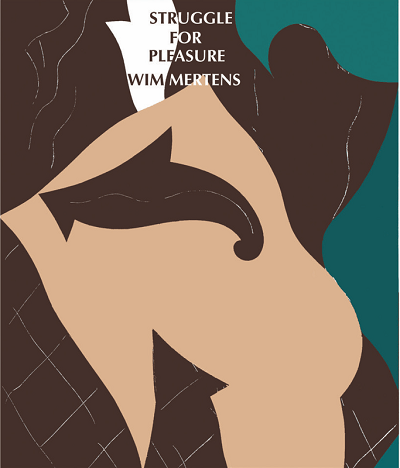
Struggle for Pleasure is the landmark post-minimalist album composed primarily in Salernes in the South of France during 1982. Struggle For Pleasure’s six short pieces, tagged as ‘modern chamber music’ are a mixture of the sublime and the vigorous, ranging from lush cult chill-out classic Close Cover to the frenetic electronically-charged Salernes. You also get the title-track Struggle for Pleasure driven by rhythmic, interlocking acoustic and electric pianos. Other tracks: Tourtour – Featuring harp and soprano saxophone. Bresque – Featuring soprano saxophone, harp, and subtle sound effects. Gentleman of Leisure – An intricate arrangement combining clarinet, flutes, and dual pianos.
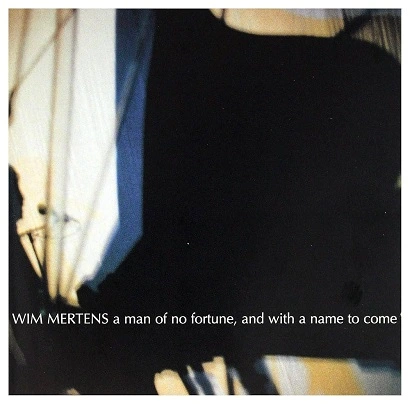
: The Belgian minimalist composer released a prominent avant-garde/classical album titled A Man of No Fortune, and with a Name to Comein 1986, which features vocal and solo piano work. Sometimes his music is considered new age but today it is considered minimalist. Widely considered one of the defining milestones of his career, this deeply emotional work was recorded live over two days at Studio Impuls in Belgium and bears the heartfelt dedication, “Dedicated To My Father” The album serves as a landmark document of Mertens’ distinct, intimate solo configurations. Its signature sound is built around two core elements. Solo Piano: Intricate, cascading minimalist patterns that loop and shift with a bittersweet intensity. Avant-Garde Vocals: Mertens’ own high-pitched falsetto, sung using wordless, abstract syllables that mimic a dreamlike or medieval plainsong style. The music balances delicate, restrained arrangements with sections of intense, pounding rhythm, creating an emotionally rich atmosphere praised by listeners.
TourtourStruggle for PleasureSalernesClose CoverBresqueGentleman of LeisureCasting No ShadowA Tiels LeisHiroseYou SeeMultiple 12NaviamenteNoli Me Tangere
The B-Sides is a five-movement symphonic work : Broom of the System – Inspired by a David Foster Wallace short-story collection, this movement mimics a dusky, circuit-board landscape. It features a “future clock” clicking away while sandpaper blocks and a literal kitchen broom provide percussive, mechanical textures. Aerosol Melody (Hanalei) – An acoustic movement heavily inspired by the North Shore of Kauai. It captures a lazy, beachside atmosphere using djembe drums, springy string pizzicatos, and gentle string glissandi that slowly drift to sleep. Gemini in the Solar Wind – An outer-space-inspired movement that functions as a re-imagination of a 1965 Gemini spacewalk. It integrates actual NASA field recordings of astronaut chatter mixed into a hazy electronic texture. Temescal Noir – A brief, moody tribute to the Temescal neighbourhood in Oakland, California. It evokes a twilight urban scene by combining a jazzy, nocturnal atmosphere with clicky electronic beats. Warehouse Medicine – The high-energy finale, which serves as a heavy homage to the gritty, industrialized birthplace of techno music in Detroit. It features an infectious, driving club beat that layers techno synthesizer rhythms directly over a roaring orchestral climax.Liquid Interface iI. Glaciers Calving: Immersive and powerful, this movement features actual audio field recordings of massive Antarctic glaciers breaking apart. II. Scherzo Liquido: A nimble, pointillist movement that captures water in a playful, micro-leak state using crisp electronic blips and agile orchestral work. III. Crescent City: Evokes both the soothing beauty and the terrifying, destructive power of water through hurricane sounds and deep bass. IV. On the Wannsee: Named after the lake in Berlin, calmer, yet slightly eerie atmosphere, blending acoustic strings with smooth electronic soundscapes.Alternative Energy The symphony traverses four unique eras and locations, tracking how humans generate and succumb to energy: I. Ford’s Farm, 1896: Centred on a rustic junkyard the music blends orchestral folk elements, acoustic fiddling, and the rhythmic, acoustic sounds of car horns and cranks. II. Chicago, 2012: Moves into the present day, using authentic field recordings and samples captured directly from the Fermilab particle accelerator in Illinois. III. Xinjiang Province, 2112: A futuristic look at a Chinese nuclear plant in an industrial wasteland. The score builds into a frantic, high-energy blend of hardcore techno rhythms overcomplex woodwind lines. IV. Reykjavik, 2222: Concludes a century later in a post-catastrophe Icelandic rainforest. After a climate disaster, humanity has returned to a simpler way of life, soundtracked by static blips, electronic birdsong, and primal communal rhythms.
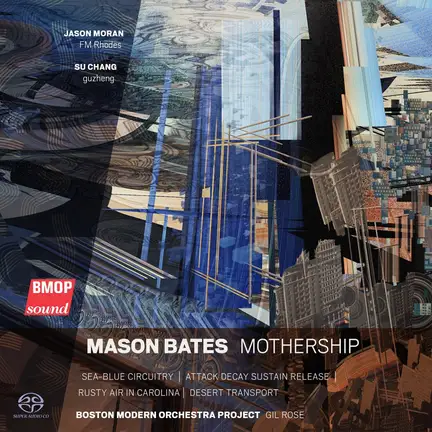
Mothership – energetic, nine-minute piece famously fuses standard symphonic forces with electronic dance beats and live improvisation. Sea blue circuitry – the work bridges the digital and natural worlds, combining elements of big-band jazz, minimalism, and techno. the acoustic instrumentation mimics the rigid, interlocking precision of a computer motherboard and electronic circuits. Attack Decay Sustain Release – fuses classical instrumentation with the harmonic and rhythmic sensibilities of electronic dance music and jazz. Rusty Air in Carolina – is a groundbreaking electro-acoustic work that blends a traditional symphony orchestra with electronica to evoke the atmosphere, climate, and culture of the American South during the summer. Desert Transport – relies entirely on the traditional, acoustic resources of a large symphony orchestra, with one unique exception: an integrated field recording
The B-Sides- I. Broom of the SystemThe B-Sides- II. Aerosol Melody (Hanalei)The B-Sides- III. Gemini in the Solar WindThe B-Sides- IV. Temescal NoirThe B-Sides- V. Warehouse MedicineLiquid Interface- I. Glaciers CalvingLiquid Interface- II. Scherzo LiquidoLiquid Interface- III. Crescent CityLiquid Interface- IV. On the WannseeAlternative Energy- I. Ford’s Farm, 1896Alternative Energy- II. Chicago, 2012Alternative Energy- III. Xinjiang Province, 2112Alternative Energy- IV. Reykjavik, 2222MothershipSea-Blue CircuitryAttack Decay Sustain ReleaseRusty Air in CarolinaDesert Transport
in further issues we will continue to Bring you the music of Popular genres to listen, review and evaluate. issue #21 (coming soon) features the stone roses, Hidden Orchestra, jaga jazzist and Gérard Henri Grisey
NOTES
Sound quality is important and some streaming services will offer superior sound quality. We do encourage you to purchase albums from good online record stores. alternatively, stream the music of favoured artists from those better online streaming services.
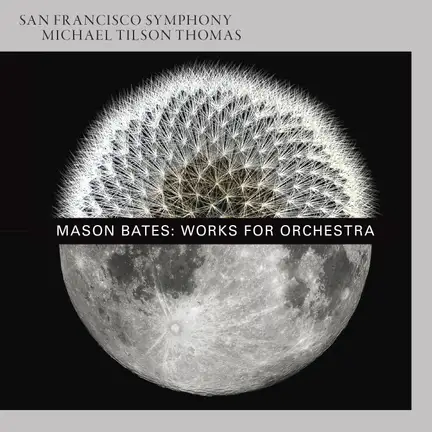
Mason bates – works for Orchestra – Label : SFS Media ; Mothership – label : BMOP/sound
Wim Mertens – A Man of No Fortune, and with a Name to Come ; Struggle for Pleasure – Label : Les Disques Du Crépuscule
Jason moran – ten – label : blue Note
franz ferdinand – franz ferdinand – Label : Domino Recording Company
It is helpful to research the artist, using sources like Wikipedia , Music Magazine Reviews (Pitchfork, Rolling stone, NME etc.,) Artist Websites, etc…
A synopsis of the life and music of this Issue’s featured artists appears below.
This Week’s Artists
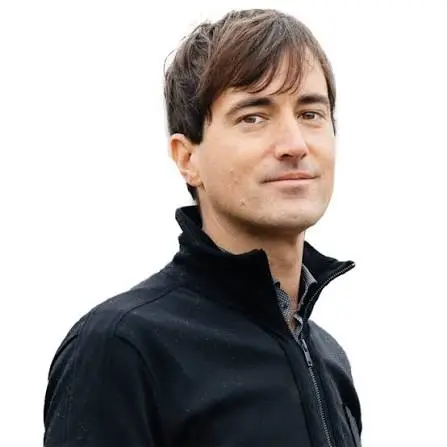
Mason Wesley Bates is a Grammy Award-winning American composer and disc jockey known for bridging the worlds of classical symphonic music and electronic dance music (EDM). Performing as a club DJ under the moniker DJ Masonic, his unique “symphonic electronica” style integrates digital loops, techno rhythms, and synthesizers directly into the traditional orchestral palette. He ranks as one of the most frequently performed living composers of his generation.
Mason Bates
Bates was born in Philadelphia and raised in Richmond, Virginia and Newtown, Virginia, where his family homestead and farm is located. His earliest choral compositions were conducted by his piano teacher Hope Armstrong Erb, and he studied composition with Dika Newlin, who was a student of Arnold Schoenberg. During the summer of 1993 at Brevard Music Center, Bates’s music caught the attention of conductor Robert Moody, who subsequently commissioned his first symphonic work Free Variations for Orchestra for his orchestra in Evansville, Indiana. Bates subsequently attended the Columbia University-Juilliard School program and earned a Bachelor of Arts in English literature and Master of Music in music composition. He studied music composition with John Corigliano, David Del Tredici, and Samuel Adler, while also studying playwriting with Arnold Weinstein. In 2001, Bates relocated to the Bay Area and studied under Edmund Campion in the Center for New Music and Audio Technologies at the University of California, Berkeley and graduated in 2008 with a PhD in composition. He worked around that time as a DJ and techno artist under the name Masonic in clubs and lounges of San Francisco. In that year, with conductor Benjamin Shwartz and visual designer Anne Patterson, he founded Mercury Soul, a San Francisco-based non-profit organization that mounts club shows combining classical music and DJ sets in clubs. He concurrently lived in Rome 2003-2004 as the recipient of The Rome Prize from the American Academy in Rome as well as in Berlin in 2005 as recipient of the Berlin Prize from the American Academy in Berlin. In 2014 he joined the Composition faculty of the San Francisco Conservatory of Music. He currently lives in Burlingame, California.
Bates showed an early interest in bridging the worlds of electronic and symphonic music, premiering his Concerto for Synthesizer in 1999 with the Phoenix Symphony and subsequently performing it with the Atlanta Symphony. Robert Moody premiered that work in addition to Rusty Air in Carolina. He gained national attention in 2007 with Liquid Interface, a water symphony commissioned by the National Symphony Orchestra under Leonard Slatkin, who premiered several works by Bates including Violin Concerto for Anne Akiko Meyers. Bates has spoken about his symphonies as a revival of the narrative symphonies of the 19th century using 21st-century sounds, as exhibited by his 2018 symphony Art of War. The piece “explores the drama of human conflict” using field recordings of mortar and artillery explosions made during two visits to Camp Pendleton, as well as recordings of the printing presses of the US Mint which appear in the work’s opening movement “Money as a weapons system”. Some of his works do not include electronic sounds, such as Resurrexit, which was commissioned by Pittsburgh Symphony Orchestra in celebration of Manfred Honeck’s 60th birthday. Honeck conducted its premiere in 2018. A long partnership with the San Francisco Symphony began with the 2009 premiere of The B-Sides under Michael Tilson Thomas, who subsequently conducted several works by Bates with the YouTube Symphony. The latter premiered Mothership at the Sydney Opera House in 2011 to an online audience of two million, and the work has become one of the most-performed orchestral works by a living composer. Michael Tilson Thomas and the San Francisco Symphony recorded three Bates works during the Beethoven & Bates Festival of 2017, earning a Grammy nomination for Best Orchestral Performance. That same year also saw a nomination for Best Contemporary Classical Composition for his Alternative Energy for the Chicago Symphony Orchestra, where Bates was named composer-in-residence from 2010 to 2015. Film projects began in 2015 with the score for Gus Van Sant’s film The Sea of Trees. While gaining national prominence for his electro-acoustic symphonic music, Bates began experimenting with concert format in his curating projects in partnership with institutions such as the Chicago Symphony Orchestra and the Kennedy Center. His first opera, The (R)evolution of Steve Jobs, was premiered in 2017 by the Santa Fe Opera. In 2018, the Metropolitan Opera announced the commission of The Amazing Adventures of Kavalier & Clay, with music by Bates and libretto by Gene Scheer. The opera is based on the Pulitzer Prize-winning novel with the same name by Michael Chabon. As a disc jockey he is known for bridging the worlds of classical symphonic music and electronic dance music (EDM). Performing as a club DJ under the moniker DJ Masonic, his unique “symphonic electronica” style integrates digital loops, techno rhythms, and synthesizers directly into the traditional orchestral palette. He ranks as one of the most frequently performed living composers of his generation.
Wim Mertens regularly performs with different settings and ensembles: solo piano, duo (violin or trumpet with piano), trio (violin or trumpet, cello, piano), and also with symphony orchestra. After a series of shows in Greece, one reviewer wrote: “Intimate yet gripping, he reaffirmed the value of listening—and the audience followed. One of the most powerful musical moments of 2025.”
wim mertens
Wim Mertens was born in Neerpelt, Belgium. He studied social and political science at the University of Leuven (graduating in 1975) and musicology at Ghent University; he also studied music theory and piano at the Ghent Conservatory and the Royal Conservatory of Brussels. In 1978, he became a producer at the BRT (Belgian Radio and Television). For Radio 2 (Radio Brabant) he produced concerts by Philip Glass, Steve Reich, Terry Riley, Meredith Monk, Urban Sax and others, and hosted a program called Funky Town together with Gust De Meyer (with whom he recorded the experimental album For Amusement Only). Known primarily as a composer since the early 1980s, Wim Mertens has been producing albums of minimal elegance and concerts from solo piano to full orchestra. A leading composer of New Music in Europe, his work resonates with both serious enthusiasts and the general public. Landmark albums include Vergessen, Maximizing the Audience and Struggle for Pleasure, and his diverse compositions range from accessible songs to intricate cycles. His debut recording, For Amusement Only, was an electronic composition for pinball machines. The 1985 album Maximizing the Audience, saw the introduction of vocals in Mertens’ music, using a high-pitched voice in a language of his own invention. Mertens’ style has continually evolved during the course of his prolific career, starting from experimental and avant-garde, always gravitating around minimalism, usually, however, preserving a melodic foundation to the forays that he makes into the worlds that he is exploring. .
His compositional quality has often overweighted the “labelling issue” and reached wider audiences although stemming from a far-from-mainstream musical context. One can follow three separate threads of musical styles throughout his work: Compositions for ensemble, perhaps his most accessible and “commercial” material; Solo piano and voice compositions, which features haunting keyboard melodies accompanied by Mertens’ unique high-pitched tenor voice singing in an invented, personal language; and Experimental minimalist “cycles” for single, dual, and sometimes more instruments. In August 2007 Mertens signed a contract with EMI Classics (now Warner Classics) for his entire catalogue. The label re-released his entire back-catalogue beginning in January 2008. EMI Music Belgium also released Mertens’ new work, beginning with the 9-track album Receptacle on 24 September 2007. For this album Mertens decided to work with an orchestra consisting of only women, 17 in total. It is not the first time that Mertens worked with EMI. Already in 1999, Mertens released the soundtrack to the Paul Cox film Molokai: The Story of Father Damien via EMI Classics. Mertens is the author of American Minimal Music, which looks at the school of American repetitive music and the work of La Monte Young, Terry Riley, Steve Reich, and Philip Glass. Mertens has released more than 71 albums, including the 37-CD cycle Qua. The majority of which were issued by Les Disques du Crépuscule from 1980 until 2004. Mertens also produced a number of Crépuscule releases and consulted with the label on its choice of works by contemporary composers such as Michael Nyman, Gavin Bryars, and Glenn Branca. Mertens also curated a series of releases for a Crépuscle imprint, Lome Armé, that featured works from the classical era as well as contemporary jazz
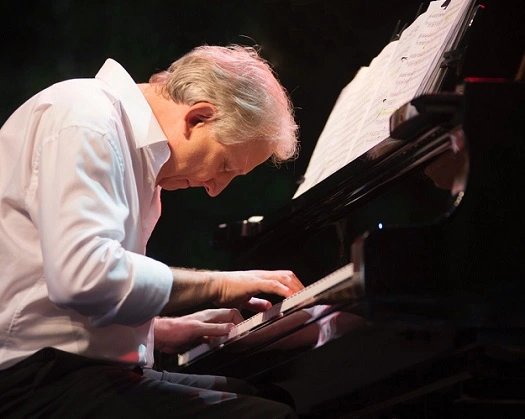
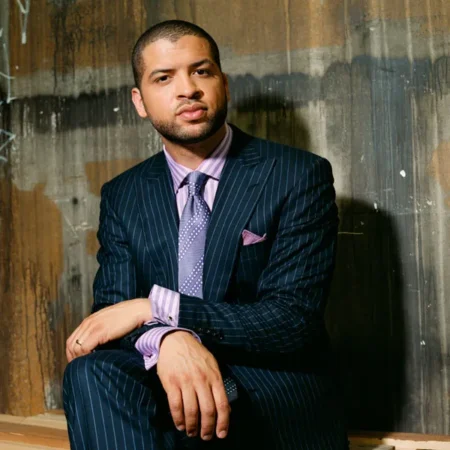
Jason Moran (born January 21, 1975) is an American jazz pianist, composer, and educator involved in multimedia art and theatrical installations. Moran has released albums with his trio The Bandwagon, solo, as a sideman, and with other bands. He combines post-bop and avant-garde jazz, blues, classical music, stride piano, and hip hop.
jason Moran
Moran was born in Houston, Texas, and grew up in the Pleasantville neighbourhood of Houston. His parents, Andy, an investment banker, and Mary, a teacher, encouraged his musical and artistic sensibilities at the Houston Symphony, museums and galleries, and through a relationship with John T. Biggers and a collection of their own. Moran began training at classical piano playing at Suzuki method music school, when he was six. However, his father’s extensive record collection (around 10,000 in 2004), varied from Motown to classical to avant-garde jazz. As a boy he developed a preference for hip hop music over the piano until, at the age of 13, he first heard the song “′Round Midnight” by Thelonious Monk at home, and switched his efforts to jazz. Both jazz and hip hop were part of Houston’s skateboarding scene in which he was involved. He attended Houston’s High School for the Performing and Visual Arts (HSPVA), graduating in 1993 from the jazz programme. He then enrolled at the Manhattan School of Music, from which he would graduate in 1997 with a BM degree. In 1997, when Moran was a senior at Manhattan School of Music, he was invited to join the band of saxophonist Greg Osby for a European tour, following a conversation that lingered mostly on older piano jazz, and no audition. Osby liked his playing, and Moran continued to play with Osby’s group upon their return to the United States, making his first recorded appearance on Osby’s 1997 Blue Note album Further Ado. He would subsequently appear on several other Osby albums, and Osby would introduce him to avant-garde pianists Muhal Richard Abrams and Andrew Hill. His stint with Osby led Moran to sign a contract of his own with Blue Note. His debut Soundtrack to Human Motion was released in 1998.
Moran’s next album, 2000s facing Left, featured a trio that formed out of Osby’s group. The trio, which came to be known as The Bandwagon, was joined by saxophonist and pianist Sam Rivers for their next album, Black Stars, which appeared in 2001.In 2002, Moran released a solo album, Modernistic, and followed it in 2003 with a live trio album, recorded at New York’s Village Vanguard, called The Bandwagon. Moran’s 2005 album Same Mother, an exploration of the blues, brought guitarist Marvin Sewell into the Bandwagon mix. Moran’s 2006 release, Artist in Residence, included a number of selections from different works commissioned by museums. Moran’s IN MY MIND, premiered in 2007. From September 2009 to about 2012, Moran toured with Dave Holland’s Overtone Quartet. The album Ten, released in 2010, marked the ten-year interval from the Bandwagon’s debut, Facing Left. a 2014 release, All Rise: A Joyful Elegy for Fats Waller, dedicated to Fats Waller and the form of popular entertainment that jazz was in his days. Two years later, Moran released his second solo piano album, the live The Armory Concert. Consisting of all-original compositions. The following year he released Bangs, a trio set with guitarist Mary Halvorson and trumpeter Ron Miles, and Mass {Howl, Eon}. The latter was the result of a collaboration with painter Julie Mehretu in real time. A few days after the 2016 presidential election, Mehretu began painting massive murals at the Church of St. Thomas the Apostle in Harlem, New York. Moran composed music while she painted. He then recorded his music inside the church, accompanied by Graham Haynes on cornet and electronics and Jamire Williams on drums. He also released Thanksgiving at the Vanguard, a trio set with the Bandwagon performed and recorded the previous year. 2018 saw Moran involved in numerous multi-media collaborations. He also issued two albums in 2018, Music for Joan Jonas, consisting of recorded versions of their three collaborations over the years, and Looks of a Lot. In February 2021, Moran and saxophonist Archie Shepp issued the duo outing Let My People Go, a set of spirituals, standards, and covers on the saxist’s Archieball label. In March, The Sound Will Tell You appeared from Yes Records. A solo piano outing, it was recorded over three days in January. Celebrating the life and legacy of noted early 20th century Black composer and musician James Reese Europe, Moran released 2023’s ragtime-infused From the Dancehall to the Battlefield. He then moved further into the experimental electronic territory, collaborating with drummer Marcus Gilmore and electronic musician BlankFor.ms on both 2023s Refract and 2026s Shards.
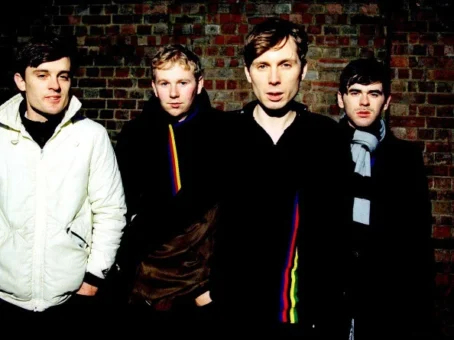
Franz Ferdinand is a highly influential Scottish indie rock band formed in Glasgow in 2002. Best known for spearheading the post-punk revival and dance-punk movements of the 2000s, the group achieved massive global success with their jagged guitar riffs, rhythmic basslines, and danceable beats.
franz ferdinand
Franz Ferdinand are a Scottish rock band formed in Glasgow in 2002. Their original line-up was composed of Alex Kapranos (lead vocals, guitar, keyboards), Nick McCarthy (guitar, keyboards, vocals), Bob Hardy (bass) and Paul Thomson (drums, percussion, backing vocals). Julian Corrie (keyboards, guitar, backing vocals) and Dino Bardot (guitar, backing vocals) joined the band in 2017 after McCarthy left during the previous year, and Audrey Tait (drums, percussion) joined the band after Thomson left in 2021. The band were categorised as a post-punk revival band, and garnered multiple UK top 20 hits in the 2000s. They have been nominated for several Grammy Awards and have received two Brit Awards—winning one for Best British Group—as well as one NME Award. From the beginning, the group had a flair for translating arty, unexpected references into widely appealing music and visuals, whether it was the Russian Constructivism-inspired artwork that graced their early releases. In May 2003 the band signed to Laurence Bell’s independent record label, Domino Recording Company. The band moved to Gula Studios in Malmö, Sweden, with Cardigans producer Tore Johansson to record their debut album. Their debut album Franz Ferdinand won the 2004 Mercury Prize and earned a Grammy nomination for Best Alternative Album.
The band spent much of 2005 in the studio in Glasgow working on their follow-up album, You Could Have It So Much Better, which was released in October 2005. Produced by Rich Costey. It peaked within the top-ten in multiple countries and earned Grammy-nominations for Best Alternative Album and for one of the singles, “Do You Want To”. In January 2009, the band released their third studio album, Tonight: Franz Ferdinand, which they had been recording in Glasgow since mid-2007 in a disused building in Glasgow that had been a town hall in the past. Tonight was mixed by Canadian Mix Engineer Mike Fraser and the band had shifted from a post-punk-focused sound to a more dance-oriented sound. A remix album of Tonight, titled Blood, was released in July 2009. Writing for a fourth studio album began in 2010. Kapranos stated that the band promised themselves they would also focus on not over-publicising their progress as he felt that’s something he regretted about their previous album. In May 2012, the band returned to touring, playing several festivals during the summer of 2012. Four years after the release of Tonight, the band released their fourth studio album, Right Thoughts, Right Words, Right Action, in August 2013. In 2015, Franz Ferdinand and American rock band Sparks formed the supergroup FFS and released a one-off album, FFS, in June 2015. The band underwent multiple line-up changes following FFS, beginning with McCarthy’s departure in 2016. After acquiring Corrie and Bardot, the band released their fifth studio album Always Ascending. In October 2021, the band announced through social media that Paul Thomson had departed the band, with Glasgow-based drummer Audrey Tait joining as his replacement, as well as confirming that studio recordings had been undertaken with Tait. The announcement was accompanied by a statement from Thomson and a photograph of him passing his drumsticks to Tait. Franz Ferdinand announced their sixth studio album, The Human Fear, was to be released in January 2025.Kapranos co-wrote songs with Hardy, Corrie, and Bardot that touched on existential worries about fatherhood, identity, and love. Working with engineer Mark Ralph as producer, Franz Ferdinand added punchy glam rock influences to their bracing style. The album was the first full-length album to feature Audrey Tait on drums following the departure of Paul Thomson.