woman with bright neon make up and her eyes closed under blue light holding headset
Boring Angel
Americans
He She
Inside World
zebra
Along
Problem Areas
Cryo
Still Life
Chrome Country


NOTES

Sound quality is important and some streaming services will offer superior sound quality. We do encourage you to purchase albums from good online record stores. alternatively, stream the music of favoured artists from those better online streaming services.

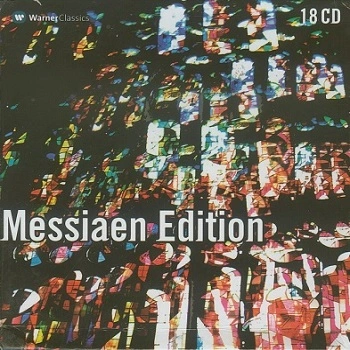
olivier Messiaen – Quartet for the End of Time / Turangalîla-Symphonie – Label : Warner Classics

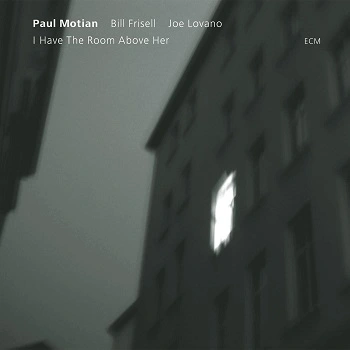
paul Motian – I Have the Room Above Her – Label : ECM

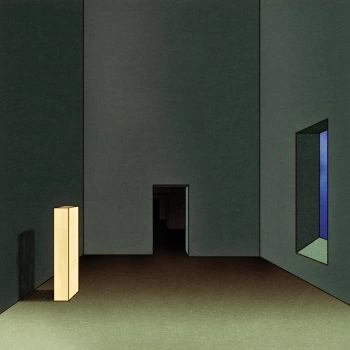
Oneohtrix Point Never – R Plus Seven – Label : Warp Records

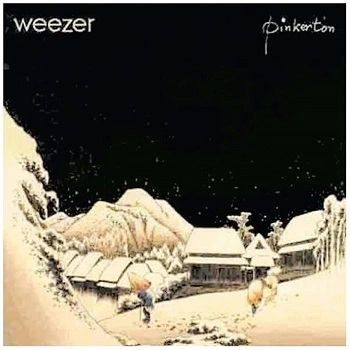
Weezer – Pinkerton – Label : Geffen Records


It is helpful to research the artist, using sources like Wikipedia , Music Magazine Reviews (Pitchfork, Rolling stone, NME etc.,) Artist Websites, etc…

A synopsis of the life and music of this Issue’s featured artists appears below.

This Week’s Artists

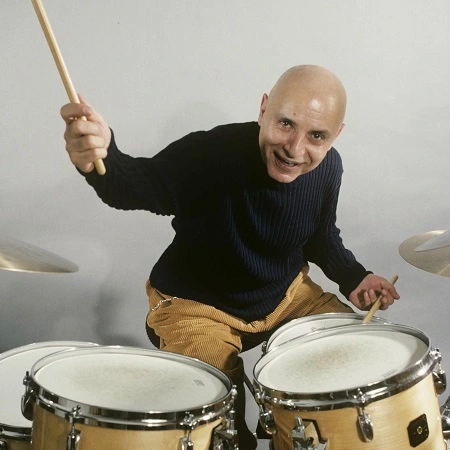
Stephen Paul Motian (March 25, 1931 – November 22, 2011) was an American jazz drummer, percussionist, and composer .

Paul Motian

Motian was born in Philadelphia, Pennsylvania and raised in Providence, Rhode Island. He was of armenian descent. After playing guitar in his childhood, Motian began playing the drums at age 12, eventually touring New England in a swing band. During the Korean War he joined the Navy and attended the United States Naval School of Music in Washington, D.C. until 1954. He also attended the Manhattan School of Music.

Motian first came to prominence in the late 1950s in the piano trio of Bill Evans and later was a regular in pianist Keith Jarrett’s band for about a decade (c. 1967–1976). The drummer began his career as a bandleader in the early 1970s. Perhaps his two most notable groups were a longstanding trio with guitarist Bill Frisell and saxophonist Joe Lovano. Despite his important associations with pianists, Motian’s work as a leader since the 1970s rarely included a pianist in his ensembles and relied heavily on guitarists.


Motian’s first instrument was the guitar, and he retained an affinity for the instrument: in addition to his groups with Frisell, his first two solo albums on ECM featured Sam Brown, and his Electric Bebop Band featured two and occasionally three electric guitars. The group was founded in the early 1990s, and featured a variety of young guitar and saxophone players. He played an important role in freeing jazz drummers from strict time-keeping duties. Motian was a pioneer of “broken time,” a style where the drummer provides texture and colour rather than a continuous, driving beat. His original pieces are often described as terse, mysterious, and lyrical. His career spanned over 60 years, during which he evolved from a tasteful sideman into a visionary bandleader and composer. 

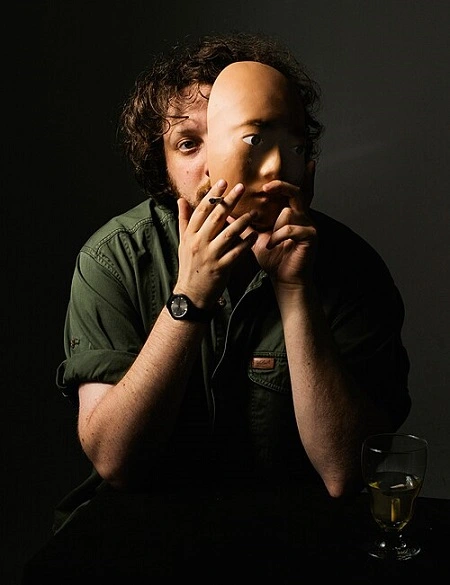
Oneohtrix Point Never (OPN) is the alias of Daniel Lopatin (born 1982), a highly influential American electronic musician, composer, and producer known for his experimental and genre-defining soundscapes.

Oneohtrix Point Never

Lopatin was born and raised in Massachusetts, and is the son of Russian-Jewish emigrants both with musical backgrounds. Some of his first experiments with electronic music were inspired by his father’s music collection and his Roland Juno-60 synthesizer, an instrument that Lopatin would inherit and go on to use extensively in his own music. During his high school years, Lopatin played synthesizer in groups with friends and future collaborator Joel Ford. Later, he moved to Brooklyn, New York, to attend graduate school at Pratt Institute, studying archival science; the field of study would go on to influence aspects of his music and artistic practice. During that time, he also became interested and involved in Brooklyn’s Underground noise music scene. Lopatin initially released music under a number of aliases, before adopting the pseudonym Oneohtrix Point Never, a verbal play on the name of the Boston FM radio station Magic 106.7.

Drawing inspiration from 1970s and 80s synthesizer music, new-age and contemporary developments in noise music. Lopatin released a series of cassette and CD-R projects interspersed with a trilogy of full-length albums.much of this material was eventually collected on the 2009 compilation Rifts, which brought him critical acclaim. Over the past two decades, Lopatin has become one of the most quietly influential figures in modern music. His early Eccojams helped spark the vaporwave movement; albums like R Plus Seven and Garden of Delete redefined ambient and experimental music for the digital age. Beyond his solo work, he has collaborated with The Weeknd, Charli XCX, Iggy Pop, David Byrne and Anohni.

Daniel Lopatin has released other critically acclaimed works, each with their own overarching idea including  ReturnalReplica and his recent releases Again (2023) and Tranquilizer (2025). Lopatin also has an all-consuming obsession with nostalgia and forgotten pop cultural artefacts: he’s made albums based around warped loops of 80s pop hits, preset sounds on obsolete synthesisers and recordings of US radio stations.

changing formats, discarding the musical genres in which they previously specialised in favour of the current vogue. Lopatin has composed scores for several films, notably for the Safdie brothers’ Good Time (2017) and ‘Uncut Gems‘ (2019), the former of which earned him a Soundtrack Award at the 2017 Cannes Film Festival.

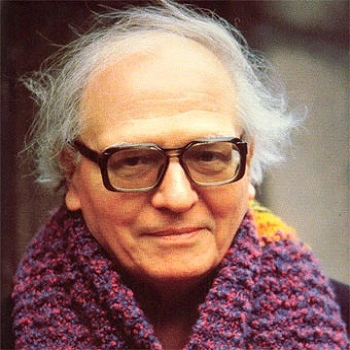
Olivier Eugène Prosper Charles Messiaen (10 December 1908 – 27 April 1992) was a French composer, organist, and ornithologist. One of the major composers of the 20th century, he was also an outstanding teacher of composition and musical analysis.

Olivier Messiaen

Messiaen entered the Conservatoire de Paris at age 11 and studied with Paul Dukas, Maurice Emmanuel, Charles-Marie Widor and Marcel Dupré, among others. He was appointed organist at the Église de la Sainte-Trinité, Paris, in 1931, a post he held for 61 years, until his death. He taught at the Schola Cantorum de Paris during the 1930s. After the fall of France in 1940, Messiaen was interned for nine months in the German prisoner of war camp Stalag VIII-A, where he composed his Quatuor pour la fin du temps (Quartet for the End of Time) for the four instruments available in the prison—piano, violin, cello and clarinet.

Messiaen’s music is rhythmically complex (he was interested in rhythms from ancient Greek and from Hindu sources), and is harmonically and melodically based on modes of limited transposition, which were Messiaen’s own innovation. . He travelled widely, and he wrote works inspired by such diverse influences as Japanese music, the landscape of Bryce Canyon in Utah, and the life of St. Francis of Assisi. Much of Messiaen’s music was inspired by Roman Catholic theology, interpreted in a quasi-mystical manner, 1932; Apparition of the Eternal Church, 1943: Visions de l’amen for two pianos, 1944; Twenty Looks upon the Infant Jesus).

.

La Transfiguration de Notre Seigneur Jésus-Christ for orchestra and choir in1969. Among his most important orchestral works is the Turangalîla-Symphonie (1948) in 10 movements—containing a prominent solo piano part and using percussion instruments in the manner of the Indonesian Gamelan orchestra, along with an ondes martenot (an electronic instrument). Also notable is Chronochromie for 18 solo strings, wind, and percussion (1960). (1953; The Awakening of the Birds), (1956; Exotic Birds), and (1959; Catalogue of Birds) incorporate meticulous notations of birdsong. He composed an opera, St. François d’Assise, which premiered at the Paris Opera in 1983. Messiaen found birdsong fascinating; he believed birds to be the greatest musicians and considered himself as much an ornithologist as a composer. He notated birdsongs worldwide, and he incorporated birdsong transcriptions into a majority of his music. His innovative use of colour, his personal conception of the relationship between time and music, his use of birdsong, and his intent to express profound religious ideas, all combine to make it almost impossible to mistake a composition by Messiaen for the work of any other western composer

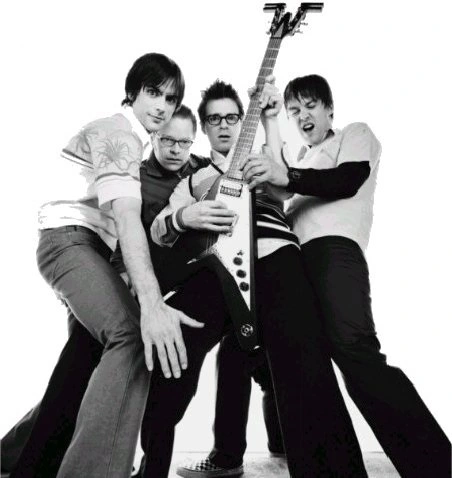
Weezer is an American alternative rock band from Los Angeles, California formed in 1992. Known for their fusion of power pop, geek rock, and emo influences.

Weezer

They began by making clever and often nostalgic music with a contemporary twist: they were sharp but never too “arch.” Despite lineup changes and public fallings-out, notably between Rivers Cuomo and former bassist Matt Sharp, the band has maintained a consistent presence in the music scene. Weezer is known for their hit singles and critical acclaim, balancing mainstream success with their unique musical style. Since 2001, the band has consisted of Rivers Cuomo (lead vocals, guitar, keyboards), Patrick Wilson (drums, backing vocals), Brian Bell (guitar, keyboards, backing vocals), and Scott Shriner (bass guitar, keyboards, backing vocals). After signing to Geffen Records in 1993, Weezer released their acclaimed self-titled debut album, also known as ‘the Blue Album’.

Weezer’s second Album, ‘Pinkerton’ (1996), featuring a darker, more abrasive sound, was a commercial failure and initially received mixed reviews, but achieved cult status and acclaim years later. Both the Blue Album and Pinkerton are now frequently cited among the best albums of the 1990s.Subsequent albums explored various sounds, including the pop-oriented ‘Green Album’, the hard rock ‘Maladroit’, the mainstream pop ‘Pacific Daydream’, and a return to their 90s rock style in ‘Everything Will Be Alright in the End’ and ‘the White Album’. In 2022, the band released a series of four EPs tied to the seasons (SpringSummerAutumnWinter), each exploring a different emotion and musical style.