
The blues have influenced many other musical styles. The blues have had their greatest influence on rock music and blues and jazz are closely related. While hip-hop and rap music tends to be harmonically and melodically static. artists such as Kanye West and Jay-Z have used samples extracted from blues songs as the basis for new music. The lyrics too, are similar to early blues, commenting on personal situations, unjust societies and disillusionment with the urban environments in which the musicians live.
contemporary Music – issue #3 – Blues
The blues emerged at a particular time, in a particular place as a response to social and economic conditions. The Blues is a music genre and musical form that originated among African Americans. This genre of music came from the souls of slaves and emerged simultaneously throughout the South, originating as early as 1860. The blues has a distinct melancholic and sombre tone, which is achieved through vocal techniques such as melisma, rhythmic techniques such as syncopation, and instrumental techniques such as “choking” guitar strings on the neck or applying a metal slide to the guitar strings to create a whining voice-like sound. Melisma is the act of singing several different notes while holding a single syllable of text. Chroniclers began to report about blues music at the dawn of the 20th century. The first publication of blues sheet music was in 1908. Blues has since evolved from unaccompanied vocal music and oral traditions of slaves into a wide variety of styles and subgenres. Blues songs are lyrical rather than narrative; blues singers are expressing feelings rather than telling stories. The emotion expressed is generally one of sadness or melancholy, often due to problems of love but also oppression and hard times. The Great Depression and the World Wars caused the geographic dispersal of the blues as millions of Blacks left the South for the cities of the North. The blues became adapted to the more sophisticated urban environment. Lyrics took up urban themes, and the blues ensemble developed as the solo bluesman was joined by a pianist or harmonica player and then by a rhythm section consisting of bass and drums. The electric guitar and the amplified harmonica created a driving sound of great rhythmic and emotional intensity.
Join the Conversation!!!
we will Feature Up to 3 Albums from Artists representative of a range of the Many sub-genres. We Hope to encourage Listeners of all tastes and passions. So Get your Headphones on and Consider discussing the musical Offering and sharing your views with like-minded peers.
In Issue #3, we feature Muddy waters
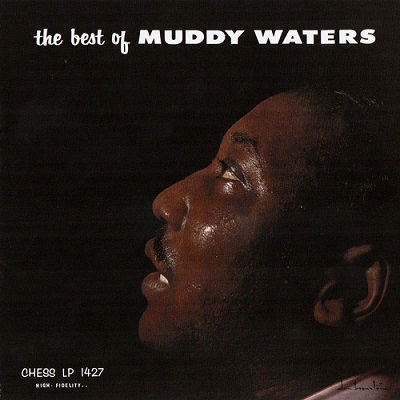
The Best of Muddy Waters (1958) is a foundational compilation that tracks the legend’s transformation from Delta slide guitarist to the “father of modern Chicago blues”. It was Muddy’s first LP and only the third ever released by the iconic Chess Records. The twelve songs were originally issued as singles between 1948 and 1954 and most appeared in Billboard’s top 10 Rhythm & Blues Records charts. The album is the first by Waters and the third by Chess on the long playing (or LP record) format. Chess re-sequenced the tracks and re-titled it Sail On for release in February 1969. The album was re-released on compact disc in 1987 by Chess and MCA Records. The Blues Foundation Hall of Fame inducted it as a “Classic of Blues Recording” in 1983.The album collects 12 hit singles recorded between 1948 and 1954, many of which became definitive blues standards:
(I’m Your) Hoochie Coochie Man: A Willie Dixon-penned classic that defined the “studly” swagger of electric blues.
Rollin’ Stone: The stripped-back track that famously gave the Rolling Stones their name.
I Just Want to Make Love to You: An up-tempo hit that has been covered by everyone from Etta James to Foghat. I Can’t Be Satisfied: A raw, slide-driven track that captures Muddy’s early electric transition.
Long Distance Call: Features a hauntingly soulful duet between Muddy’s guitar and Little Walter’s harmonica.
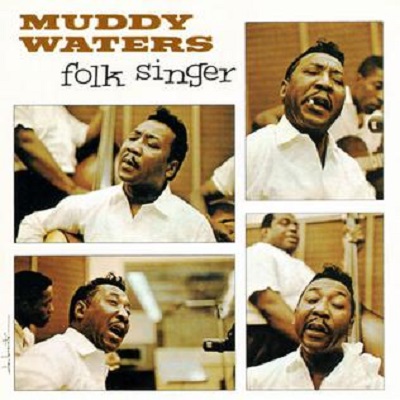
Folk Singer is the second studio album and fourth album overall by Muddy Waters, released in January 1964 by Chess Records. The album features Waters on acoustic guitar, backed by Willie Dixon on string bass, Clifton James on drums, and Buddy Guy on acoustic guitar. It is Waters’s only all-acoustic album. Numerous reissues of Folk Singer include bonus tracks from two subsequent sessions, in April 1964 and October 1964. Despite not charting in any country, Folk Singer received critical acclaim; most reviewers praised its high-quality sound, especially on remastered versions, as well as the instrumentation. While Waters is famously known as the “father of modern Chicago blues” for his electric sound, this record was a strategic return to his Delta roots, designed to appeal to the mid-1960s folk music revival. The original release featured nine tracks, including: “My Home Is in the Delta” “Good Morning Little Schoolgirl” “Country Boy” “Feel Like Going Home”. Despite its title, reviewers emphasized that the album is pure blues, showcasing Waters’ vocal power and masterly slide guitar work without the usual electric amplification. Rolling Stone wrote, “… A wonderfully intimate session, it delivers Waters’ voice in all its power and subtlety, while rendering his guitar work…with such vivid realism, you would think you were sitting in the studio….”
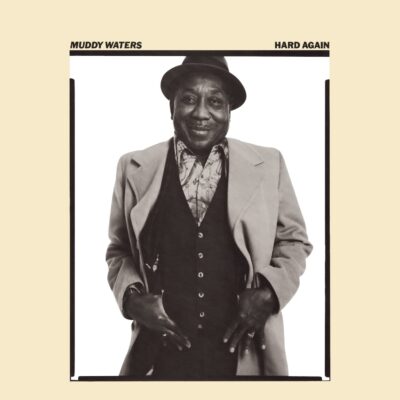
Hard Again is a landmark 1977 studio album widely celebrated as a triumphant “comeback” after his long tenure with Chess Records. Produced by blues-rock guitarist Johnny Winter, the album revitalised Waters’ career and earned him the 1977 Grammy Award for Best Ethnic or Traditional Folk Recording. Along with Johnny Winter – guitar, producer and miscellaneous screams – notable band members Include blues luminaries like James Cotton (harmonica), Pinetop Perkins (piano), Bob Margolin (guitar), Willie “Big Eyes” Smith (drums), and Charles Calmese (bass). Known for its raw, energetic, and rugged sound that captured the feel of a live performance in the studio. The over-60 Waters lived up to all the attention with one of his most energetic, sustained performances, bettering his original version of “Mannish Boy,” pushing “Bus Driver” to a raging peak, and generally sounding like the wisest man on record. Everything about this album oozes quality. There are some re-workings of old songs, but they are sonically superior to his earlier versions. Hard Again is a testament to friendship between two generations of musicians and also realizes how lavish modern Blues can be.
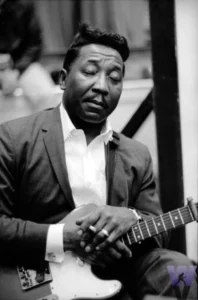
He is credited with bridging the gap between rural Delta blues and the electrified urban sound that helped pave the way for rock and roll.
muddy Waters was raised by His grandmother, Della Grant, after his mother died shortly after his birth. Grant gave him the nickname “Muddy” at an early age because he loved to play in the muddy water of nearby Deer Creek. “Waters” was added years later, as he began to play harmonica and perform locally in his early teens. He taught himself to play harmonica. The remains of the cabin on Stovall Plantation where he lived in his youth are now at the Delta Blues Museum in Clarksdale, Mississippi. By the time he was 17, he had purchased his first guitar. He started playing his songs in joints near his hometown, mostly on a plantation owned by Colonel William Howard Stovall (a ‘flying ace’ , war veteran and successful cotton farmer). In the early 1930s, he accompanied Big Joe Williams on tours of the Delta, playing harmonica. In August 1941, Alan Lomax (ethnomusicologist) went to Stovall, Mississippi, on behalf of the Library of Congress to record various country blues musicians. Lomax came back in July 1942 to record him again. Both sessions were eventually released by Testament Records as ‘Down on Stovall’s Plantation’. In 1943, he headed to Chicago with the hope of becoming a full-time professional musician. Working in a factory by day and performing at night. Big Bill Broonzy, then one of the leading bluesmen in Chicago, had Muddy open his shows in the rowdy clubs where Broonzy played. This gave him the opportunity to play in front of a large audience.In 1944, he bought his first electric guitar and then formed his first electric combo.
In 1946, he recorded some songs for Mayo Williams at Columbia Records and later that year, he began recording for Aristocrat Records, a newly formed label run by the brothers Leonard and Phil Chess. In 1948, “I Can’t Be Satisfied” and “I Feel Like Going Home” became hits, and his popularity in clubs began to take off. Soon after, Aristocrat changed its name to Chess Records. His signature tune “Rollin’ Stone” also became a hit that year. Initially, the Chess brothers would not allow Muddy Waters to use his working band in the recording studio; instead, they provided him with backing by musicians assembled specifically for the recording session. Gradually, Chess relented, and by September 1953 he was recording with one of the most acclaimed blues groups in history: Little Walter Jacobs on harmonica, Jimmy Rogers on guitar, Elga Edmonds on drums, Otis Spann on piano and, sometimes, bassist and songwriter Willie Dixon. The band recorded a number of blues songs which have become classics including “Hoochie Coochie Man”, “I Just Want to Make Love to You”, and “I’m Ready”. In the mid-1950s, his singles were frequently on Billboard magazine’s various Rhythm & Blues charts. Muddy toured England with Spann in 1958. Although his performances alienated the old guard, some younger musicians, including Alexis Korner were inspired to go in the more modern, electric blues direction. Korner’s own group included musicians who would later form the Rolling Stones, Cream, and Peter Green’s Fleetwood Mac. In the 1960s, his performances continued to introduce a new generation to Chicago blues. In 1967, he re-recorded several blues standards with Bo Diddley, Little Walter, and Howlin’ Wolf, the albums were Chess’ attempt to reach a rock audience. Later in 1969, he recorded and released the album Fathers and Sons, where he returned to his classic Chicago sound. Fathers and Sons had an all-star backing band that included Michael Bloomfield and Paul Butterfield, longtime fans whose desire to play with him was the impetus for the album. In 1972, he won his first Grammy Award, for Best Ethnic or Traditional Recording for They Call Me Muddy Waters, a 1971 album of old but previously unreleased recordings. From 1977 to 1981, blues musician Johnny Winter, who idolized Muddy since childhood and who had become a friend, produced four albums for him, all on the Blue Sky Records label. The albums were critical and commercial successes. In 1982, he cut way back on performing due to declining health. His last public performance took place when he sat in with Eric Clapton’s band at a concert in Florida in the summer of 1982.
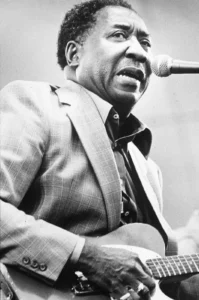
McKinley Morganfield (1913 – 1983) better known as Muddy Waters, was an American blues singer-songwriter and musician who was an important figure in the post-World War II blues scene, and is often cited as the “father of modern Chicago blues”. His style of playing has been described as “raining down Delta beatitude”
Sound quality is important and the better online Streaming services will offer superior sound quality. As always, We do encourage you to purchase Favoured albums from good online or High street record stores.
Artists in upcoming issues: John mayall, joe bonamassa, john lee hooker.....Keep Listening!! JOIN THE CONVERSATION...
“Comments are most welcome and appreciated”