Classical Music – issue #4
Classical music generally refers to the art music of the Western world. Classical music is often characterized by formality and complexity in its musical form and harmonic organization. particularly with the use of polyphony, music in which several different tunes are played or sung at the same time. Since the ninth century, it has been primarily a written tradition, spawning a sophisticated notational system.
Rooted in the patronage of churches and royal courts in Europe. early medieval music is chiefly religious, monophonic and vocal. The Baroque period (1580–1750) saw the relative standardization of common-practice tonality. Together with, the increasing importance of musical instruments, which grew into ensembles of considerable size. The common-practice period was a period in which the tonal system was regarded as the only basis for composition. The word tonality is sometimes used as a synonym for “key.”.
In the shorter but pivotal Classical period (1730–1820), composers such as Mozart created widely admired examples of absolute music. including symphonies, string quartets and concertos. Absolute music (sometimes abstract music) is instrumental music not intended to represent or illustrate something else. The ensuing Romantic music (1800–1910) focused instead on programmatic music. the art song, symphonic poem and various piano genres were important vessels. Program music is often written so that the notes themselves convey, to some degree, the meaning of what is portrayed. Thus the thunderstorm in Beethoven’s symphony includes loud timpani strokes to convey the thunder. The shrill piccolo music to depict the shrieking winds. During this time virtuosity was celebrated, immensity was encouraged, while philosophy and nationalism were embedded. all aspects that converged in the operas of Richard Wagner.
By the 20th century, the prominence of popular music greatly increased. Many Classical composers actively avoided past techniques and genres in the lens of modernism. with some abandoning tonality in place of serialism. a serial pattern in music is merely one that repeats over and over within a composition. The term serial music is often used interchangeably with 12-tone music. However, the latter is more properly an example of the former. others found new inspiration in folk melodies or impressionist sentiments.
Trends of the mid-20th century to the present day include New Simplicity, New Complexity, Minimalism, Spectral music. more recently Postmodern music and Postminimalism.
Join the Conversation!!!
we will Feature Significant Compositions from Artists representative of the various classical Periods. We Hope to encourage Listeners of all tastes and passions. So Get your Headphones on and Consider discussing the musical Offering and sharing your views with like-minded peers.
In Issue #4, we feature Aaron Copland
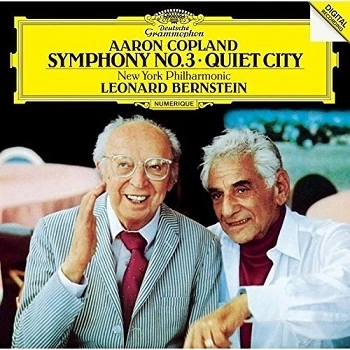
Third Symphony Written at the end of World War II, it is known as the essential American symphony that fuses his distinct “Americana” style of the ballets (Rodeo, Appalachian Spring, etc.) with the form of the symphony, which has generally been a European-dominated musical form. The Fanfare for the Common Man, written in 1942, is used as a theme in the fourth movement. Various fragments from Fanfare are also used for primary thematic material in the first three movements Copland intended this symphony as a ‘grand gesture’ there is passionate earnestness in the opening movement and tremendous impact to the brass and drums at the beginning of the scherzo, the central mood of the andantino is one of vibrant intensity, while the finale is a public address of great splendour. It is the ‘positive’ aspects of the work that have made its reputation.
Quiet City is a composition for trumpet, cor anglais or oboe, and String Orchestra. It was a suite from the incidental music for a failed play by Irwin Shaw; its main character was a lonely Jewish boy who attempted to drive away his torment by playing the trumpet. There is a true melancholy in this work that only a certain type of trumpet playing can achieve. Some see The sentiment behind Quiet City as pertinent at the moment, as we emerge from the loneliness of the pandemic and into another chapter of darkness in today’s turbulent world.
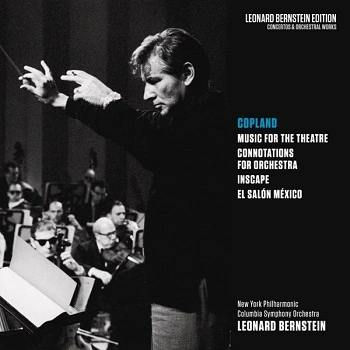
El Salón México is a popular symphonic composition completed in 1936. The piece is a musical reflection of a vibrant, working-class dance hall of the same name in Mexico City that Copland visited in 1932. It marks a turning point towards Copland’s accessible, “populist” style, using authentic Mexican folk tunes and rhythms to evoke the spirit of the place. Music for the Theatre is a chamber orchestral suite composed in 1925. It is notable for being one of the first works to establish the “American” sound associated with Copland, blending classical structures with jazz idioms popular during the Roaring Twenties. A suite in five movements – Prologue: Characterized by a solo trumpet introduction and sonata form development. Dance: Features “sassy” bassoon solos and bluesy responses. Interlude: A lyrical, nostalgic section focused on woodwind melodies. Burlesque: Emulates the bawdy, energetic atmosphere of vaudeville. Epilogue: Reprises themes from the Prologue to close the suite.
Connotations for Orchestra is a pivotal 20-minute symphonic work marking Copland’s first purely orchestral use of (twelve-tone) serialism. It represented a sharp departure from his famous “populist” style. Copland was accused by some of “betraying” his populist roots to gain favour with younger, avant-garde composers.
Inscape (1967) is an orchestral work commissioned by the New York Philharmonic. It is Copland’s fourth and final major composition using twelve-tone (serial) techniques, It is a single-movement work that alternates between massive, dissonant 11-note chords and quiet, meditative sections for wind instruments.
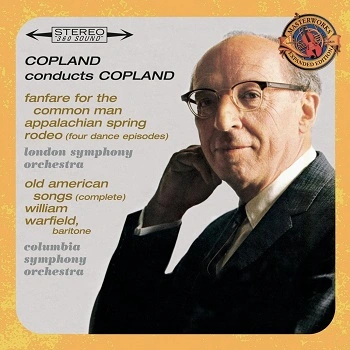
Appalachian Spring (1944) is an iconic American ballet created by choreographer Martha Graham with orchestral work composed by Copland. Set in 19th-century Pennsylvania, it follows a young pioneer couple (the Bride and Husbandman) on their wedding day as they build a new life together. Created during World War II, it captures the “pioneer spirit” and themes of optimism and community. The work is most famous for its variations on the Shaker melody “Simple Gifts”. The score won the 1945 Pulitzer Prize for Music. Copland created a suite version of the ballet. He cut out about ten minutes of music and increased the instrumentation to full-orchestra size. The Suite is cast in eight uninterrupted sections. It opens with a slowly blooming introduction, which unison strings burst into in an elated Allegro. The scenes that follow move from a warm, gentle duet for the pioneering couple, through fleetly fiddling dances for a revivalist preacher and his followers, to an animated dance of anticipation for the bride. A transitional interlude recalls the opening before the Suite’s climax, a set of variations on the Shaker hymn “Simple Gifts,” which supported scenes of rustic domesticity in the choreography. In the coda, the married couple are left alone in their new home, with tender music that bookends and fulfils the opening expectations.
third Symphony ; Quiet City
El Salon Mexico; music for the theatre Suite; Connotations; Inscape
appalachian Spring
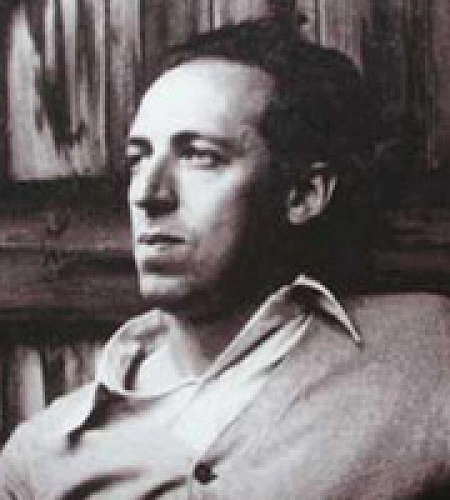
Aaron Copland (November 14, 1900 – December 2, 1990) was an American composer, critic, writer, teacher, pianist, and conductor of his own and other American music. Copland was referred to by his peers and critics as the “Dean of American Music”. The open, slowly changing harmonies in much of his music are typical of what many consider the sound of American music, evoking the vast American landscape and pioneer spirit.
Aaron Copland was born in Brooklyn, New York, on November 14, 1900. He was the youngest of five children in a Conservative Jewish immigrant family of Lithuanian origin. From 1913 to 1917 he took piano lessons with Leopold Wolfsohn, who taught him the standard classical fare. By age 15, after attending a concert by Polish composer-pianist Ignacy Jan Paderewski, Copland decided to become a composer. Copland took formal lessons in harmony, theory, and Composition from Rubin Goldmark, a noted teacher and composer of American music. Copland’s passion for the latest European music, plus glowing letters from his friend Aaron Schaffer, inspired him to travel to Paris in the 1920s and eventually study with the renowned pedagogue Nadia Boulanger, who was a primary influence on his development. Copland returned to America optimistic and enthusiastic about the future, determined to make his way as a full-time composer. He rented a studio apartment on New York City’s Upper West Side in the Empire Hotel, close to Carnegie Hall and other musical venues and publishers. He remained in that area for the next 30 years. Also important, especially during the Depression, were wealthy patrons who underwrote performances, helped pay for publication of works, and promoted musical events and composers. Among them was Serge Koussevitzky, the music director of the Boston Symphony Orchestra. Koussevitsky proved to be very influential in Copland’s life, perhaps the second most important figure in Copland’s career after Boulanger.
In his growth as a composer Copland mirrored the important trends of his time. After his return from Paris, he worked with jazz rhythms in Music for the Theater (1925) and the Piano Concerto (1926). There followed a period during which he was strongly influenced by Igor Stravinsky’s Neoclassicism, turning toward an abstract style he described as “more spare in sonority, more lean in texture.” This outlook prevailed in the Piano Variations (1930), Short Symphony (1933), and Statements for Orchestra (1933–35). After this last work, there occurred a change of direction that was to usher in the most productive phase of Copland’s career. he realized that a new public for modern music was being created by the new media of radio, phonograph, and film scores: “It made no sense to ignore them and to continue writing as if they did not exist.” Copland therefore was led to attempt to simplify the new music in order that it would have meaning for a large public. This Populist Phase (1930s–40s): Shifted toward an accessible “vernacular” style during the Great Depression to reach a wider audience. This era produced his iconic ballets and film scores like The Heiress, for which he won an Academy Award in 1949.
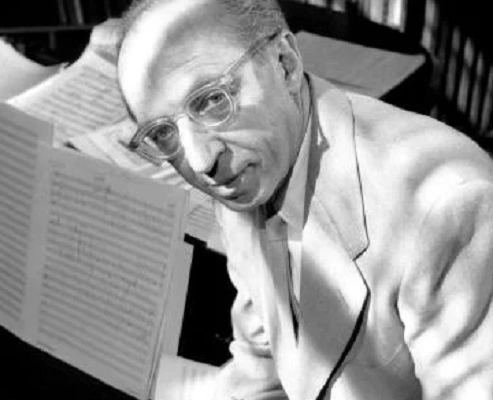
He is best known for the works he wrote in the 1930s and 1940s in a deliberately accessible style often referred to as “populist” and which he called his “vernacular” style. Works in this vein include the ballets Appalachian Spring, Billy the Kid and Rodeo, his Fanfare for the Common Man and Third Symphony. In addition to his ballets and orchestral works, he produced music in many other genres, including chamber music, vocal works, opera, and film scores.
Copland was “insatiable” in seeking out the newest European music, whether in concerts, score reading or heated debate. These “moderns” were discarding the old laws of composition and experimenting with new forms, harmonies and rhythms, and including the use of jazz and quarter-tone music. Although his early focus of jazz gave way to other influences, Copland continued to make use of jazz in more subtle ways in later works. Copland’s work from the late 1940s onward included experimentation with Schoenberg’s twelve-tone system, resulting in two major works, the Piano Quartet (1950) and the Piano Fantasy (1957) and in works like Connotations and Inscape. From the 1960s onward, he focused primarily on conducting and promoting other American composers.
Though Blacklisted during the 1950s McCarthy era for his leftist political views, he later received the Presidential Medal of Freedom in 1964. He died of Alzheimer’s disease and respiratory failure on December 2, 1990.
Sound quality is important and the better online Streaming services will offer superior sound quality. As always, We do encourage you to purchase Favoured albums from good online or High street record stores.
Artists in upcoming issues: Mozart, Brahms and Chopin.......Keep Listening!! JOIN THE CONVERSATION...
“Comments are most welcome and appreciated”