Classical Music – issue #6
Classical music generally refers to the art music of the Western world. Classical music is often characterized by formality and complexity in its musical form and harmonic organization. particularly with the use of polyphony, music in which several different tunes are played or sung at the same time. Since the ninth century, it has been primarily a written tradition, spawning a sophisticated notational system.
Rooted in the patronage of churches and royal courts in Europe. early medieval music is Chiefly Religious monophonic and vocal. The Baroque period (1580–1750) saw the relative standardization of common-practice tonality. Together with, the increasing importance of musical instruments, which grew into ensembles of considerable size. The common-practice period was a period in which the tonal system was regarded as the only basis for composition. The word tonality is sometimes used as a synonym for “key.” In the shorter but pivotal Classical period (1730–1820), composers such as Mozart created widely admired examples of absolute music. including symphonies, string quartets and concertos.
Absolute music (sometimes abstract music) is instrumental music not intended to represent or illustrate something else. The ensuing Romantic music (1800–1910) focused instead on programmatic music. the art song, symphonic poem and various piano genres were important vessels. Program music is often written so that the notes themselves convey, to some degree, the meaning of what is portrayed.Thus the thunderstorm in Beethoven’s symphony includes loud timpani strokes to convey the thunder. The shrill piccolo music to depict the shrieking winds. During this time virtuosity was celebrated, immensity was encouraged, while philosophy and nationalism were embedded. all aspects that converged in the operas of Richard Wagner.
By the 20th century, the prominence of popular music greatly increased.Many Classical composers actively avoided past techniques and genres in the lens of modernism. with some abandoning tonality in place of serialism.a serial pattern in music is merely one that repeats over and over within a composition. The term serial music is often used interchangeably with 12-tone music. However, the latter is more properly an example of the former. others found new inspiration in folk melodies or impressionist sentiments.Trends of the mid-20th century to the present day include New Simplicity, New Complexity, Minimalism, Spectral music. more recently Postmodern music and Postminimalism.
Join the Conversation!!!
we will Feature Significant Compositions from Artists representative of the various classical Periods. We Hope to encourage Listeners of all tastes and passions. So Get your Headphones on and Consider discussing the musical Offering and sharing your views with like-minded peers.
In Issue #6, we feature edward elgar
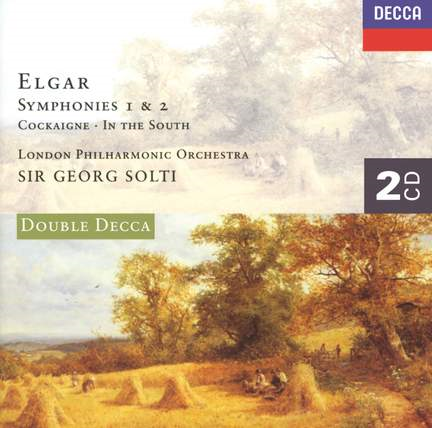
Symphony No. 1 in A-flat major, Op. 55, is considered a landmark of British music and one of the finest symphonies of the 20th century. It was an immediate “phenomenal success,” receiving 100 performances worldwide within its first year. The symphony is in cyclic form, meaning its opening “motto” theme recurs throughout the work, concluding in a grandioso finale. Movements I. Andante. Nobilmente e semplice – Allegro: Opens with a simple, noble theme Elgar called an “ideal call”. It unexpectedly shifts from A-flat major to a restless D minor for the main Allegro. II. Allegro molto: A brisk, sometimes “sinister” scherzo-like movement. Its primary theme is transformed into the main theme of the following movement. III. Adagio: Widely regarded as one of the most serene and “benedictory” slow movements in the symphonic repertoire. IV. Lento – Allegro: Begins with a mysterious introduction before a “triumphant and confident” conclusion, where the nobilmente theme returns in full splendour.
Symphony No. 2 in E-flat major, Op. 63, is often described as the “passionate pilgrimage of the soul”. Dedicated to the memory of King Edward VII, the work reflects a complex mix of public tribute and deeply personal introspection, capturing a sense of twilight at the end of the Edwardian era. A four-movement work: I. Allegro vivace e nobilmente: Opens with a high-energy “Spirit of Delight” theme.
II. Larghetto: A solemn funeral march, likely inspired by the death of Elgar’s close friend Alfred Rodewald as much as the King. III. Rondo (Presto): Noted for a “frenzied outburst” or “ghostly” pounding climax that Elgar linked to a Tennyson poem. IV. Moderato e maestoso: A confident finale that concludes not with a triumph, but with a radiant and reflective quietness.
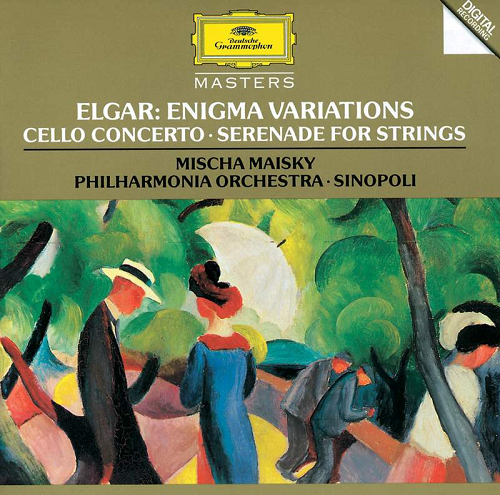
Cello Concerto in E Minor, Op. 85, composed in 1919, is one of the most significant works in the solo cello repertoire. Written in the aftermath of the First World War, it is widely considered an elegiac lament for a lost world, characterized by its contemplative, autumnal, and deeply emotional tone. Unlike the traditional three-movement concerto format, this work is structured in four movements: I. Adagio – Moderato: Opens with a bold, recitative-like cello solo marked Nobilmente, leading into a wistful main theme first introduced by the violas. II. Lento – Allegro molto: A fast, scherzo-like movement following a brief rhapsodic bridge; it is noted for its virtuosic, perpetual-motion quality. III. Adagio: The lyrical and emotional heart of the concerto, consisting of a short, intense, and searching melody. IV. Allegro – Moderato – Allegro, ma non troppo : The longest movement, featuring march-like energy that eventually slows to reprise themes from earlier movements before a final, spirited conclusion.
Variations on an Original Theme, Op. 36, better known as the Enigma Variations, is a monumental orchestral work composed between October 1898 and February 1899. It consists of fourteen variations, each dedicated “to my friends pictured within”. The work skyrocketed Elgar to international fame and remains a cornerstone of the classical repertoire. The Theme (Andante) of Edward Elgar’s Enigma Variations, Op. 36, is a melancholic G minor melody, depicting “the loneliness of the artist”, serving as a contemplative, reflective introduction to a 14-variation structure, where each section portrays a close friend: I. C.A.E. (Caroline Alice Elgar): A romantic and delicate tribute to the composer’s wife. II. H.D.S-P. (Hew David Steuart-Powell): A humorous take on a pianist friend’s warm-up exercises. III. R.B.T. (Richard Baxter Townshend): Mimics a friend’s theatrical performance of an old man with a voice that broke into a falsetto. IV. W.M.B. (William Meath Baker): A short, energetic piece depicting a friend who would forcefully slam a door when leaving a room. V. R.P.A. (Richard Penrose Arnold): Captures a serious conversationalist whose talk was often broken by a whimsical laugh. VI. Ysobel (Isabel Fitton): A pensive variation for a viola student, featuring a string-crossing exercise. VII. Troyte (Arthur Troyte Griffith): A boisterous presto mimicking a friend’s enthusiastic but “incompetent” piano playing. VIII. W.N. (Winifred Norbury): A gracious portrait that includes a hint of her characteristic laugh. IX. Nimrod (August Jaeger): The most famous variation, a noble Adagio depicting a deep conversation about Beethoven. The name is a pun; “Jaeger” is German for “hunter,” and Nimrod was a biblical “mighty hunter”. X. Dorabella (Dora Penny): An intermezzo where woodwinds gently parody a friend’s slight stutter. XI. G.R.S. (George Robertson Sinclair): Not actually about the organist himself, but his bulldog, Dan, falling into the River Wye and barking upon landing. XII. B.G.N. (Basil George Nevinson): A moving tribute to a cellist friend, featuring prominent cello solos. XIII. * * * (Lady Mary Lygon): A mysterious “Romanza” quoting Mendelssohn’s Calm Sea and Prosperous Voyage to represent a lady on a sea voyage. XIV. E.D.U. (Edward Elgar): A bold self-portrait (using his wife’s nickname “Edoo”) that brings the work to a triumphant close, referencing the themes of his wife (Variation I) and his best friend Jaeger (Variation IX)
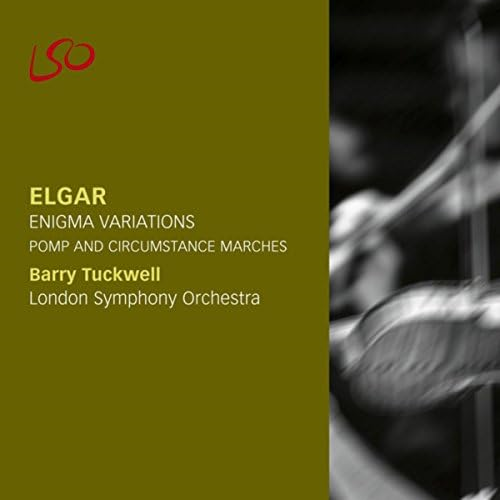
Pomp and Circumstance Marches (Op. 39) is a series of military marches for orchestra, composed primarily between 1901 and 1930. The title is famously taken from Act 3, Scene 3 of Shakespeare’s Othello: “Pride, pomp, and circumstance of glorious war!” March No. 1 in D major (1901): The most famous of the set, featuring the “Trio” melody later adapted into the patriotic hymn “Land of Hope and Glory”. It is a staple of the Last Night of the Proms in the UK and serves as the standard graduation processional in the United States. March No. 2 in A minor (1901): Dedicated to Granville Bantock, this is the shortest and simplest march, known for its tense, staccato opening. March No. 3 in C minor (1904): A more solemn and “slightly sinister” piece compared to the others, featuring unusual instrumentation such as three bassoons.
March No. 4 in G major (1907): Grand and upbeat, similar in structure to No. 1. Its central theme was used for the song “The King’s Way” and served as the recessional music for the coronation of King Charles III. March No. 5 in C major (1930): Composed much later than the first four and dedicated to Dr. Percy Hull, it is noted for its brilliant orchestral effects.
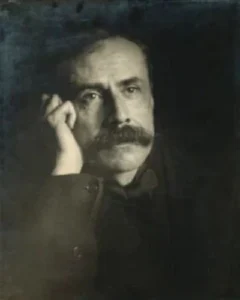
Sir Edward William Elgar, 1st Baronet, OM, GCVO (1857 – 1934) was an English composer, many of whose works have entered the British and international classical concert repertoire. Among his best-known compositions are orchestral works including the Enigma Variations, the Pomp and Circumstance Marches, concertos for violin and cello, and two symphonies. He also composed choral works, including The Dream of Gerontius, chamber music and songs. He was appointed Master of the King’s Musick in 1924.
Edward Elgar was born in the small village of Lower Broadheath, near Worcester, England, on 2 June 1857. Edward was the fourth of their seven children. His mother, Ann Elgar had converted to Roman Catholicism shortly before Edward’s birth, and he was baptised and brought up as a Roman Catholic, to the disapproval of his father, William Elgar, who was a violinist of professional standard. All the Elgar children received a musical upbringing. Elgar’s mother was interested in the arts and encouraged his musical development. It was a disappointment to Elgar that on leaving school in 1872 he went not to Leipzig for musical studies but to the office of a local solicitor as a clerk. He did not find an office career congenial, and for fulfilment he turned not only to music but to literature, becoming a voracious reader. Around this time, he made his first public appearances as a violinist and organist. After a few months, Elgar left the solicitor to embark on a musical career. Although rather solitary and introspective by nature, Elgar thrived in Worcester’s musical circles. When Elgar was 29, he took on a new pupil, Caroline Alice Roberts, known as Alice. Alice became his wife three years later. Her family was horrified by her intention to marry an unknown musician who worked in a shop and was a Roman Catholic. She was disinherited. Until her death, she acted as his business manager and social secretary, dealt with his mood swings, and was a perceptive musical critic. During the 1890s, Elgar gradually built up a reputation as a composer, catching the attention of prominent critics, but their reviews were polite rather than enthusiastic. At the age of forty-two, Elgar produced the Enigma Variations. The large-scale work was received with general acclaim for its originality, charm and craftsmanship, and it established Elgar as the pre-eminent British composer of his generation.
For the Birmingham Triennial Music Festival of 1900, he set Cardinal John Henry Newman’s poem The Dream of Gerontius for soloists, chorus and orchestra. based on a Roman Catholic text that caused some disquiet in the Anglican establishment in Britain, but it became, and has remained, a core repertory work in Britain and elsewhere. Elgar is probably best known for the first of the five Pomp and Circumstance Marches, which were composed between 1901 and 1930. In March 1904 a three-day festival of Elgar’s works was presented at Covent Garden, an honour never before given to any English composer. Elgar was knighted at Buckingham Palace on 5 July 1904. His new life as a celebrity was a mixed blessing to the highly strung Elgar, as it interrupted his privacy, and he often was in ill-health. As Elgar approached his fiftieth birthday, he began work on his first symphony, a project that had been in his mind in various forms for nearly ten years. His First Symphony (1908) was a national and international triumph. The Violin Concerto (1910) was commissioned by Fritz Kreisler, one of the leading international violinists of the time.
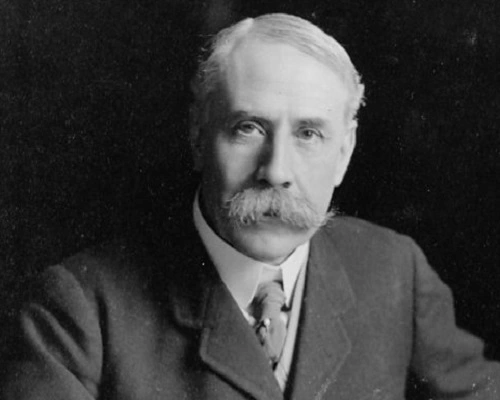
The Violin Concerto was Elgar’s last popular triumph.The following year he presented his Second Symphony in London, but was disappointed at its reception. Unlike the First Symphony, it ends not in a blaze of orchestral splendour but quietly and contemplatively. Towards the end of the war, Elgar was in poor health. His wife thought it best for him to move to the countryside, there Elgar recovered his strength and, in 1918 and 1919, he produced four large-scale works. The first three of these were chamber pieces: the Violin Sonata in E minor, the Piano Quintet in A minor, and the String Quartet in E minor.All three works were well received. By contrast, the remaining work, the Cello Concerto in E minor, had a disastrous premiere although now it is one of the most significant works in the solo cello repertoire. After a short illness, his wife died of lung cancer on 7 April 1920, at the age of seventy-two. After the Cello Concerto, Elgar completed no more large-scale works.
For most of the rest of the twentieth century, it was generally agreed that Elgar’s creative impulse ceased after his wife’s death. Elgar died on 23 February 1934 at the age of seventy-six and was buried next to his wife at St Wulstan’s Roman Catholic Church in Little Malvern.Most of his musical influences were not from England but from continental Europe. He felt himself to be an outsider, not only musically, but socially. In musical circles dominated by academics, he was a self-taught composer; in Protestant Britain, his Roman Catholicism was regarded with suspicion in some quarters; and in the class-conscious society of Victorian and Edwardian Britain, he was acutely sensitive about his humble origins even after he achieved recognition. His stock remained low for a generation after his death. It began to revive significantly in the 1960s, helped by new recordings of his works. Some of his works have, in recent years, been taken up again internationally, but the music continues to be played more in Britain than elsewhere.
Sound quality is important and the better online Streaming services will offer superior sound quality. As always, We do encourage you to purchase Favoured albums from good online or High street record stores.
Artists in upcoming issues: Haydn, Stravinsky, shostakovich, Richard strauss, Mozart, Brahms and Liszt......Keep Listening!! JOIN THE CONVERSATION...
“Comments are most welcome and appreciated”