Classical Music – issue #7
Classical music generally refers to the art music of the Western world. Classical music is often characterized by formality and complexity in its musical form and harmonic organization. particularly with the use of polyphony, music in which several different tunes are played or sung at the same time. Since the ninth century, it has been primarily a written tradition, spawning a sophisticated notational system.
Rooted in the patronage of churches and royal courts in Europe. early medieval music is Chiefly Religious monophonic and vocal. The Baroque period (1580–1750) saw the relative standardization of common-practice tonality. Together with, the increasing importance of musical instruments, which grew into ensembles of considerable size.
The common-practice period was a period in which the tonal system was regarded as the only basis for composition. The word tonality is sometimes used as a synonym for “key.”.In the shorter but pivotal Classical period (1730–1820), composers such as Mozart created widely admired examples of absolute music. including symphonies, string quartets and concertos. Absolute music (sometimes abstract music) is instrumental music not intended to represent or illustrate something else. The ensuing Romantic music (1800–1910) focused instead on programmatic music. the art song, symphonic poem and various piano genres were important vessels. Program music is often written so that the notes themselves convey, to some degree, the meaning of what is portrayed.
Thus the thunderstorm in Beethoven’s symphony includes loud timpani strokes to convey the thunder. The shrill piccolo music to depict the shrieking winds. During this time virtuosity was celebrated, immensity was encouraged, while philosophy and nationalism were embedded. all aspects that converged in the operas of Richard Wagner.By the 20th century, the prominence of popular music greatly increased. Many Classical composers actively avoided past techniques and genres in the lens of modernism. with some abandoning tonality in place of serialism.a serial pattern in music is merely one that repeats over and over within a composition. The term serial music is often used interchangeably with 12-tone music. However, the latter is more properly an example of the former. others found new inspiration in folk melodies or impressionist sentiments.Trends of the mid-20th century to the present day include New Simplicity, New Complexity, Minimalism, Spectral music. more recently Postmodern music and Postminimalism.
Join the Conversation!!!
we will Feature Significant Compositions from Artists representative of the various classical Periods. We Hope to encourage Listeners of all tastes and passions. So Get your Headphones on and Consider discussing the musical Offering and sharing your views with like-minded peers.
In Issue #7, we feature (Franz) Joseph Haydn
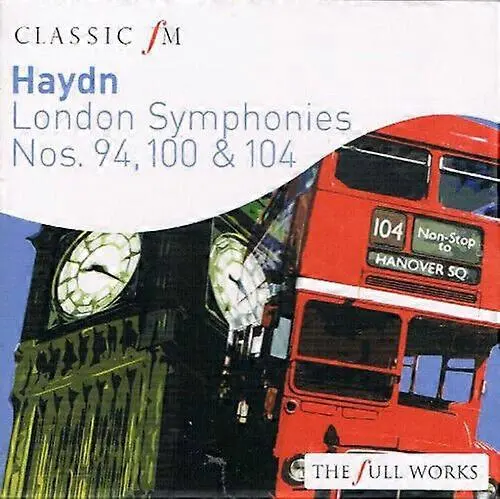
Symphony No.94 it is the second of Haydn’s twelve “London Symphonies. The “Surprise” nickname comes from the second movement (Andante). After a very quiet, simple opening theme, the entire orchestra suddenly strikes a massive fortissimo chord (often punctuated by loud timpani stroke).
Symphony No. 104 in D major, known as the “London” Symphony, is the final symphony composed by Joseph Haydn. Completed in 1795, it serves as the crowning achievement of his twelve “London Symphonies” and his entire symphonic career. It is considered a triumphant summation of Haydn’s symphonic art, blending humour, innovation, and majesty. Its finale influenced future composers, including Brahms in his Second Symphony.
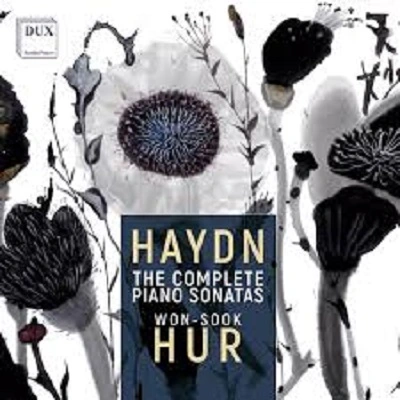
piano Sonata no.47 A popular and dramatic work, notable for its rare choice of B minor as a home key. Movements: I. Allegro moderato: A serious, rhythmically driven movement with a characteristic dotted-note theme. II. Menuet & Trio: Features a B major trio that provides a lyrical contrast to the darker outer sections. III. Finale: Presto: A fast, virtuosic movement known for its relentless momentum. Piano Sonata no. 59 is widely considered one of his most significant keyboard works. The sonata is celebrated for its expressive depth and is often cited as a key link between the classical style and the more forward-looking, expansive structures later popularised by Beethoven. The sonata consists of three movements: I. Allegro non troppo: A spirited first movement in triple metre that follows a traditional sonata form but features an unusually extensive development section. II. Adagio e cantabile: An “ABA” structured movement in B-flat major. It is noted for its highly decorated thematic material and melancholic touches in the tonic minor. III. Finale (Tempo di Menuetto): A large-scale minuet with two trio sections, starting conventionally but expanding into a complex final movement.
Piano Sonata No.62 His final and most celebrated piano sonata. Composed in 1794 during his second visit to London, it is often called the “London” sonata. Written in three movements: I. Allegro (Moderato): A powerful movement in sonata form known for its “symphonic” dimensions and bold, orchestral-like textures. II. Adagio: Notable for being in the remote key of E major, that creates a striking harmonic contrast. III. Finale: Presto: A witty, high-energy movement filled with Haydn’s characteristic humour and sudden pauses.
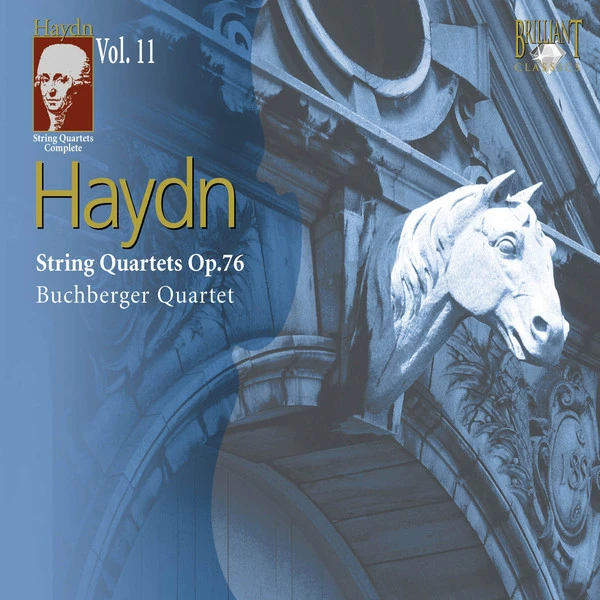
String Quartets Op.76 widely considered the summit of his achievement in the genre and a turning point in classical chamber music. Featured are No. 2 in D minor (“Fifths” / Quinten): Named for the consecutive fifths in the opening, it features a unique, canon-based minuet often associated with “witchcraft”. No. 3 in C major (“Emperor” / Kaiser): Famous for its second movement, which consists of variations on the Austrian national anthem (Kaiserlied) that Haydn composed himself.
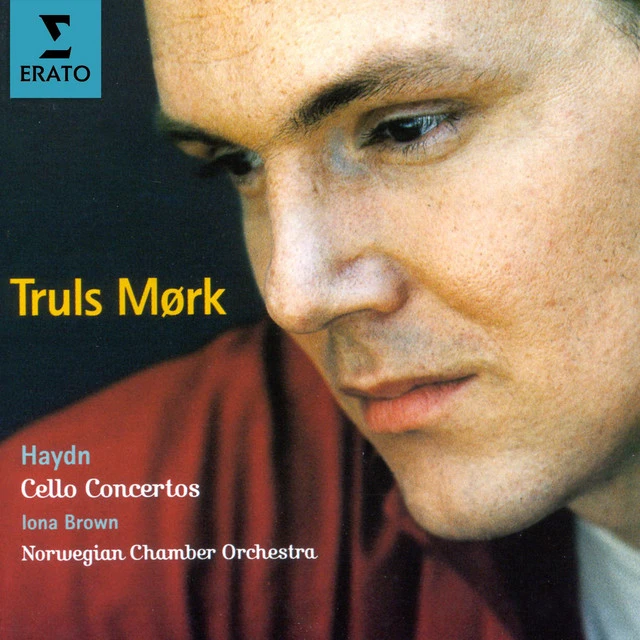
Cello Concerto 1 follows a standard three-movement structure and reflects a transition from the Baroque ritornello style to the Classical sonata form. I. Moderato: Characterised by a majestic opening and virtuosic runs. The soloist often performs a cadenza near the end. II. Adagio: A lyrical, song-like movement in F major. Haydn omits the wind instruments here, leaving the cello to be accompanied only by strings. III. Allegro molto: A high-energy finale that showcases the cellist’s technical agility through rapid scales and sweeping chords.
Cello Concerto 2 The concerto follows the standard three-movement I. Allegro moderato: Leisurely and soothing in tone, featuring a “dialogue” between the cello and orchestra. II. Adagio: A slower, singing movement in A major that shifts briefly to the distant key of C major. III. Rondo (Allegro): A cheerful, lilting finale that is the shortest of the three movements.
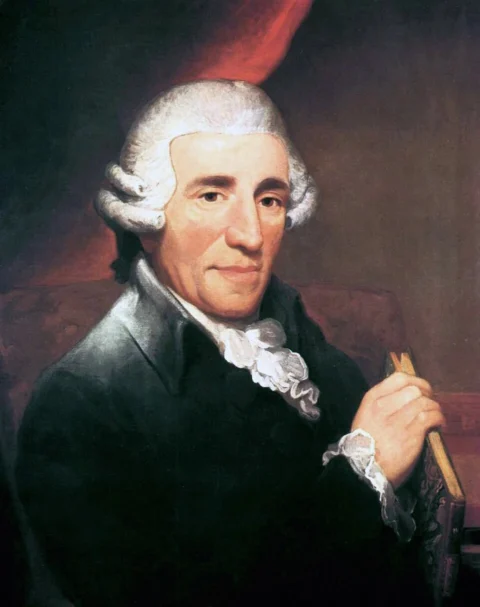
Franz Joseph Haydn (1732–1809) is recognized as a pivotal Austrian composer of the Classical period. Known as the “Father of the Symphony” and “Father of the String Quartet,” he revolutionized chamber music and established key musical forms, spending much of his career working for the wealthy Esterházy family.
Haydn was the second son of humble parents. Haydn early revealed unusual musical gifts, and a cousin who was a school principal and choirmaster in the nearby city of Hainburg offered to take him into his home and train him. Haydn, not yet six years old, left home, never to return to the parental cottage except for rare brief visits. His life changed decisively when he was eight years old. The musical director of St. Stephen’s Cathedral in Vienna invited him to serve as chorister at the Austrian capital’s most important church. Haydn’s parents accepted the offer, and thus in 1740 Haydn moved to Vienna. He stayed at the choir school for nine years, acquiring an enormous practical knowledge of music by constant performances. Haydn at 17 was left to his own devices. He undertook an arduous course of self-instruction through the study of musical works and of leading manuals of musical theory. With persistence and energy, Haydn made progress. He was eventually introduced to the music-loving Austrian nobleman Karl Joseph von Fürnberg, in whose home he played chamber music. For the instrumentalists there he wrote his earliest string quartets.In 1758 Haydn was engaged as musical director for the Bohemian count Ferdinand Maximilian von Morzin. Haydn was put in charge of an orchestra of about 16 musicians, and for this ensemble he wrote his first symphony These early musical compositions were still conventional in character, yet a certain freshness of melodic invention and sparkle marked them as the work of a future master.
Soon Haydn was invited to enter the service of the wealthy Esterházy family. Here was an atmosphere conducive to the development and maturing of Haydn’s art. In addition to composing operas for the court, Haydn composed symphonies, string quartets, and other chamber music. Prince Miklós was a passionate performer on the baryton, and Haydn provided for his patron more than 150 compositions featuring this now-obsolete cellolike instrument. On his many visits to Vienna, he developed a close friendship with Wolfgang Amadeus Mozart. The two composers felt inspired by each other’s work. The period from 1768 to about 1774 marks Haydn’s maturity as a composer. The music written then, from the Stabat Mater (1767) to the large-scale Missa Sancti Nicolai (1772), would be sufficient to place him among the chief composers of the era. The many operas he wrote during these years did much to enhance his own reputation and that of the Esterházy court. Among his other important works from this period are the string quartets of Opus 20, the Piano Sonata in C Minor, and the symphonies in minor keys, especially the so-called Trauersymphonie in E Minor, No. 44 (“Mourning Symphony,” so named because its slow movement, which was a particular favourite of the composer, was performed at a memorial service for Haydn) and the “Farewell” Symphony, No. 45. The following decade and a half did even more to enhance Haydn’s fame. His operatic output continued strong until 1785. In 1775 he composed his first large-scale oratorio, Il ritorno di Tobia, for the Musicians’ Society in Vienna. In the early 1780s the Viennese firm Artaria published his six Opus 33 quartets. These important works quickly set a new standard for the genre.
He composed over 100 symphonies, including the “[Surprise]” (No. 94), “[Clock]” (No. 101), and “[London]” (No. 104) symphonies, along with the oratorio The Creation, a Trumpet Concerto, and Cello Concerto No. 2 in D Major. While he did not literally invent the symphony or string quartet, he consolidated new principles of musical form, structure, and development His work is marked by technical brilliance, structural innovation, and a balance of dramatic effects with humour..
In mid-decade came a commission from Paris to compose a set of symphonies, and Haydn’s resulting “Paris” symphonies are a landmark of the genre. It was also about this time that he received the commission to compose the Seven Last Words of Our Saviour on the Cross; for the incorrigibly cheerful Haydn, writing seven successive dour movements was a particularly difficult undertaking, but the effort resulted in one of his most-admired works.A violinist and concert manager, Johann Peter Salomon, arrived from England and commissioned from Haydn 6 new symphonies and 20 smaller compositions to be conducted by the composer himself in a series of orchestral concerts in London sponsored by Salomon. Haydn gladly accepted this offer, and the two men set off for London in December 1790. He was feted, lionized, and treated as a genius. The 12 symphonies he wrote on his first and second visits to London represent the climax of his orchestral output. Their virtuosity of instrumentation, masterly treatment of musical forms, and freely flowing melodic inspiration—not to mention their deft wit—endeared the works to British audiences. The principal compositions of his second visit to London were the second set of London (or Salomon) symphonies (Nos. 99–104) and the six Apponyi quartets (Nos. 54–59).
While in London, Haydn reached even greater heights of inspiration, particularly in the last three symphonies he wrote (Nos. 102–104), of which the Symphony No. 102 in B-flat Major is one of the greatest of all symphonies. Resuming his duties for Prince Esterházy, he started work on the oratorio The Creation.Haydn’s late creative output included six masses which are among the most-significant masses of the 18th century. He also continued to compose magnificent string quartets, notably the six Erdödy quartets known as Opus 76. In 1797. During the last years of his life, he was apparently incapable of further work. The gaiety and naturalness of Haydn’s music held less appeal to the Romantic era of the 19th century, however, when dark, complex moods and ambivalent emotions were being explored in music; although many of his symphonies and quartets were performed with some frequency well past 1850, by the end of the century they had all but slipped from the repertory. But in the 20th century there was a re-evaluation of Haydn’s work, and his outstanding thematic elaborations, his dependably engaging wit, the originality of his modulations, and the artistry and superb craftsmanship of his orchestration were again appreciated in full measure.
Sound quality is important and the better online Streaming services will offer superior sound quality. As always, We do encourage you to purchase Favoured albums from good online or High street record stores.
Artists in upcoming issues: Stravinsky, shostakovich, Richard strauss, Mozart, Brahms and Liszt......Keep Listening!! JOIN THE CONVERSATION...
“Comments are most welcome and appreciated”