Classical Music – issue #8
Classical music generally refers to the art music of the Western world. Classical music is often characterized by formality and complexity in its musical form and harmonic organization. particularly with the use of polyphony, music in which several different tunes are played or sung at the same time. Since the ninth century, it has been primarily a written tradition, spawning a sophisticated notational system.
Rooted in the patronage of churches and royal courts in Europe. early medieval music is Chiefly Religious monophonic and vocal. The Baroque period (1580–1750) saw the relative standardization of common-practice tonality. Together with, the increasing importance of musical instruments, which grew into ensembles of considerable size.
The common-practice period was a period in which the tonal system was regarded as the only basis for composition. The word tonality is sometimes used as a synonym for “key.”.In the shorter but pivotal Classical period (1730–1820), composers such as Mozart created widely admired examples of absolute music. including symphonies, string quartets and concertos. Absolute music (sometimes abstract music) is instrumental music not intended to represent or illustrate something else. The ensuing Romantic music (1800–1910) focused instead on programmatic music. the art song, symphonic poem and various piano genres were important vessels. Program music is often written so that the notes themselves convey, to some degree, the meaning of what is portrayed.
Thus the thunderstorm in Beethoven’s symphony includes loud timpani strokes to convey the thunder. The shrill piccolo music to depict the shrieking winds. During this time virtuosity was celebrated, immensity was encouraged, while philosophy and nationalism were embedded. all aspects that converged in the operas of Richard Wagner.By the 20th century, the prominence of popular music greatly increased. Many Classical composers actively avoided past techniques and genres in the lens of modernism. with some abandoning tonality in place of serialism.a serial pattern in music is merely one that repeats over and over within a composition. The term serial music is often used interchangeably with 12-tone music. However, the latter is more properly an example of the former. others found new inspiration in folk melodies or impressionist sentiments.Trends of the mid-20th century to the present day include New Simplicity, New Complexity, Minimalism, Spectral music. more recently Postmodern music and Postminimalism.
Join the Conversation!!!
we will Feature Significant Compositions from Artists representative of the various classical Periods. We Hope to encourage Listeners of all tastes and passions. So Get your Headphones on and Consider discussing the musical Offering and sharing your views with like-minded peers.
In Issue #8, we feature igor Stravinsky
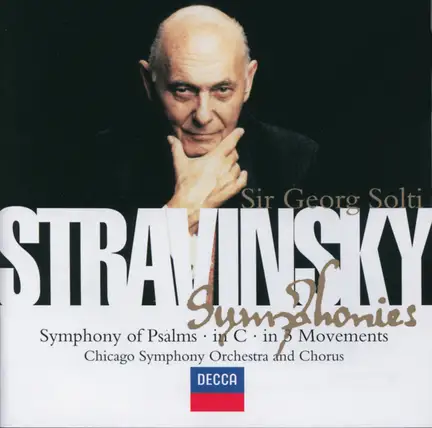
The Symphony in Three Movements is considered Stravinsky’s first major composition after emigrating to the United States. It uses material written by Stravinsky for abandoned film projects, including a piano concerto (evident in the first movement’s prominent piano part) and a film score for The Song of Bernadette (which became the second movement). Stravinsky, who rarely acknowledged extramusical inspirations for his music, referred to the composition as his ‘war symphony’. He claimed the symphony as a direct response to events of the Second World War in both Europe and Asia. The first movement was inspired by a documentary on Japanese scorched earth tactics in China. The third movement deals with footage of German soldiers goosestepping and the Allied forces’ mounting success. From a purely musical standpoint, the Symphony hearkens back to Stravinsky’s earlier styles of composition while retaining a high-energy Neoclassical work characterized by “rhythmic delirium,” shifting ostinatos, and a raucous final D-flat sixth chord that Stravinsky linked to his exuberance at the Allied triumph.
The Symphony in C is entirely abstract and seems a retreat into the “pure music” styles of Bach, Beethoven, and Haydn. It was a turbulent period of the composer’s life, marked by illness and deaths in his immediate family. Stravinsky disclaimed any link between his personal experiences and the symphony’s content. Regarding its style, Stravinsky acknowledged a division of the symphony into halves. The symphony follows a traditional four-movement structure with a total duration of approximately 30 minutes: Moderato alla breve: A sonata-form movement with a driving, energetic character. Larghetto concertante: A lyrical, slow movement with a concertante (soloistic) style, often described as ethereal. Allegretto: A playful and rhythmically complex scherzo-like movement. Largo – Tempo giusto, alla breve: A finale that shifts from a sombre, slow introduction to a spirited conclusion, eventually recalling themes from the first movement. The first two movements, composed in Europe, use more traditional rhythmic patterns and harmonizations. The last two movements use frequent modulations of rhythm and are much more chromatic.
By far the best-known of Stravinsky’s religious works, the Symphony of Psalms is formidably devout but never confessional. The work uses Latin Vulgate texts from the Book of Psalms (Psalms 38, 39, and 150). Stravinsky famously excluded violins, violas, and clarinets to achieve a “chilly” and objective sound. A double fugue suggests the way of God – not majestically Baroque, but factual, inexorable, Byzantine. A timeless “Alleluia” clinches the final impression of metaphysical grandeur and repose. It is a powerful articulation of Stravinsky’s spiritual vision.
First Movement (Psalm 38, verses 13–14): A prayer for mercy characterized by rapid, percussive woodwind figures and the stark E-minor “barking” chords. Second Movement (Psalm 39, verses 2–4): A complex double fugue where the first subject is introduced by the oboe and the second by the chorus. Third Movement (Psalm 150): An expansive song of praise that shifts from a hushed, ethereal “Alleluia” to a rhythmic, joyous celebration.
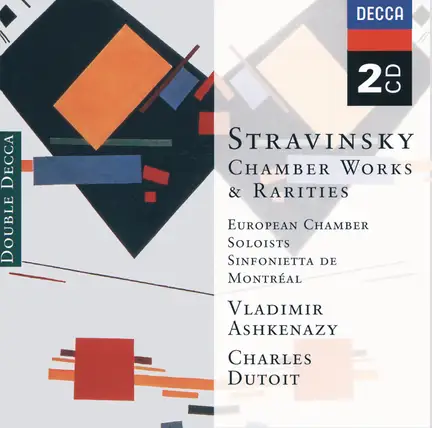
Concerto for Two Pianos (often called Concerto per due pianoforti soli) is a neoclassical masterpiece finished in 1935. Unusually for a “concerto,” it is written for two solo pianos without an orchestra, emphasising a competitive, “concertant” dialogue between the two instruments. The four compact variations are blatantly virtuosic, with attention grabbing octaves and buzzing flights of rapid notes. Stravinsky wrote the piece to perform on tour with his son, Soulima Stravinsky. It is considered one of his major works from his neoclassical period, characterised by “fiendish difficulty” and “symphonic proportions”. The work lasts approximately 20 minutes and is divided into four movements: I. Con moto: A sonata-like form filled with percussive, repeated notes and driving energy. II. Notturno: Adagietto: Described by Stravinsky as “after-dinner music” or a “digestive” meant to bridge the larger movements. III. Quattro variazioni: Four scherzo-like variations based on a theme that later serves as a fugue subject. IV. Preludio e fuga: A rigorous finale that highlights the technical virtuosity of both performers. The order of the movements was a challenging issue for Stravinsky, due to his break at the time of composing this work. The order of the last two movements was originally reversed, and the theme of these variations is the subject of the fugue in what is now the finale. There are discernible patterns in the work that indicate that every movement is in a different tonality.
L’Histoire du soldat, or Tale of the Soldier, is an hour-long 1918 theatrical work to be “read, played and danced” by three actors, one or more dancers, and a septet of instruments. The work is celebrated for its eclectic mix of styles, including marches, tangos, waltzes, and early jazz influences like ragtime – a magpie’s nest of musical idiom and cultural allusion. This popular 5-movement version exists for piano, clarinet, and violin. Instrumentation: Written while Stravinsky was a refugee in Switzerland, the piece marks a transitional phase in his career, moving away from the massive orchestral scores of his early Russian ballets toward the stripped-back transparency of Neo-classicism. Artistically speaking, it is a work of timeless appeal, creative flexibility and of rich historical context, a work which at its core captures the mood of disarray and turmoil in Europe at the closing stages of The Great War.
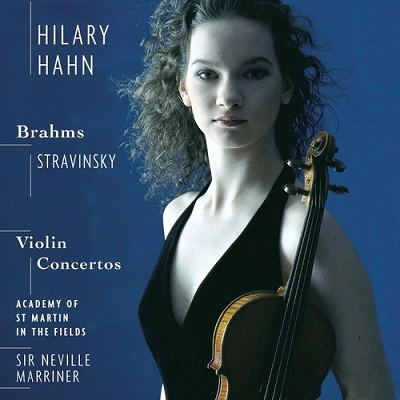
Violin Concerto in D is a neoclassical violin concerto in four movements, composed in the summer of 1931. It lasts approximately twenty minutes. It was used by George Balanchine as music for two ballets. Composed in collaboration with the Polish-born violinist Samuel Dushkin, who sought a work that would expand the instrument’s technical possibilities. The concerto consists of four movements and lasts approximately 20–22 minutes. Toccata – Energetic and bright with a touch of humour. Aria I – Lyrical and expressive. Aria II – A more sombre or introspective middle movement. Capriccio – A lively, virtuosic finale. Highlights include the “Passport” Chord where each movement begins with a specific, wide-spaced dissonant chord (D, E, A) that Stravinsky famously dubbed his “passport to the concerto”. Despite Dushkin’s assistance, the resulting concerto is unmistakably Stravinsky’s own and rather than a traditional virtuosic display, the work features chamber-like textures where the soloist often acts as a partner or even an accompanist to the orchestra.
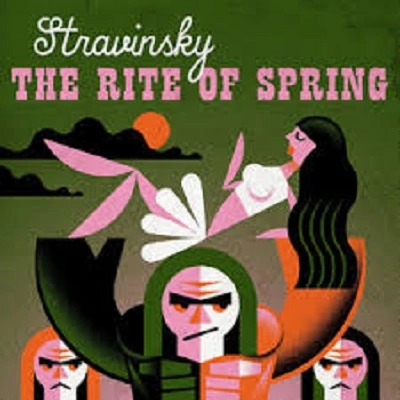
Sir Simon Rattle’s recording of Igor Stravinsky’s The Rite of Spring with the City of Birmingham Symphony Orchestra (CBSO) uses the 1947 revised version of the score. The original 1913 score featured rapidly shifting, intricate time signatures that were difficult for performers to read. In 1947, he re-barred these sections using larger units to make the rhythms more accessible. The 1947 version incorporates minor changes to the instrumentation and balance. For example, certain parts for the horns and woodwinds were refined to enhance clarity within the dense orchestral texture. A primary driver for the revision was to secure a new copyright for the work in the United States, as the original 1913 version was entering the public domain in various territories. A groundbreaking modernist masterpiece depicting pagan fertility rituals. This version opens with a famous bassoon solo and exploring intense rhythmic dissonance and primal themes. Rattle is noted for a highly detailed and atmospheric approach, particularly in the quieter “Introduction” sections. Reviewers often highlight the clarity of woodwind detail and the powerful, earth-shattering impact of the brass and percussion. He is known for avoiding “over-fast” or sensationalised speeds, preferring to build formidable tension in sections like the “Sacrificial Dance”.
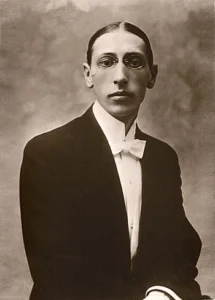
Igor Fyodorovich Stravinsky (1882 – 1971) was a Russian composer and conductor with French (from 1934) and American citizenship (from 1945). He is widely considered one of the most important and influential composers of the 20th century and a pivotal figure in modernist music.While studying law at the University of Saint Petersburg, he met Nikolai Rimsky-Korsakov and studied music under him until the latter’s death in 1908. Soon after, Stravinsky met impresario Sergei Diaghilev, who commissioned him to write three ballets for the Ballets Russes’s Paris seasons: The Firebird (1910), Petrushka (1911), and The Rite of Spring (1913),
Igor Fyodorovich Stravinsky was born in Oranienbaum, Russia (a town renamed Lomonosov in 1948). From the age of nine, Stravinsky studied privately with a piano teacher. At university, Stravinsky befriended Vladimir Rimsky-Korsakov, a son of leading Russian composer Nikolai Rimsky-Korsakov. Rimsky-Korsakov agreed personally to advise Stravinsky on his compositions. After his father died in 1902, Stravinsky became more independent and increasingly involved in Rimsky-Korsakov’s circle of artists. Stravinsky’s first major task from Rimsky-Korsakov was the four-movement Piano Sonata in F-sharp minor. Soon after finishing the sonata, Stravinsky began his large-scale Symphony in E-flat, the first draft of which he finished in 1905. Stravinsky became increasingly cramped in the stylistically conservative atmosphere: modern music was questioned, and concerts of contemporary music were looked down upon. Stravinsky remembered the concerts as intriguing and intellectually stimulating, being the first place, he was exposed to French composers like Franck, Dukas, Fauré, and Debussy. Nevertheless, Stravinsky remained loyal to Rimsky-Korsakov. As the Ballets Russes faced financial issues, Diaghilev wanted a new ballet with distinctly Russian music and design. Diaghilev turned to Stravinsky, who gladly accepted the task. The Firebird premiered in Paris (as L’Oiseau de feu) on 25 June 1910 to widespread critical acclaim, making Stravinsky an overnight sensation. Petrushka premiered in Paris in June 1911 to equal acclaim as The Firebird, and Stravinsky became established as one of the most advanced young theatre composers of his time. Stravinsky conceived an idea for a work about what he called “a solemn pagan rite: sage elders, seated in a circle, watched a young girl dance herself to death.” Diaghilev excitedly agreed to commission the work. The result was The Rite of Spring (Le sacre du printemps). With radical choreography by the young Vaslav Nijinsky, the ballet’s experimental nature caused a near-riot at its premiere in Paris on 29 May 1913. When World War I began the Stravinskys moved to Switzerland During the first months of the war, Stravinsky intensely researched Russian folk poetry and prepared librettos for numerous works to be composed in the coming years
After the war ended, Stravinsky decided that his residence in Switzerland was too far from Europe’s musical activity, and briefly moved his family to France. In 1921, Stravinsky signed a contract with the player piano company Pleyel to create piano roll arrangements of his music. Stravinsky had abandoned the Russian Orthodox Church during his teenage years, but after meeting Father Nicolas in 1926 and reconnecting with his faith, he began regularly attending services. From then until moving to the United States, Stravinsky diligently attended church, participated in charity work, and studied religious texts. A commission from the Boston Symphony Orchestra in 1930 for a symphonic work led Stravinsky back to Latin texts, this time from the book of Psalms. Between touring concerts, he composed the choral Symphony of Psalms, a deeply religious work that premiered in December of that year. While touring in Germany, Stravinsky visited his publisher’s home and met Polish-American violinist Samuel Dushkin, who convinced him to compose the Violin Concerto with the latter’s help on the solo part. Impressed by Dushkin’s virtuosic ability and understanding of music, Stravinsky wrote more music for violin and piano, and rearranged some of his earlier music to be performed alongside the Concerto while on tour until 1933. Stravinsky embarked on a successful three-month tour of the United States with Dushkin. he visited South America for the first time the following year. His son, Soulima was an excellent pianist, having performed the Capriccio in concert with Stravinsky conducting. Continuing a line of solo piano works, Stravinsky composed the Concerto for Two Pianos to be performed by them both, and they toured the work through 1936. After the beginning of World War II in September 1939, he moved to the United States. In 1945, Stravinsky received American citizenship and subsequently signed a contract with British publishing house Boosey & Hawkes, who agreed to publish all his future works. During the 1950s, Stravinsky continued touring extensively across the world, occasionally returning to Los Angeles to compose. Following Dylan Thomas’s death in November of 1953, Stravinsky completed In Memoriam Dylan Thomas, his first work fully based on the serial twelve-tone technique, the following year. The 1956 cantata Canticum Sacrum premiered at the International Festival of Contemporary Music in Venice, inspiring Norddeutscher Rundfunk to commission the musical setting Threni in 1957. With the Balanchine ballet Agon, Stravinsky fused neoclassical themes with the twelve-tone technique, and Threni showed his full shift towards use of tone rows. Continued international tours brought Stravinsky to Washington, D.C., in January 1962, and he attended a dinner at the White House with then-President John F. Kennedy in honour of the former’s 80th birthday. Although it was largely an anti-Soviet political stunt, Stravinsky remembered the event fondly, composing the Elegy for J.F.K. after Kennedy’s assassination a year later. In September 1962,
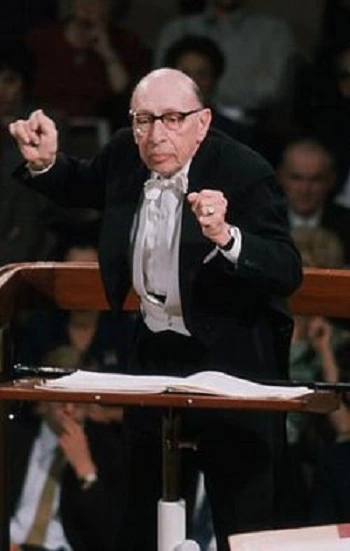
1. The Russian Period (c. 1907–1920) Stravinsky achieved international stardom through his collaboration with Sergei Diaghilev and the Ballets Russes in Paris. The Firebird (1910): A lush, folk-inspired success that made him famous overnight. Petrushka (1911): Introduced bold rhythmic complexity and bitonality. The Rite of Spring (1913): Perhaps his most famous work, its primal rhythms and dissonance famously sparked a riot at its Paris premiere. During this time, he also composed smaller-scale pieces like L’Histoire du soldat (1918) and Les noces (1917 premiered in 1923). 2. The Neoclassical Period (c. 1920–1951) Following the Russian Revolution, Stravinsky moved to France and shifted toward more restrained, transparent styles inspired by the 18th century. Pulcinella (1920): Often cited as the beginning of this phase, using music attributed to Pergolesi. Oedipus Rex (1927): A highly stylized opera-oratorio in Latin. Symphony of Psalms (1930): A deeply spiritual choral work. The Rake’s Progress (1951): His only full-length opera, representing the culmination of his neoclassical style. 3. The Serial Period (1954–1968) After moving to the United States in 1939 and settling in Hollywood, Stravinsky eventually embraced serialism (12-tone technique) after the death of Arnold Schoenberg. Agon (1957): A ballet that served as a watershed moment for his late style. Requiem Canticles (1966): His final major work, which was performed at his funeral.
Stravinsky returned to Russia for the first time since 1914, accepting an invitation from the Union of Soviet Composers to conduct six performances in Moscow and Leningrad (Saint Petersburg). Stravinsky revisited biblical themes for many of his later works, notably in the 1961 chamber cantata A Sermon, a Narrative and a Prayer. The intense touring schedule began taking a toll on Stravinsky; January 1967 marked his last recording session, and his final concert came the following May. An obviously very frail Stravinsky made his final public conducting appearance on 17 May 1967 at Massey Hall in Toronto when he led the Toronto Symphony Orchestra in a performance of his Pulcinella Suite. In his final years, Stravinsky moved to New York to be closer to medical care, and travel was limited to visiting family in Europe. Stravinsky was discharged from Lenox Hill Hospital in Manhattan after contracting pulmonary oedema. He subsequently moved to a new apartment on Fifth Avenue, where he died on 6 April 1971 at the age of 88. He was buried on the island of San Michele in Venice, Italy, near his long-time friend Sergei Diaghilev.
Sound quality is important and the better online Streaming services will offer superior sound quality. As always, We do encourage you to purchase Favoured albums from good online or High street record stores.
Artists in upcoming issues: shostakovich, Richard strauss, Mozart, Brahms and Liszt......Keep Listening!! JOIN THE CONVERSATION...
“Comments are most welcome and appreciated”