Classical Music – issue #9
Classical music generally refers to the art music of the Western world. Classical music is often characterized by formality and complexity in its musical form and harmonic organization. particularly with the use of polyphony, music in which several different tunes are played or sung at the same time. Since the ninth century, it has been primarily a written tradition, spawning a sophisticated notational system.
Rooted in the patronage of churches and royal courts in Europe. early medieval music is Chiefly Religious monophonic and vocal. The Baroque period (1580–1750) saw the relative standardization of common-practice tonality. Together with, the increasing importance of musical instruments, which grew into ensembles of considerable size.
The common-practice period was a period in which the tonal system was regarded as the only basis for composition. The word tonality is sometimes used as a synonym for “key.”.In the shorter but pivotal Classical period (1730–1820), composers such as Mozart created widely admired examples of absolute music. including symphonies, string quartets and concertos. Absolute music (sometimes abstract music) is instrumental music not intended to represent or illustrate something else. The ensuing Romantic music (1800–1910) focused instead on programmatic music. the art song, symphonic poem and various piano genres were important vessels. Program music is often written so that the notes themselves convey, to some degree, the meaning of what is portrayed.
Thus the thunderstorm in Beethoven’s symphony includes loud timpani strokes to convey the thunder. The shrill piccolo music to depict the shrieking winds. During this time virtuosity was celebrated, immensity was encouraged, while philosophy and nationalism were embedded. all aspects that converged in the operas of Richard Wagner.By the 20th century, the prominence of popular music greatly increased. Many Classical composers actively avoided past techniques and genres in the lens of modernism. with some abandoning tonality in place of serialism.a serial pattern in music is merely one that repeats over and over within a composition. The term serial music is often used interchangeably with 12-tone music. However, the latter is more properly an example of the former. others found new inspiration in folk melodies or impressionist sentiments.Trends of the mid-20th century to the present day include New Simplicity, New Complexity, Minimalism, Spectral music. more recently Postmodern music and Postminimalism.
Join the Conversation!!!
we will Feature Significant Compositions from Artists representative of the various classical Periods. We Hope to encourage Listeners of all tastes and passions. So Get your Headphones on and Consider discussing the musical Offering and sharing your views with like-minded peers.
In Issue #9, we feature Dmitri Shostakovich
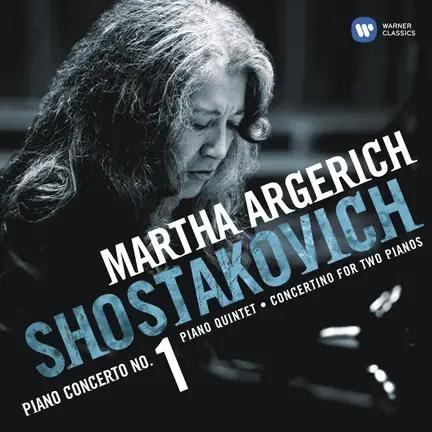
Piano Concerto No. 1 in C minor, Op. 35, completed in 1933, is a witty, highly energetic modernist masterpiece uniquely scored for piano, solo trumpet, and string orchestra. Written when the composer was 27 years old, the piece is famous for its frantic tempo changes, dry humour, jazz influences, and a kaleidoscope of musical parodies targeting classical masters like Haydn and Beethoven. The prominent trumpet part remains a legacy of Shostakovich’s initial intention to write a standalone trumpet concerto. Though often described as having four separate movements, the third movement functions primarily as a brief, dramatic transition into the finale. Allegro moderato: Starts with a striking piano flourish and transitions into a jaunty, shifting minor-key melody. Lento: A deeply expressive, melancholic waltz that contrasts heavily with the frantic pace of the outer movements. Moderato: A very brief, serious interlude (usually lasting under two minutes) that builds tension. Allegro con brio: A rollicking, circus-like finale. It incorporates frantic piano cadenzas, rapid-fire trumpet lines, and pastiches of popular tunes, reminiscent of a chaotic silent film soundtrack. The Piano Quintet in G minor, Op. 57, composed in the summer of 1940, is widely considered one of his greatest chamber music masterpieces and one of the finest piano quintets of the 20th century. Written for two violins, viola, cello, and piano, it was a staggering critical and commercial success, earning Shostakovich his first Stalin Prize. This effectively restored his status with the Soviet authorities following earlier political denunciation. Unlike the traditional four-movement form, this piece is structurally unique, unfolding across five highly integrated movements that trade dense, heavy grandiosity for structural clarity and clean textures. I. Prelude (Lento): Opens with a powerful, commanding piano solo built around a simple three-note motif that anchors the entire piece. II. Fugue (Adagio): The longest and most substantial movement, looking back to Baroque structures (reminiscent of J.S. Bach) while slowly weaving a stark, deeply moving lyrical texture. III. Scherzo (Allegretto): A sudden, frantic burst of energy. IV. Intermezzo (Lento): Replacing the typical slow movement, it introduces a poignant, soaring melody above a walking bassline, expressing intense sorrow and vulnerability.
V. Finale (Allegretto): Written in a clear, classical sonata form. It maintains a deceptively simple, cheerful, and march-like atmosphere that gracefully transitions into a quiet, whimsical G-major resolution.
Concertino for Two Pianos in A minor, Op. 94. Composed in December 1953, this lighthearted and energetic work was written as a musical gift for his 16-year-old son, Maxim, who was then a student at the Moscow Conservatory.
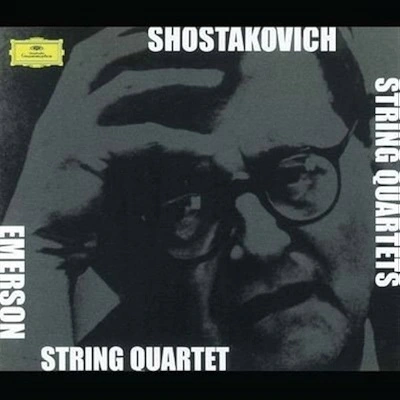
String Quartet No. 8 in C minor, Op. 110, composed in 1960, is widely considered his most famous, intensely personal, and frequently performed chamber work the quartet is celebrated for its emotional raw power. Privately, Shostakovich viewed the piece as his own musical obituary. He had recently been pressured into reluctantly joining the Communist Party—a compliance that left him traumatised and suicidal. The piece lasts approximately 20 to 22 minutes and consists of five distinct movements played continuously without pause: I. Largo: A sombre, slow opening that introduces the DSCH motif fugally. It sets a heavy, elegiac tone and includes quotes from his Symphony No. 1 and Symphony No. 5. II. Allegro molto: A violent, explosive scherzo driven by brutal mechanical energy. It erupts into a frantic rendition of the “Jewish theme” borrowed from his Piano Trio No. 2, signifying the horrors of the Holocaust and totalitarian brutality. III. Allegretto: A twisted, ghostly waltz featuring a sinister reimagining of the DSCH motif alongside a quotation from his Cello Concerto No. 1. IV. Largo: Known for its jarring, aggressive three-note “knocking” motif, often interpreted as the terrifying sound of the Soviet secret police (KGB) pounding on a door. It also features the mournful revolutionary melody “Tormented by Grievous Bondage” and a melody from his banned opera, Lady Macbeth of Mtsensk. V. Largo: A haunting, desolate mirror of the opening movement. The fugal counterpoint slowly dissipates, ending the quartet in absolute, grief-stricken silence. String Quartet No. 5 in B-flat major, Op. 92, composed in 1952, is widely regarded as one of his most powerful, symphonically integrated, and emotionally intense chamber works. Written during the dark, paranoid final months of Joseph Stalin’s regime. due to its abrasive dissonance and defiance of Soviet Socialist Realism guidelines. It finally received its premiere after Stalin’s death.
The quartet has an approximate playing time of 30 minutes and consists of three movements. Crucially, all movements are performed attacca (joined continuously without a pause), I. Allegro non troppo: A heavy, complex sonata-allegro movement. It opens with a forceful, driving theme that clashes with a gentler, waltz-like second theme, resulting in long, aggressive, and highly dissonant development sections. II. Andante – Andantino: A striking contrast of serene, steady pulses. The movement utilizes a melancholic style reminiscent of a traditional Russian folk song, transitioning into a sweeping Romantic theme before a single sustained pitch carries the music forward. III. Moderato – Allegretto: A haunting finale that revisits the rhythm and B-flat major landscape of the first movement. The piece features ghost-like echoes of earlier themes before gradually fading out morendo (dying away) over a frozen, glacial pedal note.
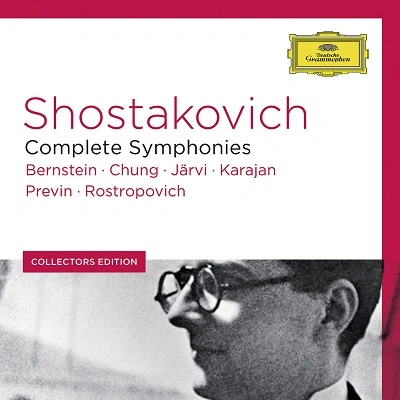
Symphony No. 10 in E minor, Op. 93, is widely considered one of his greatest masterpieces, serving as a powerful musical testament to his survival under the oppressive regime of Joseph Stalin. It was the composer’s first symphonic work released after Stalin’s death earlier that same year, breaking an eight-year symphonic silence enforced by the 1948 Soviet cultural crackdowns. The symphony is celebrated for its deep tragedy, violent intensity, and eventual triumph. The work is scored for a massive orchestra and is structured in four distinct movements: I. Moderato: Comprising nearly half the symphony’s length, this movement is built from sombre themes in the lower strings that slowly escalate to a shattering, wrenching climax. II. Allegro: A brief but terrifyingly explosive movement. III. Allegretto: The emotional turning point where Shostakovich introduces his famous DSCH motif (the musical notes D, E-flat, C, B-natural, representing his initials in German notation). This motif alternates with a recurring, haunting horn call. IV. Andante – Allegro: The music builds to a massive climax, fortified by the D-S-C-H motive (in horns and trumpets), a resolute assertion of the individual’s triumph over a soulless, dehumanizing regime. Symphony No. 5 in D minor, Op. 47, composed in 1937, is one of the most celebrated and fiercely debated orchestral masterpieces of the 20th century. Written at the height of Joseph Stalin’s Great Purge, the piece served as the composer’s precarious artistic strategy to salvage his career—and potentially his life—following severe condemnation from the Soviet regime. The symphony is scored for a large orchestra and structured in four movements: I. Moderato: opens with a sharp, jagged string canon. It shifts from a heavy, brooding military march into a tragic, hollow conclusion. II. Allegretto: A brief, biting scherzo written as a grotesque 3/4 waltz. It heavily mirrors Gustav Mahler’s Ländler style. III. Largo: The emotional heart of the piece, scored entirely without brass. It functions as a deeply moving public requiem, evoking the textures of a Russian Orthodox choir. IV. Allegro non troppo: A bombastic, brass-heavy finale. It shifts aggressively into D major to deliver a massive, thunderous conclusion. Symphony No. 4 in C minor, Op. 43 is a monumental 20th-century orchestral masterpiece widely considered the composer’s most radical, modern, and emotionally raw work. Written 1935/36, the symphony represents a critical turning point in Shostakovich’s life. It stands as a daring, uncompromising, musical statement composed under the dark shadow of Soviet totalitarianism and Joseph Stalin’s impending Great Terror.. Structured into three highly contrasting movements it demands an extraordinarily massive orchestra of over 100 musicians.
I. Allegretto poco moderato – Presto: A complex and unpredictable take on sonata form that opens with a shrill, mechanical march. It features a famously frantic, breakneck fugue played at blinding speed by the strings. II. Moderato con moto: A relatively short, eerie scherzo that acts as an uneasy interlude concluding with a chilling, skeletal clockwork ticking rhythm generated entirely by the percussion. III. Largo – Allegro: The sprawling finale opens with a heavy, sombre funeral march led by a solitary bassoon. The piece builds to a terrifying, earth-shattering wall of sound that suddenly collapses into one of the most haunting codas in classical music.
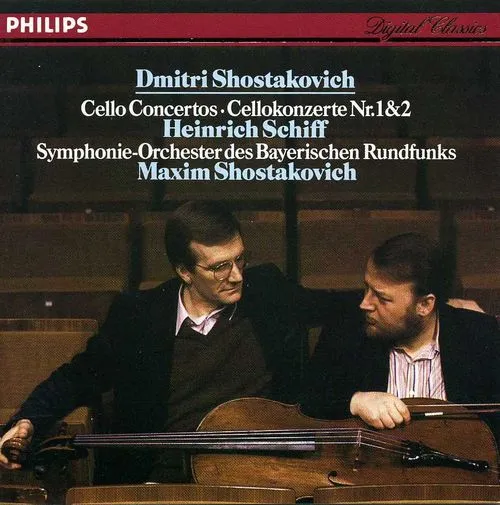
Cello Concerto No. 1 in E-flat major, Op. 107, composed in 1959, is widely celebrated as one of the definitive and most technically demanding masterpieces of the 20th-century cello repertoire. Written for his close friend and legendary cellist Mstislav Rostropovich, the concerto is highly regarded for its fierce emotional depth, driving rhythm, and signature political irony. The concerto breaks traditional forms by featuring four movements instead of three. The final three movements are bound together seamlessly without any pause (attacca). I. Allegretto: Written in the style of a “jocular march,” this movement introduces a compact, driving four-note rhythm. II. Moderato: A heartbreakingly expressive slow movement packed with deep Soviet melancholy and intense grief. It finishes with a delicate, ghostly duet between the cello playing in its highest register and the celesta. III. Cadenza: Rather than nesting the solo showcase inside a larger movement, Shostakovich isolates the cadenza as its own standalone, seven-minute movement. It starts slowly and progressively acts as an intense emotional bridge into the finale. IV. Allegro con moto: A dizzying, sarcastic rondo. It features a heavily distorted and disguised inclusion of Suliko, a traditional Georgian love song.Cello Concerto No. 2 in G minor, Op. 126 is a deeply introspective, enigmatic, and symphonic work composed in spring 1966. Unlike his fiery and extroverted First Cello Concerto (1959), the Second is darker, sparser, and mirrors the existential anxiety of Shostakovich’s late period.
The composer initially conceived the piece as his 14th Symphony, later noting that it could easily be viewed as a “symphony with a solo cello part”. I. Largo: A slow, sombre, and deeply rhapsodic movement. It opens with a mournful, searching line from the solo cello that gradually builds into dense, dissonant orchestral climaxes. II. Allegretto: A short, sardonic scherzo that acts as a biting middle movement. III. Allegretto: Linked directly from the second movement by a startling horn fanfare driving towards a massive orchestral frenzy. Instead of ending triumphantly, the energy subsides into a fading whisper over an eerie, “clock-work” ticking pattern in the percussion.
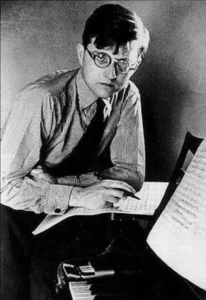
Dmitri Shostakovich was a leading composer of the 20th century and Soviet Russia’s most important symphonist. His adult life was lived entirely inside the USSR and his music was deeply affected by political events there, especially under Stalin.
Dmitri Dmitriyevich was the second of their three children; The future composer was born in St. Petersburg on 25 September 1906.Shostakovich’s desire to compose was kindled as soon as he started to play the piano. The focus of great expectations, Dmitri Shostakovich was duly enrolled as a student of both piano and composition at the Petrograd Conservatory in the autumn of 1919. The head of the Conservatory was the composer and teacher Alexander Glazunov. He monitored the young composer’s progress and made sure he had opportunities to compose and perform. He studied piano with Leonid Nikolayev until 1923 and composition until 1925 with Aleksandr Glazunov and Maksimilian Steinberg. Early works, including first four symphonies, are dissonant, colourful, satirical and theatrical, reflecting enthusiasm for 1920s modernism. Shostakovich’s musical breakthrough was the First Symphony, written as his graduation piece at the age of 19. On 12 May 1926 At the premiere of the symphony the audience received it enthusiastically, demanding an encore of the scherzo. Thereafter, Shostakovich regularly celebrated the date of his symphonic debut. He participated in the Chopin International Competition for Pianists in Warsaw in 1927 and received an honourable mention but made no subsequent attempt to pursue the career of a virtuoso, confining his public appearances as a pianist to performances of his own works.
The cultural climate in the Soviet Union was remarkably free at that time; even the music of Igor Stravinsky and Alban Berg, then in the avant-garde, was played. Shostakovich openly experimented with avant-garde trends. His satiric opera The Nose (composed 1927–28), displayed a comprehensive awareness of what was new in Western music. From 1928, when Joseph Stalin inaugurated his First Five-Year Plan, an iron hand fastened on Soviet culture, and in music a direct and popular style was demanded. Avant-garde music and jazz were officially banned. Not surprisingly, Shostakovich’s incomparably finer second opera, Lady Macbeth of the Mtsensk District (composed 1930–32; revised and retitled Katerina Izmaylova), marked a stylistic retreat. Yet even this more accessible musical language was too radical for the Soviet authorities. The composer was subjected to official campaign of repression and harassment. Pravda published an editorial titled “Muddle Instead of Music”, complaining that the opera was a “deliberately dissonant, muddled stream of sounds”. The publication of the Pravda editorials coincided with the composition of Shostakovich’s Fourth Symphony. The work continued a shift in his style, The manager of the Leningrad Philharmonic persuaded Shostakovich to withdraw the symphony. Shostakovich did not repudiate the work and retained its designation as his Fourth Symphony and the work was finally premiered in 1961. In 1937 Shostakovich became a teacher of composition in the Leningrad Conservatory, and the German attack on the Soviet Union in 1941 found him still in that city. The monumental 5th Symphony (1937), one of the most popular orchestral works of 20th century, moved towards a simpler style, and also brought him back towards official favour. During World War Il his 7th Symphony, the ‘Leningrad’, became an emblem for the allied world for struggle against Fascist Germany. The work achieved quick fame, as much because of the quasi-romantic circumstances of its composition as because of its musical quality. In 1943 Shostakovich settled in Moscow as a teacher of composition at the conservatory, and from 1945 he taught also at the Leningrad Conservatory. Shostakovich’s works written during the mid-1940s contain some of his best music, especially the Symphony No. 8 (1943), the Piano Trio (1944), and the Violin Concerto No. 1 (1947–48). Their prevailing seriousness, even grimness, was to contribute to Shostakovich’s second fall from official grace.
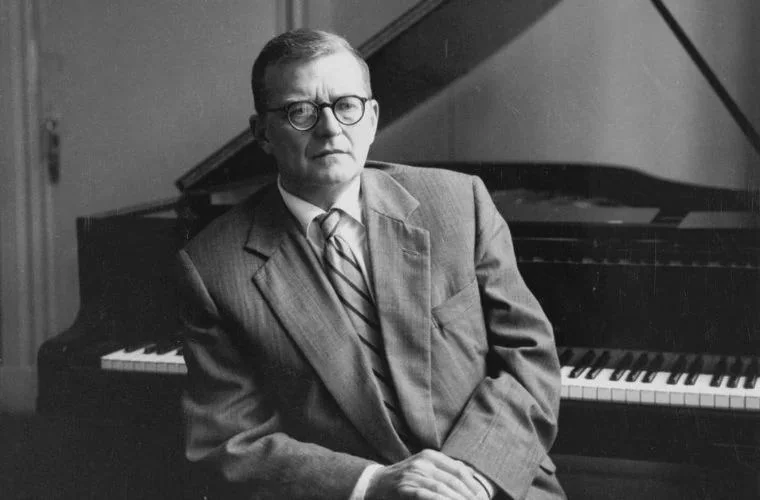
Two cycles, of 15 symphonies and 15 string quartets, are the peaks of his output, but his violin, cello and piano concertos are played by most of the world’s soloists, as are his 24 preludes and fugues for piano. Overall, his music characterised by powerful sense of mockery and irony mixed with grandeur and despair, and absolute mastery of large-scale forms. After his own death his music became the subject of furious contention between those upholding the Soviet view of the composer as a sincere Communist and those viewing him as a closet dissident.
In 1948 Shostakovich was again subjected to humiliating campaign of official persecution and vilification. Yet he was not completely intimidated, and, in his String Quartet No. 4 (1949) and especially his Quartet No. 5 (1951), he offered a splendid rejoinder to those who would have had him renounce completely his style and musical integrity. His Symphony No. 10, composed in 1953, the year of Stalin’s death, like his Symphony No. 5 of 16 years earlier, compelled acceptance by sheer quality and directness. His Symphony No. 11 (1957), a paean to revolution, earned him both the Lenin Prize and the Wihuri Sibelius Prize in 1958. From that time on, Shostakovich’s biography is essentially a catalogue of his works. He was left to pursue his creative career largely unhampered by official interference. The composer visited the United States in 1949, and in 1958 he made an extended tour of western Europe, including Italy and Great Britain, where he received an honorary doctorate of music at the University of Oxford. In 1966 he was awarded the Royal Philharmonic Society’s Gold Medal. In 1960, against his wishes, he was persuaded into joining the Communist Party (CPSS), a low point in his life marked by composing 8th String Quartet as ‘an obituary for myself’. Continual illness in his last years is reflected in preoccupation with death shown in pieces like 14th Symphony and Michelangelo Suite for voice and orchestra. His death is variously attributed to lung cancer or heart failure. Shostakovich died on 9 August 1975 at the Moscow Central Clinical Hospital. A civic funeral was held; he was interred in Novodevichy Cemetery, Moscow.
Sound quality is important and the better online Streaming services will offer superior sound quality. As always, We do encourage you to purchase Favoured albums from good online or High street record stores.
Artists in upcoming issues: Richard strauss, Mozart, Brahms and Liszt......Keep Listening!! JOIN THE CONVERSATION...
“Comments are most welcome and appreciated”