
contemporary Music – issue #2 – folk / Country rock
Folk rock is a popular music genre that emerged in the mid-1960s, primarily in the U.S. and UK, by blending the acoustic, lyrical, and melodic elements of folk music with the electric instrumentation, rhythm, and energy of rock & roll. It often features close vocal harmonies, poignant songwriting, and jangly guitars.
The American folk-music revival began during the 1940s; building on the interest in protest folk singers such as Woody Guthrie and Pete Seeger, it reached a peak in popularity in the mid-1960s with artists such as Bob Dylan and Joan Baez: The Byrds are credited with creating the genre’s “jangle” sound, particularly with their 1965 cover of Bob Dylan’s “Mr. Tambourine Man”. Dylan himself popularized the genre by “going electric” at the 1965 Newport Folk Festival. Besides Dylan and The Byrds, notable artists include Crosby, Stills, Nash & Young, Buffalo Springfield, Simon & Garfunkel, and The Band.In the UK, bands like Fairport Convention and Steeleye Span developed a distinct sound by electrifying traditional British folk tunes. Common instruments include acoustic and electric guitars, mandolin, banjo, and fiddle. In the United States folk rock acts personified a generalized, often self-righteous youthful rebellion that in its more pointed songs was labelled “protest” music. In Britain folk rock tended to be more respectful of tradition and combined centuries-old folk material with original, tradition-flavoured songs arranged for folk rock ensembles that often used old instruments to maintain a strong Celtic flavour. While the folk rock movement began and quickly surged in the 1960s, it has continued through the present day. It has spawned many offshoots, including psychedelic folk rock (Jefferson Airplane), country rock (the Flying Burrito Brothers, John Prine), progressive folk music (Richard Thompson, O’Death), punk-inspired folk rock (the Replacements, Dinosaur Jr., Buffalo Tom), and even folk metal (Skyclad, Moonsorrow). The annual Newport Folk Festival brings disparate folk acts together highlighting the wide array of songwriting and performance styles in today’s folk rock music.
Join the Conversation!!!
we will Feature Up to 3 Albums from Artists representative of a range of the Many sub-genres. We Hope to encourage Listeners of all tastes and passions. So Get your Headphones on and Consider discussing the musical Offering and sharing your views with like-minded peers.
In Issue #2, we feature the byrds
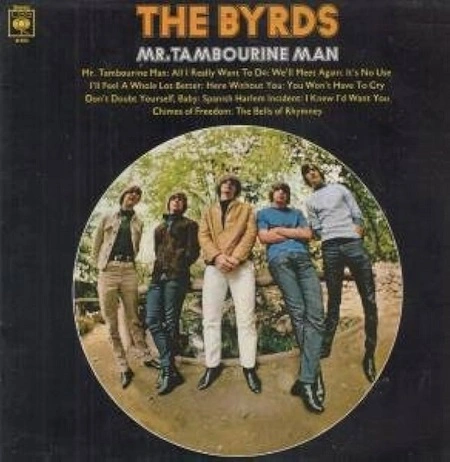
“Mr. Tambourine Man” a great debut album, remarkably consistent and the startlingly original jingle-jangle sound it pioneered was sonorous, joyful and slightly mystical at the same time. This album did a lot to push the ‘60s forward. A demonstration of intelligent lyrical content allied to compelling electric guitar riffs and a solid backbeat. It was also the album that was most responsible for establishing folk-rock as a popular phenomenon. The album is famous for its Bob Dylan covers but as they soon proved, they were a whole band full of brilliant songwriters. Gene Clark wrote most of the album’s highlights. Notable tracks include “Mr. Tambourine Man”: The #1 hit single that introduced Roger McGuinn’s jangly 12-string Rickenbacker sound. “I’ll Feel a Whole Lot Better”: An original Gene Clark composition frequently cited as one of the band’s best tracks. “All I Really Want to Do”: Another Dylan cover that reached the UK Top 10. “The Bells of Rhymney”: A Pete Seeger cover noted for its intricate harmony. It’s very rare to have a cover that has the gift of competing with its original version. Mr. Tambourine Man is just the example where the Byrds have managed to create something unique, so different and as good as the original. The Beatles, who had influenced the group’s arrangement just a year earlier, reflected the Byrds’ sound on their late 1965 album, Rubber Soul. This immediate influence is perhaps the best tribute to the Byrds debut album’s success.
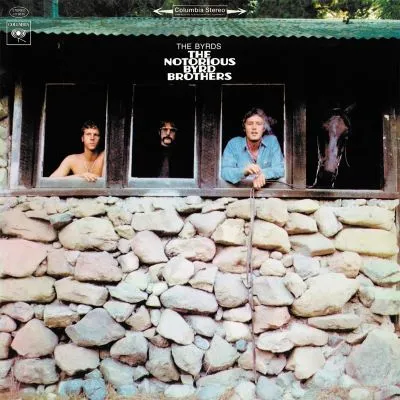
The Notorious Byrd Brothers is the fifth studio album by the American rock band The Byrds, released in 1968 by Columbia Records. It is widely considered one of the band’s most experimental and cohesive works, blending psychedelic rock, folk, country, and early electronic music. The album was created during a period of extreme internal conflict. The Byrds began the recording sessions as a four-piece band, consisting of Roger McGuinn, David Crosby, Chris Hillman, and Michael Clarke—the same line-up that had recorded their two previous albums. By the time of the album’s release, however, only McGuinn and Hillman remained in the group. It was one of the first rock albums to prominently feature the Moog synthesizer, played by Paul Beaver and Roger McGuinn. The tracks are craftily linked with electronic fades and segues, creating a “spacey” and ethereal listening experience. Notable tracks: “Goin’ Back”: A Gerry Goffin and Carole King cover that became the lead single. “Wasn’t Born to Follow”: Later gained fame after being featured in the film Easy Rider. “Draft Morning”: A poignant anti-war song featuring battlefield sound effects. The album was almost universally well received by the music press upon release, with Jon Landau in the newly launched Rolling Stone magazine noting that “When the Byrds get it together on record they are consistently brilliant.” Over the years, The Notorious Byrd Brothers has gained in reputation and is often considered the group’s best work, while the contentious incidents surrounding its making have been largely forgotten. The album managed to capture the band at the height of their creative powers, as they pushed ahead lyrically, musically and technically into new sonic territory..
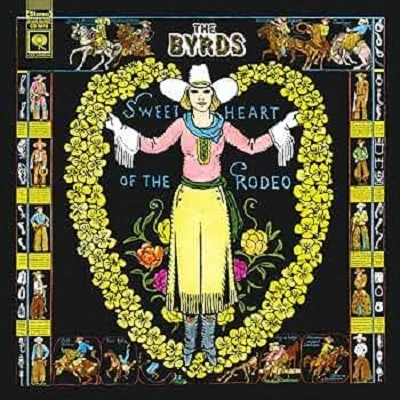
Sweetheart of the Rodeo is the sixth studio album by the American rock band the Byrds, released in 1968 by Columbia Records. Recorded with the addition of country rock pioneer Gram Parsons, it represented a stylistic move away from the psychedelic rock of the band’s previous LP. The album was responsible for bringing Parsons, who had joined the Byrds in February 1968 prior to the start of recording, to the attention of a mainstream rock audience for the first time. Due to legal disputes with Parsons’ previous record label, many of his lead vocals were replaced by Roger McGuinn’s for the original release. By the time the album was released, Parsons had left the band. The Byrds’ move away from rock and pop towards country music elicited a great deal of resistance and hostility from the ultra-conservative Nashville country music establishment, who viewed the Byrds as a group of hippies attempting to subvert country music. At the same time, they managed to disaffect their core fanbase who were left bewildered by its Grand Ole Opry-ish banjos and steel guitars They were sure of one thing though, they almost universally disliked it and the resultant sales were the lowest of any Byrds album to that point. Despite being the least commercially successful Byrds’ album to date upon release, Sweetheart of the Rodeo is today considered to be a seminal and highly influential country rock album. Ultimately, the Byrds’ experimentation with the country genre was slightly ahead of its time, to the detriment of the band’s commercial fortunes, as the international success of country rock-flavoured bands like the Eagles during the 1970s demonstrated. It was the last influential Byrds album and it shouldn’t be viewed as The Byrds “doing country” but as an outstanding country release in its own right.
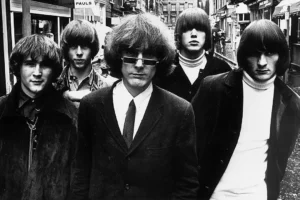
The Byrds were an American rock band formed in Los Angeles, California, in 1964. The band underwent multiple lineup changes; frontman Roger McGuinn (known as Jim McGuinn until mid-1967) was the sole consistent member. For a short time in the mid-1960s, the Byrds were among the most popular groups in the world, with critics considering them to be among the most influential rock acts of their era. The band’s signature sound of “angelic harmonies” and McGuinn’s jangly 12-string Rickenbacker guitar sound was “absorbed into the vocabulary of rock” and has continued to be influential. Initially, the Byrds pioneered the musical genre of folk rock as a popular format in 1965 by melding the influence of the Beatles and other British Invasion bands with contemporary and traditional folk music on their first and second albums and the hit singles “Turn! Turn! Turn!” and “Mr. Tambourine Man”. As the 1960s progressed, the band was influential in originating psychedelic rock and raga rock, with their song “Eight Miles High” (1966) and the albums Fifth Dimension (1966), Younger Than Yesterday (1967), and The Notorious Byrd Brothers (1968. The band also helped pioneer country rock, particularly with the 1968 album Sweetheart of the Rodeo.
The band’s original five-piece lineup consisted of McGuinn (lead guitar, vocals), Gene Clark (tambourine, vocals), David Crosby (rhythm guitar, vocals), Michael Clarke (drums), and Chris Hillman (bass guitar, vocals). In early 1966, Clark left due to anxiety and his increasing isolation within the group. The Byrds continued as a quartet until late 1967, when Crosby and Clarke departed. McGuinn and Hillman recruited new members, including country rock pioneer Gram Parsons, but by late 1968, Hillman and Parsons had also left the band. McGuinn rebuilt a new version of the Byrds that featured guitarist Clarence White among others. McGuinn disbanded that iteration of the band in early 1973 to make way for a reunion of the original quintet. The Byrds released their final album in March 1973, with the reunited group disbanding later that year. Several members of the Byrds went on to successful careers as solo artists or as members of successful groups. Upon release, the Mr. Tambourine Man album, like the single of the same name, was influential in popularizing folk rock and served to establish the band as an internationally successful rock act, representing the first effective American challenge to the dominance of the Beatles and the British Invasion. The Byrds’ second album, Turn! Turn! Turn!, was released in December 1965 and while it received a mostly positive reception, critical consensus deemed it to be inferior to the band’s debut. Irrespective of the critics’ opinions, the album was a commercial success. Like their debut, the album comprised a mixture of group originals, folk songs, and Bob Dylan covers, all characterized by the group’s clear harmonies and McGuinn’s distinctive guitar sound.
Fifth Dimension is the third studio album (1966). The album is more overtly psychedelic than its predecessors, and the band took influences from raga music (such as Ravi Shankar) and modal jazz (such as John Coltrane). The album is also notable for being the first album recorded after the departure of frontman Gene Clark, although he did participate in the recording of two of its tracks. Younger Than Yesterday is the fourth Byrds album, released 1967. It’s their first without founding member Gene Clark – as a result, bassist Chris Hillman steps up as a songwriter for the first time to fill the void. Meanwhile, David Crosby becomes frustrated with his role in the band and begins to act out, with mixed results. Due to this tension, the album is a fragmented mix of styles that seems to go in three different directions ……
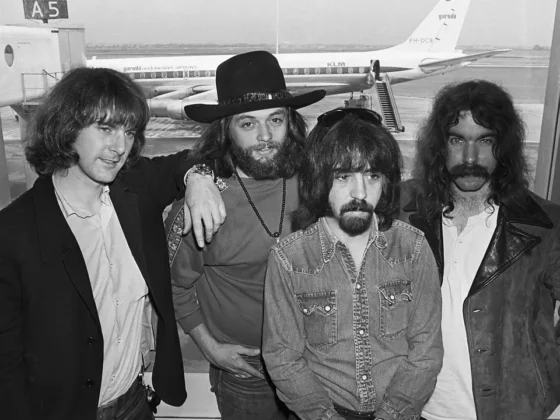
McGuinn’s traditional folk rock, Crosby’s psychedelic experiments and Hillman’s proto-country rock. The record was a relative commercial disappointment for the group, but it spawned several successful singles, including “So You Want to Be a Rock ‘n’ Roll Star” and “My Back Pages” and today is considered one of their strongest albums (if not one of the greatest ever made). “The Notorious Byrd Brothers” is the fifth studio album by The Byrds. It was recorded from June 21 to December 6 of 1967. The album is the most eclectic and experimental album in the Byrds’ catalogue. “Sweetheart of the Rodeo” is the Byrds’ sixth album. It was the first album recorded after the departure of David Crosby and Michael Clarke, featuring Gram Parsons on guitar and Kevin Kelley on drums. It is significant in that it is the first notable country album recorded by a rock band, laying the foundations for the country-rock subgenre. The album was a flop on its original release, but has since become highly viewed by fans and critics as one of their greatest albums. “Dr. Byrds and Mr. Hyde” is the seventh studio album by The Byrds. It was the first album to be recorded with new members Clarence White (lead guitar), John York (bass), and Gene Parsons (drums). The album alternates between psychedelic rock and country/folk rock, and the band decided to name the album after the novel “Dr. Jekyll and Mr. Hyde” as a reference to the album’s split personality. The album is also notable for being the only Byrds album to have guitarist Roger McGuinn singing lead vocals on every track. Ballad of Easy Rider is the eighth album and was released in November 1969 on Columbia Records. The album was named after the song which had been written by Roger McGuinn (with help from Bob Dylan), as the theme song for the 1969 film, Easy Rider. The title was also chosen in an attempt to capitalize on the commercial success of the film, although the majority of the music on the album had no connection with it. (Untitled) is the ninth album by the American rock band the Byrds and was released in 1970 on Columbia Records. It is a double album, with the first LP featuring live concert recordings from early 1970, and a second disc consisting of new studio recordings. Byrdmaniax is the tenth album by the American rock band the Byrds. It was released in 1971 on Columbia Records at a time of renewed commercial and critical success for the band, due to the positive reception that their two previous albums. However, it remains one of the Byrds’ most poorly received album releases, largely due to the incongruous addition of strings, horns, and a gospel choir which were overdubbed onto the songs by producer Terry Melcher and arranger Paul Polena, reportedly without the band’s consent. Farther Along is the eleventh album by the American rock band the Byrds and was released in 1971 on Columbia Records. Farther Along resulted in an LP that the band themselves were unhappy with and that failed to undo the damage to their reputation inflicted by Byrdmaniax. Byrds is the twelfth and final studio album by the American rock band the Byrds and was released in March 1973 on Asylum Records. It was recorded as the centrepiece of a reunion among the five original band members. Upon its release, Byrds received generally poor reviews, with many critics bemoaning a lack of sonic unity and the absence of the Byrds’ signature jangly guitar sound.
Sound quality is important and the better online Streaming services will offer superior sound quality. As always, We do encourage you to purchase Favoured albums from good online or High street record stores. The Byrds Labels - columbia Records
Artists in upcoming issues: steeleye span, crosby, stills and Nash.....Keep Listening!! JOIN THE CONVERSATION...jazz Music
“Comments are most welcome and appreciated”