
contemporary Music – issue #3 – folk / Country rock
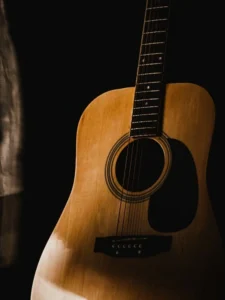
Folk rock is a popular music genre that emerged in the mid-1960s, primarily in the U.S. and UK, by blending the acoustic, lyrical, and melodic elements of folk music with the electric instrumentation, rhythm, and energy of rock & roll. It often features close vocal harmonies, poignant songwriting, and jangly guitars.
The American folk-music revival began during the 1940s; building on the interest in protest folk singers such as Woody Guthrie and Pete Seeger, it reached a peak in popularity in the mid-1960s with artists such as Bob Dylan and Joan Baez: The Byrds are credited with creating the genre’s “jangle” sound, particularly with their 1965 cover of Bob Dylan’s “Mr. Tambourine Man”. Dylan himself popularized the genre by “going electric” at the 1965 Newport Folk Festival. Besides Dylan and The Byrds, notable artists include Crosby, Stills, Nash & Young, Buffalo Springfield, Simon & Garfunkel, and The Band.In the UK, bands like Fairport Convention and Steeleye Span developed a distinct sound by electrifying traditional British folk tunes. Common instruments include acoustic and electric guitars, mandolin, banjo, and fiddle. In the United States folk rock acts personified a generalized, often self-righteous youthful rebellion that in its more pointed songs was labelled “protest” music. In Britain folk rock tended to be more respectful of tradition and combined centuries-old folk material with original, tradition-flavoured songs arranged for folk rock ensembles that often used old instruments to maintain a strong Celtic flavour. While the folk rock movement began and quickly surged in the 1960s, it has continued through the present day. It has spawned many offshoots, including psychedelic folk rock (Jefferson Airplane), country rock (the Flying Burrito Brothers, John Prine), progressive folk music (Richard Thompson, O’Death), punk-inspired folk rock (the Replacements, Dinosaur Jr., Buffalo Tom), and even folk metal (Skyclad, Moonsorrow). The annual Newport Folk Festival brings disparate folk acts together highlighting the wide array of songwriting and performance styles in today’s folk rock music.
Join the Conversation!!!
we will Feature Up to 3 Albums from Artists representative of a range of the Many sub-genres. We Hope to encourage Listeners of all tastes and passions. So Get your Headphones on and Consider discussing the musical Offering and sharing your views with like-minded peers.
In Issue #3, we feature Neil Young
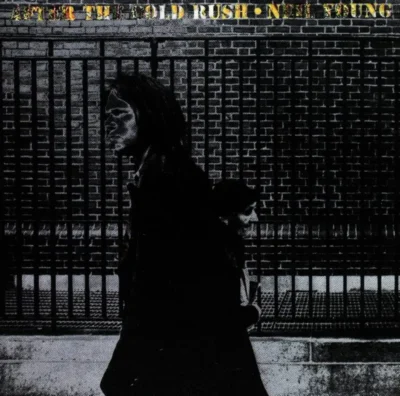
After the Gold Rush stands as Neil Young’s greatest album because it captures the full breadth of his artistic voice – raw yet poetic, fragile yet fierce. Released in 1970, it arrived at a cultural crossroads and responded with music that felt both intimate and epochal. The album moves effortlessly between delicate piano ballads like the haunting title track and raucous rockers like “Southern Man,” balancing vulnerability with urgency. Young’s songwriting here is at a peak: deeply personal yet steeped in wider social commentary. “Only Love Can Break Your Heart” expresses romantic fragility with stunning simplicity, while “Don’t Let It Bring You Down” channels melancholy through vivid imagery and stark beauty. The production is understated, highlighting Young’s expressive vocals and his remarkable way of making every note feel lived-in. Musically cohesive yet emotionally expansive, After the Gold Rush is not just a snapshot of a moment – it’s a timeless reflection of human longing, confusion, and hope. The album’s blend of folk, rock, and country laid a blueprint for countless artists to follow, yet none have quite captured its unique atmosphere. For its sheer consistency, emotional resonance, and influence, After the Gold Rush endures as the most complete, affecting expression of Neil Young’s genius.
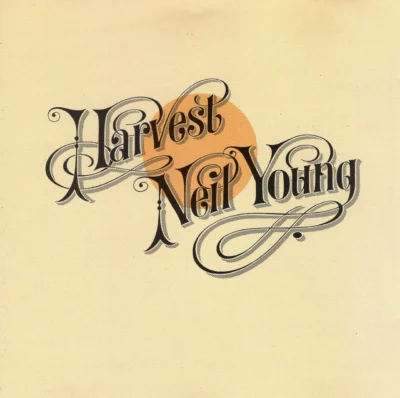
Harvest is the seminal fourth studio album by Canadian-American musician Neil Young, released on February 15, 1972, by Reprise Records. Acoustic – except for two tracks – out of necessity, because of a back injury that required surgery, it took him an entire year to finish, recorded piecemeal in between tours, hospital stays, surgery recuperations and a high-profile romance that would lead to his first child. He commandeered 70s folk-pop stars Linda Ronstadt and James Taylor to provide backup vocals for both Heart Of Gold and Old Man. It stands as his most commercially successful work, becoming the best-selling album of 1972 in the United States and spawning the iconic number-one hit single “Heart of Gold”…..ultimately because Harvest yields some of the most accessible music Neil Young has ever made.and The album beautifully blends folk rock and country rock, capturing a warm, fragile, and distinctively pastoral atmosphere.
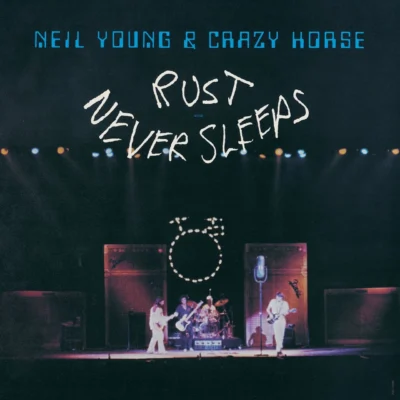
Rust Never Sleeps is a gloriously confident and pure example of Neil Young’s two sides. While most of the record stays within the confines of rock and roll, the first half is drenched in Americana, relying heavily on acoustic guitars and the occasional slide part to give it a slightly country feel. the album’s flip side shows the other side of that coin. Coming off of songs like ‘Sail Away’, ‘Powderfinger’ opens with blasts of distortion and some of the craziest guitar tones that have appeared on any Young record. Compared to the acoustic side, this feels like getting the full blast of what Young can do after his confessional side. Punk had been a shot in arm. He saw his younger self reflected in its spirit and that rejuvenation is evident in RNS’s blend of the mellow and the demonic. The electric songs are pugilistic and unrelenting (Sedan Delivery; Welfare Mothers), the acoustic rolling and elegiac (Thrasher; Pocahontas). Young ended the decade as he began: transformed and at the top of his game. The commercial acceptance was nice, but the artistic achievement was even more impressive. Rust Never Sleeps was one of those increasingly rare events where chart success aligned with artistry.
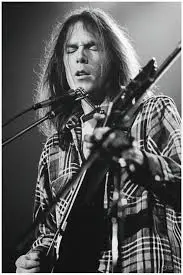
Neil Young is an iconic Canadian-American singer-songwriter and musician, widely revered for his deeply idiosyncratic career spanning over six decades. Known as the “Godfather of Grunge”, his sonic versatility ranges from intimate acoustic folk and sweet country-rock to roaring, heavily distorted garage rock, mostly backed by his legendary long-time band, Crazy Horse.
Neil Percival Young was born on November 12, 1945, in Toronto, Ontario, Canada. His father, Scott Alexander Young was a journalist and sportswriter who also wrote fiction. His mother, Edna Blow Ragland “Rassy” Young was a member of the Daughters of the American Revolution. Young’s parents moved to Toronto Shortly after Young’s birth in 1945, Young contracted polio in the late summer of 1951 and as a result, became partially paralyzed on his left side. After her divorce his mother settled in the working-class area of Fort Rouge, Winnipeg. While attending School in Winnipeg, he played in several instrumental rock bands, eventually dropping out of school in favour of a musical career. Young’s first stable band was the Squires, who had a local hit called “The Sultan”. Over three years, the band played hundreds of shows at community centres, dance halls etc., in Winnipeg and other parts of Manitoba. After leaving the Squires, Young worked in folk clubs where he first met Joni Mitchell. Here he wrote some of his earliest and most enduring folk songs such as “Sugar Mountain”, about lost youth. In 1965, Young toured Canada as a solo artist, while in Toronto, he joined the Rick James-fronted Mynah Birds. Later, Young and the bass player Bruce Palmer decided to relocate to Los Angeles. Once they reached Los Angeles, Young and Palmer met up with Stephen Stills and Richie Furay after a chance encounter in traffic on Sunset Boulevard. Along with Dewey Martin, they formed Buffalo Springfield. A mixture of folk, country, psychedelia, and rock. the twin lead guitars of Stephen Stills and Neil Young were famously said to have lent a hard edge to the folk-rock sound of the band Buffalo Springfield essential to their critical success, Buffalo Springfield helped create the genres of folk rock and country rock. In May 1968, the band split up for good, but to fulfil a contractual obligation, a final studio album, Last Time Around, was released. Young contributed the songs “On the Way Home” and “I Am a Child”, singing lead on the latter.
After the breakup of Buffalo Springfield, Young signed a solo deal with Reprise Records. Neil Young was the debut studio album in 1968. Young recruited Danny Whitten on guitar, Billy Talbot on bass guitar, and Ralph Molina on drums. These three took the name Crazy Horse. Everybody Knows This Is Nowhere was the second studio album and first with longtime collaborators Crazy Horse . Young reunited with Stephen Stills by joining Crosby, Stills & Nash, who had already released one album. Young was originally offered a position as a sideman but agreed to join only if he received full membership, and the group – winners of the 1969 Best New Artist Grammy Award – was renamed Crosby, Stills, Nash & Young. During the making of their first album, Déjà Vu (1970), the musicians frequently argued, particularly Young and Stills, who both fought for control. Later in the year, Young released his third solo album, After the Gold Rush which featured, among others, Nils Lofgren, Stephen Stills, and CSNY bassist Greg Reeves. Young also recorded some tracks with Crazy Horse, but dismissed them early in the sessions. The eventual recording was less amplified than the Second album, with a wider range of sounds. Young’s newfound fame with CSNY made the album his commercial breakthrough as a solo artist, and it contains some of his best-known work. Young’s fourth album, Harvest (1972), was the best-selling album of 1972 in the US. After his success with CSNY, Young purchased a ranch in the rural hills above Woodside and Redwood City in Northern California (“Broken Arrow Ranch”, where he lived until his divorce in 2014). Time Fades Away was recorded live, although it was an album of new material, The album was the first of three consecutive commercial failures which became known collectively to fans as the “Ditch Trilogy”. Deeply affected by the drug-induced deaths of Whitten and roadie Bruce Berry, Young recorded an album specifically inspired by the incidents, Tonight’s the Night. The album’s dark tone and rawness led Reprise to delay its release and Young had to pressure them for two years before they would do so.
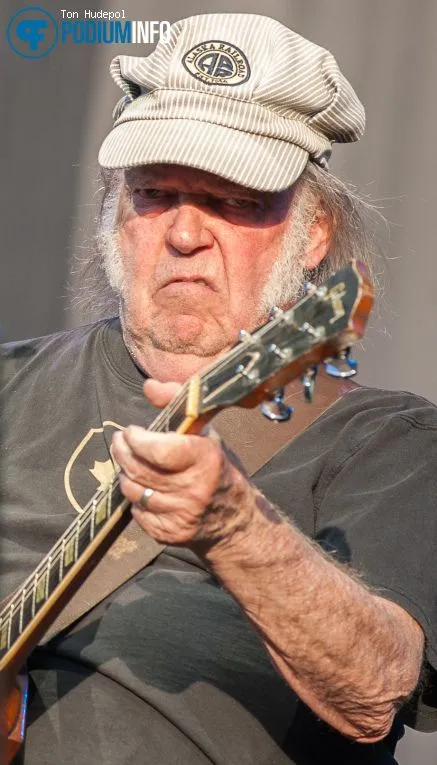
Young’s deeply personal lyrics and signature high tenor singing voice define his long career. He also plays piano and harmonica on many albums, which frequently combine folk, rock, country and other musical genres. His often-distorted electric guitar playing, especially with Crazy Horse, earned him the nickname “Godfather of Grunge”.
While his record company was stalling, Young recorded another album, On the Beach (1974), which presented a more melodic, acoustic sound at times, but dealt with similarly dark themes such as the collapse of 1960s folk ideals, the downside of success and the underbelly of the Californian lifestyle. Like Time Fades Away, it sold poorly but eventually became a critical favourite, presenting some of Young’s most original work. After completing On the Beach, Young reunited with Harvest producer Elliot Mazer to record another acoustic album, Homegrown. Most of the songs were written after Young’s breakup with Carrie Snodgress, and thus the tone of the album was somewhat dark. Though Homegrown was reportedly entirely complete, Young decided, not for the first or last time in his career, to drop it and release something else instead. Tonight’s the Night, when finally released in 1975, sold poorly, as had the previous albums of the “ditch” trilogy, and received mixed reviews at the time, but is now regarded as a landmark album. In Young’s own opinion, it was the closest he ever came to art. Comes a Time (1978), Young’s first entirely new solo recording since the mid-1970s, marked a return to the commercially accessible, Nashville-inspired sound of Harvest while also featuring contributions from Larson and Crazy Horse. The album also marked a return to his folk roots. Young set out in 1978 on the lengthy Rust Never Sleeps tour, in which he played a wealth of new material. Each concert was divided into a solo acoustic set and an electric set with Crazy Horse. The electric sets, featuring an abrasive style of playing, were influenced by the punk rock spirit of the times and provided a stark contrast from Comes a Time. Young’s two accompanying albums Rust Never Sleeps (1979; new material culled from live recordings, but featuring studio overdubs and Live Rust (November 19, 1979; a genuine concert recording featuring old and new material captured the two sides of the concerts. Young’s work since Harvest had alternated between being rejected by mass audiences and being seen as backward-looking by critics, sometimes both at once, and now he was suddenly viewed as relevant by a new generation, who began to discover his earlier work. The 1982 album Trans, which incorporated vocoders, synthesizers, and electronic beats, was Young’s first for the new label Geffen Records and represented a distinct stylistic departure. Young later revealed that an inspiration for the album was the theme of technology and communication with his son, who could not speak. Young’s next album, Everybody’s Rockin’(1983), included several rockabilly covers and clocked in at less than 25 minutes in length. Trans (1982) had already drawn the ire of label head David Geffen for its lack of commercial appeal, and with Everybody’s Rockin’ following seven months later, Geffen Records sued Young for making music “unrepresentative” of himself. Young’s last two albums for Geffen were more conventional in the genre, although they incorporated production techniques like synthesizers and echoing drums that were previously uncommon in Young’s music. Young recorded Landing on Water (1986) without Crazy Horse but reunited with the band for the subsequent year-long tour and final Geffen album, Life, which emerged in 1987. Young’s 1990 album Ragged Glory, recorded with Crazy Horse in a barn on his Northern California ranch, continued this distortion-heavy aesthetic. Young toured for the album with Orange County, California country-punk band Social Distortion and Sonic Youth as support, much to the consternation of many of his old fans. Harvest Moon (1992) marked an abrupt return to the country and folk-rock stylings of Harvest and reunited him with some of the musicians from that album. The decade ended with the release in late 1999 of Looking Forward, another reunion with Crosby, Stills, and Nash. Young continued to release new material at a rapid pace through the first decade of the new millennium. In March 2005, while working on the Prairie Wind album in Nashville, Young was diagnosed with a brain aneurysm. He was treated successfully in a New York hospital. Young’s brush with death influenced Prairie Wind’s themes of retrospection and mortality. Americana (2012) was Young’s first album entirely of cover songs. It debuted at number four on the Billboard 200, making it Young’s highest-charting album in the US since Harvest. Young released his 35th studio album, Storytone, on November 4, 2014. Storytone was followed in 2015 by his concept album The Monsanto Years. The Monsanto Years is an album themed both in support of sustainable farming and to protest the biotechnology company Monsanto. Young achieves this protest in a series of lyrical sentiments against genetically modified food production. In December 2018, Young criticized the promoters of a London show for selecting Barclays Bank as a sponsor. He objected to the bank’s association with fossil fuels. On August 4, 2020, Young filed a copyright infringement lawsuit against Trump’s re-election campaign for the use of his music at campaign rallies. In 2023, Young criticized Ticketmaster’s practice of raising ticket prices and adding fees. Neil Young’s song “Big Crime” directly targets Donald Trump’s deployment of National Guard troops and federal agents in Washington, D.C. the song combines Young’s signature protest rock style with explicit criticism of government overreach and the political climate, continuing his long legacy of using music as a platform for social and political commentary. Furthermore, the singer-songwriter despite earlier conflicts with Spotify and Amazon donated a year’s worth of access to his music archive to ‘ease the unwarranted stress and threats’ Greenlanders have experienced from the US government.
Sound quality is important and the better online Streaming services will offer superior sound quality. As always, We do encourage you to purchase Favoured albums from good online or High street record stores. Neil Young Labels: - Reprise Records
Artists in upcoming issues: Bob Dylan, steeleye span, crosby, stills and Nash.....Keep Listening!! JOIN THE CONVERSATION...
“Comments are most welcome and appreciated”