jazz Music – issue #11
Jazz is a music genre that originated in the African-American communities of New Orleans. Since the 1920s Jazz Age, it has been a major form of musical expression in traditional and popular music. It was developed partially from ragtime and blues. often characterized by syncopated rhythms and polyphonic ensemble playing. incorporating varying degrees of improvisation, often deliberate deviations of pitch, and the use of original timbres. As jazz spread around the world, it drew indigenous musical cultures, which gave rise to different styles. In the 1930s, arranged dance-oriented swing big bands was the prominent styles. Bebop emerged in the 1940s, representing a shift from danceable popular music. Now a more challenging music emerged which was played at faster tempos and used more chord-based improvisation. Cool jazz developed near the end of the 1940s, introducing calmer, smoother sounds and long, linear melodic lines. Free jazz is a style of avant-garde jazz . This experimental style of jazz improvisation developed in the late 1950s and early 1960s. Jazz fusion appeared in the late 1960s and early 1970s. a Fusion combining jazz improvisation with rock music’s rhythms, electric instruments, and highly amplified stage sound.
In the early 1980s, a commercial form of jazz fusion called smooth jazz became successful, garnering significant radio airplay. For almost all of its history it has employed both creative approaches in varying degrees and endless permutations. despite the all these diverse styles, jazz is distinguishable as something separate from all other forms of musical expression. Especially from classical music. The jazz performer is primarily or wholly a creative, improvising composer. On the other hand in classical music the performer typically expresses and interprets someone else’s composition.
Join the Conversation!!!
we will Feature Up to 4 Albums from Artists representative of a range of the Many sub-genres. We Hope to encourage Listeners of all tastes and passions. So Get your Headphones on and Consider discussing the musical Offering and sharing your views with like-minded peers.
In Issue #11, we feature keith Jarrett
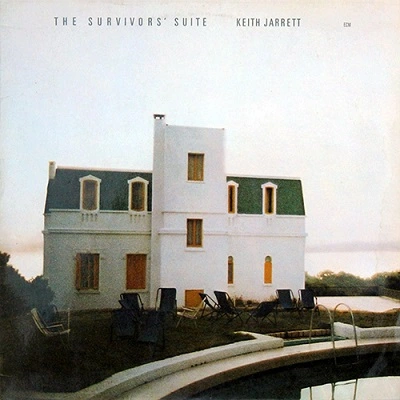
The Survivors’ Suite is a landmark 1977 jazz album recorded in April 1976 and released through the prestigious ECM Records label. It is widely considered by critics and fans to be the crowning masterpiece of Jarrett’s “American Quartet”. The album won Melody Maker’s Jazz Album of the Year in 1978 and remains an enduring classic of the avant-garde and third-stream jazzinto two parts due to the physical constraints of vinyl
“Beginning” (Side 1): Opens delicately with an atmospheric, ritualistic drone featuring Jarrett on bass recorder and Charlie Haden’s lightly plucked bass. It builds into a hypnotic, cyclical rhythm before blooming into a gorgeous piano-led melody supported by shimmering celeste. “Conclusion” (Side 2): Starts in stark contrast with a fiery, chaotic free jazz section characterized by screeching saxophones and heavy percussion. It seamlessly shifts into an intense, uptempo groove before ultimately resolving back into the peaceful, liberating motifs of the opening.
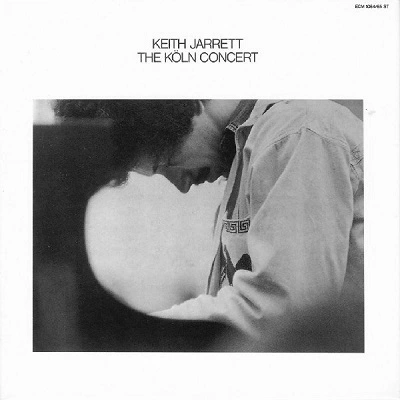
the best-selling solo album in jazz history and the best-selling solo piano album of all time. It is celebrated as a pinnacle of spontaneous musical creation and was selected for preservation in the Library of Congress National Recording Registry.The limitations of a broken piano forced Jarrett to radically adapt his playing style. The iconic opening theme of “Part I” was inspired by the 4-note Rhythmic Grooves: To mask the weak bass, he avoided standard jazz basslines and relied heavily on repetitive, rhythmic left-hand ostinatos (grooves). He physically stood over the piano and frequently groaned, sang, or shouted alongside the notes—a sonic hallmark captured clearly on the recording.
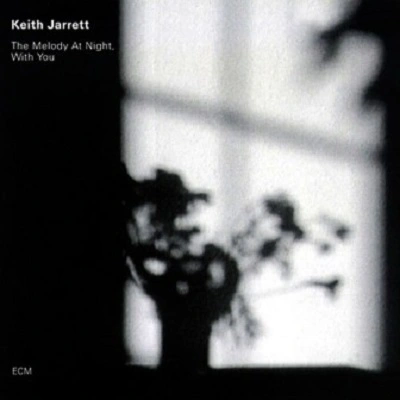
The Melody at Night, with You is a critically acclaimed solo piano album recorded in 1998 and released by ECM Records in October 1999. The album stands out as one of the most intimate and stripped-back recordings of Jarrett’s career. It was created at his home studio during his recovery from Chronic Fatigue Syndrome. This condition left him temporarily unable to perform his signature, highly energetic, and virtuosic improvisations. Instead, Jarrett stripped traditional jazz standards and folk songs down to their bare melodic essence, playing with a rare, quiet vulnerability. It was originally intended purely as a personal Christmas gift to his wife, Rose Anne, before its commercial release. Unlike the explosive, sprawling energy of his famous live performances like The Köln Concert, this record is defined by absolute minimalism, slow tempos, and a warm, domestic acoustic environment. note that Jarrett avoids any virtuosic sleight-of-hand or complex flourishes, focusing entirely on direct, emotional storytelling. It is also one of the few Jarrett albums entirely devoid of his characteristic vocal groans and grunts.
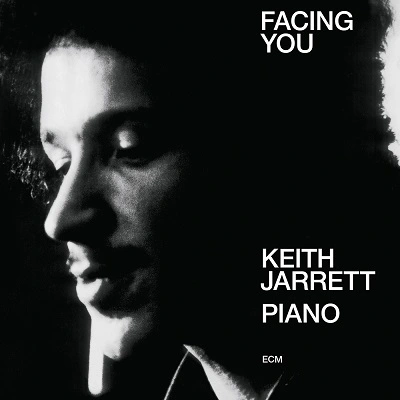
Facing You is the seminal debut solo piano album released in March 1972. It holds massive historical significance as Jarrett’s very first release on ECM Records, launching a legendary, multi-decade partnership with producer Manfred Eicher. The record completely altered the course of modern jazz, proving that a completely solo, unaccompanied acoustic piano could captivate global audiences during an era dominated by electric jazz-rock fusion. The album serves as the definitive structural blueprint for all of Jarrett’s legendary solo work that followed. Musically, it weaves gospel-tinged vamps, seamless classical architecture, blues, and rich melodic ostinatos into structured improvisations. Critics frequently praise the album for its distinct, gem-like lucidity and intense introspection compared to his wider, more experimental live concert recordings.the opening track, ‘In Front’, showcases the precise, rhythmic momentum that defines the record.
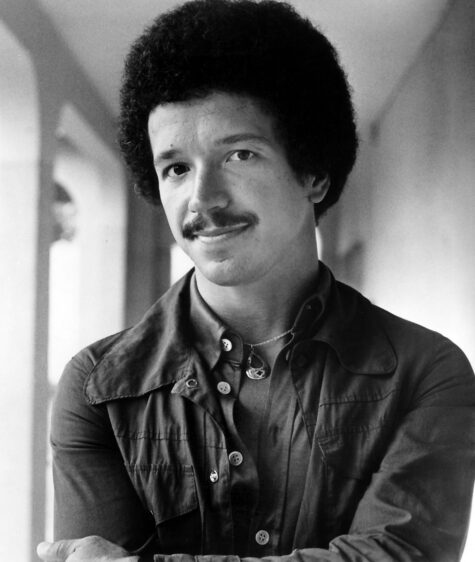
Keith Jarrett (born May 8, 1945) is an American pianist and composer. Jarrett started his career with Art Blakey and later moved on to play with Charles Lloyd and Miles Davis. Since the early 1970s, he has also been a group leader and solo performer in jazz, jazz fusion, and classical music. His improvisations draw from the traditions of jazz and other genres, including Western classical music, gospel, blues, and ethnic folk music. In 2008, he was inducted into the DownBeat Jazz Hall of Fame in the magazine’s 73rd Annual Readers’ Poll. In 2003, Jarrett received the Polar Music Prize and was the first recipient to be recognized with the prizes for both contemporary and classical music. In 2004, he received the Léonie Sonning Music Prize.
Jarrett was born on May 8, 1945, in Allentown, Pennsylvania, to a mother of Slovenian descent. Jarrett’s father was of mostly German descent. He grew up in suburban Allentown with significant early exposure to music. Jarrett possesses absolute pitch and displayed prodigious musical talents as a young child. He began piano lessons before his third birthday. At age five, he appeared on a television talent program hosted by swing bandleader Paul Whiteman. He performed in his first formal piano recital at the age of seven, playing works by composers such as Bach, Beethoven, Mozart, and Saint-Saëns, and ending with two of his own compositions. Encouraged by his mother, he took classical piano lessons with a series of teachers, including Eleanor Sokoloff of the Curtis Institute of Music in Philadelphia. Jarrett attended Emmaus High School in Emmaus, Pennsylvania, where he learned jazz and became proficient in it. He developed a strong interest in contemporary jazz, and was inspired by a Dave Brubeck performance he attended in New Hope. He was invited to study classical composition in Paris with Nadia Boulanger, but he was already leaning toward jazz and turned it down. After his graduation from Emmaus High School in 1963, Jarrett moved to Boston to attend Berklee College of Music and play cocktail piano in local Boston clubs. In 1964, Jarrett moved to New York City, where he played at the Village Vanguard in Greenwich Village. Art Blakey hired Jarrett to play with The Jazz Messengers. Jarrett’s appearance on the Messengers’ live album Buttercorn Lady marked his commercial recording debut. However, there was friction between Blakey and Jarrett, and Jarrett left after four months of touring. During a show, he was noticed by Jack DeJohnette, who recommended Jarrett to his band leader Charles Lloyd. The Charles Lloyd Quartet had formed not long before and was exploring open, improvised forms while building supple grooves, and it was moving into terrain that was also being explored, although from another stylistic background, by some of the psychedelic rock bands of the West Coast. Their 1966 album Forest Flower was one of the most successful jazz recordings of the mid-1960s.
They were invited to play The Fillmore in San Francisco, and won over the local hippie audience. The quartet toured across the U.S. and Europe, including appearances in Leningrad and Moscow. Their concert at London’s Royal Albert Hall was attended by The Beatles. The band was profiled in Time and Harper’s Magazine, which made Jarrett a popular musician in rock and jazz. The tour also laid the foundation for a lasting musical bond with DeJohnette. Jarrett began to record his own tracks as a leader of small groups, at first in a trio with Charlie Haden and Paul Motian. Life Between the Exit Signs (1967), his first album as a band leader, was released by Vortex and was followed by Restoration Ruin (1968] Not only does Jarrett barely touch the piano, but he plays all the other instruments on what is essentially a folk-rock album; he also sings. Somewhere Before, another trio album with Haden and Motian, was released in 1968 on Atlantic Records..The Charles Lloyd Quartet with Jarrett, Ron McClure, and DeJohnette came to an end in 1968 after their recording of Soundtrack because of money disputes and artistic differences. Jarrett was asked to join the Miles Davis group after the trumpeter heard him in a New York City club. During his tenure with Davis, Jarrett played both electronic organ and Rhodes piano, alternating with Chick Corea. After Corea left in 1970, Jarrett often played electric piano and organ simultaneously. Despite his growing dislike of amplified music and electric instruments within jazz, Jarrett continued with the group out of respect for Davis and because of his desire to work with DeJohnette. DeJohnette left Davis’s band in the middle of 1971, and Jarrett followed in December. In 1971, Jarrett, Haden, and Motian participated in a four-day session for Atlantic Records during which they recorded three trio albums. The trio was augmented by saxophonist Dewey Redman. Redman became an official member of the group, which later became known as the “American quartet”. They would go on to record over a dozen albums over five years. The group was often supplemented by an extra percussionist, such as Danny Johnson, Guilherme Franco, or Airto Moreira, and occasionally by guitarist Sam Brown. Later in 1971, the quartet, with Brown and Moreira, recorded Expectations for Columbia Records, with string and brass arrangements by Jarrett. However, Columbia suddenly dropped Jarrett in favour of Herbie Hancock, and Jarrett’s manager negotiated a contract with Impulse! Records, for whom the group would record eight albums. Jarrett’s compositions and the musical identities of the group members gave this ensemble a distinctive sound. The quartet’s music is an amalgam of free jazz, straight-ahead post-bop, gospel music, and exotic, Middle-Eastern-sounding improvisations.
During this time, Jarrett received a letter from producer Manfred Eicher asking if he would like to record for the relatively new ECM label. In 1972, Eicher proposed that Jarrett work with Norwegian saxophonist Jan Garbarek, whom Jarrett had met while in Europe with Charles Lloyd during the late 1960s.Their initial collaborations laid the groundwork for what would become known as the “European quartet”, which also featured Palle Danielsson on bass and Jon Christensen on drums. The group recorded five albums for ECM. Jarrett’s first album for ECM, Facing You, was released in 1971. He has continued to record solo studio piano albums intermittently throughout his career. In 1973, Jarrett began playing totally improvised solo concerts, and it is the popularity of these concert recordings that made him one of the best-selling jazz artists in history. Albums released from these concerts were Solo Concerts: Bremen/Lausanne (1973), which Time magazine named “Jazz Album of the Year”, The Köln Concert (1975), which became the best-selling piano recording in history. Jarrett was diagnosed with chronic fatigue syndrome and was unable to leave his home for long periods of time. During this period, he recorded The Melody at Night, with You, a solo piano effort consisting of jazz standards. Jarrett’s first solo piano concerts following his illness, were released on the 2005 CD Radiance (a complete concert in Osaka and excerpts from one in Tokyo) and the 2006 DVD Tokyo Solo (the entire Tokyo performance. In 1983, at the suggestion of ECM head Manfred Eicher, Jarrett asked bassist Gary Peacock and drummer Jack DeJohnette, to record an album of jazz standards. The Trio went on to record numerous live and studio albums consisting primarily of jazz repertory material. The trio also produced recordings that consist largely of challenging original material. Several of the standards albums contain an original track or two, some attributed to Jarrett, but most are improvisations on jazz standards. The musical communication among these three men was nothing short of telepathic, and their group improvisations frequently take on a complexity that sounds almost composed. The standards trio undertook frequent world tours of recital halls (the only venues Jarrett, a notorious stickler for acoustics, will play) and was one of the few truly successful jazz groups to play both straight-ahead (as opposed to smooth) and free jazz. The Standard Trio disbanded in 2014 after more than 30 years.Jarrett suffered two strokes in February and May 2018. After the second, he was paralyzed and spent nearly two years in a rehabilitation facility and is not expected to perform again.
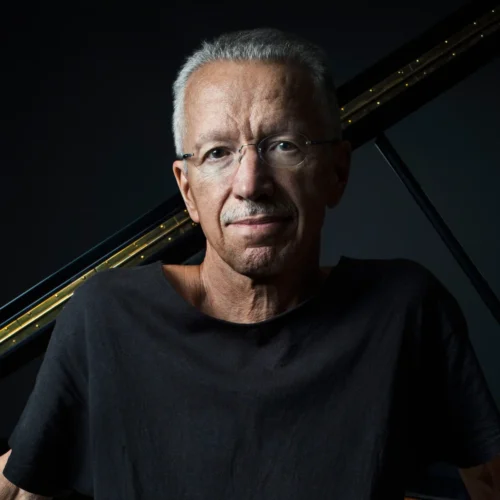
Since the early 1970s, Jarrett’s success as a jazz musician has enabled him to maintain a parallel career as a classical composer and pianist, recording almost exclusively for ECM Records. In the Light, an album made in 1973, consists of short pieces for solo piano, strings, and various chamber ensembles, including a string quartet and a brass quintet, and a piece for cellos and trombones, these compositions are dismissed by many classical music aficionados as lightweight. Bridge of Light (1993) is the last recording of classical compositions to appear under Jarrett’s name. Jarrett has also recorded classical works for ECM by composers such as Bach, Handel, Shostakovich, and Arvo Pärt.
Jarrett frequently emits loud vocalizations, sometimes characterized as moaning, during his playing. Jarrett is also physically active while playing jazz and improvised solo performances, but the vocalizations are generally absent whenever he plays classical repertoire. Jarrett is highly intolerant of audience noise, especially during solo improvised performances. He feels extraneous noise affects his inspiration and distracts from the purity of the sound. He has also complained onstage about audience members taking photographs, and has performed in the dark to prevent this. Jarrett is opposed to electronic instruments and equipment. He has largely eschewed electric or electronic instruments since his time with Miles Davis. On the majority of his recordings in the last 20 years, he has played acoustic piano only.
Sound quality is important and the better online Streaming services will offer superior sound quality. As always, We do encourage you to purchase Favoured albums from good online or High street record stores. keith Jarrett's Labels - ECM
Artists in upcoming issues: Lester Young, Ezra Collective, jaco pastorius, Phronesis.....Keep Listening!! JOIN THE CONVERSATION...jazz Music
“Comments are most welcome and appreciated”