jazz Music – issue #3
Jazz is a music genre that originated in the African-American communities of New Orleans. Since the 1920s Jazz Age, it has been a major form of musical expression in traditional and popular music. It was developed partially from ragtime and blues. often characterized by syncopated rhythms and polyphonic ensemble playing. incorporating varying degrees of improvisation, often deliberate deviations of pitch, and the use of original timbres. As jazz spread around the world, it drew indigenous musical cultures, which gave rise to different styles. In the 1930s, arranged dance-oriented swing big bands was the prominent styles. Bebop emerged in the 1940s, representing a shift from danceable popular music. Now a more challenging music emerged which was played at faster tempos and used more chord-based improvisation. Cool jazz developed near the end of the 1940s, introducing calmer, smoother sounds and long, linear melodic lines. Free jazz is a style of avant-garde jazz . This experimental style of jazz improvisation developed in the late 1950s and early 1960s. Jazz fusion appeared in the late 1960s and early 1970s. a Fusion combining jazz improvisation with rock music’s rhythms, electric instruments, and highly amplified stage sound. In the early 1980s, a commercial form of jazz fusion called smooth jazz became successful, garnering significant radio airplay. For almost all of its history it has employed both creative approaches in varying degrees and endless permutations. despite the all these diverse styles, jazz is distinguishable as something separate from all other forms of musical expression. Especially from classical music. The jazz performer is primarily or wholly a creative, improvising composer. On the other hand in classical music the performer typically expresses and interprets someone else’s composition.
Join the Conversation!!!
we will Feature Up to 3 Albums from Artists representative of a range of the Many sub-genres. We Hope to encourage Listeners of all tastes and passions. So Get your Headphones on and Consider discussing the musical Offering and sharing your views with like-minded peers.
In Issue #3, we feature Charles Mingus
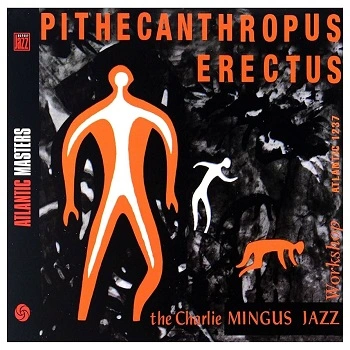
Pithecanthropus Erectus was released in August 1956 through Atlantic Records. Mingus noted that this was the first album where he taught arrangements to his musicians by ear instead of putting the chords and arrangements in writing to encourage a more organic, improvisational “feel”. The mix of structured and improvised playing is just perfect; the pace and energy irresistible. The liner notes state that the title song is a ten-minute tone poem, depicting the rise of man from his hominid roots (Pithecanthropus erectus) to an eventual downfall due to “his own failure to realize the inevitable emancipation of those he sought to enslave, and his greed in attempting to stand on a false security.” The song’s title refers to the Java Man fossil, which at the time of its discovery was the oldest human fossil ever found. It is widely considered his breakthrough work, establishing him as a leader and a visionary composer who blended traditional jazz with avant-garde experimentation. The album is noted for its early use of collective improvisation and “noise” (shrieks, wails, and honking) that predated the free jazz movement of the 1960s. Mingus’ playful side surfaces on the Gershwins’ “A Foggy Day (In San Francisco),” which crams numerous sound effects (all from actual instruments) into a highly visual portrait, complete with honking cars, ringing trolleys, sirens, police whistles, change clinking on the sidewalk, and more.
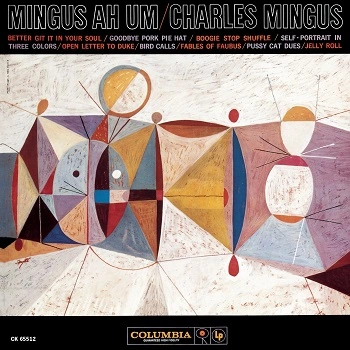
Ah Um is widely considered the definitive masterpiece of bassist and composer Charles Mingus. Released in October 1959 by Columbia Records, it is one of the foundational pillars of modern jazz. The album is a “grand tour of jazz” that simultaneously looks back at the history of the genre while pushing its boundaries forward. Several tracks honour Mingus’s musical ancestors. “Goodbye Pork Pie Hat” is a haunting elegy for saxophonist Lester Young, who died shortly before the recording and “Open Letter to Duke” refers to Duke Ellington. Some critics argue “Bird Calls” pays homage to Charlie Parker, while others claim What Mingus was trying to create in “Bird Calls” was the sound of . . . birds. “Fables of Faubus” is one of jazz’s most famous protest songs Columbia Records initially refused to let Mingus record the song with its scathing lyrics, so the version on Ah Um is instrumental. he opening track, “Better Git It in Your Soul,” captures the joyous, rhythmic energy of the gospel music Mingus heard as a child in Watts, Los Angeles. In 2003, the Library of Congress added the album to the National Recording Registry. The iconic abstract cover was painted by graphic design innovator S. Neil Fujita
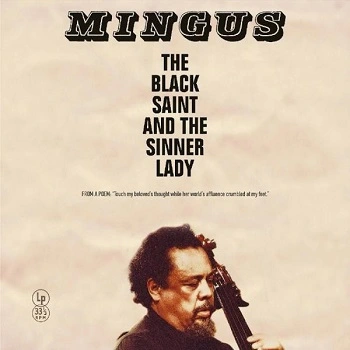
The Black Saint and the Sinner Lady is a studio album by Charles Mingus. It was recorded on January 20, 1963, and released in July of that year by Impulse! Records. The album comprises a single continuous composition—partially written as a ballet—divided into four tracks and six movements It is widely regarded as one of the greatest jazz records of all time. The album is a pioneering work of Avant-garde Jazz and Third Stream, blending traditional jazz with orchestral structures and classical techniques. Mingus himself described the style as “ethnic folk-dance music”. Mingus has called the album’s orchestral style “ethnic folk-dance music”, and has been described by critics as blending “jazz and classical but also integrates elements of African music and Spanish theme. The album is notable for its innovative use of studio overdubbing, which was rare for jazz at the time. Mariano’s soaring alto sax solos, in particular, were dubbed in later to achieve their intense, visceral effect.
Pithecanthropus Erectus
Mingus ah Um
The Black Saint and the Sinner Lady
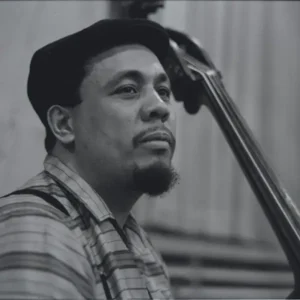
Charles Mingus was born in Nogales, Arizona. He was largely raised in the Watts area of Los Angeles. He developed an early love for Jazz music, especially that of Duke Ellington. He studied trombone, and later cello, although he was unable to follow the cello professionally because, at the time, it was nearly impossible for a black musician to make a career of classical music, and the cello was not accepted as a jazz instrument. Much of the cello technique Mingus learned was applicable to double bass when he took up the instrument in high school. He studied for five years with Herman Reinshagen, principal bassist of the New York Philharmonic, and compositional techniques with the legendary Lloyd Reese, a master musician.
He proved to be an immensely talented bassist and soon found touring work with Louis Armstrong and Lionel Hampton. Eventually he settled in New York where he played and recorded with the leading musicians of the 1950s— Charlie Parker, Miles Davis, Bud Powell, Art Tatum and Duke Ellington himself. One of the few bassists to do so, Mingus quickly developed as a leader of musicians. He was also an accomplished pianist who could have made a career playing that instrument. By the mid-50s he had formed his own publishing and recording companies to protect and document his growing repertoire of original music. He also founded the “Jazz Workshop,” a group which enabled young composers to have their new works performed in concert and on recordings.
Mingus soon found himself at the forefront of the avant-garde. His recordings bear witness to the extraordinarily creative body of work that followed. He recorded over a hundred albums and wrote over three hundred scores. Although he wrote his first concert piece, “Half-Mast Inhibition,” when he was seventeen years old, it was not recorded until twenty years later by a 22-piece orchestra with Gunther Schuller conducting. It was the presentation of “Revelations” which combined jazz and classical idioms, at the 1955 Brandeis Festival of the Creative Arts, that established him as one of the foremost jazz composers of his day.
In 1971 Mingus spent a semester teaching composition at the State University of New York at Buffalo. In the same year his autobiography, Beneath the Underdog, was published by Knopf. The book provides a raw look at his struggles with race, identity, and mental health in 20th-century America. His music was performed frequently by ballet companies.
Mingus had a notoriously fiery temperament, which earned him the nickname “the Angry Man of Jazz”. His refusal to compromise his musical integrity led to many onstage outbursts, which were directed at members of his band and the audience alike. In addition to bouts of ill temper, Mingus was prone to clinical depression and tended to have brief periods of extreme creative activity intermixed with fairly long stretches of greatly decreased output. His compositions retained the hot and soulful feel of hard bop, drawing heavily from black gospel music and blues, while sometimes containing elements of third stream, free jazz, and classical music. He once cited Duke Ellington and church as his main influences. Mingus espoused collective improvisation, paying particular attention to how each band member interacted with the group as a whole often demanding that his musicians develop their musical ideas on the spot. In creating his bands, he looked not only at the skills of the available musicians, but also their personalities. Many musicians passed through his bands and later went on to impressive careers. As a performer, Mingus was a pioneer in double bass technique, widely recognized as one of the instrument’s most proficient players. As a bassist, he was always more effective as a soloist than as an accompanist or sideman. Mingus was a powerhouse of technical command and invention.
Mingus frequently used his platform to address social injustice and racism.”Fables of Faubus” was written as a protest against Arkansas Governor Orval Faubus, who opposed the integration of Little Rock Central High School.
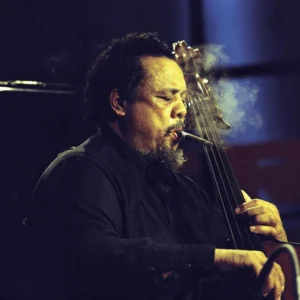
Though Mingus would not ally himself to any particular political group, his work during the 1960s in particular, is inherently political, imbued with righteous anger against racism and injustice. Mingus was also an outspoken critic of the music industry itself and in particular the imbalance between the musicians and their record labels often having to fight for royalties and artistic freedom.
In the late 1970s, Mingus was diagnosed with amyotrophic lateral sclerosis (ALS), which eventually left him unable to play the bass. He continued to compose by singing into a tape recorder, notably collaborating with Joni Mitchell on her 1979 album Mingus. Mingus died of ALS in 1979 in Cuernavaca, Mexico.
Sound quality is important and the better online Streaming services will offer superior sound quality. As always, We do encourage you to purchase Favoured albums from good online or High street record stores.
Artists in upcoming issues: herbie Hancock, Bill Evans, brad Mehldau.....Keep Listening!! JOIN THE CONVERSATION...Jazz Music
“Comments are most welcome and appreciated”