jazz Music – issue #12
Jazz is a music genre that originated in the African-American communities of New Orleans. Since the 1920s Jazz Age, it has been a major form of musical expression in traditional and popular music. It was developed partially from ragtime and blues. often characterized by syncopated rhythms and polyphonic ensemble playing. incorporating varying degrees of improvisation, often deliberate deviations of pitch, and the use of original timbres. As jazz spread around the world, it drew indigenous musical cultures, which gave rise to different styles. In the 1930s, arranged dance-oriented swing big bands was the prominent styles. Bebop emerged in the 1940s, representing a shift from danceable popular music. Now a more challenging music emerged which was played at faster tempos and used more chord-based improvisation. Cool jazz developed near the end of the 1940s, introducing calmer, smoother sounds and long, linear melodic lines. Free jazz is a style of avant-garde jazz . This experimental style of jazz improvisation developed in the late 1950s and early 1960s. Jazz fusion appeared in the late 1960s and early 1970s. a Fusion combining jazz improvisation with rock music’s rhythms, electric instruments, and highly amplified stage sound.
In the early 1980s, a commercial form of jazz fusion called smooth jazz became successful, garnering significant radio airplay. For almost all of its history it has employed both creative approaches in varying degrees and endless permutations. despite the all these diverse styles, jazz is distinguishable as something separate from all other forms of musical expression. Especially from classical music. The jazz performer is primarily or wholly a creative, improvising composer. On the other hand in classical music the performer typically expresses and interprets someone else’s composition.
Join the Conversation!!!
we will Feature Up to 4 Albums from Artists representative of a range of the Many sub-genres. We Hope to encourage Listeners of all tastes and passions. So Get your Headphones on and Consider discussing the musical Offering and sharing your views with like-minded peers.
In Issue #12, we feature Lester young
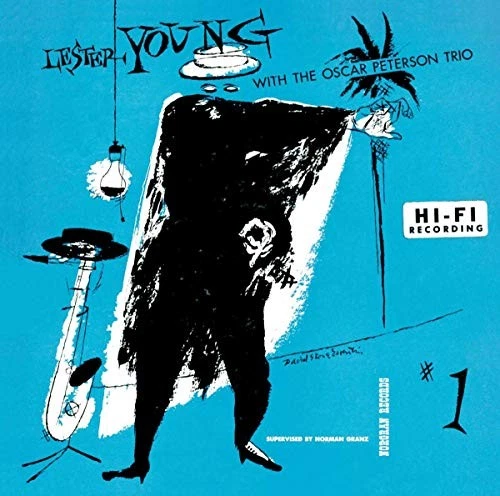
Lester Young with the Oscar Peterson Trio is a 1954 studio album this session brought together tenor saxophone titan Lester “Pres” Young and virtuoso pianist Oscar Peterson (who proves to be the perfect accompanist in addition to contributing many concise solos) bringing out the best in each other throughout. Peterson’s trio provides a buoyant, swinging backdrop, with Kessel’s guitar adding rhythmic and harmonic support and with Ray Brown on bass and J.C. Heard on drums completing the rhythm section, this CD contains some of the best of Lester Young’s later work. In Young’s last decade he mostly dispensed with big bands and stuck to great songs, mainly ballads. The session captures Young in a relaxed, small-group setting that suited his conversational approach to improvisation, producing one of the stronger documents of his later Granz-era recordings. The album consists mostly of relaxed, beautifully phrased swing standards and a notable novelty: Tracks like “On the Sunny Side of the Street,” “Tea for Two,” and “I Can’t Get Started” showcase Young’s lush, exquisite tone. He has a way of coaxing a palpable, intimate warmth out of his instrument on these slower tempos. Tunes like “Just You, Just Me” allow the rhythm section to shine. The interplay between Peterson, Brown, and Kessel provides a robust, swinging foundation that pushes Young without ever overpowering him. “Ad Lib Blues” – A standout, improvised blues numbers tracking over 5 minutes. This is the only original collaboration on the album, acting as a brilliant showcase for both Young and Peterson to stretch out and trade ideas. “(It Takes) Two to Tango” – Features a highly unusual, playful vocal performance by Lester Young. It remains his only studio-recorded vocal track. While his singing isn’t technically perfect, it offers a fascinating, slightly risqué glimpse into his unique personality and charm. The album serves as a gorgeous bridge from the classic swing era to the modern jazz vocabulary of the 1950s. The rhythm section locks together flawlessly, providing the absolute perfect foil for Young’s floating, airy tenor style. It is an essential, relaxed, and deeply rewarding listen for any jazz fan.
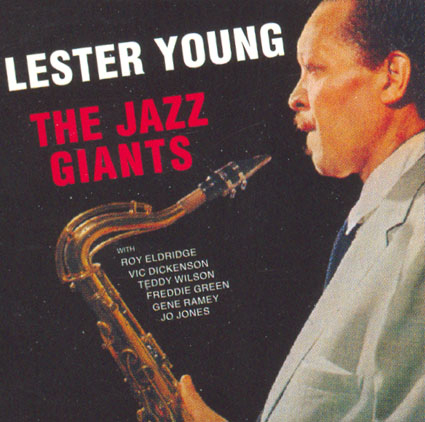
The Jazz Giants ’56 is widely considered Lester “Pres” Young’s finest post-World War II recording and a definitive masterpiece of mid-century swing music. Released on Verve Records and supervised by Norman Granz, the album served as a powerful critical comeback, proving that Young’s late-career genius remained remarkably potent. Featuring an elite lineup of all-stars: Roy Eldridge (trumpet), Vic Dickenson (trombone), Teddy Wilson (piano), Freddie Green (guitar), Gene Ramey (bass), and Jo Jones (drums) the album features five tracks, balancing fiery up-tempo jams with deeply moving ballads. “I Didn’t Know What Time It Was”: A gorgeous opening standard where Young showcases his famous “cool,” lyrical phrasing. “Gigantic Blues”: The absolute centrepiece of the album. It is a roaring, explosive blues track written by Young himself where Roy Eldridge delivers a fiery, fiercely competitive trumpet solo. “Red Boy Blues”: A beautifully laid-back blues track which showcases Teddy Wilson’s sophisticated, sparkling piano touch. “You Can Depend on Me”: A joyful swing anthem that demonstrates the seamless chemistry of the three horn players trading ideas. “This Year’s Kisses”: A poignant, bittersweet ballad echoing Young’s classic 1930s collaborations with Billie Holiday, delivered here with a more mature, weathered dignity. Historically, some jazz critics unfairly dismissed Young’s post-1945 catalogue, claiming his tone had grown too dark or fatigued after his traumatic wartime military service. However, major jazz platforms like AllMusic note that The Jazz Giants ’56 is the ultimate exception to that rule. While Young’s tone is noticeably deeper and more fragile than his buoyant 1930s era, it is incredibly expressive, soulful, and commanding. Critics celebrate the record for its “explosive joy” and an essential cornerstone of any serious jazz collection.
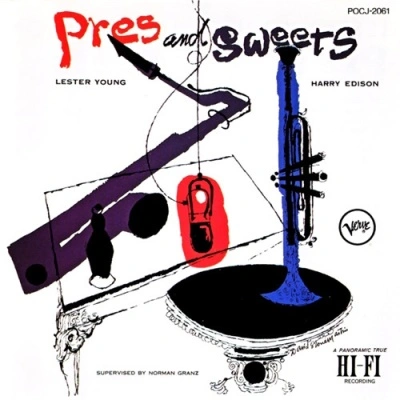
Pres and Sweets is a classic swing-jazz studio album by the American tenor saxophonist Lester “Pres” Young and trumpeter Harry “Sweets” Edison, recorded on 1 November 1955. Supervised by legendary producer Norman Granz, the record was originally released in September 1956 under the Norgran label before later reissues moved it to Verve Records. The album reunites the two jazz giants who initially formed a close musical bond as bandmates in the Count Basie Orchestra during the late 1930s. It was common for Young to solo followed directly by Edison in the Basie days, and they follow that same plan here. The album comprises eight tracks consisting of standards and relaxed, bluesy jam-session vehicles and showcases an incredible, heavy-hitting rhythm section supporting the two main soloists. The two horn players perform a swinging, rousing version of the Count’s legendary “One O’Clock Jump,” which features superb solos by pianist Oscar Peterson and drummer Buddy Rich, both legends in their own right. Other highlights on Pres & Sweets include the subtle “Pennies from Heaven” and the lovely ballad, “It’s the Talk of the Town,” the latter of which displays Herb Ellis’ delicate guitar stylings and Pres’ beautiful light and airy tone.
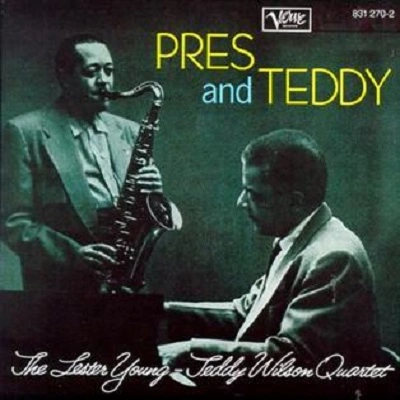
Pres and Teddy (1959), a masterpiece by the Lester Young and Teddy Wilson Quartet, is a highly celebrated late-career triumph for both jazz icons. Recorded in 1956, it is an elegant, relaxed set of swing standards featuring sublime interplay and beautifully subtle arrangements. This session is unanimously considered one of the finest later-career recordings by Lester Young. While his health was in decline during this period, his elegant tone, sophisticated harmonies, and melodic phrasing are in top form. Users and critics alike praise the album for its laid-back, swinging rhythm section. The reunion of Young and Wilson (who famously recorded with Billie Holiday twenty years earlier) yields a magical, intuitive musical dialogue. Young’s dry, sophisticated playing is paired wonderfully with Wilson’s elegant piano progressions, creating an effortlessly relaxed and joyous atmosphere. “All of Me” & “Prisoner of Love”: Regarded by some critics as the absolute standouts of the session, showcasing Young’s highly economical, lyrical phrasing. “Taking a Chance on Love”: Highlighted for Wilson’s stride-style piano introduction which perfectly sets up one of the most superbly poetic saxophone solos ever recorded. “Love Me or Leave Me” & “Louise”: Features potent, tasteful backing by Wilson, proving his swing-era sensibilities only grew deeper with age. “Pres Returns”: The album’s sole original track, letting the quartet stretch out into a bluesier, spontaneous groove. Reviewers emphasize that the album’s success relies heavily on the steady foundation built by Gene Ramey and Jo Jones. Jones uses his snare and cymbals with light, rhythmic precision rather than overpowering the soloists. A highly recommended album for listeners seeking an engaging, deeply emotional, and stress-free jazz experience.
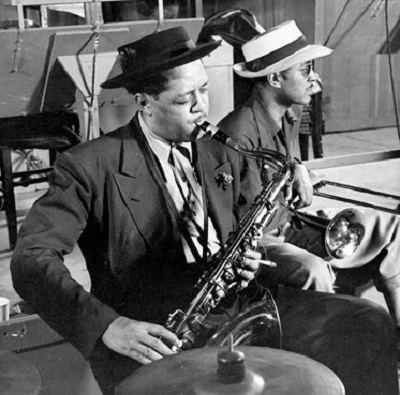
Lester Young was unique, just as original and fascinating a musician as he was a human being. He introduced a new way of playing which led to the modern jazz. He was the inspiration for Charlie Parker and countless musicians on all instruments who grew up becoming jazz musicians during the forties and fifties. The cool jazz of the 1950’s was directly based on Young’s light and relaxed style.
Lester Willis Young (1909 – 1959), nicknamed “Pres” (short for the “President of the tenor saxophone”), was an American jazz tenor saxophonist and occasional clarinettist. Coming to prominence while a member of Count Basie’s orchestra, Young was one of the most influential players on his instrument. In contrast to many of his hard-driving peers, Young played with a relaxed, cool tone and used sophisticated harmonies, using what one critic called “a free-floating style, wheeling and diving like a gull, banking with low, funky riffs that pleased dancers and listeners alike”. Known for his hip, introverted style, he invented or popularized much of the hipster jargon which came to be associated with the music. Lester Young was born in Woodville, Mississippi, on August 27, 1909. He grew up in a musical family; his father was a teacher and band leader. While growing up in the Algiers neighbourhood of New Orleans, he worked from the age of five to make money for the family. He sold newspapers and shined shoes. By the time he was ten, he had learned the basics of the trumpet, violin, and drums, and joined the Young Family Band, touring with carnivals and playing in regional cities in the Southwest. Young’s early musical influences included Louis Armstrong, Bix Beiderbecke, Jimmy Dorsey, and Frankie Trumbauer. In his teens, he and his father clashed, and he often left home for long periods. His family moved to Minneapolis, Minnesota, in 1919, and Young stayed there for much of the 1920s, first picking up the tenor saxophone while living there. Young left the family band in 1927, at the age of 18, because he refused to tour in the Southern United States, where Jim Crow laws were in effect and racial segregation was required in public facilities. He became a member of the Bostonians, led by Art Bronson, and chose the tenor saxophone over the alto as his primary instrument. He made a habit of leaving, working, then going home. He left home permanently in 1932 when he became a member of the Blue Devils led by Walter Page.
In 1933, Young settled in Kansas City, where after playing briefly in several bands, he rose to prominence with Count Basie. His playing in the Basie band was characterized by a relaxed style which contrasted sharply with the more forceful approach of his bandmate Hershel Evans, an alumnus of Coleman Hawkins, the dominant tenor sax player of the day. One of Young’s key influences was Frankie Trumbauer, who came to prominence in the 1920s with Paul Whiteman and played the C melody saxophone (between the alto and tenor in pitch). Young left the Basie band to replace Hawkins in Fletcher Henderson’s orchestra, but he soon left to play in the Andy Kirk band for six months before returning to Basie. In 1936, Young recorded his first sides with Basie, though in a quintet rather than with his orchestra. While with Basie, Young made also small-group classic recordings with Billie Holiday, under Teddy Wilson’s conductorship, and for Milt Gabler’s Commodore Records. In these sessions Young also played clarinet in a “liquid, nervous style.” His clarinet work from 1938 to 1939 is documented on recordings with the Basie orchestra and small groups and Billie Holiday. Billie and Lester met at a Harlem jam session in the early 1930s and worked together in the Count Basie band and in nightclubs on New York’s 52nd Street. She gave Lester the nickname “Pres”. She believed that Lester was the “greatest” tenor saxophonist and felt that his title should reflect that status. Playing on her name, he would call her “Lady Day”. Young left the Basie band in late 1940. His studio recordings are relatively sparse during the 1942 to 1943 period, largely due to the recording ban by the American Federation of Musicians. Small record labels not bound by union contracts continued to record, and Young recorded some sessions for Harry Lim’s Keynote label in 1943. In December 1943, Young returned to the Basie fold for a 10-month stint, cut short by his being drafted into the U.S. Army during World War II. Lester was assigned to the regular army where he was not allowed to play his saxophone. Whilst in the services, Lester was found with marijuana and alcohol among his possessions. He was court-martialled and was convicted, serving one traumatic year in a detention barracks. Young’s career after WW II was far more prolific and lucrative than in the pre-war years in terms of recordings made, live performances, and annual income. Young joined Norman Granz’s Jazz at the Philharmonic troupe in 1946, touring regularly with JATP over the next 12 years. He made many studio recordings under Granz’s supervision as well, including more trio recordings with Nat King Cole.
Young also recorded extensively in the late 1940s for Aladdin Records (1945–1947, where he had made the Cole recordings in 1942) and for Savoy (1944, 1949, and 1950), some sessions of which included Basie on piano. From around 1951, Young’s level of playing declined more precipitously as his drinking increased. His playing showed reliance on a small number of clichéd phrases and reduced creativity and originality, despite his claims that he did not want to be a “repeater pencil” (Young coined this phrase to describe the act of repeating one’s own past ideas). Young’s playing and health went into a crisis, culminating in a November 1955 hospital admission following a nervous breakdown. He emerged from this treatment improved. In January 1956. That year was a relatively good year for Lester Young, including a tour of Europe with Miles Davis and the Modern Jazz Quartet and a successful residency at Olivia Davis’s Patio Lounge in Washington, D.C., with the Bill Potts Trio. Live recordings of Young and Potts in Washington were issued later. On December 8, 1957, Young appeared with Billie Holiday, Coleman Hawkins, Ben Webster, Roy Eldridge, and Gerry Mulligan on the CBS television special The Sound of Jazz, performing Holiday’s tune “Fine and Mellow”. It was a reunion with Holiday, with whom he had lost contact over the years. She was also in physical decline, near the end of her career, yet they both gave moving performances. Young made his final studio recordings and live performances in Paris in March 1959 with drummer Kenny Clarke at the tail end of an abbreviated European tour during which he ate next to nothing and drank heavily. On a flight to New York City, he suffered from internal bleeding due to the effects of alcoholism and died in the early morning hours of March 15, 1959, only hours after arriving back in New York, at the age of 49.
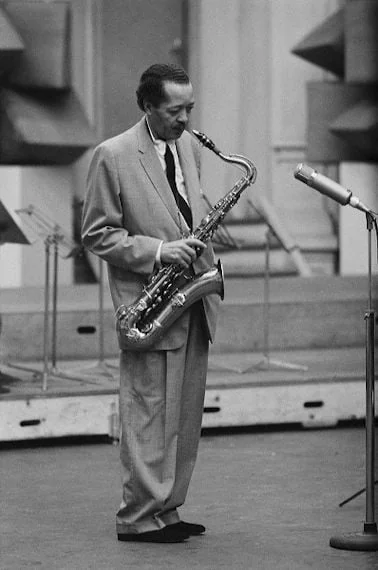
Now, more than 60 years after his death, Young is still an inspiration for many – as the so called mainstream jazz, which never seems to go out of fashion, basically comes from his influence on musicians like Dexter Gordon, Stan Getz, Miles Davis and others of that generation.
Sound quality is important and the better online Streaming services will offer superior sound quality. As always, We do encourage you to purchase Favoured albums from good online or High street record stores. Lester young's Labels - all reissued by Verve Records
Artists in upcoming issues: Ezra Collective, jaco pastorius, Phronesis.....Keep Listening!! JOIN THE CONVERSATION...jazz Music
“Comments are most welcome and appreciated”