
jazz Music – issue #2

Jazz is a music genre that originated in the African-American communities of New Orleans. Since the 1920s Jazz Age, it has been a major form of musical expression in traditional and popular music. It was developed partially from ragtime and blues. often characterized by syncopated rhythms and polyphonic ensemble playing. incorporating varying degrees of improvisation, often deliberate deviations of pitch, and the use of original timbres. As jazz spread around the world, it drew indigenous musical cultures, which gave rise to different styles. In the 1930s, arranged dance-oriented swing big bands was the prominent styles. Bebop emerged in the 1940s, representing a shift from danceable popular music. Now a more challenging music emerged which was played at faster tempos and used more chord-based improvisation. Cool jazz developed near the end of the 1940s, introducing calmer, smoother sounds and long, linear melodic lines. Free jazz is a style of avant-garde jazz . This experimental style of jazz improvisation developed in the late 1950s and early 1960s. Jazz fusion appeared in the late 1960s and early 1970s. a Fusion combining jazz improvisation with rock music’s rhythms, electric instruments, and highly amplified stage sound. In the early 1980s, a commercial form of jazz fusion called smooth jazz became successful, garnering significant radio airplay. For almost all of its history it has employed both creative approaches in varying degrees and endless permutations. despite the all these diverse styles, jazz is distinguishable as something separate from all other forms of musical expression. Especially from classical music. The jazz performer is primarily or wholly a creative, improvising composer. On the other hand in classical music the performer typically expresses and interprets someone else’s composition.
Join the Conversation!!!
we will Feature Up to 3 Albums from Artists representative of a range of the Many sub-genres. We Hope to encourage Listeners of all tastes and passions. So Get your Headphones on and Consider discussing the musical Offering and sharing your views with like-minded peers.
In Issue #2, we feature John coltrane
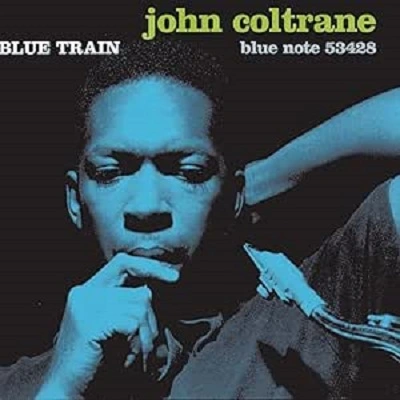
Blue Train was released through Blue Note Records in January 1958. The album is known for its blend of urgency and tenderness, mastering both hard-driving tracks and softer ballads. Its enduring quality is highlighted by its consistent acclaim and status as a pivotal work in Coltrane’s career. Coltrane wrote four of the record’s five tracks. His playing exhibits early elements of the signature style for which he later became known. Blue Train can easily be considered in and among the most important and influential entries not only of John Coltrane’s career, but of the entire genre of jazz music as well. Blue Train is widely reviewed as a masterpiece of hard bop, celebrated for John Coltrane’s powerful saxophone playing and the excellent band. The lineup of that album is phenomenal, Lee Morgan, Curtis Fuller, Kenny Drew, Paul Chambers and Philly Joe Jones.
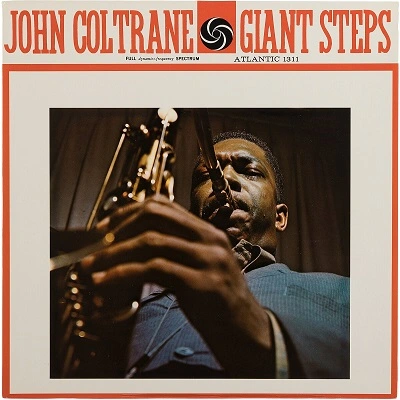
Giant Steps is widely acclaimed as a jazz masterpiece and a landmark album in modern jazz. The album is a high point of hard bop, the 1950s genre that was derived from the jazz clubs of New York City and Detroit. It marked a transition for Coltrane as he moved toward more experimental and modal styles. Notable for its virtuoso saxophone playing and its blend of complex, rapid-fire compositions and beautiful ballads. The album showcases Coltrane’s incredible talent, particularly on the title track which is known for its fiendishly difficult chord changes and is still used as a benchmark for improvisation by many musicians. It represents Coltrane’s mastery of hard bop, The album’s seven tracks, most of which are now contemporary jazz standards, are imbued with the full extent of Coltrane’s talent. Coltrane’s legacy as one of the most innovative and influential jazz musicians of all time is perhaps nowhere more evident than on Giant Steps an album that continues to inspire and captivate listeners more than sixty years after its release.
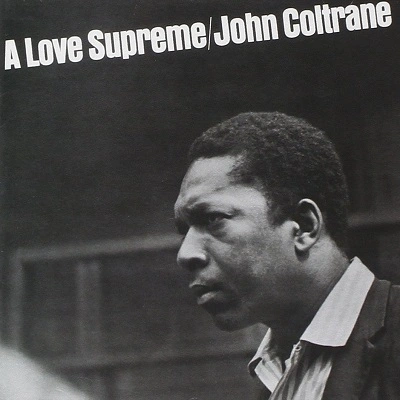
A Love Supreme is John Coltrane’s defining album. Structured as a suite and delivered in praise of God, everything about it is designed for maximum emotional impact. Casting away the physical and mental baggage of his drink and drug addiction, this was his expression of gratitude. He wrote in the liner notes ” During the year 1957, I experienced, by the grace of God, a spiritual awakening which was to lead me to a richer, fuller, more productive life.” It contains four parts—Acknowledgement, Resolution, Pursuance, and Psalm. the quartet of Coltrane, pianist McCoy Tyner, bassist Jimmy Garrison and drummer Elvin Jones collectively carved out the 33-minute, four-part suite by improvising together. Reviews of the album often highlight its spiritual and compositional depth, calling it a masterpiece, while some find its intensity or improvisational nature jarring at times.
blue train
giant Steps
A love Supreme
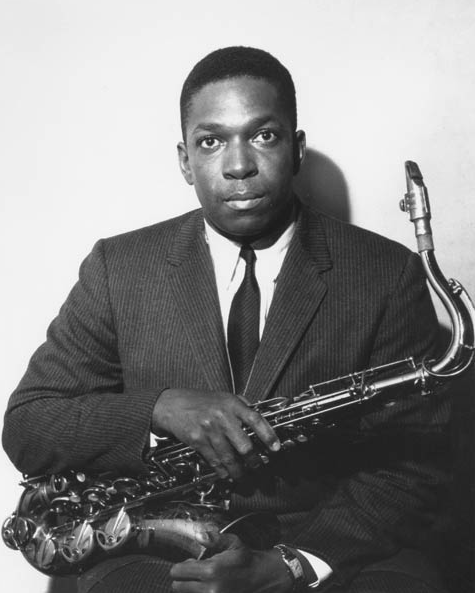
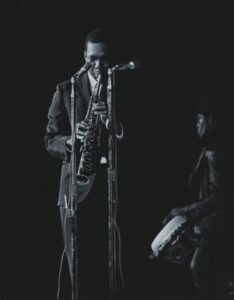
John coltrane Born and raised in North Carolina. While in high school, Coltrane played clarinet and alto horn in a community band before switching to the saxophone. After graduating from high school Coltrane moved to Philadelphia, where he studied music. For his 17th birthday, his mother bought him his first saxophone, an alto. From 1944 to 1945, Coltrane took saxophone lessons at the Ornstein School of Music with Mike Guerra. Between early to mid-1945, he had his first professional work as a musician: a “cocktail lounge trio” with piano and guitar. Coltrane enlisted in the Navy on August 6, 1945, By the time he got to Hawaii in late 1945, the Navy was downsizing. Coltrane’s musical talent was recognized and, when he joined the Melody Masters, the base swing band. After being discharged from the Navy as a seaman first class in August 1946, Coltrane returned to Philadelphia, where the city’s bustling jazz scene offered him many opportunities for both learning and playing. He enrolled at the Granoff School of Music, where he studied music theory with jazz guitarist and composer Dennis Sandole. After touring with King Kolax, he joined a band led by Jimmy Heath. Coltrane became fanatical about practicing and developing his craft, practicing “25 hours a day” according to Jimmy Heath. He was a member of groups led by Dizzy Gillespie, Earl Bostic, and Johnny Hodges in the early to mid-1950s. Coltrane joined up with the Miles Davis band (known as the “First Great Quintet”—along with Red Garland on piano, Paul Chambers on bass, and Philly Joe Jones on drums) from October 1955 to April 1957. During the latter part of 1957, Coltrane worked with Thelonious Monk.
after breaking out of a six-year battle with heroin addiction, Coltrane finally realized his Full talent and in the decade following 1957, hit an astonishing creative peak, releasing twenty-five records with Coltrane as leader. Coltrane recorded many sessions for Prestige at this time. After Coltrane gained prominence in the early 1960s, Prestige reissued a number of Coltrane’s sideman and jam sessions under his name to capitalize on his success. Prestige allowed him to Fulfil a promise that he would make an album for Blue Note, leading to Blue Train. it is often considered his best album from this period. Coltrane Re-joined Davis’s group, now a sextet, and stayed with Davis until April 1960. At the end of this period, Coltrane recorded Giant Steps (1960), his first released album as leader for Atlantic that contained only his compositions. The album’s title track is generally considered to have one of the most difficult chord progressions of any widely played jazz composition.
Coltrane’s Classic Quartet period 1962–1965: Coltrane was moving toward a more harmonically static style that allowed him to expand his improvisations rhythmically and melodically In contrast to the radicalism of his 1961 recordings at the Village Vanguard, his studio albums in the following two years were much more conservative. The Classic Quartet produced its best-selling album, A Love Supreme, in December 1964. Coltrane showed an interest in the avant-garde jazz. He championed many young free jazz musicians such as Archie Shepp, and, under his influence, Impulse! became a leading free jazz label. By late 1965, Coltrane was regularly augmenting his group with free jazz musicians. Rashied Ali joined the group as a second drummer. and This was to signal the end of the quartet. McCoy Tyner and Elvin Jones left the group and both voiced their displeasure with the music’s direction. however, they would incorporate some of the intensity of free jazz in their solo work. Later. both musicians expressed tremendous respect for Coltrane regarding his late music. After the departure of Tyner and Jones, Coltrane led a quintet. When touring, the group was known for playing long versions of their repertoire, many stretching beyond 30 minutes to an hour. In concert, solos by band members often extended beyond fifteen minutes.
Sound quality is important and the better online Streaming services will offer superior sound quality. As always, We do encourage you to purchase Favoured albums from good online or High street record stores.
Artists in upcoming issues: Charles Mingus, Bill Evans, brad Mehldau.....Keep Listening!! JOIN THE CONVERSATION...
“Comments are most welcome and appreciated”