jazz Music – issue #5
Jazz is a music genre that originated in the African-American communities of New Orleans. Since the 1920s Jazz Age, it has been a major form of musical expression in traditional and popular music. It was developed partially from ragtime and blues. often characterized by syncopated rhythms and polyphonic ensemble playing. incorporating varying degrees of improvisation, often deliberate deviations of pitch, and the use of original timbres. As jazz spread around the world, it drew indigenous musical cultures, which gave rise to different styles. In the 1930s, arranged dance-oriented swing big bands was the prominent styles. Bebop emerged in the 1940s, representing a shift from danceable popular music. Now a more challenging music emerged which was played at faster tempos and used more chord-based improvisation. Cool jazz developed near the end of the 1940s, introducing calmer, smoother sounds and long, linear melodic lines. Free jazz is a style of avant-garde jazz . This experimental style of jazz improvisation developed in the late 1950s and early 1960s. Jazz fusion appeared in the late 1960s and early 1970s. a Fusion combining jazz improvisation with rock music’s rhythms, electric instruments, and highly amplified stage sound. In the early 1980s, a commercial form of jazz fusion called smooth jazz became successful, garnering significant radio airplay. For almost all of its history it has employed both creative approaches in varying degrees and endless permutations. despite the all these diverse styles, jazz is distinguishable as something separate from all other forms of musical expression. Especially from classical music. The jazz performer is primarily or wholly a creative, improvising composer. On the other hand in classical music the performer typically expresses and interprets someone else’s composition.
Join the Conversation!!!
we will Feature Up to 3 Albums from Artists representative of a range of the Many sub-genres. We Hope to encourage Listeners of all tastes and passions. So Get your Headphones on and Consider discussing the musical Offering and sharing your views with like-minded peers.
In Issue #5, we feature ornette Coleman
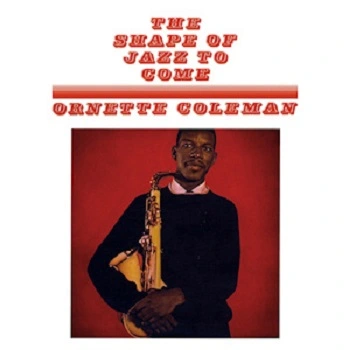
In 1959, Atlantic Records released Coleman’s third studio album, The Shape of Jazz to Come. According to music critic Steve Huey, the album “was a watershed event in the genesis of avant-garde jazz, profoundly steering its future course and throwing down a gauntlet that some still haven’t come to grips with.” The album served to redirect modern jazz away from chord changes and towards greater improvisational freedom. Key aspects of its innovation included the exclusion of a piano from his quartet to emphasize melody over harmony. Improvisations were to be based on the tunes’ melodies, moods, and emotional contours, rather than a predetermined harmonic structure. a focus on ‘Harmolodics’ his philosophy of improvisation that blends harmony, movement, and melody in an integrated way.
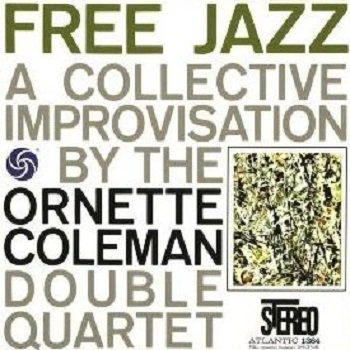
In 1960, Coleman recorded Free Jazz: A Collective Improvisation, which featured a double quartet, including Don Cherry and Freddie Hubbard on trumpet, Eric Dolphy on bass clarinet, Charlie Haden and Scott LaFaro on bass, and both Billy Higgins and ed Blackwell on drums. It was one of Coleman’s most controversial albums. In the issue of Down Beat magazine, Pete Welding gave the album five stars while John A. Tynan rated it zero stars. The two quartets play at the same time, often creating a dense, “chaotic” sound that challenged conventional notions of order in jazz. To enhance the listening experience and distinguish the groups, one quartet was placed in the left stereo channel and the other in the right stereo channel. Aside from brief, fanfare-like thematic elements that serve as transition signals, the music is a spontaneous group improvisation, relying on the musicians’ innate sensitivity and established styles rather than predetermined harmonic progressions or fixed time signatures.
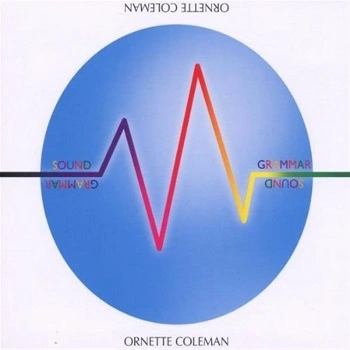
Sound Grammar is a landmark live album recorded in Ludwigshafen, Germany. It is notable for winning the 2007 Pulitzer Prize for Music. The album features a unique “acoustic-oriented quartet” consisting of Coleman (alto saxophone, trumpet, and violin), his son Denardo Coleman (drums), and two double bassists—Greg Cohen (pizzicato) and Tony Falanga (primarily arco/bowed). Critics hailed the album as a vital return for Coleman, who had not released a new record in a decade. Reviews highlighted the interlocking “dance” of the two basses and Coleman’s undiminished, “jaw-droppingly beautiful” melodic power on the alto saxophone. Ornette explains further: “Sound grammar is to music what letters are to language. Music is a language of sounds that transforms all human languages.”
the shape of jazz to Come
free jazz
sound grammar
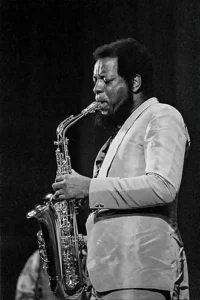
Coleman was born Randolph Denard Ornette Coleman on March 9, 1930, in Fort Worth, Texas, where he was raised. Originally inspired by Charlie Parker, he started playing alto at 14 and tenor two years later. His early experiences were in R&B bands in Texas. Eager to leave town, he accepted a job in 1949 with a New Orleans traveling show and then with touring rhythm and blues shows. After a show in Baton Rouge, Louisiana, he was assaulted and his saxophone was destroyed. Coleman subsequently switched to alto saxophone, first playing it in New Orleans after the Baton Rouge incident; the alto would remain his primary instrument for the rest of his life. He then joined the band of Pee Wee Crayton and travelled with them to Los Angeles.His search for a different sound and approach, a means of escaping traditional chord patterns and progressions, led some critics to suggest that he did not know how to play his instrument. In reality, he was studying harmony and theory zealously from books while supporting himself. He worked at various jobs in Los Angeles, including as an elevator operator, while pursuing his music career. His performances in clubs and jam sessions were often met with derision if not outright rejection and anger from his fellow musicians and critics. Coleman soldiered on, honing his sound with like-minded musicians, including trumpeter Don Cherry, drummer Billy Higgins, and bassist Charlie Haden. However, it was not until 1958 (after many unsuccessful attempts to sit in with top L.A. musicians) that Coleman had a nucleus of musicians who could play his music. He appeared as part of Paul Bley’s quintet for a short time at the Hillcrest Club and recorded two very interesting albums for Contemporary Records.
One of the most important (and controversial) innovators of the jazz avant-garde, Ornette Coleman gained both loyal followers and lifelong detractors when he seemed to burst on the scene in 1959 fully formed. Although he, and Don Cherry in his original quartet, played opening and closing melodies together, their solos dispensed altogether with chordal improvisation and harmony, instead playing quite freely off of the mood of the theme. Coleman’s tone (which purposely wavered in pitch) rattled some listeners, and his solos were emotional and followed their own logic. In time, his approach would be quite influential, and the quartet’s early records still sound advanced many decades later. In November 1959, his quartet began a controversial residency at the Five Spot jazz club in New York. This engagement alerted the jazz world toward the radical new music, and each night the audience was filled with curious musicians who alternately labelled Coleman a genius or a fraud. Coleman is best known for his work on Atlantic Records between 1959 and 1961, during which time he recorded classic albums like ‘The Shape of Jazz to Come’, ‘This is Our Music’, ‘Change of the Century’ and ‘Free Jazz’, a record that gave an entire genre its name and would profoundly impact the direction of jazz in that decade. His compositions “Lonely Woman” and “Broadway Blues” became genre standards that are cited as important early works in free jazz. In 1962, Coleman, feeling that he was worth much more money than the clubs and his label were paying him, surprised the jazz world by retiring for a short period. He took up trumpet and violin (playing the latter as if it were a drum), and in 1965, he recorded a few brilliant sets on all his instruments with a particularly strong trio featuring bassist David Izenzon and drummer Charles Moffett. Coleman signed with Blue Note after leaving Atlantic, and the albums he made—two volumes of live material recorded ‘At the “Golden Circle’, as well as the studio albums ‘The Empty Foxhole’, ‘New York is Now!’, ‘Love Call’, and the collaborative ‘New and Old Gospel’, with Jackie McLean—that were arguably even more exploratory, and surprising, than the discs that made his name. Later in the decade, Coleman had a quartet with the very complementary tenor Dewey Redman, Haden, and either Blackwell or his young son Denardo Coleman on drums. In addition, Coleman wrote some atonal and wholly composed classical works for chamber groups, and had a few reunions with Don Cherry. the early ’70s, Coleman entered the second half of his career. He formed a “double quartet” comprised of two guitars, two electric bassists, two drummers, and his own alto. The group, called “Prime Time,” featured dense, noisy, and often-witty ensembles in which all of the musicians are supposed to have an equal role, but the leader’s alto always ended up standing out. He now called his music “harmolodics” (symbolizing the equal importance of harmony, melody, and rhythm).
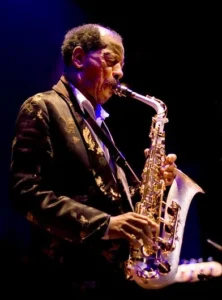
Coleman, who recorded for Verve in the ’90s, has remained true to his highly original vision throughout his career and, although not technically a virtuoso and still considered controversial, is an obvious giant of jazz. He recorded sparingly as the 21st century began, appearing on Joe Henry’s Scar in 2000 and on single tracks on Lou Reed’s Raven and Eddy Grant’s Hearts & Diamonds, both released in 2002.
Meanwhile, Coleman’s increased compositional outlook included works for wind ensembles, strings, and symphony orchestra (notably his symphony Skies of America, recorded with the London Philharmonic). Coleman’s ongoing experiments took him to Northern Africa to work with the Master Musicians of Joujouka. He was a recipient of Guggenheim Fellowships for composition, a MacArthur grant, and the prestigious Gish Prize in 2004.
In September 2006, Coleman released the album Sound Grammar. Recorded live in Ludwigshafen, Germany, in 2005, it was his first album of new material in ten years. Although Wynton Marsalis won a Pulitzer in 1997 for Blood on the Fields, an oratorio on slavery, Sound Grammar is the first jazz work to earn the award. Coleman died of cardiac arrest in Manhattan on June 11, 2015, aged 85
Sound quality is important and the better online Streaming services will offer superior sound quality. As always, We do encourage you to purchase Favoured albums from good online or High street record stores.
Artists in upcoming issues: Bill Evans, brad Mehldau.....Keep Listening!! JOIN THE CONVERSATION...jazz Music
“Comments are most welcome and appreciated”