jazz Music – issue #7
Jazz is a music genre that originated in the African-American communities of New Orleans. Since the 1920s Jazz Age, it has been a major form of musical expression in traditional and popular music. It was developed partially from ragtime and blues. often characterized by syncopated rhythms and polyphonic ensemble playing. incorporating varying degrees of improvisation, often deliberate deviations of pitch, and the use of original timbres. As jazz spread around the world, it drew indigenous musical cultures, which gave rise to different styles. In the 1930s, arranged dance-oriented swing big bands was the prominent styles. Bebop emerged in the 1940s, representing a shift from danceable popular music. Now a more challenging music emerged which was played at faster tempos and used more chord-based improvisation. Cool jazz developed near the end of the 1940s, introducing calmer, smoother sounds and long, linear melodic lines. Free jazz is a style of avant-garde jazz . This experimental style of jazz improvisation developed in the late 1950s and early 1960s. Jazz fusion appeared in the late 1960s and early 1970s. a Fusion combining jazz improvisation with rock music’s rhythms, electric instruments, and highly amplified stage sound.
In the early 1980s, a commercial form of jazz fusion called smooth jazz became successful, garnering significant radio airplay. For almost all of its history it has employed both creative approaches in varying degrees and endless permutations. despite the all these diverse styles, jazz is distinguishable as something separate from all other forms of musical expression. Especially from classical music. The jazz performer is primarily or wholly a creative, improvising composer. On the other hand in classical music the performer typically expresses and interprets someone else’s composition.
Join the Conversation!!!
we will Feature Up to 3 Albums from Artists representative of a range of the Many sub-genres. We Hope to encourage Listeners of all tastes and passions. So Get your Headphones on and Consider discussing the musical Offering and sharing your views with like-minded peers.
In Issue #7, we feature Bill evans
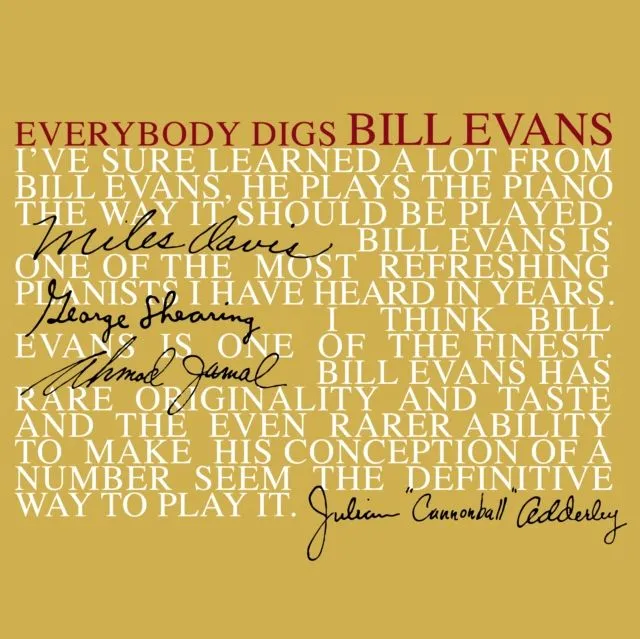
Everybody Digs Bill Evans was Evans’s second album as a leader and 30th recording project overall, completed 27 months after his first record as a leader, New Jazz Conceptions. Orrin Keepnews had wanted Evans to record a follow-up album to his debut sooner, but the self-critical pianist “resolutely refused to consider himself ready for another effort on his own” before this album. Evans is joined by bassist Sam Jones and drummer Philly Joe Jones. It is celebrated for its mix of swinging trio numbers and deeply introspective solo pieces. After its release, the album received rave reviews from DownBeat, The Jazz Review and other publications. A lot of critical attention the album has received over the years has focused on the famous solo “Peace Piece”, which has been compared to classical works.
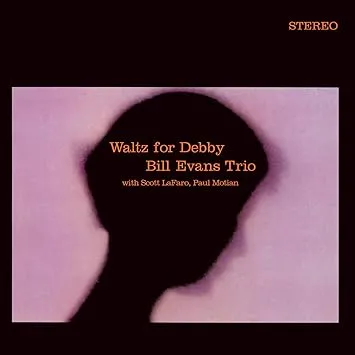
Waltz for Debby – The album is widely considered to be one of the best in the Evans canon, and the type of emotive interplay between the musicians that at some points seemed almost deconstructed has served as a model for piano trio play. The album Waltz for Debby was recorded live at the Village Vanguard in New York City on 25 June 1961. It captures the “classic” Bill Evans Trio at its peak: Line-up: Bill Evans (piano), Scott LaFaro (bass), and Paul Motian (drums). The trio redefined jazz by moving away from “piano plus accompaniment” toward a “conversational” style where all three instruments played equal roles in improvisation. Just ten days after this recording, bassist Scott LaFaro died in a car accident at age 25, making this the final recording of this legendary unit.
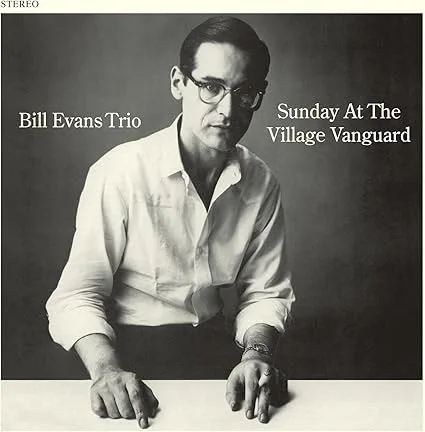
Sunday at the Village Vanguard is a live album by jazz pianist and composer Bill Evans and his Trio consisting of Evans, bassist Scott LaFaro, and drummer Paul Motian. Released in 1961, the album is routinely ranked as one of the best live jazz recordings of all time. Evans perfected his democratic vision of trio cooperation, where all members performed with perfect empathy and telepathy. The album was specifically curated by Evans and producer Orrin Keepnews to highlight LaFaro’s innovative, melodic bass playing. It is bookended by two of LaFaro’s own compositions: “Gloria’s Step” and “Jade Visions”.
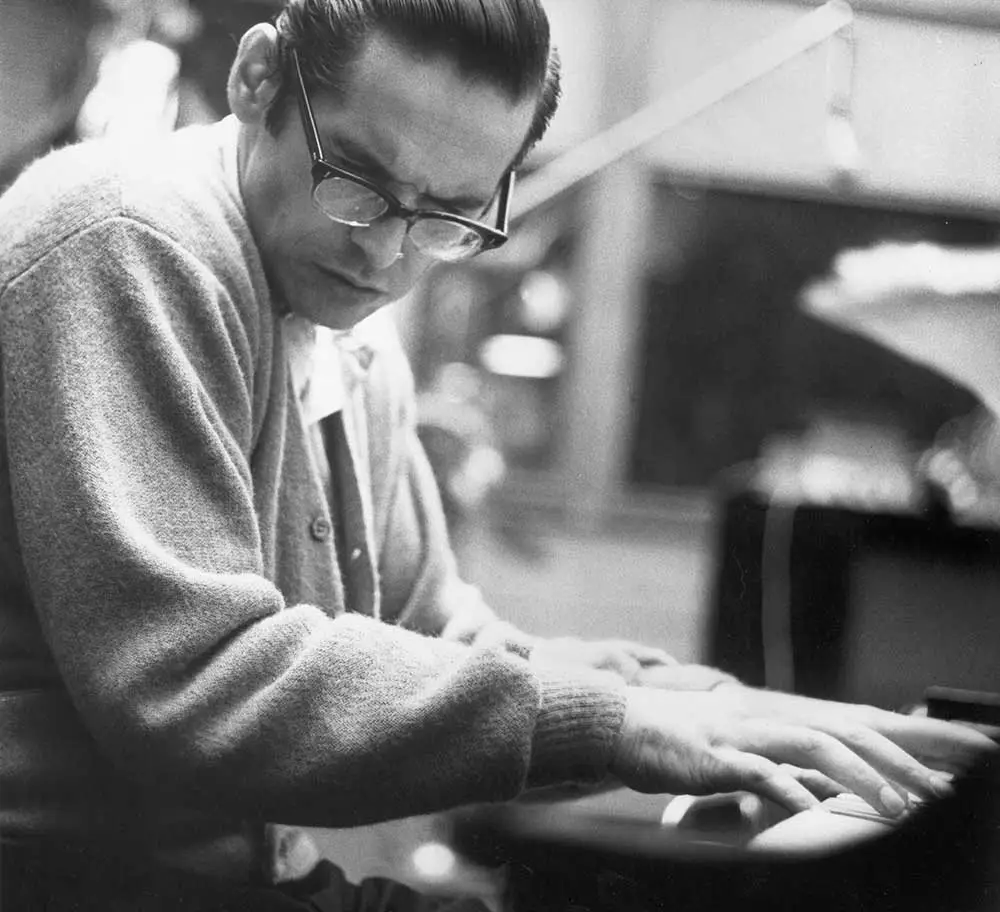
William John Evans was an American jazz pianist and composer who worked primarily as the leader of his trio. His extensive use of impressionist harmony, block chords, innovative chord voicings, and trademark rhythmically independent “singing” melodic lines continue to influence jazz pianists today. Evans grew up in North Plainfield, New Jersey, the son of Harry and Mary Evans (née Soroka). The marriage was stormy because of his father’s heavy drinking, gambling, and abuse. Due to the destructive behaviour of Harry Evans Sr. Mary Evans frequently left home with her sons to stay with her sister Justine and family in nearby Somerville. During this time, Bill began taking piano lessons with a local teacher named Helen Leland. Encouraged by his parents to learn multiple instruments, Bill started violin lessons at the age of seven, and soon added flute and piccolo to his studies. He soon dropped those instruments, but it is believed they influenced his keyboard style. Evans studied classical music at Southeastern Louisiana College and the Mannes School of Music, in New York City, where he majored in composition and received an artist diploma. During college, Evans met guitarist Mundell Lowe, and after graduating, they formed a trio with bassist Red Mitchell. In July 1950, Evans joined Herbie Fields’s band, based in Chicago. During the summer, the band did a three-month tour backing Billie Holiday.
During his three-year (1951–54) period in the Army he hosted a jazz program on the camp radio station and occasionally performed in Chicago clubs. Around 1953, Evans composed his best-known tune, “Waltz for Debby”, for his young niece. During this period, he began using recreational drugs, occasionally smoking marijuana. In 1955, he moved to New York City, where he worked with bandleader and theorist George Russell. In 1958, Evans joined Miles Davis’s sextet, which in 1959, then immersed in modal jazz, recorded Kind of Blue, the best-selling jazz album of all time. Sometime during the late 1950s, most probably before joining Davis, Evans began using heroin. Philly Joe Jones has been cited as an especially bad influence in this regard. Davis seems to have tried to help Evans kick his addiction, but failed. Evans’s first long-term romance was with a black woman named Peri Cousins (for whom “Peri’s Scope” was named), during the second half of the 1950s. The couple had problems booking hotels during Evans’s gigs, since most did not allow interracial couples. By the turn of the decade, Evans had met a waitress named Ellaine Schultz, who became his partner for 12 years. In late 1959, Evans left Davis’s band and began his career as a leader, forming a trio with bassist Scott LaFaro and drummer Paul Motian, a group now regarded as a seminal modern jazz trio.
They recorded two studio albums, Portrait in Jazz and Explorations, and two albums recorded live at New York’s Village Vanguard jazz club: Sunday at the Village Vanguard and Waltz for Debby. During this time, Helen Keane, the music producer, began to have an important influence, as she significantly helped maintain Evans’s career despite his self-destructive lifestyle, and the two developed a strong friendship. In summer 1963, Evans and Schultz left their flat in New York and settled in his parents’ home in Florida, where, it seems, they quit the habit for some time. Even though never legally married, Bill and Ellaine were in all other respects husband and wife. In 1966, he met bassist Eddie Gómez, with whom he worked for the next 11 years. Gómez sparked new developments in Evans’s trio conception. One of the most significant releases during this period is Bill Evans at the Montreux Jazz Festival (1968), which won him his second Grammy award. It has remained a critical favourite, and is one of two albums Evans made with drummer Jack DeJohnette. Between May and June 1971, Evans recorded The Bill Evans Album, which won two Grammy awards. This all-originals album also featured alternation between acoustic and electric piano. Evans collaborated with the singer Tony Bennett on two critically acclaimed albums. The two respected each other’s talent, and performed together for about two years. Although Evans was using cocaine regularly during this period, he was reportedly sober when recording the albums with Bennett. In 1973, while working in Redondo Beach, California, Evans met and fell in love with Nenette Zazzara, despite his long-term relationship with Schultz. When Evans broke the news to Schultz she pretended to understand, but then died by suicide, throwing herself under a subway train.
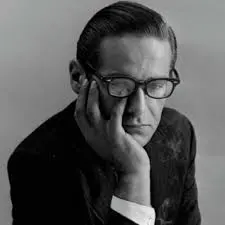
In 1975, Morell was replaced by drummer Eliot Zigmund. Several collaborations followed, and the trio did not record an album until 1977. Both I Will Say Goodbye (Evans’s last album for Fantasy Records) and You Must Believe in Spring (for Warner Bros.) highlighted changes that became significant in the last stage of Evans’s life. Greater emphasis was placed on group improvisation and interaction, and new harmonic experiments were attempted. At the beginning of a several-week tour of the trio through the Pacific Northwest in the spring of 1979, Evans learned that his brother, Harry, who had been diagnosed with schizophrenia, had died by suicide at age 52. This news shocked him deeply, and some of the concerts were cancelled. His friends and relatives believe Harry’s death precipitated his own death the next year. In August 1979, Evans recorded his last studio album, We Will Meet Again, featuring a composition of the same name written for his brother. The album won a Grammy award posthumously in 1981, along with I Will Say Goodbye. On September 15, 1980, Evans, who had been in bed for several days with stomach pains at his home in Fort Lee, was accompanied by Joe LaBarbera and Laurie Verchomin to the Mount Sinai Hospital in New York City, where he died that afternoon. The cause of death was a combination of peptic ulcer, cirrhosis, bronchial pneumonia, and untreated hepatitis. Evans’s friend Gene Lees called Evans’s struggle with drugs “the longest suicide in history.”
Sound quality is important and the better online Streaming services will offer superior sound quality. As always, We do encourage you to purchase Favoured albums from good online or High street record stores. Bill evans Labels - riverside Records
Artists in upcoming issues: Charlie Parker, brad Mehldau.....Keep Listening!! JOIN THE CONVERSATION...jazz Music
“Comments are most welcome and appreciated”