jazz Music – issue #8
Jazz is a music genre that originated in the African-American communities of New Orleans. Since the 1920s Jazz Age, it has been a major form of musical expression in traditional and popular music. It was developed partially from ragtime and blues. often characterized by syncopated rhythms and polyphonic ensemble playing. incorporating varying degrees of improvisation, often deliberate deviations of pitch, and the use of original timbres. As jazz spread around the world, it drew indigenous musical cultures, which gave rise to different styles. In the 1930s, arranged dance-oriented swing big bands was the prominent styles. Bebop emerged in the 1940s, representing a shift from danceable popular music. Now a more challenging music emerged which was played at faster tempos and used more chord-based improvisation. Cool jazz developed near the end of the 1940s, introducing calmer, smoother sounds and long, linear melodic lines. Free jazz is a style of avant-garde jazz . This experimental style of jazz improvisation developed in the late 1950s and early 1960s. Jazz fusion appeared in the late 1960s and early 1970s. a Fusion combining jazz improvisation with rock music’s rhythms, electric instruments, and highly amplified stage sound.
In the early 1980s, a commercial form of jazz fusion called smooth jazz became successful, garnering significant radio airplay. For almost all of its history it has employed both creative approaches in varying degrees and endless permutations. despite the all these diverse styles, jazz is distinguishable as something separate from all other forms of musical expression. Especially from classical music. The jazz performer is primarily or wholly a creative, improvising composer. On the other hand in classical music the performer typically expresses and interprets someone else’s composition.
Join the Conversation!!!
we will Feature Up to 3 Albums from Artists representative of a range of the Many sub-genres. We Hope to encourage Listeners of all tastes and passions. So Get your Headphones on and Consider discussing the musical Offering and sharing your views with like-minded peers.
In Issue #8, we feature charlie parker
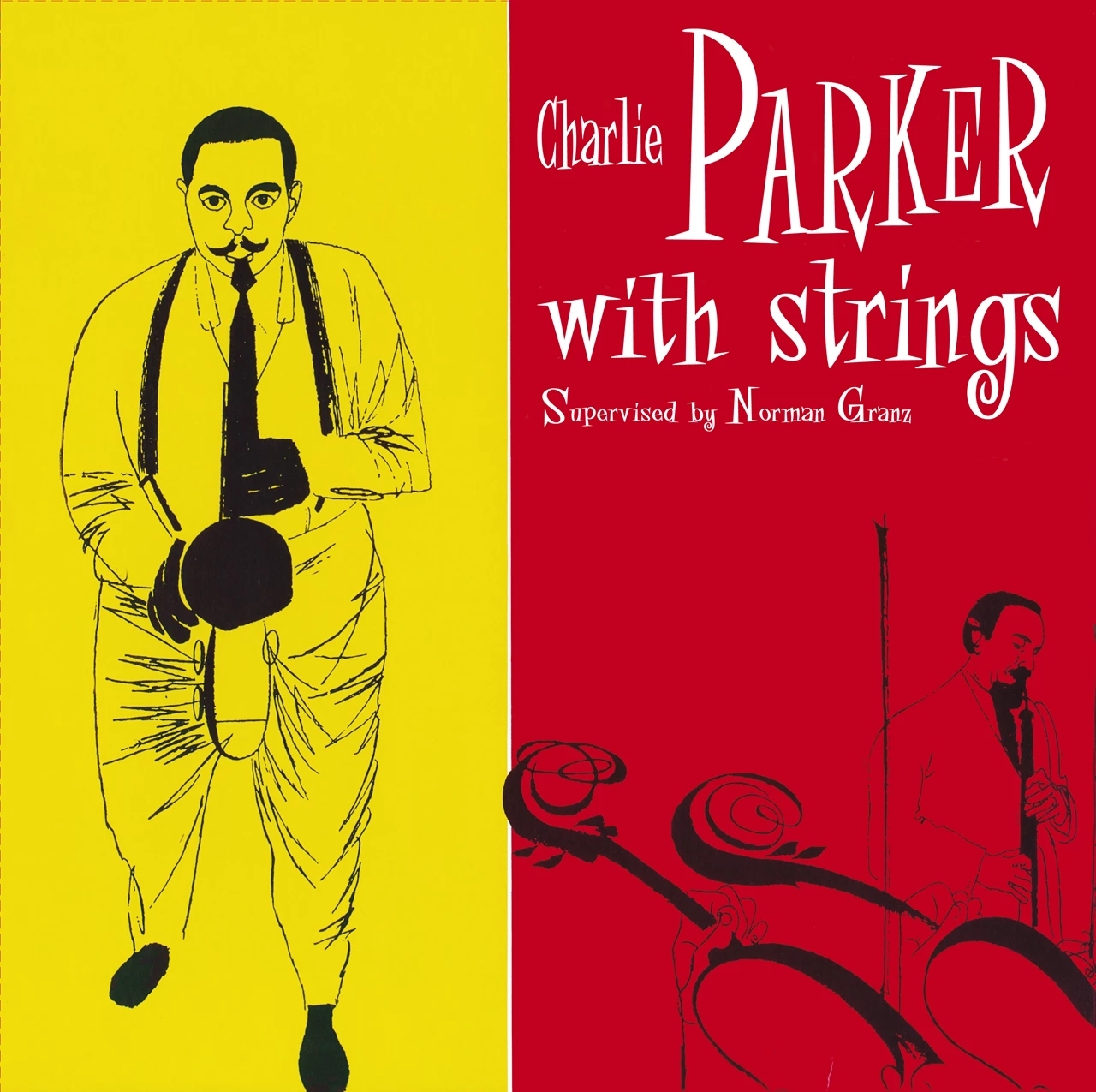
Charlie Parker with Strings – Volume 1 refers to a series of legendary recording sessions and subsequent albums (most notably the 1955 compilation) that featured the pioneering bebop alto saxophonist performing jazz standards accompanied by a small classical string section. These recordings were a significant departure from Parker’s typical small-group bebop quintets and represented the realisation of his long-held desire to blend jazz improvisation with “legitimate” orchestral arrangements. While some “purists” at the time viewed the project as a commercial “sell-out,” it is now widely regarded as a masterpiece that showcases Parker’s lyrical, melodic genius. Notable Tracks”Just Friends”: Frequently cited by Parker as his favourite of his own recordings. “April in Paris”: One of the most famous tracks from the sessions, later used as an album title for various reissues. “Summertime”: Praised for Parker’s masterful tone and melodic embellishments over the string backdrop.
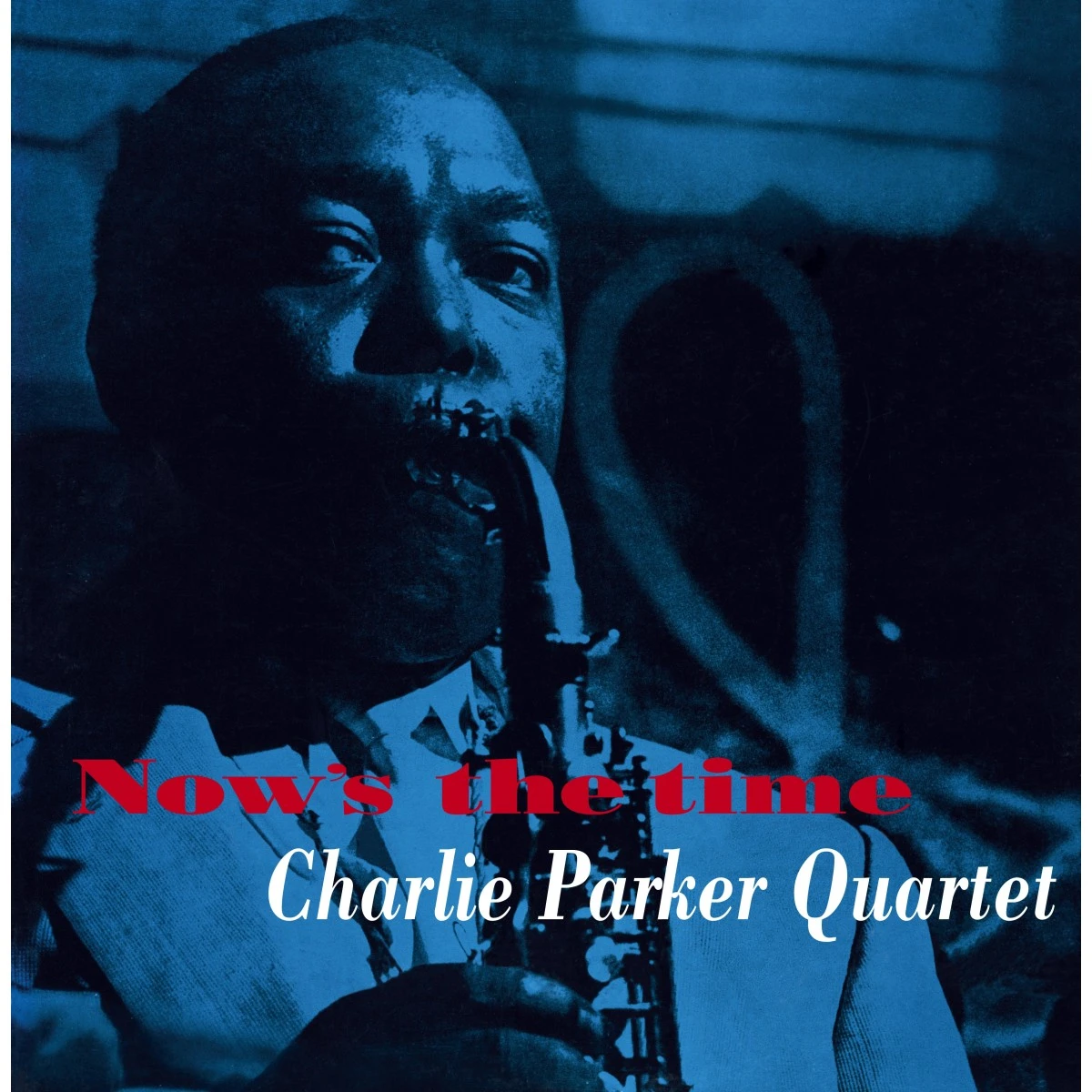
Now’s The Time: the Quartet of Charlie Parker, is a studio album recorded in 1952 and 1953 and released posthumously in 1956 by Verve (also released as The Genius of Charlie Parker, Vol. 3). The album boasts some of Parker’s purest recordings and strongest playing, featuring two different quartets (December 1952 Session: Charlie Parker (alto sax), Hank Jones (piano), Teddy Kotick (bass), and Max Roach (drums). July 1953 Session: Al Haig replaces Jones on piano and Percy Heath replaces Kotick on bass..) His lyrical and fluid improvisations on cuts like “The Song Is You” and “Laird Baird” are on full display, prime examples of his unmatched genius. Parker’s musical genius is complemented by the incredible talent of his bandmates who contribute to the infectious rhythm and captivating harmonies throughout the album. AllMusic critic Robert Taylor praised the album, writing, “Now’s the Time captures Charlie Parker during one of his peak recording periods… There are numerous outtakes, which offer a fascinating analysis of Parker’s improvisations”. He highlighted the “excellent recording quality” of the session Now’s The Time is a timeless masterpiece that continues to inspire and amaze jazz enthusiasts to this day.
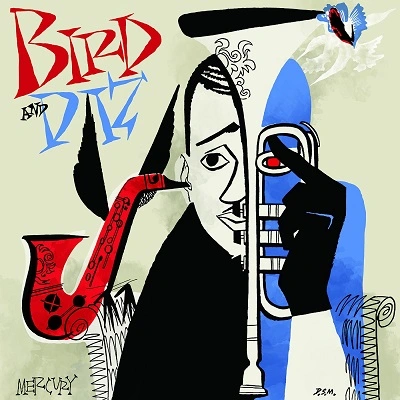
Bird and Diz is a studio album by jazz saxophonist Charlie Parker and trumpeter Dizzy Gillespie. It was recorded primarily on June 6, 1950, in New York City. The album contains compositions performed with the standard bebop instrumentation of saxophone, trumpet, piano, bass, and drums. It was their final studio recording together and Parker’s only studio encounter with pianist Thelonious Monk. The quintet featured Charlie Parker (alto sax), Dizzy Gillespie (trumpet), Thelonious Monk (piano), Curly Russell (bass), and Buddy Rich (drums). Key tracks included essential bebop numbers like “Bloomdido”, “Mohawk”, “Leap Frog”, and “Relaxin’ with Lee”. Often noted for its top-tier production quality and the unique, albeit sometimes debated, inclusion of drummer Buddy Rich, considered more as a big band drummer at the time. Many believed him ill-suited to bop, while others argue his intense style challenged the soloists effectively. Parker and Gillespie are lauded for their technical prowess and playful interplay, while Thelonious Monk provides unique, angular piano contributions, though he is somewhat buried in the mix.
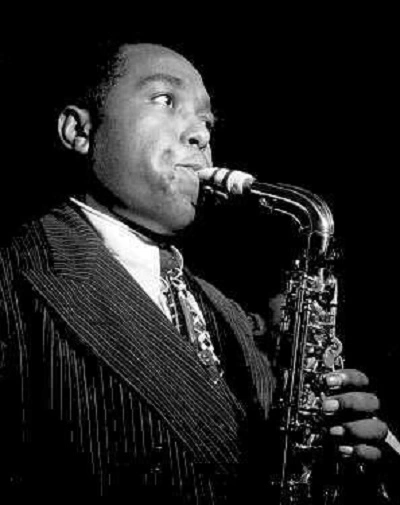
Charles Parker Jr. (August 29, 1920 – March 12, 1955), nicknamed “Bird” or “Yardbird”, was an American jazz saxophonist, bandleader, and composer. Parker was a highly influential soloist and leading figure in the development of bebop, a form of jazz characterized by fast tempos, virtuosic technique, and advanced harmonies. He was a virtuoso and introduced revolutionary rhythmic and harmonic ideas into jazz, including rapid passing chords, new variants of altered chords, and chord substitutions. Parker primarily played the alto saxophone. Parker was an icon for the hipster subculture and later the Beat Generation, personifying the jazz musician as an uncompromising artist and intellectual rather than just an entertainer.
Charles Parker Jr. was born in 1920, in Kansas City to Charles Parker Sr. and Adelaide “Addie” Bailey, who was of mixed Choctaw and African-American background. His father, a Pullman waiter and chef on the railways, was often required to travel for work, but provided some musical influence because he was a pianist, dancer, and singer on the Theatre Owners Booking Association circuit. Parker first went to a Catholic school and sang in its choir, but his parents separated in 1930 due to his father’s alcoholism and the effects of the Great Depression. Parker began playing the saxophone at age 11, and at age 14, he joined the Lincoln High School band, where he studied under bandmaster Alonzo Lewis. His mother purchased him a new alto saxophone around the same time. Parker’s biggest influence in his early teens was a young trombone player named Robert Simpson, who taught him the basics of improvisation. Parker withdrew from high school in December 1935, joined the local musicians’ union, and decided to pursue his musical career full-time. Parker began to play with local bands in jazz clubs around Kansas City and often ambitiously took part in jam sessions with more experienced musicians. In early-1936, at one such jam session with the Count Basie Orchestra, he lost track of the chord changes while improvising. This prompted Jo Jones to contemptuously remove a cymbal from his drum kit and throw it at his feet as a signal to leave the stage. Parker vowed to practice harder. He mastered improvisation and, according to his comments in an interview with Paul Desmond, spent the next three to four years practicing up to 15 hours a day.Parker proposed to Rebecca Ruffin, his girlfriend four years his senior, and the two married on July 25, 1936. They had two children before divorcing in 1939, in large part due to his growing drug addiction. In 1939, Parker moved to New York City to pursue his musical career but worked part-time jobs to make a living. Among the more musically significant of these was as a dishwasher, for nine dollars a week, at Jimmie’s Chicken Shack, where pianist Art Tatum performed. Struggling with poverty, Parker went to the home of fellow alto saxophone player Buster Smith to ask for help. Smith allowed Parker to live in his apartment for six months and gave him gigs in his band. Parker’s playing at the gigs impressed several New York musicians, including pianist and bandleader Earl Hines.
While living in New York, Parker achieved his musical breakthrough, developing a new improvisational vocabulary which later came to be known as “bebop”.Due to the strike of 1942–1944 by the American Federation of Musicians, during which time few professional recordings were made much of bebop’s critical early development was not captured for posterity due to the ban, and the new genre gained limited radio exposure as a result. Parker’s time with Hines’s band and his travel between New York and Chicago enabled him to model his style on, according to his own words, a “combination of the Midwestern beat and the fast New York tempos”. Parker began writing compositions thanks to his growing friendship with Gillespie, who began notating Parker’s solos as melodies. Among these early Parker compositions were “Ko-Ko”, “Anthropology”, and “Confirmation”. Parker left Hines’s band and formed a small group with Gillespie, pianist Al Haig, bassist Curley Russell, and drummer Stan Levey. The group stood out from its contemporaries, as it was racially integrated and lacked a guitarist for rhythmic support. This new format freed soloists from harmonic and rhythmic restrictions, and in late 1944, the group secured a gig at the Three Deuces club in New York. The group’s name recognition spread along 52nd Street, and its style was dubbed “bebop” for the first time. Musicians at other clubs came to hear bebop and reacted unfavourably to it because, according to Charles Mingus, they saw it as a threat to their style of jazz. In December 1945, the Parker band travelled to an unsuccessful engagement at the Billy Berg’s club in Los Angeles. Most of the group returned to New York, but Parker remained in California, cashing in his return ticket to buy heroin.
After he dedicated one of his compositions to local drug dealer “Moose the Mooche” at a studio session in the spring, the dealer was arrested, and without access to heroin, Parker turned to alcohol addiction. He suffered a physical and mental breakdown after a studio session in July 1946 for Dial Records, and was briefly jailed after setting the bedsheets of his Los Angeles hotel room on fire and then running naked through the lobby while intoxicated, after which he was committed to the Camarillo State Mental Hospital for six months. When Parker was discharged from the hospital, he was healthy and free from his drug habit. Upon returning to New York in 1947, Parker resumed his heroin usage. He recorded dozens of sides for the Savoy and Dial labels, which remain some of the high points of his recorded output. Many of these were with his new quintet, including Davis and Roach. Following the establishment of a regular quintet, Parker signed for Mercury Records with Jazz at the Philharmonic promoter Norman Granz as his producer. The partnership enabled Parker to work with musicians from other genres and to appear in concerts at Carnegie Hall as part of the Jazz at the Philharmonic series. Further, Granz was able to fulfil a longstanding desire of Parker’s to perform with a string section. He was a keen student of classical music, and contemporaries reported he was most interested in the music and formal innovations of Igor Stravinsky and longed to engage in a project akin to what later became known as third stream, a new kind of music, incorporating both jazz and classical elements as opposed to merely incorporating a string section into performance of jazz standards. Parker’s regular group maintained popular success with a European tour in 1950 and live gigs at New York nightclubs continued, leading to live albums One Night in Birdland (with Fats Navarro and Powell) and Summit Meeting at Birdland (with Gillespie and Powell). But Parker became frustrated and disillusioned that, due to racial discrimination, he was reaching the limits of what he could achieve in his career. Since 1950, Parker had been living in New York City with his common-law wife, Chan Berg, the mother of his son, Baird and his daughter, Pree. He considered Chan his wife, although he never married her; nor did he divorce his previous wife, Doris, whom he had married in 1948. The death of Parker’s daughter Pree from pneumonia in 1954, aged 3, devastated him and, after being fired from Birdland in September of that year, he attempted to commit suicide. He was hospitalized and made a partial recovery by early 1955 before his health declined again in March. Parker’s last gig on March 4 at Birdland ended when Powell refused to play in his group, and the performance spiralled into an argument among the musicians. Parker became drunk and, a few days later, visited the suite of Baroness Pannonica at the Stanhope Hotel in New York City in ill health. He refused to go to the hospital and died on March 12, 1955. The official causes of death were lobar pneumonia and a bleeding ulcer, but Parker also had advanced cirrhosis and had suffered a heart attack and a seizure. The coroner who performed his autopsy mistakenly estimated Parker’s 34-year-old body to be between 50 and 60 years of age. Recordings of Charlie Parker were inducted into the Grammy Hall of Fame, which is a special Grammy Award established in 1973 to honour recordings that are at least twenty-five years old and that have “qualitative or historical significance”.
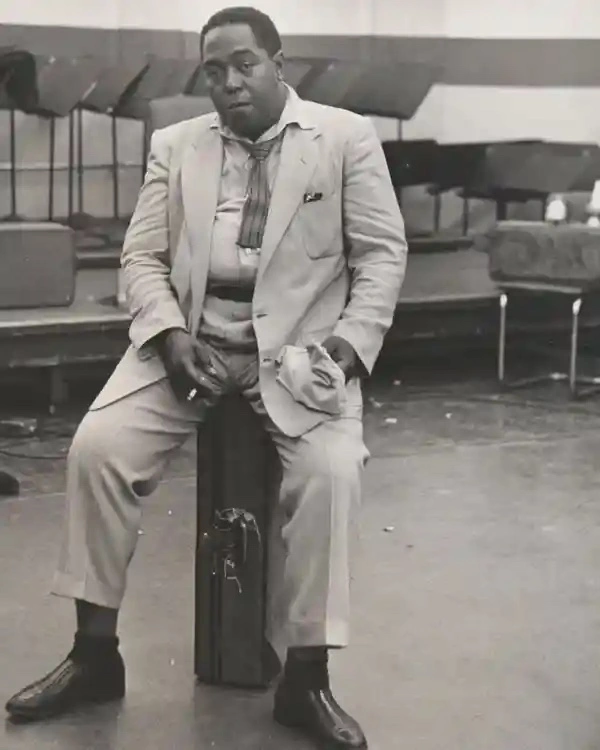
Parker’s style of composition involved writing original melodies over existing jazz forms and standards, a practice known as writing a contrafact, which is still common in jazz today. Examples include “Ornithology” (which borrows the chord progression of jazz standard “How High the Moon” and “Moose The Mooche” (one of many Parker compositions based on the chord progression of “I Got Rhythm”). The practice was not uncommon prior to bebop, but it became a signature of the movement as artists began to move away from arranging popular standards and toward composing their own material. Perhaps Parker’s most well-known contrafact is “Ko-Ko”, which is based on the chord changes of the popular bebop tune “Cherokee”, written by Ray Noble. Parker contributed greatly to the modern jazz solo, one in which triplets and pick-up notes were used in unorthodox ways to lead into chord tones, affording the soloist more freedom to use passing tones, which soloists previously avoided. It’s the difference between walking a straight line and dancing around it—you still end up at the same destination, but the journey is much more sophisticated.
Sound quality is important and the better online Streaming services will offer superior sound quality. As always, We do encourage you to purchase Favoured albums from good online or High street record stores. Charlie Parker's Labels - Verve / Clef Records
Artists in upcoming issues: brad Mehldau, Dizzy Gillespie, jaco pastorius.....Keep Listening!! JOIN THE CONVERSATION...jazz Music
“Comments are most welcome and appreciated”