jazz Music – issue #9
Jazz is a music genre that originated in the African-American communities of New Orleans. Since the 1920s Jazz Age, it has been a major form of musical expression in traditional and popular music. It was developed partially from ragtime and blues. often characterized by syncopated rhythms and polyphonic ensemble playing. incorporating varying degrees of improvisation, often deliberate deviations of pitch, and the use of original timbres. As jazz spread around the world, it drew indigenous musical cultures, which gave rise to different styles. In the 1930s, arranged dance-oriented swing big bands was the prominent styles. Bebop emerged in the 1940s, representing a shift from danceable popular music. Now a more challenging music emerged which was played at faster tempos and used more chord-based improvisation. Cool jazz developed near the end of the 1940s, introducing calmer, smoother sounds and long, linear melodic lines. Free jazz is a style of avant-garde jazz . This experimental style of jazz improvisation developed in the late 1950s and early 1960s. Jazz fusion appeared in the late 1960s and early 1970s. a Fusion combining jazz improvisation with rock music’s rhythms, electric instruments, and highly amplified stage sound.
In the early 1980s, a commercial form of jazz fusion called smooth jazz became successful, garnering significant radio airplay. For almost all of its history it has employed both creative approaches in varying degrees and endless permutations. despite the all these diverse styles, jazz is distinguishable as something separate from all other forms of musical expression. Especially from classical music. The jazz performer is primarily or wholly a creative, improvising composer. On the other hand in classical music the performer typically expresses and interprets someone else’s composition.
Join the Conversation!!!
we will Feature Up to 3 Albums from Artists representative of a range of the Many sub-genres. We Hope to encourage Listeners of all tastes and passions. So Get your Headphones on and Consider discussing the musical Offering and sharing your views with like-minded peers.
In Issue #9, we feature Brad Mehldau
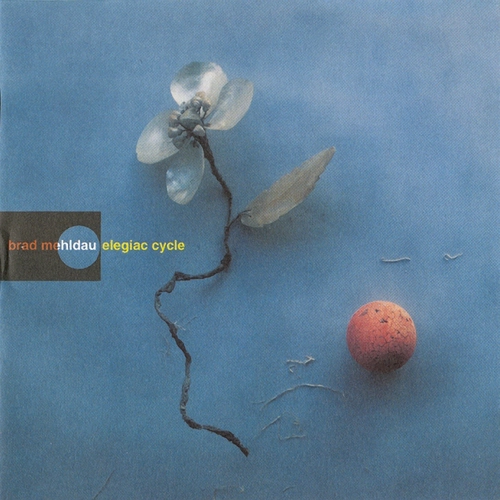
Elegiac Cycle is a landmark solo piano album, released in 1999. It marked a significant departure from his established trio format, showcasing a through-composed suite of nine original pieces that blend jazz improvisation with the structures of 19th-century German Romanticism. The album is a “cycle” inspired by the works of James Joyce and the poetry of Rainer Maria Rilke. The opening theme from “Bard” recurs throughout the record and returns in “The Bard Returns,” a technique used by classical composers. The title references Rilke’s Duino Elegies. Mehldau views the “elegy” as a healing acknowledgment of mortality. Critics noted the album’s strong contrapuntal nature, drawing more from Bach, Brahms, and Chopin than traditional bop. The album was considered a “bold step” for a young artist. It is now regarded as a pivotal recording that helped redefine modern jazz solo piano. While producing a work of great beauty and haunting melody. This is not music that swings, but music that once again extends the boundaries of what we have come to think of as jazz. He states: “Music doesn’t just represent time, it moves through time, and the listener experiences that passing. … The process of improvisation is a kind of affirmation of mortality: Even in the moment you’re creating something, it’s already gone forever, and that’s precisely its strength. Improvisation would seem to solve the problem of death by constantly dying as it’s being born. It scoffs at loss, and revels in its own transience.”
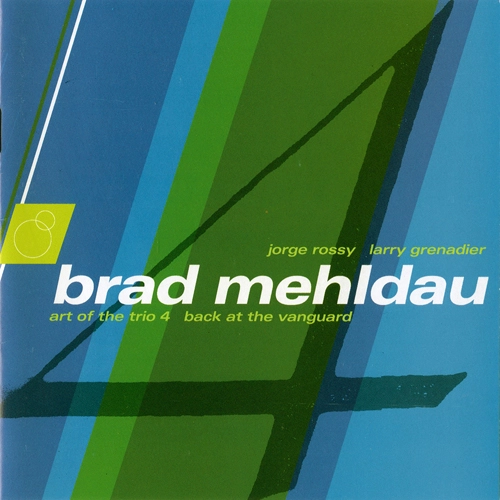
Art of the Trio 4: Back at the Vanguard is a live jazz released on 28 September 1999. Recorded over six nights at the legendary Village Vanguard in New York City, it captures the “telepathic rapport” of Mehldau’s first long-standing trio featuring bassist Larry Grenadier and drummer Jorge Rossy. The record is noted for its high energy, highlighting the trio’s ability to “turn songs inside out” through complex yet accessible variations. A significant feature of the physical album is Mehldau’s liner notes, where he famously pushes back against constant comparisons to Bill Evans, arguing for a more nuanced understanding of his own style. The album consists of an eclectic mix of jazz standards and pop tunes. The group also reprises and expands on two tunes that first appeared on Vol. 3 of this series, “Sehnsucht” and “Exit Music (For A Film).” Through it all Mehldau constantly toys with familiar melodies, tinkers with meter and tempo and amazes with a steady stream of inspired improvisations.
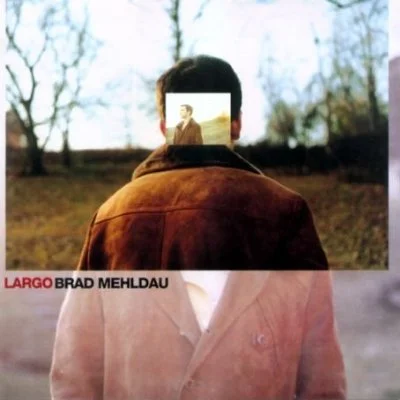
Largo is an album released on the Warner Bros. label in 2002. The album is a departure from Mehldau’s earlier straight-ahead jazz albums, instead featuring a more experimental pop-influenced sound and extensive use of session musicians. The album blends jazz improvisation with chamber-classical arrangements and grooves influenced by hip-hop and drum ‘n’ bass. It is particularly noted for its distinctive covers of modern rock and pop songs: “Paranoid Android”: A complex, 9-minute interpretation of the Radiohead classic. “Dear Prudence”: A lo-fi take on the Beatles track featuring thudding, Ringo-esque drums. Key original tracks include the melancholic opener “When It Rains” and the groove-heavy “Dusty McNugget” While his regular trio members Larry Grenadier and Jorge Rossy appear, the record also features rock-leaning session musicians like drummer Jim Keltner and bassist Justin Meldal-Johnsen. The album was produced by Jon Brion, known for his work with pop/alternative artists like Fiona Apple and Elliott Smith. Mehldau’s jazz improvisation and Brion’s creative, rich production. The album is wide-ranging in texture and big in scale: Woodwind or brass ensembles are on several tracks, and one feature of the record is a heavy emphasis on powerful drums – Matt Chamberlain and veteran rock master Jim Keltner are the core rhythm on most of the album, often simultaneously playing, like on the cover of ‘Paranoid Android,’ whose middle section becomes a monster rock affair.
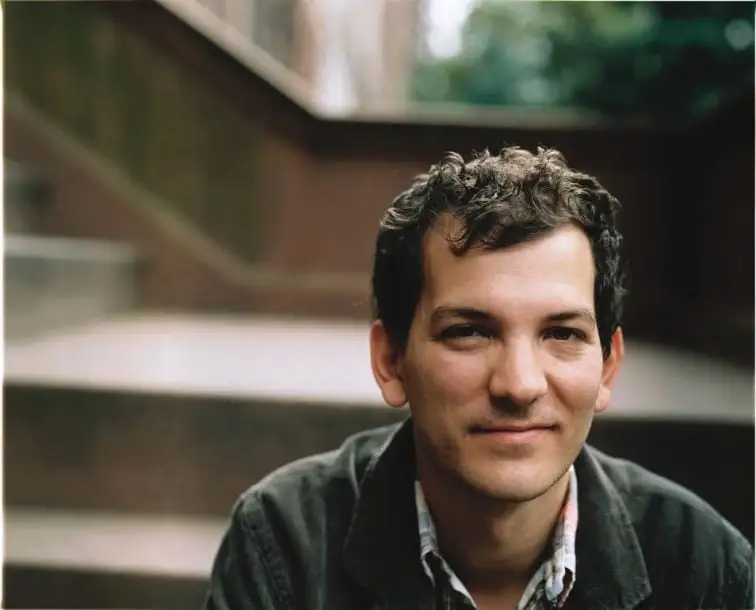
Bradford Alexander Mehldau is an American jazz pianist, composer, and arranger. He was a member of saxophonist Joshua Redman’s quartet in the mid-1990s, and has led his own trio since the early 1990s. His first long-term trio featured bassist Larry Grenadier and drummer Jorge Rossy; in 2005 Jeff Ballard replaced Rossy. Since the early 2000s, Mehldau has experimented with other musical formats in addition to trio and solo piano. ‘Largo‘, released in 2002, contains electronics and input from rock and classical musicians. “Few performers dissolve into their music as completely as Brad Mehldau. To watch him live is to witness a man disappearing into his own interior, as though the piano were a threshold. In Mehldau’s hands, the piano becomes both confessional and sanctuary; an instrument for meeting the unmet parts of the self. His gift lies in making his interior feel universal, turning inwardness into a kind of communion.”
– Grace Easton, The Line of Best Fit
Mehldau was born in Jacksonville, Florida. His adoptive family was father Craig Mehldau, an ophthalmologist, mother Annette, a homemaker, and sister Leigh Anne, who became a social worker. The family moved from Roswell, Georgia, to Bedford, New Hampshire, in 1975. There was always a piano in the house during Mehldau’s childhood, and he initially listened to pop and rock music on the radio. His family moved to West Hartford, Connecticut, and by the age of 14 he was listening more to jazz, including recordings by saxophonist John Coltrane and pianist Oscar Peterson. Keith Jarrett’s Bremen/Lausanne helped Mehldau realize the potential of the piano as an instrument. While at high school, he began transcribing jazz solos from recordings, to improve his listening skills and gain insights into improvisation. From the age of 15 until he graduated from high school, he had a weekly gig at a local club, and performed for weddings and other parties. After graduating, Mehldau moved to New York City in 1988 to study jazz and contemporary music at The New School on a partial scholarship. He studied under pianists Fred Hersch, Junior Mance and Kenny Werner, and drummer Jimmy Cobb. In 1989, Mehldau was a member of saxophonist Christopher Hollyday’s band that toured for several months; as a result of playing so often with one group, Mehldau was able to assimilate the music of Wynton Kelly and McCoy Tyner, his two principal influences on piano up to that point, and began to develop his own sound. Before the age of 20, Mehldau also had gigs in Cobb’s band, along with fellow student Peter Bernstein on guitar. Mehldau’s first recording was for Hollyday’s The Natural Moment in 1991; his first tour of Europe was also with the saxophonist during the same year. Mehldau’s interest in classical music returned when he was in his early twenties, and spurred him into developing his left-hand playing technique. He led his own trio from at least 1992, when he played at New York’s Village Gate. Mehldau also played as sideman with other musicians around this time. His performances with saxophonist Perico Sambeat included a tour of Europe early in 1993, and Mehldau’s first released recordings as co-leader, from a May concert in Barcelona.
Mehldau toured for 18 months with saxophonist Joshua Redman. The association with Redman began in 1993, but they had played together for a short period the previous year. Redman and his band attracted attention, with their 1994 album Moodswing also aiding Mehldau’s profile. They also played together for the soundtrack to the film Vanya on 42nd Street (1994), for which Redman wrote the music. Mehldau graduated from The New School in 1993. He formed his first long-term trio in 1994, with bassist Larry Grenadier and drummer Jorge Rossy. In the following year, Mehldau recorded Introducing Brad Mehldau for Warner Bros., his first album as sole leader. It was well received, with The Penguin Guide to Jazz commenting that “it’s as if he were aware of jazz tradition but entirely unencumbered by it.” His second album for Warner Bros., The Art of the Trio Volume One, was recorded in 1996 and was widely praised by critics. By the mid- to late 1990s, Mehldau was regarded by some as one of the leading jazz musicians of the day. his main influences, which previously had often been given as Evans. Another, non-musical, similarity with Evans that was commented on was Mehldau’s struggle with an addiction to heroin during the 1990s, up to 1998. Around 1996 he moved to Los Angeles, to try to overcome his problem with drugs. Mehldau became established on the international jazz festival scene in the mid- to late 1990s.
Also in 1998, the pianist reunited with Redman. Looking back on his earlier career, Mehldau commented in 2005 that “The trio created my identity”. In the three or four years up to the end of 2001, his trio had toured for the majority of each year. While trio performances and recordings continued, Mehldau began in the early to mid-2000s to broaden the musical settings in which he appeared as leader. An early instance was his 2002 album Largo, which was Mehldau’s first departure from piano solo or trio albums. A solo piano recording from a 2003 concert, Live in Tokyo, showed greater lyricism appearing in Mehldau’s playing and was released in 2004 as his first album for Nonesuch Records. In the summer of 2004, he toured Europe for three weeks with a band that included guitarist Kurt Rosenwinkel and Redman. That autumn, Mehldau formed a quartet, with Mark Turner on saxophones, Grenadier on bass, and Jeff Ballard on drums.Mehldau’s trio returned to the studio for the first time in several years in 2008 and again in 2011, resulting in Ode, an album of the pianist’s originals, and Where Do You Start, an album of covers. In 2013 Mehldau began touring with drummer Mark Guiliana as a synthesizer-oriented duo that was given the portmanteau name “Mehliana”. Another trio recording with Grenadier and Ballard, Blues and Ballads, was recorded in 2012 and 2014 and was released in 2016. Also in 2016, Mehldau and Guiliana formed a trio with guitarist John Scofield; they played in the United States before touring Europe. Mehldau’s interest in classical music continued with commissions by several concert halls to write pieces that were inspired by Johann Sebastian Bach compositions; he played these and the Bach originals in solo performances during 2015. They were the origins of his solo piano album After Bach, which was recorded in 2017 and released the following year. This release was followed by Seymour Reads the Constitution! another trio album with Grenadier and Ballard, later that year. His next album, released in 2019, was Finding Gabriel, which “comprises nine thematically related songs by Mehldau and features performances by him on piano, synthesizers, percussion, and Fender Rhodes, as well as vocal.” Mehldau recorded two solo piano albums in 2020. Jacob’s Ladder, an album that explored the progressive rock musical influences of Mehldau’s youth, was recorded in 2020 and 2021 and released in 2022. He later commented that the album was made when he was going through “a breakdown. It’s all there – the descent, the way through and the way out.” In 2023, he published a memoir titled Formation: Building a Personal Canon, Part I, which details his early life and musical development in New York. Ride into the Sun, an album with compositions by or inspired by singer-songwriter Elliott Smith, and featuring a chamber orchestra and various guest performers, was recorded in 2025 and nominated for a Grammy Award for Best Alternative Jazz Album.
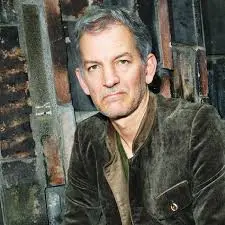
Mehldau often plays a separate melody with each hand, and one of the central features of his music is the playing of improvised counterpoint. He stated in 2002 that some of the content of his playing is affected by the music that he has recently been listening to. Mehldau indicated that some of his compositions address a specific need, such as integrating a particular rhythm into his trio, while others emerge from something he has played while improvising. He is best known for his long-running trio and his ability to fuse traditional jazz with elements of classical romanticism and modern pop/rock. He is famous for reimagining rock and pop classics by artists like Radiohead, The Beatles, and Nick Drake, treating them with the same harmonic rigour as jazz standards. His solo work, showcases his “splitting the brain” technique, where he plays independent, contrapuntal melodies with each hand.
Sound quality is important and the better online Streaming services will offer superior sound quality. As always, We do encourage you to purchase Favoured albums from good online or High street record stores. Brad Mehldau's Labels - Warner Bros.
Artists in upcoming issues: Dizzy Gillespie, jaco pastorius.....Keep Listening!! JOIN THE CONVERSATION...jazz Music
“Comments are most welcome and appreciated”