Early pioneers like Grandmaster Flash and DJ Grand Wizard Theodore developed key techniques such as scratching and looping “break beats”—instrumental sections of songs that people could dance to. The core elements of rap include: Content: The lyrics, which often incorporate “street vernacular” and address a wide range of social and political issues, such as racism and poverty.Flow: The rhythm and rhyme scheme of the delivery. Delivery: The cadence, tone, and vocal qualities used by the rapper (MC). The Beat: The instrumental accompaniment, typically created by a DJ or producer using turntables, samplers, drum machines (like the iconic 808 drum machine), and synthesizers. Sampling and the evolution of rap and hip hop go hand in hand. Essentially, this comes down to combining old classics with contemporary sounds. Rap music has deep cultural roots and several precursors: The tradition of rhythmic storytelling by West African griots over drums is often cited as an early precursor; African American Traditions Influences blues and jazz vocal styles; Jamaican Toasting (or Deejaying) A Rhythmic Chanting or Talking Style Performed over a Beat; “playing the dozens,” a verbal game where participants exchange witty insults about each other’s family to demonstrate verbal skill and coolness without getting genuinely angry, evolving into ‘battle rap.’ and 1960s African American poetry and spoken word artists like The Last Poets and Gil Scott-Heron. Changes to the musical production of hip-hop, along with growing stylistic diversity and advances in technology, led to the community-imposed concept of an old and new school. The “Old School” is associated with the period from the early 1970s to the mid-1980s.Rap gained commercial viability in 1979 with The Sugarhill Gang’s “Rapper’s Delight” and later with artists like Kurtis Blow. “New School” rap was coined by the 2nd generation artist (1984) to distinguish the pop sensibilities of the first commercial generation of rap artists and ranged from the pop-oriented humorous style of the Fat Boys, for example, to the rock-oriented sounds of say, Run-D.M.C. Women rappers like Queen Latifah introduced Black women’s point of view to rap fans and proved that they were as skilled and commercially successful as the men.
contemporary Music – Rap – issue #4
Rap music is stylistically and lyrically diverse, representing a range of experiences and worldviews. originating in the Bronx, New York City, in the early 1970s. It features rhythmic, rhyming speech delivered over a musical backdrop, known as a beat or instrumental track. Its earliest performers comprise MCs (derived from master of ceremonies but referring to the actual rapper) and DJs (who use and often manipulate pre-recorded tracks as a backdrop to the rap), break dancers and graffiti writers. Rap music is a musical form of vocal delivery that is a primary component of hip-hop culture.
The chaotic sounds of Public Enemy and N.W.A became known as hardcore. The harsh lyrical content mirrored the deteriorating conditions of the inner-cities and pushed the boundaries of lyrical complexity and social commentary. also known as “conscious” rap and a sub-genre “gangsta” rap characterized by its lyrical focus on the often-violent realities of inner-city life, including crime, gang activity, and drug dealing. In the 2000s, hip-hop music was mainstream. Kanye West’s production and lyricism redirected attention away from gangsta rap and explored a range of topics including his middle-class upbringing, anti-Black racism, corporatism, and his faith presented in full ‘boasting’ style. additionally, Eminem will become a most revered lyricist, by rap artists and rap fans alike. Encouraging white artists to Foster relationships with people of colour and follow their lead in dismantling oppressive systems. a legacy of Vanilla Ice the first solo white rapper to achieve commercial success in 1990. Musically, music-making turned away from the East Coast and the West coast and found a new home in the South. Several epicentres develop influential styles: Miami (Miami bass), New Orleans (bounce), Houston (screwed), and Atlanta (crunk and trap). By the 2010s, socially conscious rap will cross over into the mainstream as R&B and rap artists respond to tension borne from increased police and vigilante shootings of unarmed Black men, women, and children, and from advances in technology for self-production and instant sharing through social media. Key artists include Kendrick Lamar. In the 2010s we witness the rise of female MCs as producers of critically acclaimed albums. Women leading the trend include Nicky Minaj and Cardi B. By the 21st century, rap had become a global phenomenon, influencing music, fashion, and culture worldwide. Fame in rap often comes with mainstream success and cultural impact, and few have shaped culture like Jay-Z. From his fluid rhymes about hustle and heartache to becoming a mogul in music and business, his influence spans beyond music charts to fashion and social activism.
Join the Conversation!!!
we will Feature Up to 3 Albums from Artists representative of a range of the Many sub-genres. We Hope to encourage Listeners of all tastes and passions. So Get your Headphones on and Consider discussing the musical Offering and sharing your views with like-minded peers.
In Issue #4, we feature eminem
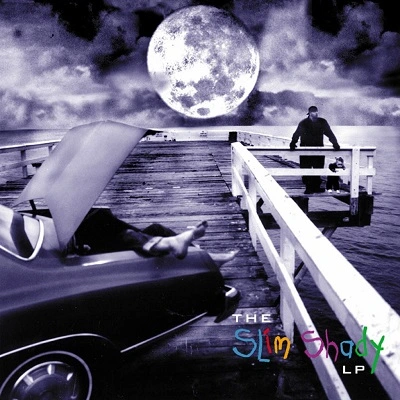
The Slim Shady LP is the breakthrough second studio album and major-label debut by American rapper Eminem, released on 23 February 1999 under Dr. Dre’s Aftermath Entertainment and Interscope Records. The album left an indelible imprint on hip-hop, and introduced the man who would go on to be the biggest-selling artist of any genre in the ensuing decade. The record catapulted Eminem from an underground artist into a global celebrity and highly controversial cultural figure. It went on to win the Grammy Award for Best Rap Album in 2000. The album’s lyrical content is famously written from the perspective of his unhinged alter ego, Slim Shady, featuring dark humour, cartoonish violence, and heavy profanity. The original 59-minute release consists of 20 tracks, including iconic skits. Although many of the lyrics on the album are intended to be humorous, several songs depict Eminem’s frustrations with living in poverty. When discussing The Slim Shady LP, Anthony Bozza of Rolling Stone described Eminem as “probably the only MC in 1999 who boasts low self-esteem. His rhymes are jaw-droppingly perverse, bespeaking a minimum-wage life devoid of hope, flushed with rage and weaned on sci-fi and slasher flicks.” After the success of The Slim Shady LP, Interscope Records awarded him with his independently-owned record label, called Shady Records, where the first artist Eminem signed was a rapper and his best friend Proof.
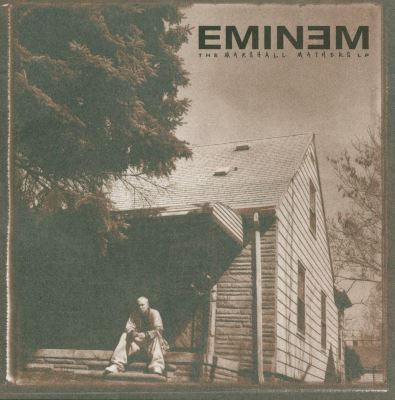
The Marshall Mathers LP is the third studio album by American rapper Eminem. Widely regarded as his magnum opus, it cemented his place in pop culture history by selling over 1.76 million copies in its first week in the US alone. It eventually surpassed 35 million copies sold worldwide, making it one of the best-selling hip-hop albums of all time. Primary Producers: Dr. Dre, Mel-Man, Eminem, and the Bass Brothers. A dark, satirical blend of hardcore hip-hop, horrorcore, and introspective lyricism. Core themes focus on the pressures of sudden mega-fame, media censorship, severe family dysfunction, and bitter responses to his critics. Won the Grammy Award for Best Rap Album (2001) and is certified RIAA Diamond. The record blurred the lines between reality, satire, and horror. While music critics heavily praised Eminem’s storytelling ability and complex rhyme schemes, the project drew immense backlash and public protests from advocacy groups like GLAAD (founded as a protest against defamatory coverage of gay and lesbian demographics and their portrayals in the media and entertainment industries) due to its violent imagery and homophobic slurs.
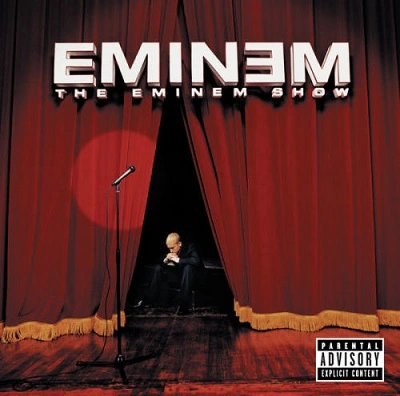
The Eminem Show is the critically acclaimed fourth studio album by American rapper Eminem, released on 26 May 2002. Driven by self-production and a heavier incorporation of 1970s rap-rock guitar melodies, the project captures Eminem at the absolute peak of his global commercial power and introspection. A change in direction from the dark shock-rap of The Marshall Mathers LP to focus heavily on personal fame, politics, and the suburban American cultural landscape. Won Best Rap Album at the 2003 Grammy Awards and earned a nomination for Album of the Year. The concept and title were explicitly inspired by the 1998 Jim Carrey drama movie The Truman Show, reflecting Eminem’s feeling that his chaotic private life had been turned into public entertainment. The standard edition contains 20 tracks, blending standard music records with cinematic, narrative skits. Notable tracks include White America – A sharp political critique on race, censorship, and his massive white suburban fan base. Business – A fast-paced, comic-book-style collaboration track produced by Dr. Dre. Cleanin’ Out My Closet – A deeply personal and painful song detailing his turbulent childhood and relationship with his mother. Without Me – The wildly successful, humorous lead single mocking pop culture and the media. ‘Till I Collapse (featuring Nate Dogg) – A massive, Queen-inspired anthem that became one of his most popular streaming hits.
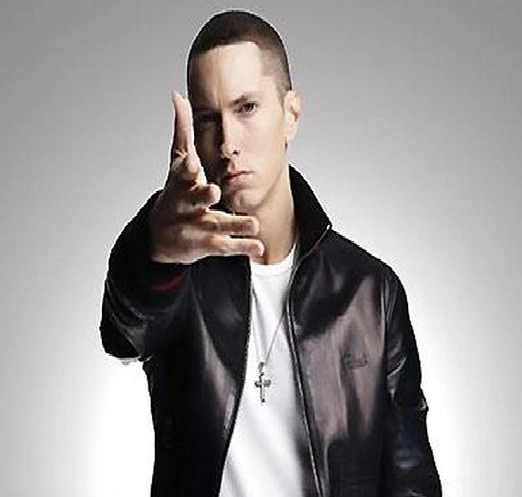
Eminem is an iconic American rapper, songwriter, and record producer widely considered one of the greatest and most influential hip-hop artists of all time. Emerging from the underground battle rap scene in Detroit, Michigan, he achieved global superstardom in the late 1990s through his transgressive alter-ego, Slim Shady. Over a career spanning more than three decades, Eminem has won 15 Grammy Awards, an Academy Award, and earned an induction into the Rock and Roll Hall of Fame.
Marshall Bruce Mathers III was born on October 17, 1972, in St. Joseph, Missouri, the only child of Deborah “Debbie” Nelson and Marshall Bruce Mathers Jr. Eminem’s parents were in a band called Daddy Warbucks, before they separated. His father abandoned his family when Eminem was a year and a half old, and his mother raised him herself in poverty. He wrote letters to his father, but Nelson said that they all came back marked “return to sender”. Eminem and his mother shuttled among states, rarely staying in one house for more than a year or two and mostly living with family members, before settling in Detroit when Eminem was 12. For much of his youth, Eminem and his mother lived in a bungalow-style house in a working-class, primarily Black neighbourhood in Detroit. He and Debbie were one of three white households on their block, and Eminem was beaten several times by Black youths. Eminem frequently fought with his mother, whom a social worker described as having a “very suspicious, almost paranoid personality”. At age 14, Eminem began rapping with high-school friend Mike Ruby; they adopted the names “Manix” and “M&M”, the latter evolving into “Eminem”. After spending three years in ninth grade because of truancy and poor grades, 17-year-old Eminem dropped out of Lincoln High School. In 1988, he went by the stage name MC Double M and formed his first group, New Jacks, and made demo tape recordings with DJ Butter Fingers. In 1989, they joined Bassmint Productions who later changed their name to Soul Intent in 1992 with rapper Proof and other Detroit artists. n 1995, Eminem was signed to Jeff and Mark Bass’ F.B.T. Productions and in 1995–1996 recorded his debut album Infinite for their independent Web Entertainment label the album was a commercial failure upon its release in 1996. Eminem attracted more attention when he developed Slim Shady, a sadistic, violent alter ego. The character allowed him to express his anger with lyrics about drugs, rape, and murder. in the spring of 1997 he recorded his debut EP, the Slim Shady EP.
After Eminem released The Slim Shady LP in 1999, he started his own record label, Shady Records. The Marshall Mathers LP was released in May 2000. It sold 1.76 million copies in its first week, breaking U.S. records for fastest-selling solo album. The first single from the album, “The Real Slim Shady”, was a success despite controversies about Eminem’s insults and dubious claims about celebrities. The Eminem Show was released in May 2002. It was another success. The Eminem Show, certified Diamond by the RIAA, examines the effects of Eminem’s rise to fame, his relationship with his wife and daughter and his status in the hip-hop community, addressing an assault charge brought by a bouncer he saw kissing his wife in 2000. In 2002, he starred in the semi-biographical film 8 Mile. Its lead track, “Lose Yourself,” became the first rap song to win the Oscar for Best Original Song. Encore, released in 2004, was another success, but not as successful as his previous albums. Although Relapse (2009) did not sell as well as Eminem’s previous albums and received mixed reviews, it was a commercial success and re-established his presence in the hip-hop world. Recorded from 2009 to 2010, Recovery was released on June 18 and Billboard reported that it was the bestselling album of 2010. The Marshall Mathers LP 2 (2013) was Eminem’s seventh album to debut atop the Billboard 200. At the 57th Grammy Awards, he received Best Rap Album award for The Marshall Mathers LP 2. Despite an online leak two days prior, Revival was released as scheduled. The album debuted at number one on the U.S. Billboard. However, Revival received mixed to negative reviews and is often regarded as Eminem’s weakest album. On August 31, 2018, Eminem released his tenth studio album and first surprise album, Kamikaze, just eight months after Revival. Kamikaze was a response to the criticism of Revival. On January 17, 2020, Eminem released another surprise album, Music to Be Murdered By. Music critics praised Eminem’s lyrical abilities and the improved production compared to Kamikaze, though some criticized the album’s formulaic song structure, lack of innovation, and shock value. Eminem announced a twelfth studio album titled The Death of Slim Shady (Coup de Grâce). The concept album was released on July 12, 2024, It too, was met with mixed reviews from critics, with praise directed towards Eminem’s rapping techniques while panning its attempts at shocking lyrics as “predictable”, “disjointed and incoherent”, and featuring “infantile wordplay”.
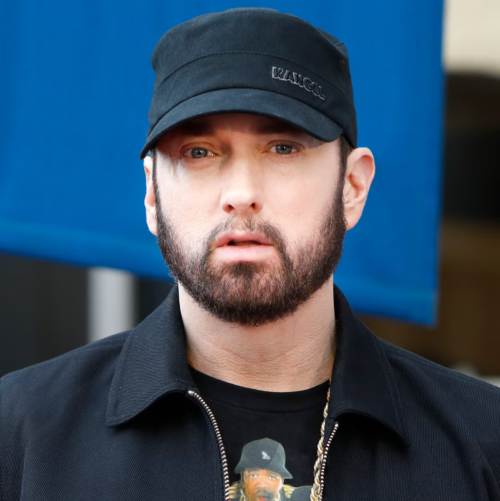
Having greatly popularized hip-hop with Middle American audiences, Eminem is widely credited for the acceptance of white rappers in popular music. While much of his transgressive art (art that aims to outrage or cause a reaction from the observer) during the late 1990s and early 2000s made him a controversial figure, Eminem has become a representation of popular angst in lower-income America and is noted for his conscious rap—including political criticism and social commentary—and rap flow.
Sound quality is important and the better online Streaming services will offer superior sound quality. As always, We do encourage you to purchase Favoured albums from good online or High street record stores.
Artists in upcoming issues: nicki Minaj, kano .....Keep Listening!! JOIN THE CONVERSATION...
“Comments are most welcome and appreciated”