
rock Music – issue #10
Rock music’s history is glorious. But who are it’s greatest rock bands and artists?
Over the years Many Disparate rock music sub-genres have emerged. hybrids like blues rock, folk rock, country rock, Progressive Rock, Psychedelic Rock, Glam Rock, Heavy Metal, Punk, Electronic, Etc. Have their Fans and Critics. From the ’90s alternative Rock achieves dominance. New genres, like grunge, Britpop, Hip Hop and indie Rock enter the mainstream. each with their own Unique Characteristics, Style, and Cultural Significance. Rock music has long been linked with political activism. Together with changes in social attitudes to race, sex, and drug use. Rock Music has assimilated cultural and social Movements – mods, rockers, Punks and the hippie movement for Example. the music both reflects society and influences society.
The evolution of Rock Music has been inextricably linked to technological advancements. from the invention of the electric guitar to the rise of digital streaming platforms. Thus Music became ubiquitous, whether in public places or in the home.
Music is a form of human conversation
Music Remains deeply personal, We hope to Highlight albums that evoke images, memories, and emotions to spark debate and
Broaden your Horizons, step out of Your comfort zone and expand your music taste and experiences.
Join the Conversation!!!
we will Feature Up to 3 Albums from Artists representative of a range of the Many sub-genres. We Hope to encourage Listeners of all tastes and passions. So Get your Headphones on and Consider discussing the musical Offering and sharing your views with like-minded peers.
In Issue #10, we feature fleetwood mac
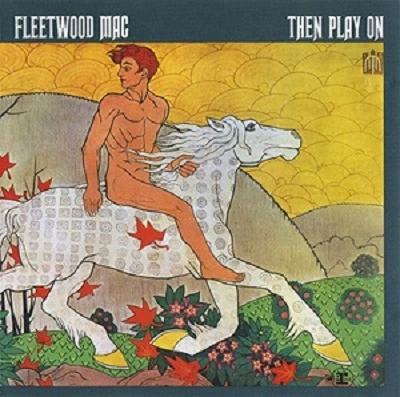
Then Play On is the third studio album by the British blues rock band Fleetwood Mac, released in 1969. It was the first of their original albums to feature Danny Kirwan and the last with Peter Green. Then Play On is a reminder of how pervasive and powerful Green’s influence was on Mac’s originality and individual stance beyond his involvement. Still highly recommended and a must-buy after all these years, it remains their magnum opus. The album offered a broader stylistic range than the straightforward electric blues of the group’s first two albums, displaying elements of folk rock, hard rock, art rock and psychedelia. Fleetwood Mac’s previous albums had been recorded live in the studio and adhered strictly to the blues formula. For the recording of Then Play On, editing and overdubbing techniques were used extensively for the first time. Fleetwood was adamant about veering away from material that was strictly blues-oriented “we didn’t have an exact concept of what we were going to do, but we knew what we weren’t going to do, and that was put out another record of Jeremy singing Elmore James. Jeremy Spencer attended some of the studio sessions and attempted to record a few things for Then Play On, but none of his contributions appeared on any of the album’s original tracks. Melody Maker praised the album, saying that it would “enhance” the Fleetwood Mac’s reputation and “surprise anyone who thinks of them as a straight, bashing blues band. Featured tracks include the immortal “Oh Well,” with its hard-edged, thickly layered guitars and chamber-like sections, it is perhaps the band’s most enduring progressive composition. “Rattlesnake Shake” is another familiar number, a down-and-dirty, even-paced funk, with clean, wall-of-sound guitars. Choogling drums and Green’s fiery improvisations power “Searching for Madge,” and leads into an unlikely symphonic interlude and the similar, lighter boogie “Fighting for Madge.” A hot Afro-Cuban rhythm with beautiful guitars from Kirwan and Green on “Coming Your Way” not only defines the Mac’s sound, but the rock aesthetic of the day. Of the songs with Kirwan’s stamp on them, “Closing My Eyes” is a mysterious waltz love song; haunting guitars approach surf music on the instrumental “My Dream”; while “Although the Sun Is Shining” is the ultimate pre-Rumours number someone should revisit. Blues roots still crop up on the spatial, loose, Hendrix-tinged “Underway,” the folky “Like Crying,” and the final outcry of the ever-poignant “Show Biz Blues,” with Green moaning “do you really give a damn for me? It is widely celebrated by music critics as a masterpiece of guitar interplay, showcasing the contrasting but complementary styles of Peter Green and his protégé Danny Kirwan.
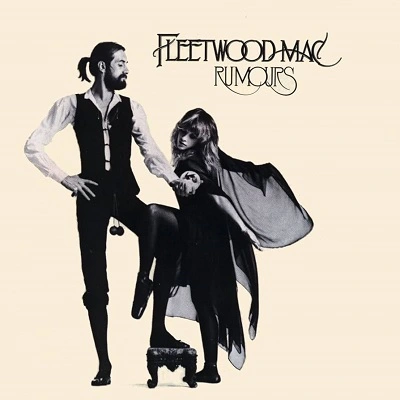
Rumours is the eleventh studio album by the British-American rock band Fleetwood Mac, released in 1977 by Warner Bros. Records. It stands as one of the best-selling and most critically acclaimed pop-rock albums in music history, having sold more than 45 million copies worldwide. The album famously juxtaposes upbeat, flawless soft-rock melodies with deeply painful lyrics written amidst intense internal relationship breakdowns among the band members. The legendary status of the album is permanently tied to the emotional chaos happening behind the scenes during its 1976 recording sessions in California: Stevie Nicks & Lindsey Buckingham: The romantic and musical duo ended their turbulent relationship just as recording began. John & Christine McVie: The married couple filed for divorce after eight years of marriage and stopped speaking outside of musical matters. Mick Fleetwood: The drummer discovered his wife was having an affair with his best friend, further compounding the studio tension. Despite screaming matches, heavy drug use, and emotional trauma, the band refused to let their personal lives derail the music, channelling their anger and heartbreak directly into their songwriting. The album features 11 songs, functioning as an open, sonic diary where members wrote cutting messages directly to or about each other: “Second Hand News” (Buckingham): An energetic opener dealing with the aftermath of his breakup. “Dreams” (Nicks): offering a hauntingly beautiful perspective on her split from Buckingham. “Never Going Back Again” (Buckingham): An intricate acoustic track tracking his desire to move forward. “Don’t Stop” (C. McVie): An optimistic anthem focused on looking toward tomorrow, later used for Bill Clinton’s 1992 presidential campaign. “Go Your Own Way” (Buckingham): A blistering, angry message aimed directly at Stevie Nicks. “Songbird” (C. McVie): A gentle, emotional piano ballad reflecting unconditional love. “The Chain” (All members): The only track credited to all five members, crafted by splicing together different individual fragments—including John McVie’s iconic bass solo. “You Make Loving Fun” (C. McVie): An upbeat celebration of her new relationship, which her ex-husband John McVie had to play bass on. “I Don’t Want to Know” (Nicks): A country-tinged, fast-paced acoustic track. “Oh Daddy” (C. McVie): A track written partly about Mick Fleetwood, who was the structural anchor of the group. “Gold Dust Woman” (Nicks): A dark, mystical closing track exploring the harrowing realities of cocaine dependency in the 1970s LA music scene.
Rumours set a template for pop with a gleaming surface that has something complicated, desperate, and dark resonating underneath.
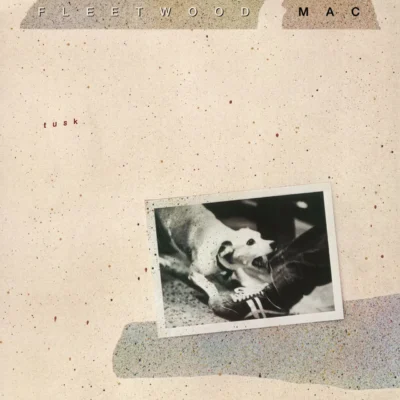
Tusk is the twelfth studio album by the British and American rock band Fleetwood Mac, released as a double album in 1979 by Warner Bros. Records. It is considered more experimental than their previous albums, partly as a consequence of Lindsey Buckingham’s sparser songwriting arrangements and the influence of post-punk. It’s Buckingham’s tour de force, contributing nine of the 20 tracks, presiding over the production and generally acting out his fantasies of creating a masterpiece. Though initial music critics gave it mixed reviews and the label considered it a commercial disappointment next to Rumours, Tusk has undergone a massive critical reappraisal as progressive and visionary. Tusk took 13 months and racked up roughly $1.4 million in production costs, making it the most expensive rock album ever recorded up to that time. It is famous for its highly unconventional production elements: Marching Band: Features the boisterous brass and percussion of the USC Trojan Marching Band, recorded live at Dodger Stadium. Strange Percussion: Mick Fleetwood kept time by slapping lamb chops, while Lindsey Buckingham banged on a Kleenex box. The 20-track double album highlights distinct, contrasting sonic styles among the group’s three main front-facing songwriters: Lindsey Buckingham: Channelled manic energy and DIY home-recording aesthetics on experimental tracks like “The Ledge”, which to achieve the track’s distinctive “buzzed” and frantic sound, Buckingham deliberately loosened his guitar strings so they would intentionally go sharp and flop around when struck. “I Know I’m Not Wrong” written and sung by Buckingham, who used it to channel the raw energy and influence of the late-1970s punk rock and new wave movements. “Tusk” the title track, one of the most bizarre records ever to make the US Top 10. Halfway through the song, a weirdly tongue-in-cheek sounding Afro drumbeat is suddenly interrupted layers of distinct percussion tracks—including meat ribs, tissue boxes, and folding chairs—passing them through heavy, echoing reverb units to create a chaotic, avant-garde wall of sound. “Not That Funny” is highly regarded for its frantic, energetic transformation during concerts compared to the studio version. Stevie Nicks offered her signature ethereal, mystical storytelling on tracks such as “Sisters of the Moon”, “Beautiful Child”, an achingly sad song about unrequited love and “Sara” another yearning song to somebody or other. Christine McVie: Maintained the group’s classic, melodic pop-rock anchoring with tracks like “Brown Eyes”, “Over & Over” which sounds not just reflective, but burnt-out and jaded in the most compelling style. “Think About Me”, whilst this song may sound superficially cheery, listen to the lyrics and you’ll find it’s a stinging tirade against a selfish lover (rumoured to have been the Beach Boys’ Dennis Wilson).
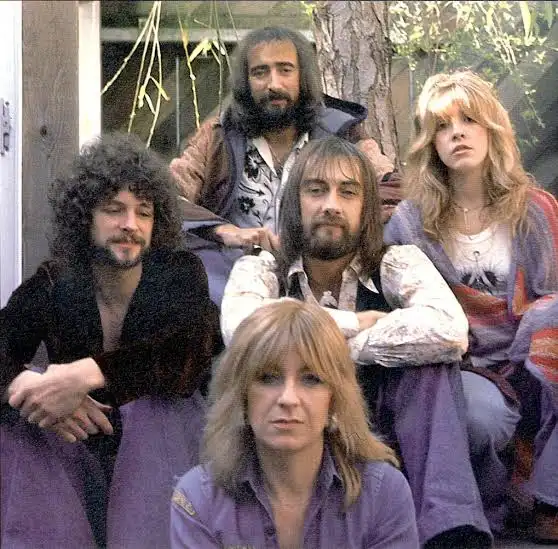
Fleetwood Mac were a British and American rock band formed in London in 1967 by singer and guitarist Peter Green. He named the band by combining the surnames of drummer Mick Fleetwood, the only constant member of the band throughout its history, and bassist John McVie, who joined the band soon after it was formed. Fleetwood Mac found instant success during the British blues boom with its debut album and the hit single “Albatross” (1968). Thereafter the band experienced more moderate success while undergoing multiple personnel changes (including Green’s departure and the addition of McVie’s wife, keyboardist-vocalist-songwriter Christine).
The band formed in 1967 when lead singer Peter Green left his old band “John Mayall & The Bluesbreakers” to find better music producers. He luckily found guitarist Jeremy Spencer, bass player John McVie and drummer Mick Fleetwood. These three represent the original composition of the band and released their first album the next year titled “Fleetwood Mac”. Throughout the 20 years after its debut, the band grew in members and styles of music. The well-known and last variation of the band includes Stevie Nicks, Lindsey Buckingham, Fleetwood, McVie, and the late Christine McVie. With these members, the band quickly rose to greater fame than the original formation in 1975 with the release of their hit self-titled album. By the mid-’70s, Fleetwood Mac had relocated to California, where they added the soft-rock duo of Lindsey Buckingham and Stevie Nicks to their lineup. Obsessed with the meticulously arranged pop of the Beach Boys and the Beatles, Buckingham helped the band become one of the most popular groups of the late ’70s. Combining soft rock with the confessional introspection of singer/songwriters, Fleetwood Mac created a slick but emotional sound that resulted in the multimillion-selling Fleetwood Mac (1975) and Rumours. Evocatively reflecting the simultaneous breakups of the McVies’ marriage and Buckingham and Nicks’s relationship, Rumours—which won the Grammy Award for album of the year—epitomized the band’s accomplished songwriting, arresting vocal chemistry, and rock-solid rhythm section. Described as an unhappy love story with a happy ending, the record showed off Nicks’s raspy lower notes, McVie’s constant alto and Buckingham’s striking high notes. These vocals mixed with soft piano; strong drums and the background electric guitar tie the whole album together and earn it the reviews it deserves.
Following the idiosyncratic Tusk (1979), the band retained their popularity through the early ’80s, when Buckingham, Nicks and Christine McVie all began pursuing solo careers. The band produced the noteworthy Mirage (1982) and Tango in the Night (1987) before the departure of Buckingham. Buckingham left the group initially, but the band decided to soldier on, releasing one other album before Nicks and McVie left the band in the early ’90s, hastening the group’s commercial decline. Further lineup changes followed, but Fleetwood, John McVie, Christine McVie, Buckingham, and Nicks reunited to perform at the inauguration of U.S. Pres. Bill Clinton in 1993 (Clinton had used “Don’t Stop” from Rumours as his campaign theme song). Four years passed before the core members gathered again for The Dance, a live album that debuted a smattering of new material and fuelled a U.S. tour. In 1998, Fleetwood Mac was inducted into the Rock and Roll Hall of Fame.
The 2003 release Say You Will brought together Fleetwood, John McVie, Buckingham, and Nicks for their first studio album in 16 years, but the absence of Christine McVie highlighted her importance as a mediating influence within the band. She rejoined the group in 2014, and Fleetwood Mac’s first major tour since 2009 followed. A new album, much discussed, failed to materialize, though Buckingham and Christine McVie released Lindsay Buckingham/Christine McVie in 2017.

Fleetwood Mac evolved into one of the greatest and influential rock bands Beginning in 1967, the band attained its reputation for 36 years. Within those years came multiple scandals and rumours that amplified the band’s quality of music and grew its fanbase. Fleetwood Mac have sold more than 120 million records worldwide, making them one of the world’s best-selling musical acts.While most bands undergo a number of changes over the course of their career, few groups experienced such radical stylistic changes as Fleetwood Mac. Throughout all of their incarnations, the only consistent members of Fleetwood Mac were drummer Mick Fleetwood and bassist John McVie — the rhythm section who provided the band with its name. Ironically, they had the least influence over the musical direction of the band.
The following year Buckingham’s departure from Fleetwood Mac was announced. In 2018–19, Fleetwood Mac performed a series of concerts for their tour “An Evening with Fleetwood Mac,” with Mike Campbell (guitarist for Tom Petty & The Heartbreakers) and Neil Finn (lead singer of Australian-New Zealand rock band Crowded House) as replacements for Buckingham. Following the tour’s conclusion, the band had no further plans. After the death of Christine McVie in late 2022, the group largely lost its desire to perform and tour as Fleetwood Mac.
Sound quality is important and the better online Streaming services will offer superior sound quality. As always, We do encourage you to purchase Favoured albums from good online or High street record stores.
fleetwood Mac – record labels : Rumours and Tusk – warner Bros. ; then Play on – Reprise
Artists in upcoming issues: sleater-kinney, David Bowie, Blur, the eagles, elvis Costello, ......Keep Listening!!
“Comments are most welcome and appreciated”