
rock Music – issue #12
Rock music’s history is glorious. But who are it’s greatest rock bands and artists?
Over the years Many Disparate rock music sub-genres have emerged. hybrids like blues rock, folk rock, country rock, Progressive Rock, Psychedelic Rock, Glam Rock, Heavy Metal, Punk, Electronic, Etc. Have their Fans and Critics. From the ’90s alternative Rock achieves dominance. New genres, like grunge, Britpop, Hip Hop and indie Rock enter the mainstream. each with their own Unique Characteristics, Style, and Cultural Significance. Rock music has long been linked with political activism. Together with changes in social attitudes to race, sex, and drug use. Rock Music has assimilated cultural and social Movements – mods, rockers, Punks and the hippie movement for Example. the music both reflects society and influences society.
The evolution of Rock Music has been inextricably linked to technological advancements. from the invention of the electric guitar to the rise of digital streaming platforms. Thus Music became ubiquitous, whether in public places or in the home.
Music is a form of human conversation
Music Remains deeply personal, We hope to Highlight albums that evoke images, memories, and emotions to spark debate and
Broaden your Horizons, step out of Your comfort zone and expand your music taste and experiences.
Join the Conversation!!!
we will Feature Up to 4 Albums from Artists representative of a range of the Many sub-genres. We Hope to encourage Listeners of all tastes and passions. So Get your Headphones on and Consider discussing the musical Offering and sharing your views with like-minded peers.
in issue #12, we feature david bowie
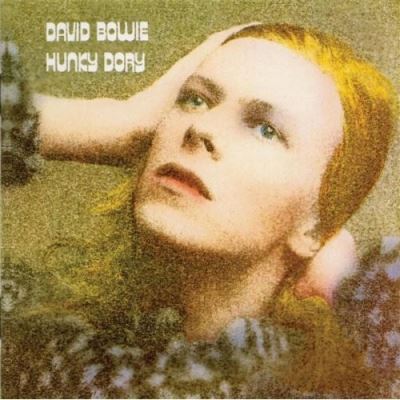
Hunky Dory is widely celebrated as his artistic breakthrough, shifting from heavy rock to a cinematic, piano-led blend of art pop, folk, and glam rock. Bowie’s breakthrough moment, and the album that signals the captivating, multifaceted phenomenon he was becoming. Just one of a basket of dazzling albums from perhaps rock’s greatest year, Hunky Dory captures the moment he fully discovers – and revels in – his limitless creative potential. It’s an album of dazzling range: gleaming pop brilliance on ‘Changes’, eerie, philosophical folk on ‘Quicksand’, homespun hippy whimsy on ‘Kooks’, boisterous, winking cabaret on ‘Oh! You Pretty Things’. And then there’s ‘Life on Mars?’, a genre-defying masterpiece that feels beamed in from a parallel universe. Bowie also salutes his artistic heroes: Andy Warhol, Bob Dylan, Lou Reed. And miraculously, it all coheres into a single, vibrant identity. Hunky Dory is the record where Bowie proves he can be a pop craftsman, a poet, a glam provocateur, and an art-rock visionary all at once. No wonder he came away believing he could do anything: on Hunky Dory, he did just that. Bowie moved from writing primarily on acoustic guitar to piano. Rick Wakeman of Yes provided the distinctive cabaret-style piano artistry that dominates the album’s sonic profile.
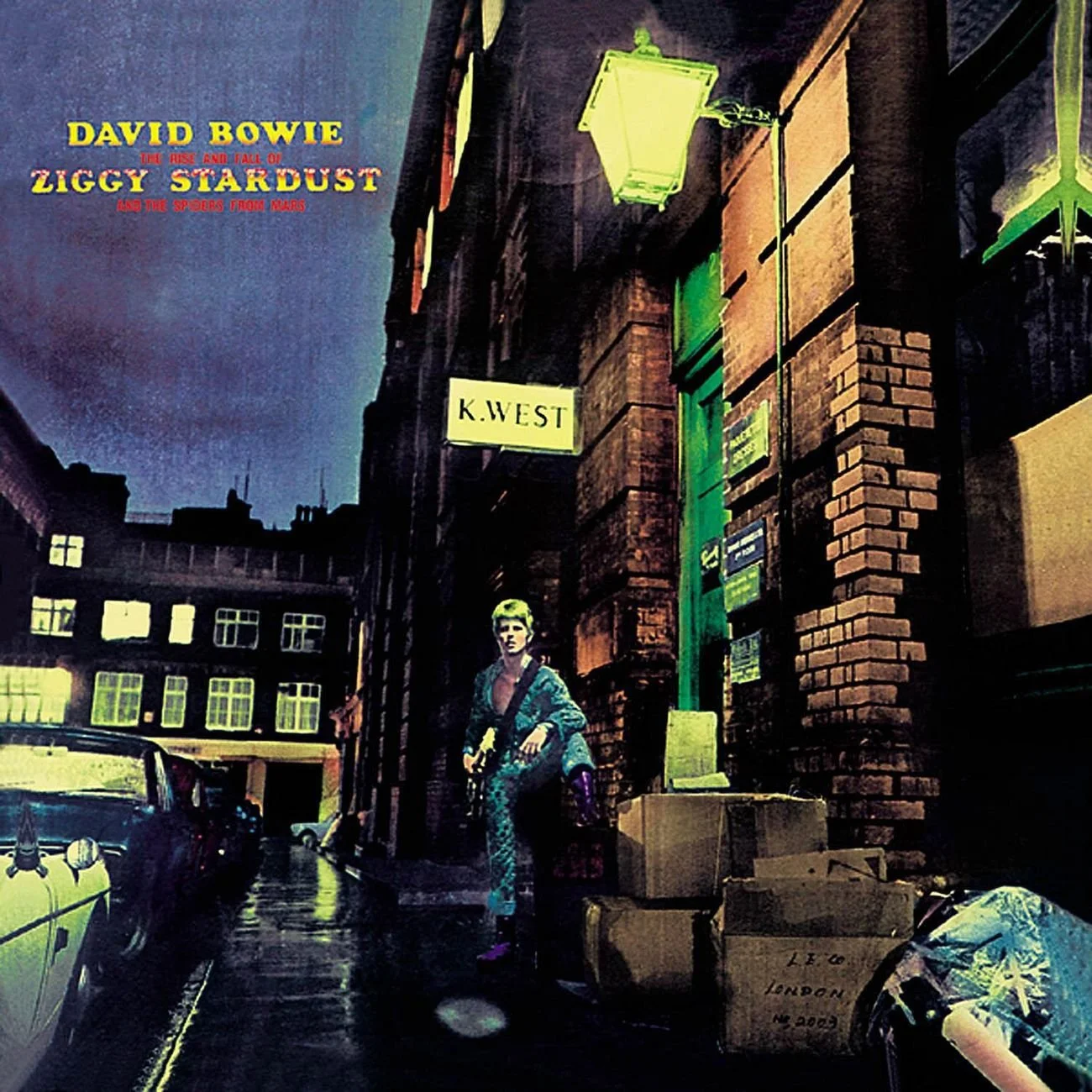
The Rise and Fall of Ziggy Stardust and the Spiders from Mars (often shortened to Ziggy Stardust) Described as a loose concept album and rock opera, Ziggy Stardust focuses on Bowie’s titular alter ego Ziggy Stardust, a fictional androgynous and bisexual rock star who is sent to Earth as a saviour before an impending apocalyptic disaster. The music on Ziggy Stardust has been retrospectively described as glam rock. After the departure of Rick Wakeman on keyboards, the songs on Ziggy Stardust are considerably less piano-led than the songs on Hunky Dory and are more guitar-led, primarily due to the influence of Ronson’s guitar and string arrangements. Retrospectively, Ziggy Stardust has received critical acclaim and is recognised as one of the most important rock albums. Bowie’s flamboyant performance of “Starman” on the BBC’s Top of the Pops in July 1972 shook up the British public and forever changed the trajectory of pop culture, fashion, and sexual exploration. The album consists of 11 perfectly structured tracks: Five Years – Establishes the impending doom of Earth. Soul Love – Explores different types of love amid the tragedy. Moonage Daydream – The grand introduction of the alien Ziggy character. Starman – The album’s breakthrough hit prophesying salvation. It Ain’t Easy – A driving rock cover originally by Ron Davies (a British rock and roll singer and songwriter). Lady Stardust – A tribute to gender-bending performance and public perception. Star – Ziggy musing on the power of intergalactic fame. Hang On to Yourself – A fast-paced, proto-punk rock anthem. Ziggy Stardust – The core narrative piece mapping the character’s rise and fall. Suffragette City – A high-octane, piano-driven rock track. Rock ‘N’ Roll Suicide – The dramatic, tragic curtain call for Ziggy.
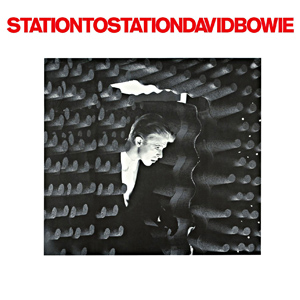
Station to Station is the definitive document of David Bowie’s most dangerous and fertile period. Widely regarded as one of his masterworks, the album served as the vehicle for his famously dark, detached performance persona, the Thin White Duke It shifts away from the “plastic soul” and funk elements of his 1975 album Young Americans and incorporates European experimentalism, heavily drawing from German krautrock and motorik electronic rhythms of bands like Kraftwerk. This unique fusion laid the direct sonic foundation for his highly acclaimed late-1970s Berlin Trilogy. The ten-minute title track alone is a revolutionary feat, transitioning from a mechanical, avant-garde drone into a triumphant, driving anthem. By synthesizing funk, art-rock, and proto-electronics, Bowie didn’t just move between genres; he created a new sonic language. Despite his fractured mental state, the album features incredibly precise musicianship from rhythm guitarist Carlos Alomar, bassist George Murray, drummer Dennis Davis, and E Street Band pianist Roy Bittan It remains Bowie’s most cohesive, intense, and intellectually daring work, sitting at the absolute centre of his creative evolution.
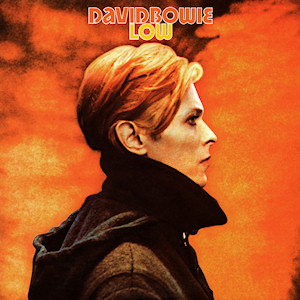
Low is the eleventh studio album by English musician David Bowie, released in 1977 through RCA Records. It marks the first entry in his acclaimed Berlin Trilogy, a series of three studio collaborations with co-producer Tony Visconti and visionary musician Brian Eno. Featuring a reinvention of the most radical and fascinating kind and serving as a massive influence on the sounds of the next decade. the album features a structure consisting of brief avant-garde pop vignettes combining stripped-back, sharp-edged songs like ‘Sound and Vision’, ‘Always Crashing in the Same Car’, and the somehow chilling-yet-euphoric ‘New Career in a New Town’ on Side A and gives us four absolutely gripping, bleak, atmospheric ambient electronic soundscapes crafted with Brian Eno and evoking Bowie’s experience of life in Cold War Berlin on Side B which capture a man at a crossroads: battling personal demons, shedding old habits, and opening himself to radical artistic experimentation. Producer Tony Visconti’s inventive techniques included the introduction of the extraordinary Eventide Harmonizer – Essentially a pitch-shifting and delay device, it allowed Visconti to detune, thicken, and manipulate drum and guitar sounds in ways previously unheard of it gives the drums that deep, ‘splatting’ quality – suddenly weighty, almost otherworldly, yet punchy. Bowie also experimented with cut-up lyrics and non-linear narrative, giving even his simplest lines weight and mystery. Low is a 40-minute immersion in mood, innovation, and daring. Few albums mark a reinvention so brilliantly.

David Bowie, was an English singer, songwriter and actor. Regarded as among the most influential musicians of the 20th century, Bowie received particular acclaim for his work in the 1970s. His career was marked by reinvention and visual presentation, and his music and stagecraft have had a great impact on popular music.
David Robert Jones was born on 8 January 1947 in Brixton, London. His mother, Margaret Mary “Peggy” (née Burns), was a waitress at a cinema in Royal Tunbridge Wells. His father, Haywood Stenton “John” Jones, was a promotions officer for the children’s charity Barnardo’s.
Bowie later studied art, music and design. After Burns introduced him to modern jazz, his enthusiasm for players like Charles Mingus and John Coltrane led his mother to give him a Grafton saxophone in 1961. He was soon receiving lessons from baritone saxophonist Ronnie Ross.
He received a serious injury at school in 1962 when his friend George Underwood punched him in the left eye during a fight over a girl. After a series of operations during a four-month hospitalisation, the damage could not be fully repaired and Bowie was left with a permanently dilated pupil; his eye later became one of Bowie’s most recognisable features. Despite their altercation, Bowie remained on good terms with Underwood, who went on to create the artwork for Bowie’s early albums. Early bands he played with provided him with an introduction into the showy worlds of pop and mod. Dissatisfied with Davy (and Davie) Jones, which in the mid-1960s invited confusion with Davy Jones of the Monkees, he took on the stage name David Bowie after the 19th-century American pioneer James Bowie and the knife he had popularised. his album debut, David Bowie, an amalgam of pop, psychedelia and music hall, failed to chart. It was his last release for two years. In September, Bowie recorded “Let Me Sleep Beside You” and “Karma Man”, both rejected by Deram and left unreleased until 1970. however, The tracks marked the beginning of Bowie’s working relationship with producer Tony Visconti which, with large gaps, lasted for the rest of Bowie’s career.
it was not until 1969 that his leap onto the charts would begin, with the legendary single Space Oddity. Bowie met Angela Barnett in April 1969. They married within a year. Her impact on him was immediate—he wrote his 1970 single “The Prettiest Star” for her—and her involvement in his career was far-reaching. The Man Who Sold The World was the first David Bowie album recorded as an entity unto itself and marks ground zero of the first definitive creative stretch to come. Mick Ronson’s guitars are often referred to as the birth point of heavy metal, and certainly the auspicious beginnings of glam rock can be traced here. Mercury financed a coast-to-coast publicity tour across the US in which Bowie, between January and February 1971, was interviewed by the media. Exploiting his androgynous appearance, he wore a blue dress during interviews, Bowie’s observation of two seminal American proto-punk artists led him to develop a concept that eventually found form in the Ziggy Stardust character. 1972 would be the year that Bowie ascended to international superstardom. The Rise and Fall of Ziggy Stardust and The Spiders from Mars—a record without which any Greatest Albums of All Time list is simply incomplete. In the summer of 1974, he undertook his most ambitious US tour yet, with an enormous set and choreographed tableaus. After a break in Philadelphia, where Bowie recorded new material, the tour resumed with a new emphasis on soul. The Philadelphia recording sessions produced the album Young Americans (1975).

Critics credit Bowie with having “brought sophistication to rock music”, and critical reviews frequently acknowledge the intellectual depth of his work and influence.
Bowie’s interest in the music he’d heard in America, soon became more than a homage. In 1975 not long after Young Americans’ release, Bowie moved to Los Angeles. The album Station to Station (1976), produced by Bowie and Harry Maslin developed the funk and soul of Young Americans with synthesiser-heavy arrangements which were influenced by electronic and German krautrock. Bowie’s cocaine addiction during this period was at its peak; he often did not sleep for three to four days at a time during Station to Station’s recording sessions and later said he remembered “only flashes” of its making.
in May 1976. Never one to stay in one place too long, shortly after his tour finished, David relocated to the Schonenberg section of Berlin. The subsequent albums, ‘Low’, ‘Heroes’, and ‘Lodger’ provided an atmospheric counterpoint to the emerging punk scene in London. The album, “Low” (1977), was recorded in France and took influence from krautrock and experimental music, featuring short song-fragments and ambient instrumentals. Echoing Low’s minimalist, instrumental approach, “Heroes” (1977) incorporated pop and rock to a greater extent, seeing Bowie joined by guitarist Robert Fripp. It was the only album of the trilogy recorded entirely in Berlin. Incorporating ambient sounds from a variety of sources including white noise generators, synthesisers and koto. The final piece in what Bowie called his “triptych”, Lodger (1979) eschewed the minimalist, ambient nature of its two predecessors, making a partial return to the drum- and guitar-based rock and pop of his pre-Berlin era. The result was a complex mixture of new wave and world music, in places incorporating Hijaz Non-Western scales. The three albums were later adapted into classical music symphonies by American composer Philip Glass for his first, fourth and twelfth symphonies.
Scary Monsters (and Super Creeps) (1980) produced the number one single “Ashes to Ashes”. While Scary Monsters used principles established by the Berlin albums, it was considered by critics to be far more direct musically and lyrically. The album’s hard rock edge included conspicuous guitar contributions from Fripp and Pete Townshend. Bowie achieved “the perfect balance” of creativity and mainstream success.
Let’s Dance shattered the silence in April 1983. Bowie’s first release for EMI, Co-produced by Chic’s Nile Rodgers, Let’s Dance would in short order become the most commercially successful album of his career. Followed by Tonight (1984), another dance-oriented album, which found Bowie collaborating with Pop and Tina Turner. His final solo album of the decade was 1987’s Never Let Me Down, where he ditched the light sound of his previous two albums, instead combining pop rock with a harder rock sound.
Wanting to completely rejuvenate himself following the critical failures of Tonight and Never Let Me Down, Bowie turned off the solo star spotlight with the formation of his new band, Tin Machine. Later, Like his audience and his critics, Bowie himself became increasingly disaffected with his role as just one member of a band.
1993 brought the long-awaited return of David Bowie, solo artist, with Black Tie White Noise reassuring fans that Bowie’s creative curiosity was insatiable as ever. Reuniting Bowie with Eno, the quasi-industrial Outside (1995) was originally conceived as the first volume in a non-linear narrative of art and murder. Featuring characters from a short story written by Bowie, the album achieved UK and US chart success and yielded three top 40 UK singles. Incorporating experiments in jungle and drum ‘n’ bass, Earthling (1997) was a critical and commercial success in the UK and the US. Reality (2003) was the 24th studio album by Bowie, It features a straightforward, energetic rock sound designed to be easily replicated in a live setting
An accomplished actor Bowie starred in The Man Who Fell To Earth in 1976 and Labyrinth in 1986. Bowie starred on Broadway in The Elephant Man. Over the next decade, Bowie alternated between acting and music.
In 2004 he suffered a heart attack while on stage in Germany but made a full recovery. In the years following his recuperation from the heart attack, Bowie reduced his musical output, making only one-off appearances on stage and in the studio.
In 2006 he was a recipient of the Grammy Lifetime Award. For several years he kept a low profile until the release of his 2013 album The Next Day. In 2016 he released his final album Blackstar which New York Times critic Jon Pareles found to be ‘strange, daring and ultimately rewarding…. with a mood darkened by bitter awareness of mortality’
On January 10, 2016, David Bowie died peacefully surrounded by his family after a courageous 18-month battle with cancer. His body of work, partly comprising 26 albums, multi-generational influence and legacy of fearless innovation and endless reinvention will live on forever.
Sound quality is important and the better online Streaming services will offer superior sound quality. As always, We do encourage you to purchase Favoured albums from good online or High street record stores.
david bowie – record label : RCA
Artists in upcoming issues: The Stranglers, the ramones, Blur, elvis Costello, ......Keep Listening!!
“Comments are most welcome and appreciated”