
rock Music – issue #14
Rock music’s history is glorious. But who are it’s greatest rock bands and artists?
Over the years Many Disparate rock music sub-genres have emerged. hybrids like blues rock, folk rock, country rock, Progressive Rock, Psychedelic Rock, Glam Rock, Heavy Metal, Punk, Electronic, Etc. Have their Fans and Critics. From the ’90s alternative Rock achieves dominance. New genres, like grunge, Britpop, Hip Hop and indie Rock enter the mainstream. each with their own Unique Characteristics, Style, and Cultural Significance. Rock music has long been linked with political activism. Together with changes in social attitudes to race, sex, and drug use. Rock Music has assimilated cultural and social Movements – mods, rockers, Punks and the hippie movement for Example. the music both reflects society and influences society.
The evolution of Rock Music has been inextricably linked to technological advancements. from the invention of the electric guitar to the rise of digital streaming platforms. Thus Music became ubiquitous, whether in public places or in the home.
Music is a form of human conversation
Music Remains deeply personal, We hope to Highlight albums that evoke images, memories, and emotions to spark debate and
Broaden your Horizons, step out of Your comfort zone and expand your music taste and experiences.
Join the Conversation!!!
we will Feature Up to 4 Albums from Artists representative of a range of the Many sub-genres. We Hope to encourage Listeners of all tastes and passions. So Get your Headphones on and Consider discussing the musical Offering and sharing your views with like-minded peers.
in issue #14, we feature the ramones
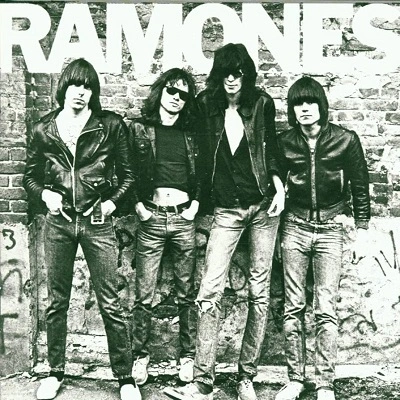
The ‘Ramones’ self-titled debut album, released on April 23, 1976, is widely considered punk’s ground zero. The 29-minute record pioneered the punk aesthetic by stripping rock and roll back to its minimalist roots, relying on relentless down-picking, buzzsaw guitars, and Joey Ramone’s iconic “Hey! Ho! Let’s Go!” chants. An explosive introduction that influenced generations of alternative, punk, and metal bands. Reviewers often note that the album operates less like a varied journey and more like a continuous, brutal sprint. Some songs are highly praised for their 60s pop sensibilities disguised in black leather. Key Tracks to note include Blitzkrieg Bop” one of the most recognizable punk anthems of all time. “Beat on the Brat” a perfect example of the band’s trademark cartoon-violence themes juxtaposed against catchy, surf-rock and pop rhythms. “I Wanna Be Your Boyfriend” shows the band’s softer, bubblegum-pop roots, complete with tubular bells. Lyrically, the comic strip-style songs churned out a good amount of irreverence to shock (“Now I Wanna Sniff Some Glue,” “I Don’t Wanna Go Down to the Basement”). Songs get shorter and music gets faster and more furious Joey Ramone said: “To me, punk is about being an individual and going against the grain; and standing up and saying ‘This is who I am’.”
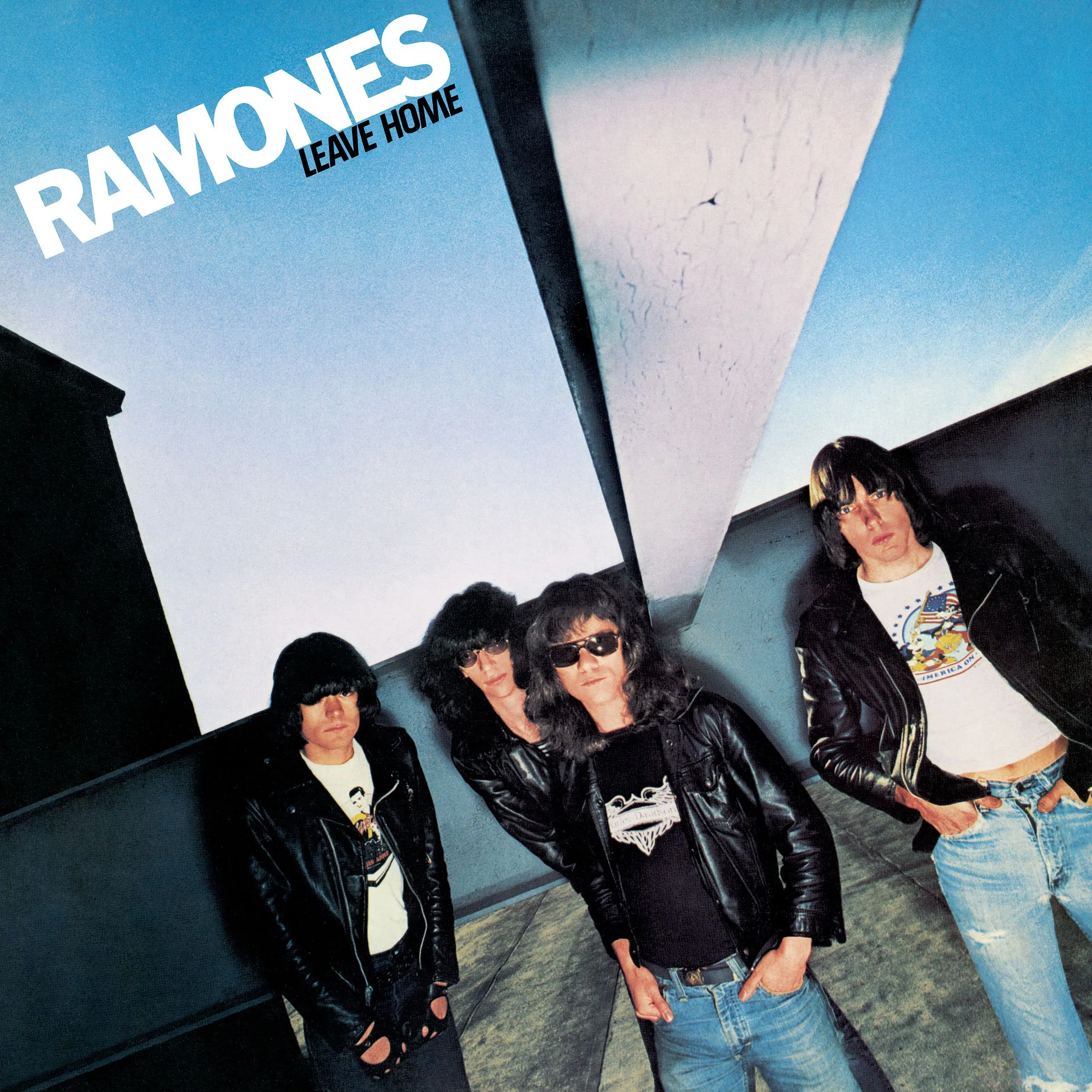
Leave Home is the second studio album, released in January 1977 through Sire Records. It is far from a copy of the debut album with an increased studio budget allowing the band to get a smoother sound and a better producer. Recorded at Sundragon Studios in Manhattan, the album expanded on the band’s signature blitzkrieg sound with higher production value, faster tempos, and explicit 1960s pop sensibilities. is universally praised by critics for its tighter musicianship, improved production, and unapologetic mix of rapid-fire punk with 60s surf-pop and Phil Spector romanticism. In the UK and internationally, it remains celebrated as a foundational rock masterpiece. Joey’s vocals and Johnny’s scything guitars to cut through clearly. Subject matter-wise it was business as usual, with songs about fairground freaks (Pinhead), right-wing militarism (Commando), mental illness (Gimme Gimme Shock Treatment), misogyny (Glad To See You Go) and low rent drug abuse (Carbona Not Glue); all served with a good dose of humour. The latter again landed them in trouble, getting the album withdrawn and re-released with an alternative track (the B-side, Babysitter)
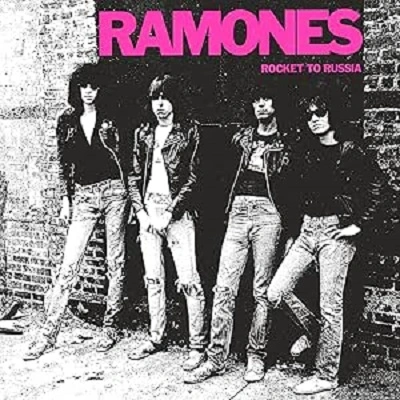
The Ramones’ third album, Rocket to Russia, boasts a cleaner production than its predecessors, which only gives the Ramones’ music more force. Their most critically acclaimed, mixing an obvious yearning for rock ‘n’ roll’s past with a minimalist punk attack which made them sound fresh. It is widely considered one of the definitive cornerstones of the punk rock genre, perfectly balancing their signature raw, high-velocity minimalist attack with surf-rock melodies and bubblegum pop sensibilities It helps that the group wrote its finest set of songs for the album. From the mindless, bopping opening of “Cretin Hop” and “Rockaway Beach” to the urban surf rock of “Sheena Is a Punk Rocker” and the ridiculous anthem “Teenage Lobotomy,” the songs are teeming with irresistibly catchy hooks; even their choice of covers, “Do You Want to Dance?” and “Surfin’ Bird,” provide more hooks than usual. The Ramones also branch out slightly, adding ballads to the mix. Even with these (relatively) slower songs, the speed of the album never decreases. However, the abundance of hooks and slight variety in tempos makes Rocket to Russia the Ramones’ most listenable and enjoyable album — it doesn’t have the revolutionary impact of The Ramones, but it’s a better album and one of the finest records of the late ’70s.
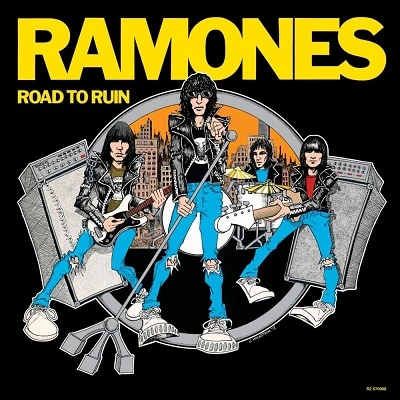
The first album with new drummer Marky was the Ramones’ idea of a pop album. The more conventional approach was designed to get the band on the radio. It didn’t work. But ‘Road to Ruin’ includes some of the group’s most endearing songs, including “I Wanna Be Sedated” and “I Just Want to Have Something to Do.” The album marked a crucial turning point in the band’s career, introducing a more polished, commercially viable sound and featuring a significant lineup change. Marky Ramone (Marc Bell) joined the band on drums, replacing founding member Tommy Ramone. Tommy Ramone left due to touring stress and low sales of their previous albums, but stayed on to co-produce the record under his birth name, T. Erdelyi. Marky had the same straightforward punk style as Tommy, but he added some jazz-inspired technical flourishes that really elevated the band’s game four albums in. Notable tracks include “Don’t Come Close”, a ballad, by punk rock standards at least. Road to Ruin saw the band experiment with ballads, acoustic guitars, and guitar solos. “Needles and Pins” The band was always well-known for paying homage to their ’50s and ’60s rock influences with cover songs. Their take on “Needles and Pins” is certainly a top cut. “I Wanna Be Sedated” is one of the most defining anthems by the American punk rock band Ramones. The track captures the frenetic, stripped-down energy that pioneered the punk genre, it has since become the band’s signature song and a permanent fixture in rock history. Contrary to popular belief that the track is purely about drug use, frontman Joey Ramone wrote it out of extreme boredom and exhaustion while touring. “I Just Want to Have Something to Do” is another one of the best pop-punk expressions of frustrated teenage anomie and boredom “She’s the One” the album had plenty of straightforward, Ramones-flavoured punk. The fourth, UK-only single is a prime example.
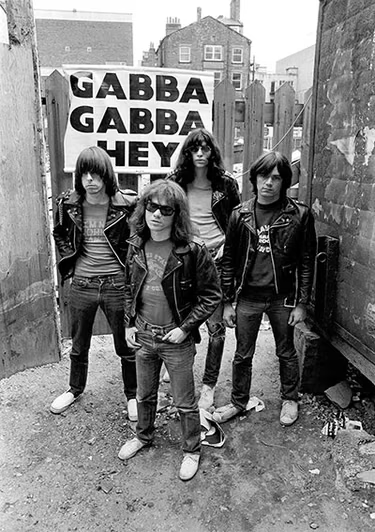
The Ramones were a seminal American rock band formed in Forest Hills, Queens, New York, in 1974, universally credited with pioneering the punk rock movement. They replaced the bloated, over-produced stadium rock of the 1970s with a raw, minimalist sound characterized by lightning-fast tempos, simple three-chord structures, and songs that rarely exceeded two minutes. Although they never achieved major commercial success during their active years, they fundamentally transformed the landscape of alternative music and influenced generations of rock
The Ramones were an American punk rock band formed in the New York City neighbourhood Forest Hills, Queens in 1974. Known for helping establish the punk movement in the United States and elsewhere, the Ramones are often recognized as one of the first bands of the genre. All members adopted pseudonyms ending with the surname Ramone, although none were biologically related. The Ramones performed 2,263 concerts, touring virtually nonstop for 22 years, and released fourteen studio albums. In 1996, after a tour as part of the Lollapalooza music festival, they played a farewell concert in Los Angeles and disbanded. By 2014, all four original members had died: lead singer Joey Ramone (1951–2001), bassist Dee Dee Ramone (1951–2002), guitarist Johnny Ramone (1948–2004) and drummer Tommy Ramone (1949–2014). The Ramones had experienced a few lineup changes, with Joey and Johnny as the only constant members. Tommy left the band in 1978 to pursue a career in record production, and was replaced by Marky Ramone, who himself was replaced by Richie Ramone in 1983. Following Richie’s departure in 1987, and a brief stint with Elvis Ramone, Marky rejoined the band and Dee Dee left two years later, being replaced by C. J. Ramone. From 1989 to their breakup in 1996, the Ramones consisted of Joey, Johnny, Marky and C. J. Ramone.
Recognition of the band’s importance has built over the years. The original four members and Tommy’s replacement on drums, Marky Ramone, were all inducted into the Rock and Roll Hall of Fame in their first year of eligibility. In 2011, the band was awarded a Grammy Lifetime Achievement Award.
The original members of the band met in and around the middle-class neighbourhood of Forest Hills in the New York City borough of Queens. John Cummings and Thomas Erdelyi had both been in a high-school garage band from 1965 to 1967. They became friends with Douglas Colvin, who had recently moved to the area from Germany, and Jeff Hyman, who was the singer for a glam rock band. Erdelyi was set to become their manager. Soon after the band was formed, Dee Dee realized that he could not sing and play his bass guitar simultaneously; with Erdelyi’s encouragement, Joey became the band’s new lead singer. Dee Dee would continue, however, to count off each song’s tempo with his signature rapid-fire shout of “1-2-3-4!” Joey soon similarly realized that he could not sing and play drums simultaneously and left the position of drummer. While auditioning prospective replacements, Erdelyi would often take to the drums and demonstrate how to play the songs. It became apparent that he was able to perform the group’s music better than anyone else, and he joined the band as Tommy Ramone. The band swiftly became regulars at CBGB a New York City music club. After garnering considerable attention for their performances, the Ramones became recognized as leaders of the new scene that was increasingly being referred to as “punk”. The Ramones recorded their debut album, Ramones, in February 1976. Of the fourteen songs on the album, the longest, “I Don’t Wanna Go Down to the Basement”, barely surpassed two and a half minutes. While the songwriting credits were shared by the entire band, and each member did contribute some writing, much of the writing was done by Dee Dee. The Ramones’ debut album was greeted by rock critics with glowing reviews although it was not a commercial success. Their next two albums, Leave Home and Rocket to Russia, were both released in 1977.
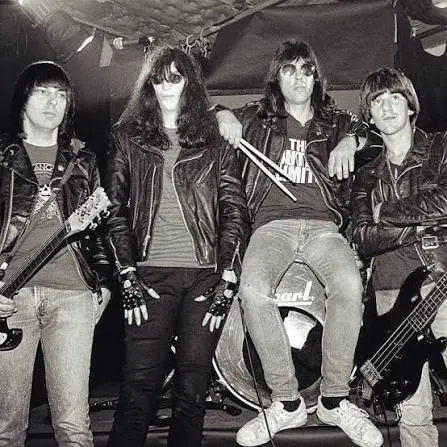
They spearheaded the punk movement. The Ramones were punk rock. They were the first band you thought of when the words was spoken.Their branding was spot on. Black hair, black t-shirts and jeans and a black leather jacket – it doesn’t get any more rock n’ roll than that. Right from the beginning The Ramones decided that there would be as few solos as possible in their music. They wanted their songs to be as short and to the point as possible, so they played them as fast as could. A hit record can be fleeting, but influence can last for generations.
Tommy, tired of touring, left the band in early 1978. He continued as the Ramones’ record producer under his birth name of Erdelyi. His position as drummer was filled by Marc Bell and adopted the name Marky Ramone. Later that year, the band released their fourth studio album, and first with Marky, Road to Ruin. The album, included some new sounds such as acoustic guitar, several ballads, and the band’s first two recorded songs longer than three minutes. Phil Spector became interested in the Ramones and produced their fifth album End of the Century (1980). Although it was to be the highest-charting album in the band’s history Johnny made clear that he favoured the band’s more aggressive punk material. Pleasant Dreams, the band’s sixth album, was released in 1981. Produced by Graham Gouldman of UK pop act 10cc it continued Taking the band further from the raw punk sound of its early records, moving the Ramones “away from their pioneering minimalism into heavy metal territory.” Subterranean Jungle, was released in 1983. Johnny stated that he was “kinda disappointed” with Subterranean Jungle because he felt it was “too melodic, too “pop”, and too commercial” like End of the Century and Pleasant Dreams. Subterranean Jungle would be the last album by the band to crack the Billboard Top 100. After the release of Subterranean Jungle, Marky was fired from the band due to his alcoholism. He was replaced by Richard Reinhardt, who adopted the name Richie Ramone. The first album the Ramones recorded with Richie was Too Tough to Die in 1984. The album marked a shift to something like the band’s original sound. In the description of Allmusic’s Stephen Thomas Erlewine, the “rhythms are back up to jackhammer speed and the songs are down to short, terse statements.” The band’s ninth studio album, Animal Boy (1986) was characterized by a Rolling Stone reviewer as “nonstop primal fuzz pop.” The following year the band recorded their last album with Richie, Halfway to Sanity. Richie left in August 1987 after financial conflicts with Johnny that centred around him being refused a small percentage of the merchandising money. Richie was replaced by Clem Burke from Blondie, which was disbanded at the time. According to Johnny, the performances with Burke—who adopted the name Elvis Ramone—were a disaster. He was fired after two because his drumming could not keep up with the rest of the band. In September, Marky, now clean and sober, returned to the band. In December 1988, the Ramones recorded material for their eleventh studio album, Brain Drain. Dee Dee Ramone would only record the additional vocals on the album citing that members of the band (including himself) were going through personal troubles and changes to the point where he did not want to be in the band anymore. Although it received mixed reviews upon its release in May 1989, the album included the band’s highest-charting hit in the US, “Pet Sematary”. Despite not wanting to be in the band anymore, Dee Dee (who was sober by this point) was present for the world tour for Brain Drain and played his last show with the Ramones on July 5, 1989. By Johnny’s decision, the group ended up signing a new contract with Radioactive Records at the end of that year, the Ramones were soon able to start on sessions for what would become Mondo Bizarro anticipated as a “comeback” for the band after years of decline in popularity. In 1995, the Ramones released their fourteenth and final studio album ¡Adios Amigos! and announced that they would be disbanding the following year. The album sales were unremarkable. The band spent late 1995 on what was promoted as a farewell tour. The Ramones played their final show on August 6, 1996, at the Palace in Hollywood.
Sound quality is important and the better online Streaming services will offer superior sound quality. As always, We do encourage you to purchase Favoured albums from good online or High street record stores.
The ramones – Ramones, Leave Home, Rocket to Russia, road to Ruin – label : Sire Records
Artists in upcoming issues: Blur, Guns n' Roses, led Zeppelin, elvis Costello, ......Keep Listening!!
“Comments are most welcome and appreciated”