Classical Music – issue #2
Classical music generally refers to the art music of the Western world. Classical music is often characterized by formality and complexity in its musical form and harmonic organization. particularly with the use of polyphony, music in which several different tunes are played or sung at the same time. Since the ninth century, it has been primarily a written tradition, spawning a sophisticated notational system.
Rooted in the patronage of churches and royal courts in Europe. early medieval music is chiefly religious, monophonic and vocal. The Baroque period (1580–1750) saw the relative standardization of common-practice tonality. Together with, the increasing importance of musical instruments, which grew into ensembles of considerable size. The common-practice period was a period in which the tonal system was regarded as the only basis for composition. The word tonality is sometimes used as a synonym for “key.”.
In the shorter but pivotal Classical period (1730–1820), composers such as Mozart created widely admired examples of absolute music. including symphonies, string quartets and concertos. Absolute music (sometimes abstract music) is instrumental music not intended to represent or illustrate something else. The ensuing Romantic music (1800–1910) focused instead on programmatic music. the art song, symphonic poem and various piano genres were important vessels. Program music is often written so that the notes themselves convey, to some degree, the meaning of what is portrayed. Thus the thunderstorm in Beethoven’s symphony includes loud timpani strokes to convey the thunder. The shrill piccolo music to depict the shrieking winds. During this time virtuosity was celebrated, immensity was encouraged, while philosophy and nationalism were embedded. all aspects that converged in the operas of Richard Wagner.
By the 20th century, the prominence of popular music greatly increased. Many Classical composers actively avoided past techniques and genres in the lens of modernism. with some abandoning tonality in place of serialism. a serial pattern in music is merely one that repeats over and over within a composition. The term serial music is often used interchangeably with 12-tone music. However, the latter is more properly an example of the former. others found new inspiration in folk melodies or impressionist sentiments.
Trends of the mid-20th century to the present day include New Simplicity, New Complexity, Minimalism, Spectral music. more recently Postmodern music and Postminimalism.
Join the Conversation!!!
we will Feature Significant Compositions from Artists representative of the various classical Periods. We Hope to encourage Listeners of all tastes and passions. So Get your Headphones on and Consider discussing the musical Offering and sharing your views with like-minded peers.
In Issue #2, we feature Johann Sebastian Bach
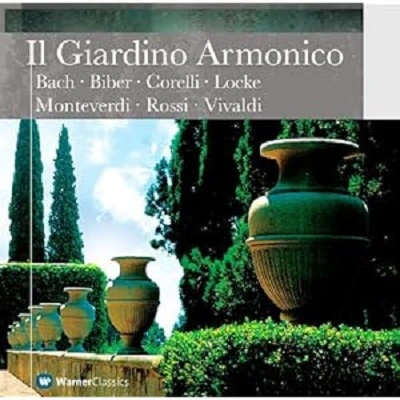
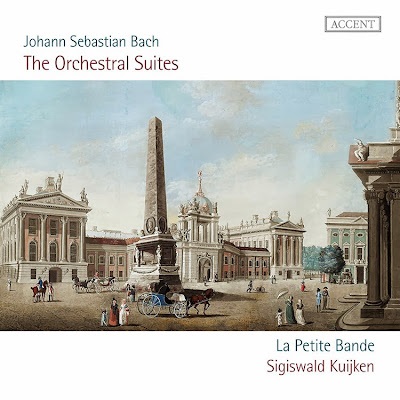
Brandenburg concerto No.2. a quartet of trumpet, oboe, recorder and violin is accompanied by a string ensemble and continuo group. the trumpet player would undoubtedly have been the star of this Concerto. Brandenburg concerto No.3. unusual form and instrumentation. Bach composed it for three violins, three violas, three cellos and basso continuo that provides a continuous bass line and harmonic support. The two fast movements are characterised by a strong rhythmic drive which are separated, uncommonly, without a fully-developed slow middle movement. Brandenburg concerto No.4. The concerto leads with the two recorders, but after the introductory refrain it appears that the violin is the soloist. Thus, it continues, Bach dislocates the solo argument from the ritornello (recurring, principal theme) structure. the soloists are continually weaving in and out of the larger orchestral Texture. Brandenburg concerto no .5. A unique aspect of the Concerto is the unusually prominent, virtuosic role Bach gave to the harpsichord, including an extensive solo cadenza near the end of the first movement. Possibly the earliest keyboard solo concerto ever written, even though the violin and flute are also featured soloists.
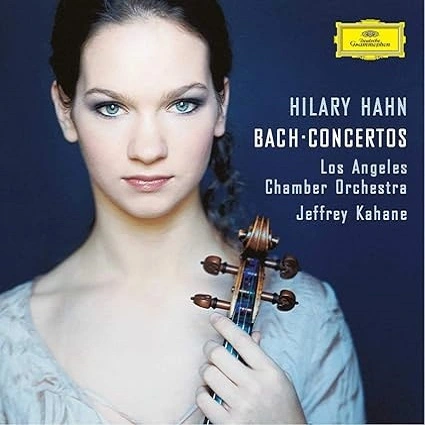
Violin Concerto No. 1 in A minor, BWV 1041 is a renowned work for solo violin, strings, and continuo, famous for its Vivaldian influence and rich counterpoint. It has remained consistently popular in the classical repertoire since it was written. The concerto follows the typical quick-slow-quick three-movement structure of the Italian concerto form. Violin Concerto in E major, BWV 1042. It follows the three-movement Venetian concerto model, but incorporates characteristically “un-Italian” features. The first movement with an opening section followed by a contrasting middle section, and then a return to the original opening section. The slow movement is one of those Bach concerto middle movements in which the memorable melody is a persistent figure in the bass. The finale is a true rondo, an unusual form for Bach. Concerto for Two Violins in D minor, BWV 1043 (Double Concerto) which is one of the composer’s most famous and successful works. The piece is noted for the intricate and expressive interplay between the two solo violins, which use fugal imitation, a compositional procedure characterized by the systematic imitation of a principal theme (called the subject) in simultaneously sounding melodic lines and counterpoint. The relationship between the soloists is collaborative rather than competitive.
Four Orchestral Suites : Each work begins with a majestic French overture and is followed by a series of dance movements. It’s important to note that Bach did not conceive of them as a single set, and their instrumentation and origin stories differ. Orchestral Suite No. 2 in B minor, BWV 1067:It contains seven movements, including the famous Badinerie. Orchestral Suite No. 3 in D major, BWV 1068:It is known for its second movement, the Air, often heard as “Air on the G String”.
The suites show the influence of French style popular in early 18th-century Germany. Written during Bach’s years in Leipzig, where he had a wider range of instruments at his disposal than ever before, the Suites revel in new sonorous possibilities and employ varied combinations of wind, brass, stringed instruments and timpani.
Brandenburg Concertos 2-5
Violin Concertos
Orchestral Suites 2 – 3
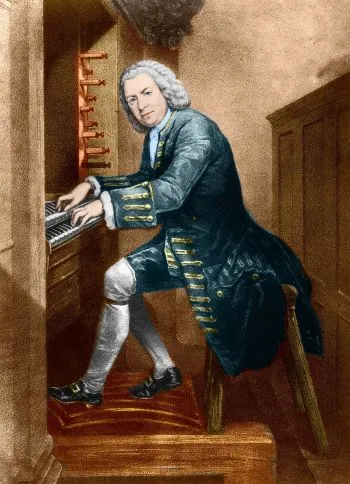
Johann Sebastian Bach (1685-1750) was a german Composer and Musician of the Baroque Period. widely regarded as one of the greatest composers in Western music history. He is celebrated for his mastery of counterpoint (playing a melody or melodies in conjunction with another), harmonic organization, and a prolific output across almost every contemporary musical genre except opera
Johann Sebastian Bach Born into a highly musical family in Eisenach, Bach was orphaned by age 10 and raised by his elder brother, Johann Christoph. His career progressed through various positions as an organist and court musician in Germany. Bach began his career as an organist in Arnstadt, where his virtuosity and complex compositions sometimes clashed with church authorities. He then moved to Mühlhausen, where he married his second cousin, Maria Barbara Bach. As the Weimar court organist and later Konzertmeister, Bach focused heavily on composing for the organ and adapting Italian styles, producing many of his great organ works and cantatas. A dispute over his resignation led to a brief imprisonment before he left for Köthen. The orchestral cornerstone of Bach’s years at Köthen (1717-23) are the Brandenburg Concertos, assembled in response to a ‘command’ from Christian Ludwig, Margrave of Brandenburg. Serving as Kapellmeister ‘master of the chapel choir’ for Prince Leopold, a Calvinist who favoured secular music, Bach composed many other famous instrumental works, including the cello suites, and The Well-Tempered Clavier, Book I. His first wife, Maria Barbara, died suddenly in 1720, and he married Anna Magdalena Wilcke, a court singer, the following year. The music from this era is blessed with great expressive individuality, whilst also revealing Bach’s awe-inspiring understanding of the instrument for which he was writing. Bach spent the last 27 years of his life as the director of music at the prestigious St. Thomas School, Leipzig. Also, he was responsible for music at the city’s four principal churches. Here he produced the bulk of his sacred vocal music, including the St Matthew Passion, the Christmas Oratorio, and hundreds of cantatas
He also directed the secular Collegium Musicum, for which he wrote pieces like the Coffee Cantata. In addition, Bach remained active during the last 20 years of his life – composing, compiling and revising his music, giving organ recitals, and advising on the construction of keyboard instruments. The products of this concluding period are dominated by the Mass in B minor, the Goldberg Variations for harpsichord (1741 or 1742), the Musical Offering and the Art of Fugue.
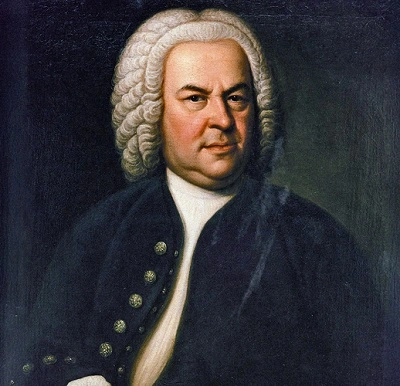
The Brandenburg Concertos, the Goldberg Variations, the Violin Concertos, the Cello Suites, the B Minor Mass: among so much incredible music, it’s impossible to pick a favourite. Your answer will be a personal one. We can say that all the works above, and very much more Bach besides, are worth getting to know.
During his lifetime, Bach was primarily known as a virtuoso organist and keyboardist. After his death in 1750 (from complications following a botched eye surgery by the controversial surgeon John Taylor), his music fell into relative obscurity until a 19th-century revival led by composers like Felix Mendelssohn. Bach is best known for his orchestral music, including the Brandenburg Concertos and Orchestral Suites. He also composed some much-loved concertos, including two Violin Concertos and a Concerto for Two Violins (commonly known as the Bach Double Concerto). Today, his music is a cornerstone of classical repertoire and fundamental to the education of musicians worldwide
Sound quality is important and the better online Streaming services will offer superior sound quality. As always, We do encourage you to purchase Favoured albums from good online or High street record stores.
Artists in upcoming issues: Beethoven, Brahms and Chopin.......Keep Listening!! JOIN THE CONVERSATION...
“Comments are most welcome and appreciated”